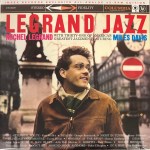
Robert tries to remain positive when choosing the words that would best describe the award winning Impex release of Legrand Jazz. In the end he goes with the spoken word over the written one.
Years ago I wrote about how important the Legrand Jazz album was for me in my growth as a critical listener. It’s yet another example of an album that helped make me a better audiophile by showing me the errors of my tweaking and tuning ways.
Let’s watch the video and see what Robert has learned about Impex’s recent release.
Michael Fremer gives the Impex pressings an 11 for sound. He writes (emphasis added):
“This IMPEX reissue is sourced from an “analog mix-down transfer of the original 1958 work tape by Mark Wilder at Battery Studios” and cut by Chris Bellman and Bob Donnelly at Bernie Grundman Mastering on Grundman’s all-tube mastering system. I have a clean, original 6-Eye pressing that this superbly pressed reissue betters in every way. This will make both your stereo and your heart sing. Some of the greatest jazz musicians of that or any era wailing and clearly having a Legrand time. Limited to 3000 copies. Don’t miss it!”
Who are you going to believe, the Self-Appointed Vinyl Experts of the World and Bestowers of Prestigious Audio Awards (awards which you may have never heard of; I sure hadn’t), or some guy who’s just dedicated to being an Analog Audiophile and knows a good record when he hears one? (Or doesn’t hear one, as the case may be.)
Like Robert, I tried being kinder and gentler, but it didn’t take. I may resolve to try harder in 2024 2026. Then again, I may not. If we’re nicer to the people currently making Heavy Vinyl records, aren’t we running the risk, to cop a line from the late, great P.J. O’Rourke, of encouraging them?
Click on the link above to see an interesting and informative video that we think is well worth watching.
Allow me to make a few points:
As to the question posed above, my vote would of course be no. The new Beatles albums are awful sounding. Here are a few of rour eviews detailing their many shortcomings:
After playing those three, we gave up on the idea of playing the rest of the set.
The Mono Box (in analog!) was even worse. We played one record, heard truly awful sound, and that was all she wrote.
Mushy Sound Quality
Andrew Milton, the Parlogram Auctions guy, offers opinions about the sound quality of the various pressings he reviews. Naturally we are skeptical of reviewers’ opinions for reasons that should be clear to readers of this blog.
We have no idea how he cleans his records or how carefully he plays his records, or even what he listens for.
Frankly, even if we knew all those things it wouldn’t mean much to us. So many reviewers like so many bad sounding modern records that we’ve learned not to take anything they say seriously.
The comment about the 1G stampers being “mushy” that Andrew makes about 19 minutes in is one we take exception to. Part of the problem with his comment is that we can’t really be sure what he means by “mushy.” If it means smeary or thick, that has not been our experience with the best cleaned originals.
On the Big Think website, Michael Strevens has outlined some ideas from his recent book about how science advances.
I stumbled upon Strevens through Michael Shermer’s Skeptic Podcast. Shermer and his professor guest discuss at length (about an hour and a half) his singular insight that trying to understand and promulgate a Big Picture of Reality is what kept the scientists of the past (they used to call themselves natural philosophers) for hundreds of years from actually making the breakthroughs necessary to come up with one.
What was needed was data, and lots of it, with no concern for theories of any kind, elegant, inelegant or otherwise.
Here is the link to the podcast, which we feel is well worth your time if a deeper understanding of how we gain knowledge is a subject that interests you.
Some of the key takeaways from the book:
Modern science requires scrutinizing the tiniest of details and an almost irrational dedication to empirical observation.
Many scientists believe that theories should be “beautiful,” but such argumentation is forbidden in modern science.
Neglecting beauty would be a step too far for Aristotle.
My heart raced a bit when I read the line “an almost irrational dedication to empirical observation.”
This describes our obsession with finding the best sounding pressings of our favorite music better than any seven words I’ve ever come up with, that’s for sure. If only I were a better writer!
However, I did have some skills to bring to bear on the problems I was trying to solve, the most important of which was the fact that I was a naturally a skeptic.
Steve Westman invited me to appear again on his youtube channel chat with the Audiophile Roundtable.
At about the 39 minute mark, we discuss my picks for what I would rate as the Five Best Sounding Records I know of.
I wanted to go with more variety, so I picked two rock records, two jazz records and one classical album.
A rough transcription with corrections and additions follows:
Before I did my top five, I wanted to say something along the lines of, if you want to know where somebody’s coming from in audio, you don’t ask them what their stereo is, you don’t ask them what their room is like, and how their electricity is done, and what their history with audio is, because they’re not going to tell you, and they just don’t want to go down that road.
But you can ask them about music, and that will tell you a lot about where they’re coming from, so here are my questions for people if I wanted to know more about their understanding of records (and, by implication, audio):
One: what are the five best sounding records you’ve ever heard?
Two: what are your five favorite records of all time?
Three: what five famous recordings never sounded good to you?
Four: name five recordings that are much better than most of your friends or audiophiles in general think?
In my world, you would have to tell me what pressing you’re listening to. If you said “I love the new Rhino Cars album,” I think we would be done, but if you told me that you love the original, then I would say yes, I love that record too. I bought it in 1978 and I’ve played it about 5000 times. Never tired of hearing it.
At about the 48 minute mark I reveal the best stampers for Ry Cooder’s Jazz album.
At about the 50 minute mark someone asks about my system. This would be my answer:
All that information is on the blog., I actually do a thing about my stereo where I take it all the way from 1976 to the present, which I’m sure bores people to death, but you know, there was a lot to talk about there.
There were a lot of changes that I went through and I even talk about how my old stereo from the 90s, which I had put together after having been an audiophile for 25 years, was dark and unrevealing compared to the one I have now, so all my opinions from 25 years ago are suspect, and rightly so.
I feel the same thing is going on in the world of audiophiles when you have systems that aren’t very revealing and aren’t tonally accurate, yet are very musical and enjoyable the way Geoff would like, but they’re not good for really knowing what your records sound like because your system is doing all sorts of things to the record that you’re playing in order to keep the bad stuff from bothering you.
All the bad stuff just jumps out of the speakers, and that’s why these heavy vinyl records don’t appeal to us anymore, because we hear all the bad stuff and we don’t like it.
At 1:03 I’m asked if I like any modern mastering engineers, and the only one I can think of is Chris Bellman, because he masterered one of the few Heavy Vinyl pressing I know of that sounds any good, Brothers in Arms, released in 2021. I played it when Edgers brought it by the studio when he first visited me in preparation for his article.
My best copy was clearly better in some important ways, but Bellman’s mostly sounds right, and that surprised me because most of these modern records sound funny and weird and rarely do they sound right.
(Geoff brought over three records that day: Brothers in Arms, the remastered Zep II, and a ridiculously bad sounding Craft pressing of Lush Life, which was mastered by Bernie Grundman, and one which I have not had time to review yet. It was my introduction to the Craft series (in this case the small batch, limited to 1000), and let’s just say we got off on the wrong foot. I told Geoff it sounded like a bad CD, and that’s pretty much all I remember of it. The average price for that pressing on Discogs is roughly $210 these days. The CD is cheaper and there is very little doubt in my mind that it would be better sounding to boot.)
At 1:04 I mention the biggest snake oil salesman in the history of vinyl, the man behind The Electric Recording Company.
Patrick mentions an ERC Love record which he likes, but we played one that sounded about as bad as a bad record could sound. That Love record will never get any love from us. He says he’ll never buy another ERC pressing, but that doesn’t sound like the kind of thing someone who really likes a record would say, does it? I suppose you can ask him in the comments section why that would be.
At some point I talk about the studio we play records in, not exactly spouse-friendly but good for hearing what’s really in the grooves of the records we play:
The reason the sound room is the way it is is because you’re not there to be reading magazines and looking at your phone. You’re just in there to sit in a single chair in front of two speakers, not talking. Nobody else is in there. They have no business being in there. It’s just you and the music and that’s the way I like it.
This next section has been fleshed out quite a bit. I took the question posed and ran with it:
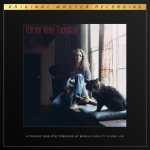
The Washington Post article that Geoff Edgers wrote includes a video of a little shootout we did for Tapestry, using, without my knowledge, the MoFi One-Step, a Hot Stamper pressing, and a current, modern, standard reissue of the album. Could I spot the Hot Stamper without knowing what record was playing?
First up (and of course unbeknownst to me), the MoFi. My impressions from the video:
That’s probably tonally correct for this record. It’s just missing everything that’s good about this record, which is a meaty, rich piano. And the vocal sounds very dry. There’s no Tubey Magic. It’s tonally correct. If you were playing me a CD right now, I wouldn’t be able to tell you weren’t.
Next up, the cheap ($20?), current reissue:
Piano’s better.
Voice is better!
Richer and smoother.
That’s what this is supposed to sound like.
Her voice sounds mostly correct.
This might not be a particularly good record. If I played a real one for you, you might just say, oh, my God, there’s so much more.
But this is not a wrong record. It’s not awful. It’s doing something… I don’t know if I would say most things right. I’ll just say something right.
At least the person understands what she’s supposed to sound like.
Then the Hot Stamper (a Super Hot copy as it turns out):
She sounds pretty right on this copy.
I think there’s more space.
You hear more space, more three-dimensional space.
The piano: there’s more richness to the tone of the various notes that she’s playing.
I would probably pick this one.
Geoff sums it all up as follows:
So we have a winner, and I couldn’t fool the Hot Stamper king.
Without knowing what he was listening to, he chose the hot stamper of Tapestry.
If he still had it, that copy would be sold for about $400 on the Better Records website.
In the video below, Robert discusses how Tubey Magical his system is when playing an All Tube Chain recording from 1955, this without the benefit of any tubes in his system whatsoever. Quite the trick!
Everything was fine until he decided to track down a clean, quiet, good-sounding copy of Julie Is Her Name for a friend. As the saying goes, no good deed goes unpunished, and after buying scores of copies of Julie London’s records off the internet ourselves, we know firsthand how painful it is to have one noisy record after another arrive on our doorstep.
Winner: 2023 Excellence in Audio Digital Storytelling, Use of Audio Storytelling
Apparently readers could not get enough of this old man and his big speakers.
For the story behind the story, and the award it has now won, please click on this link.
The Washington Post talks more about the project:
In “The search for the perfect sound,” arts reporter Geoff Edgers explores the boom in vinyl record sales and the often contentious world of extreme audiophiles through an immersive mix of video, interactive audio and narrative reporting. This multimedia feature revealed the characters behind this growing subculture, from audio elites hunting down rare pressings to populists sharing their hobby with their community.
Edgers had rocked the audiophile world earlier in the year with his reporting on a record company scandal. Through more than two dozen interviews and over a year of reporting; original photography and video; and interactive audio, this project took both newcomers and experts into the debates and technicalities of this growing market — and captured the artistry that make fans so passionate to begin with.
To open the story, Edgers and video journalist CJ Russo joined the controversial audio entrepreneur Tom Port during one of his “shootouts,” sessions in which Port listens to many pressings of the same record to find the best-sounding version.
How could we re-create this scene for readers? Nothing could match the experience of sitting in front of one of these deluxe sound systems.
With the help of contacts in the music world, the team designed the next best thing. Edgers and audio producer Bishop Sand traveled to Brooklyn with a binaural microphone and a stereo microphone to record the same tracks, the Miles Davis Quintet’s “Oleo” and Neil Young’s “Out on the Weekend,” playing once as a digital file and once on vinyl through Jonathan Weiss’s $363,000 Oswalds Mill Audio speakers. Sand matched the loudness of the recordings postproduction.
The team embedded those tracks as audio quizzes in the story, challenging readers to listen and guess which version was the digital file and which was the vinyl track. After meeting the characters who organize their lives around the search for the perfect sound, readers could get a taste of the difference for themselves.
One of our good customers, Robert Brook, writes a blog which he calls A GUIDE FOR THE BUDDING ANALOG AUDIOPHILE.
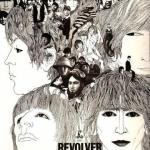
He recently made a youtube video for his shootout for Revolver, which we wrote about here.
Now he has posted some context and talked about his journey in audio which we think you will enjoy reading. Robert and I will be doing a video next week about his shootout, so expect to see that here on The Skeptical Audiophile soon.
One of our good customers, Robert Brook, writes a blog which he calls A GUIDE FOR THE BUDDING ANALOG AUDIOPHILE. You can find it by clicking the link below.
We recently loaned Robert some copies of Revolver so that he could do the first youtube-acceptable Record Shootout video in the history of mankind. He had three copies of his own to play along with the five we loaned him, plenty to work with.
We hope to be able to discuss the experience of doing the shootout and the video with him soon, but for now, let’s just enjoy the first of its kind.
Robert now knows firsthand something few audiophiles have made the effort to learn:
Shootouts are a great deal of work if you take the time to do them right.
If you have just a few pressings on hand and don’t bother to clean them carefully, or follow rigorous testing protocols, that kind of shootout anyone can do. You can find those kinds of shootouts on youtube, but we have never seen fit to take them seriously.
The results of shootouts that are not carried out in the serious way that we do and the way that Robert did cannot be trusted, for reasons that anyone reading this blog should find obvious.
Art Dudley illustrates this approach, but you could pick any reviewer you like — none of them have ever undertaken a shootout worthy of the name to our knowledge.
We ourselves struggled back in the old days. in 2005, our attempted shootout for Blue could not get off the ground. Two years and scores of shootouts later, we had been able to find and clean some amazing sounding copies, which is how we were able to tell how far off the mark this pressing was.
Click on the link below to read the story behind an interview conducted by a well-known reviewer of an engineer who was tasked (by whom I wonder?) with remastering Graceland on Heavy Vinyl.
He apparently had never played an original Sterling-mastered copy of Graceland. Either that, or this engineer thought the original “needed improvement,” the kind supplied by taking a hatchet to the sound of the original tape.
The interviewer apparently does not know how bad the new version sounds, but we had no trouble recognizing its awfulness here at Better Records. As a public service, we soon set about describing what we heard when we put this remastered piece of junk to the test.
Up against a properly-mastered, properly-pressed early pressing, it earned a failing grade.
Is it the worst version of the album ever pressed on vinyl? Hard to imagine it would have much competition.
The reviewer who interviewed the remastering engineer responsible for this and no doubt many other awful sounding records has never been able to tell a good record from a bad one, and he carries on that tradition with Graceland.
Ryan Smith, the hack who cut this album, has done quite a lot of work for Analogue Productions. We can’t say we’ve played many of his recuts, but the ones we have played are hopelessly bad, with the overly smooth sound so much in vogue today.
We played his recut of Scheherazade, and rather than just give it the failing grade it deserved, we explained how any audiophile could go about using its mistaken EQ in order to recognize what is wrong with it, and of course, others like it.
(Contrary to popular opinion, it is no better than Bernie Grundman’s bad sounding version from the 90s, the one he cut for Classic Records.)
One of my good customers read this rave review from this same reviewer for the Texas Hurricane Box Set and made the worst mistake any audiophile can make: he believed it.
“His overdriven Stratocaster sound is one that guitar aficionados never tire of hearing live or on record, especially when it’s well recorded. … Yet again, Chad Kassem sets high the box set reissue bar delivering a “must have” package for SRV fans, every bit the equal of the one Doors fans have come to cherish. …every one of these records betters the originals and by a considerable margin. It is not even close…You’ve never heard these albums sound like this. That is a 100 % guaranty. …this is an impeccably produced box set physically and especially sonically. It’s the best these albums have ever and probably will ever sound.” — Music = 9/11; Sound = 10/11 — Michael Fremer
Sure, he’s out $400, but on the bright side he’s now learned a lesson he is very unlikely to forget.
 Robert Brook has a blog which he calls