test-jazz

Some of our favorite jazz test discs.

Top End Extension Is Key to the Best Pressings of Fingers

airtofinge_

Hot Stamper Pressings of Jazz Fusion Albums Available Now

The best copies have the highs that are missing from so many of the CTI originals. When you play them against most copies, there is an extension to the top end that you won’t hear elsewhere. Since this album is heavy on percussion, that difference is critical.

The HARMONICS of the percussion are critically important to the music. When they go missing, it’s as if the music seems to slow down, a strange effect but a fairly common one with rhythmically dense arrangements such as these. Some of the energy of the music is lost. 

With an extended top end the sound is SWEET, not HARSH. Believe us when we tell you, the last thing you want is a harsh sounding pressing of a Rudy Van Gelder recording. (Not unless you have a dull, dull, deadly dull system. Those old school stereos are practically the only way one can tolerate some of his early recordings.)

With so many high frequency transients and such complex arrangements, this is a record that must be mastered (and pressed) with great skill or the result is going to be trouble. RVG, who both recorded and mastered the album, has a penchant for over-cutting records and being heavy handed when it comes to his favorite studio tricks, often to the detriment of instrumental fidelity. When his approach works, the resulting recordings are wonderful. When he gets too carried away with his “sound,” look out.

This is without a doubt the best album Airto ever made. On top of that, this copy really has the kind of sound we look for, with an open, fully extended top end that gives all the elements of this complex music room to breathe.

(more…)

On Waka/Jawaka Transparency Is Key

Hot Stamper Pressings of the Music of Frank Zappa Available Now

Not long ago we discovered the secret to separating the men from the boys on side one: TRANSPARENCY.

On the lively, punchy, dynamic copies — which are of course the best ones — you can follow the drumming at the beginning of ‘Big Swifty’ note for note: every beat, every kick of the kick drum, every fill, every roll.

It’s all there to be heard and appreciated. If that track on this copy doesn’t make you a huge fan of Aynsley Dunbar, I can’t imagine what would. The guy had a real gift.

Big Swifty!

The 17-plus-minute-long Big Swifty is a suite in which each section slowly, almost imperceptibly blends into the next, so that you find yourself in a completely new and different section without knowing how you got there — that is, until you go back and play the album and listen for just those transistions, which is what makes it worth playing hundreds and hundreds and hundreds of times.

Big Swifty is a jazz suite with amazingly innovative work by Sal Marquez on trumpet. He single-handedly turns this music into a work of brilliance. I can’t imagine a more talented player.

Zappa on guitar is excellent as well. Aynsley Dunbar plays his ass off, only falling short when it comes time to do his drum solo on Waka/Jawaka.

The interplay of each of these rock musicians is in the tradition of the greatest jazz artists stretching all the way back to the 50s.

And since the drumming throughout this record is so crucial to the music itself, a copy that really gets that right is one that probably gets everything right.

(more…)

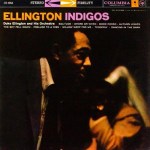
The Amazingly Spacious Sound of Ellington Indigos

Hot Stamper Pressings of the Music of Duke Ellington Available Now

This original 6-Eye Stereo pressing blew us away with its superbly well-recorded romantic big band jazz, of which Ellington was a true master.

A near-perfect demonstration of just how good 1958 All Tube Analog sound can be – no modern record can hold a candle to a pressing as good as this one.

If you like the sound of relaxed, tube-mastered jazz, you can’t do much better than Ellington Indigos. Many of the other Six Eye copies we played suffered from blubbery bass and transient smearing, but the clarity and bass definition here are surprisingly good. The warmth and immediacy of this sound may just blow your mind.

We played a handful of later pressings that didn’t really do it for us. They offer improved clarity, but can’t deliver the tubey goodness that you’ll hear on the best early pressings. We won’t be bothering with them anymore. It’s tubes or nothing on this album, and that means the best 6 Eye Stereo original pressings will always win our shootouts.

The key for vintage super-tubey recordings is balancing clarity with richness. The easiest way to test for those two qualities on this album is to find a track with clear, lively, loud trumpets that also includes rich trombones and other low brass.

On side one that track is Where or When. If your copy has clear, lively trumpets and rich, full-bodied, Tubey Magical low brass, it is definitely doing an awful lot of what it needs to do right.

Some of you may recognize that this is precisely why Bob and Ray Throw a Stereo Spectacular is our all time favorite test disc. (Was might be more accurate. It was for me, but I retired. The younger generation now running the show has their own favorite test discs, as is only fitting. They didn’t spend ten or fifteen years working on the stereo and room with the record the way I did.)

(more…)

In the Market for New Speakers? See How Well They Handle the Energy of Far More Drums

Hot Stamper Pressings of the Music of Dave Brubeck Available Now

The drum solo Joe Morello lets loose on Far More Drums is one of the best on record. I was playing that song recently and it occurred to me that it is practically impossible for a screen or panel speaker of any design to reproduce the sound of those drums properly, regardless of how many subs you have.

Most of the music is not in the deeper bass anyway. It’s the whack of instruments whose energy is in the lower midrange and mid-bass that a screen speaker will struggle with.

A good large-driver dynamic speaker fed by fast electronics can handle the energy in that range with ease.

This is the album you need to take with you next time you head to your local stereo store to audition speakers.

It will help clarify the issues. Screen speakers do many things well, but drums are not one of them, at least in my experience they aren’t. If drums are important to you, do yourself a favor and buy a dynamic speaker, the bigger the better.

brubeck in the studio733

Time Further Out, like most of the classic Brubeck albums, is a big speaker record. It requires a pair of speakers that can move air with authority below 250 cycles and play at fairly loud levels. If you don’t own speakers that can do that, this record will never really sound the way it should.

(more…)

Another Great Conga Tester Title

Hot Stamper Pressings of Recordings by Rudy Van Gelder Available Now

The best pressings of Prelude are especially full-bodied and rich.

The congas are well up in the mix, which allows them to drive the powerful rhythmic energy of the music.

We know this because the copies with congas that were veiled or thin never seemed to have any get up go. 

There is wonderful transparency and openness to the soundstage, as well as less congestion in the loudest parts. Also Sprach (2001) is on side one of the album and it is KILLER on the best pressings.

Both sides can also be surprisingly sweet and Tubey Magical, nice qualities for a CTI record to have since so many of them are aggressive and edgy to the point of distraction.

Full, lively horns; rich, punchy, smear-free congas; fuzzy fuzzed-out guitars; as well as correct tonality and Tubey Magic in every area of the spectrum, what’s not to love?

The best pressings are so much bigger than most copies too. There is no doubt that you will hear the difference immediately. If you do a shootout with your best copy and ours plan on it being over almost before it starts.

(more…)

Oscar Peterson’s Best Recording? Sure Sounds Like It to Us

Hot Stamper Pressings of the Music of Oscar Peterson Available Now

I’ve known this was a well recorded album since I first heard the DCC Gold CD back in the 90s.

It sounded great to me at the time, although I had nothing to compare it to. I was not an Oscar Peterson fan in those days. The CD may be very good, but it is unlikely to hold a candle to any of our Hot Stamper vinyl pressings.

I now realize that this album is clearly one of the best jazz piano recordings ever made. In its own way it’s every bit as good as  another landmark recording we talk about, The Three, recorded in 1975.

This album checks off a number of important boxes for us here at Better Records:

The description for the amazing copy we found in our shootout more than a decade ago has been reproduced below.

The Right Sound from the Get Go

Side one starts out with a solid, full-bodied piano and snare drum, a sure sign of great sound to come. This side was richer and fuller than all the other copies we played. That rich tonality is key to getting the music to work. It keeps all the instrumental elements in balance. The natural top on this side is just more evidence that the mastering and pressing are top drawer. Great space and immediacy, powerful driving energy — this side could not be beat.

And side two was every bit as good! The sound was jumpin’ out of the speakers. There was not a trace of smear on the piano, which is unusual in our experience, although no one ever seems to talk about smeary pianos in the audiophile world (except for us of course).

Ray Brown’s bass is huge, probably bigger than it would be in real life, but I can live with that. Once again, with this kind of extended top end, the space of the studio and harmonics of the instruments are reproduced brilliantly.

Testing with Oscar

Lately we have been writing quite a bit about how good pianos are for testing your system, room, tweaks, electricity and all the rest, not to mention turntable setup and adjustment.

  • We like our pianos to sound natural (however one chooses to define the term)
  • We like them to be solidly weighted
  • We like them to be free of smear, a quality that for some reason is rarely mentioned in the audiophile reviews we read [more on smear at the end of this commentary]

Here are some of our favorite jazz records with top quality piano sound

Other records that we have found to be good for testing and improving your playback can be found here.

(more…)

Prelude Is a Phenomenally Good Van Gelder Recording from 1973

Hot Stamper Pressings of Recordings by Rudy Van Gelder

On Deodato’s magnificent Prelude, listen to the trumpet on the second track on side one — it’s so immediate, it’s practically JUMPING out of the soundfield, just bursting with energy. Rudy can really pull off these big productions on occasion, and this session was clearly one of them.

If you have the kind of stereo that’s right for this music (the bigger the better) you could easily find yourself using this record as a demonstration disc. It’s very unlikely that many of your audiophile friends have ever heard anything like it.

The congas are present in the mix and very full-bodied — this allows them to really drive the rhythmic energy of the music. We know this because the copies with congas that were veiled or thin never seemed to want to get up and go. 

The top is most often the problem with these CTI pressings. The best sides seem to give you all the top end that was on the tape.

There is wonderful transparency and openness to the soundstage, as well as less congestion in the loudest parts. Also Sprach (2001) is on side one of the album and it is KILLER on the best pressings.

The best sides are also surprisingly sweet and Tubey Magical, nice qualities for a CTI record to have since so many of them are aggressive and edgy.

Full, lively horns; rich, punchy, smear-free congas; fuzzy fuzzed-out guitars; as well as correct tonality and Tubey Magic in every area of the spectrum, what’s not to love?

The best are so much bigger than most copies too. There is no doubt that you will hear the difference immediately. If you do a shootout with your best copy and ours plan on it being over practically before it starts.

(more…)

What to Listen For on Birds of Fire

Hot Stamper Pressings of Jazz-Rock Fusion Albums Available Now

Birds of Fire as a recording is not about depth or soundstage or ambience.

It’s about immediacy, plain and simple.

All the lead instruments positively jump out of the speakers — if you are lucky enough to be playing the right pressing.

This is precisely what we want our best Hot Stampers to do. In most cases, the better they do it, the higher their grade will be.

The main problem with this record is a lack of midrange presence. If the keyboards, drums and guitars are not front and center, your copy does not have the presence it should. On the best copies the musicians are right in the room with you. We know this for a fact because we heard the copies that could present them that way, and we heard it more than once.

Which of course gets to the reason shootouts are the only real way to learn about records.

The best copies will show you qualities in the sound you had no way of knowing were there. Without the freakishly good pressings you run into by chance in a shootout you have no way to know how high is up. On this record up is very high indeed.

A True Demo Disc

Birds of Fire is one of the top two or three Jazz/Rock Fusion Albums of All Time. In my experience, few recordings within this genre can begin to compete with the Dynamics and Energy of the best pressings of the album — if you have the Big Dynamic system for it.

(more…)

Finding the Rare Pressing of Heavy Weather with An Extended Top End

Hot Stamper Pressings of Jazz Rock Fusion Albums Available Now

It has been our experience that the copies with high frequency extension and the clarity, space and percussive energy that results from it are consistently the best sounding. You may have read elsewhere on the site that what separates many of the best Columbia LPs from their competition is an open, extended top end.

For some reason, Columbia, more than most labels, had a habit of making slightly dull records. Dull does not work for this album. 

When the highs on the record are right, it all comes together. Unfortunately, most copies don’t have those highs. There’s more to it than that of course: some copies lack bass, some are a bit grainy and gritty sounding — the normal problems associated with vinyl records are all here to one degree or another.

But when you have good highs you are about 80 to 85% of the way toward a Hot Stamper. Complete the picture with bass, dynamics, etc. (and a big speaker system) and there’s a good chance the sound will blow your mind.


Heavy Weather is a classic case of yet another in the long list of recordings that really comes alive when you turn up your volume.

This is music that doesn’t make any sense unless you play it LOUD. This is a BIG SPEAKER recording. I know this because I was playing it too quietly, which is to say at normal listening volumes, and it just wasn’t thrilling me. As soon as I turned it up, it really started to work, both as a piece of music and as a recording. So much gets lost in a mix as dense as this one at moderate levels. Everything comes out into the open when you give it the volume it needs. Trust me on this one; without a big dynamic speaker this music is never going to do what it wants to do — which is to ROCK YOUR WORLD. (more…)

On Sweetnighter, Watch Out for Sourness, Slowness and Smear

Hot Stamper Pressings of the Music of Weather Report

What surprised us most about the dozen or so copies that we played years ago for a shootout was how wrong most copies of this album sound. They’re SOUR in the midrange. On this kind of music, a sour midrange is the kiss of death.

Those copies that aren’t sour are frequently just plain dull. On a recording like this, so full of percussion — which, to be honest, it’s a record that LIVES OR DIES on the quality of its percussion — dullness is devastating.

And so is slowness. If you have old school tube equipment — great for vintage RVG recordings but way too slow to keep up with this fast-paced and percussion-heavy music — this record is not going to do what it desperately wants to do: get your feet tappin’.

Smear is also another thing to watch out for — smear kills what’s good about this record. The percussion transients lose their snap and the harmonics get lost. The less smeary sides really bring out the funky magic of the recording.

(more…)