nfg/no

For a record to end up on this list, our review notes must say NFG or NO on at least one side.

Sometimes one side of the record will be passable, but the other side will be so awful it earns the “no f-ing good” grade.

Those of you who own these records may want to compare the two sides and listen for the differences we ascribe to them.

Obscured By Cloudy Japanese Vinyl

Hot Stamper Pressings of the Music of Pink Floyd Available Now

When I was just getting up to speed in audio and exploring the world of music available on vinyl in the 70s, many of the stereo stores I frequented carried Japanese pressings. They were widely believed to have superior sound relative to their domestic counterparts — in this case, the mass-produced pressings I would see at the Tower Records right across from the Sports Arena in my hometown of San Diego. I went there at least once a week, probably more like two or three times.

Tower was far and away the best place to go record shopping in those days. The store was huge and they had dramatically more stock than Licorice Pizza or The Wherehouse.

They also had a separate section for Half-Speed mastered pressings from a number of labels, which of course was the first place in the store I would visit, digging through the bins to see what new remastered titles may have been produced for audiophiles searching for the ultimate in sound quality.

Of course, I identified as just such a person. In terms of sound quality, and with the extremely limited knowledge I had acquired at the time, I believed I set a high standard for the sound of the records I bought. I was willing — eager even, you could even say excited — to pay whatever premium price I had to for a record that was sure to deliver superior sound quality. To me, in the late 70s, that meant two things: direct to disc recordings, and Half-Speed mastered pressings.

(There was a another category of records that did not fall into the above two, best exemplified by American Grammaphone and the Fresh Aire series, but the less said about those schlocky releases the better, other than to point out that some of their titles are TAS list carryovers from HP’s time running the Super Disc list, specifically Fresh Aire 2 and 3, both best avoided.)

And, like any other open-minded individual, when it came to Japanese vinyl I was willing to give a few a spin.

However, the more of them I bought, the more clear it became to me that even the best of them sounded mediocre (veiled, smeary and dubby from second generation tapes) and more often than not they were just plain awful. (Second generation tape issues being the main problem, of course, with the additional insult of poor tonality, the result of being mastered using wacky equalization, typically with added brightness where none was needed.)

Pink Floyd

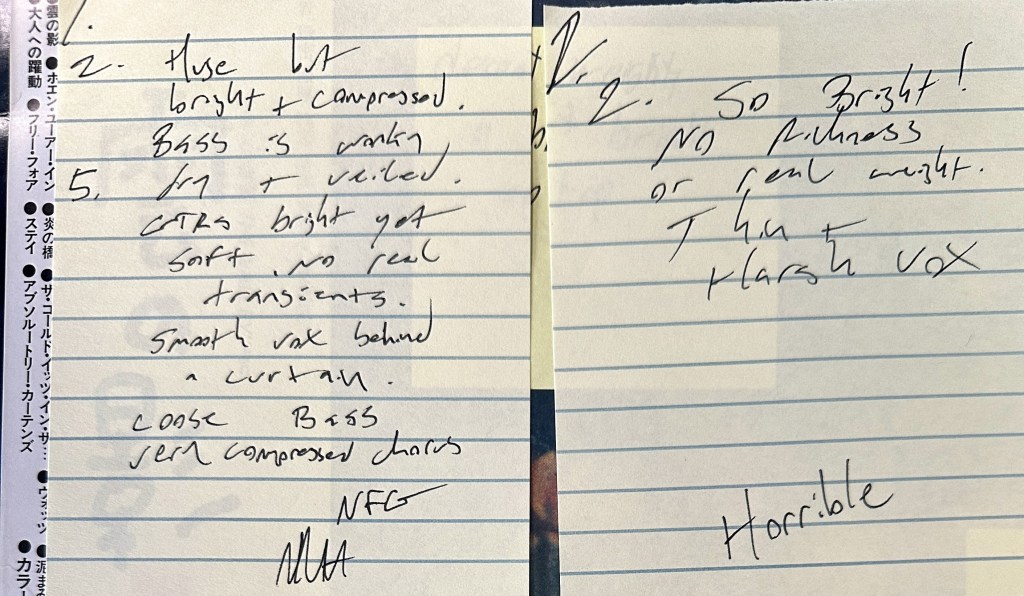
The notes for the Pink Floyd album you see below, Obscured by Clouds, were written sometime in March of 2025 as part of the shootout we conducted for the album.

If we assume it would be an audiophile who would be attracted to this pressing, perhaps for its quieter playing surfaces, perhaps operating under the assumption that the Japanese engineers mastering the record would be more likely to do a better job as well, then what we have here is a textbook case of an audiophile bullshit pressing.

One that sounds nothing like the album is supposed to, based on having played a number of exceptionally good sounding copies, all British and all on the Green Harvest label, mastered from good tapes, sometimes by the legendary Harry T. Moss. We feel we are more than qualified to make these judgments. If we can’t make them, nobody can.
Discogs allows us to glean some information regarding the desirability of this Japanese reissue with the record buying public currently in the market for Pink Floyd vinyl who register on their site.
(more…)

Stan Ricker’s Fingers Are All Over these Paintings

Hot Stamper Pressings of Jazz Guitar Recordings Available Now

We have been planning on doing a shootout for this Earl Klugh’s 1977 Blue Note release, Finger Paintings, for more than a year, and over that time we were fortunate enough to pick up a MoFi pressing of the album locally for the very reasonable price of ten bucks. (The price tag on the jacket is visible at the bottom of this post.)

The notes for our 2025 Shootout Winner included phrases such as “huge, weighty and punchy, ” along with “natural, rich and sweet.” Most copies may not have those qualities, but the best ones sure do.

Contrast that with the Mobile Fidelity pressing that Stan Ricker mastered in 1980. It was one of their biggest early sellers, and one that they no doubt felt had such good sound that it would be sure to sell at triple the price of the regular Mobile Fidelity pressing!

WTF you say? Yes, it would be released in 1981 in a box (not a box set!) as a Numbered, Limited Edition, Ultra High Quality Record (UHQR) at the retail price of $50. $178 in 2026 dollars, if you can believe that records used to cost that kind of dough (cough).

OK, that’s all well and good, but this is supposed to be a blog for audiophiles, so forget all that history stuff and just tell us what the record sounds like.

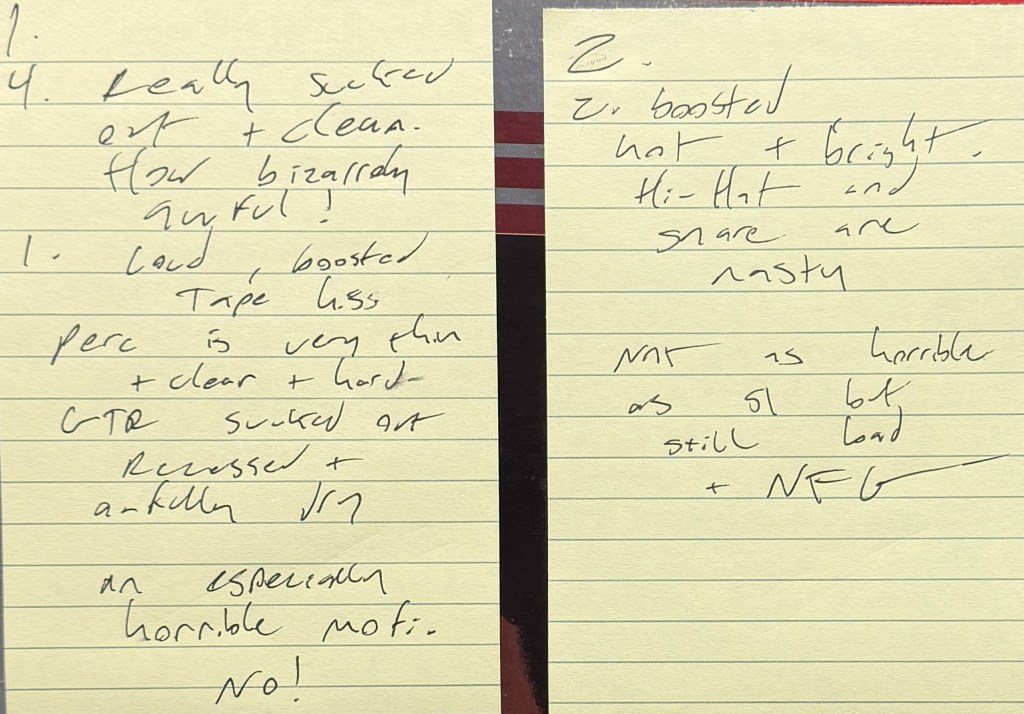
Fair enough. After having played a big batch of standard issue pressings and getting to know the sound of the record well, feast your eyes on the notes we took.

This MoFi may actually set a new standard for screwing up a perfectly good sounding record. (I was going to say tape but I have never heard the tape and have no idea what it sounds like. John Golden (JG) at Kendun cut the originals. Maybe he was able to somehow make a silk purse out of a sow’s ear. The possibility exists.)

Side One

Track Four

  • Really sucked out and clean
  • How bizarrely awful!

(more…)

Turning Master Tapes into Mud Pies – The Magic of the Electric Recording Company

Hot Stamper Pressings of Psychedelic Rock Recordings Available Now

UPDATE 2026

This commentary originally came out in 2023 I believe. The comments section at the end is a bit of a hoot. Man, there sure are some real wackos in the world of audio.


““It’s magical what they’re doing, recreating these old records,” Fremer said as he swapped out more Electric Recording discs.”

Swapped them out? Anyone with an ounce of respect for Love’s music would have tossed them into the nearest trash bin.

We did a shootout for Love’s Forever Changes earlier this year, and it was our good luck to get hold of a copy of the Electric Recording Company’s pressing of the album in order to see how it would fare against our Gold Label Stereo original LPs.

As you can see from the notes, to say that we could hardly believe what we were hearing clearly understates the depth of our befuddlement.

We simply have no context for a record that sounds as bad as this record sounds. We’ve never heard anything like it, and we’ve played a lot of records in the 37 years we’ve been in business. After critically auditioning thousands upon thousands of pressings in our shootouts, all day every day for the last twenty years, we’ve worn out scores of cartridges and even our Triplanar tonearm.

But this is new ground for us. A quick recap:

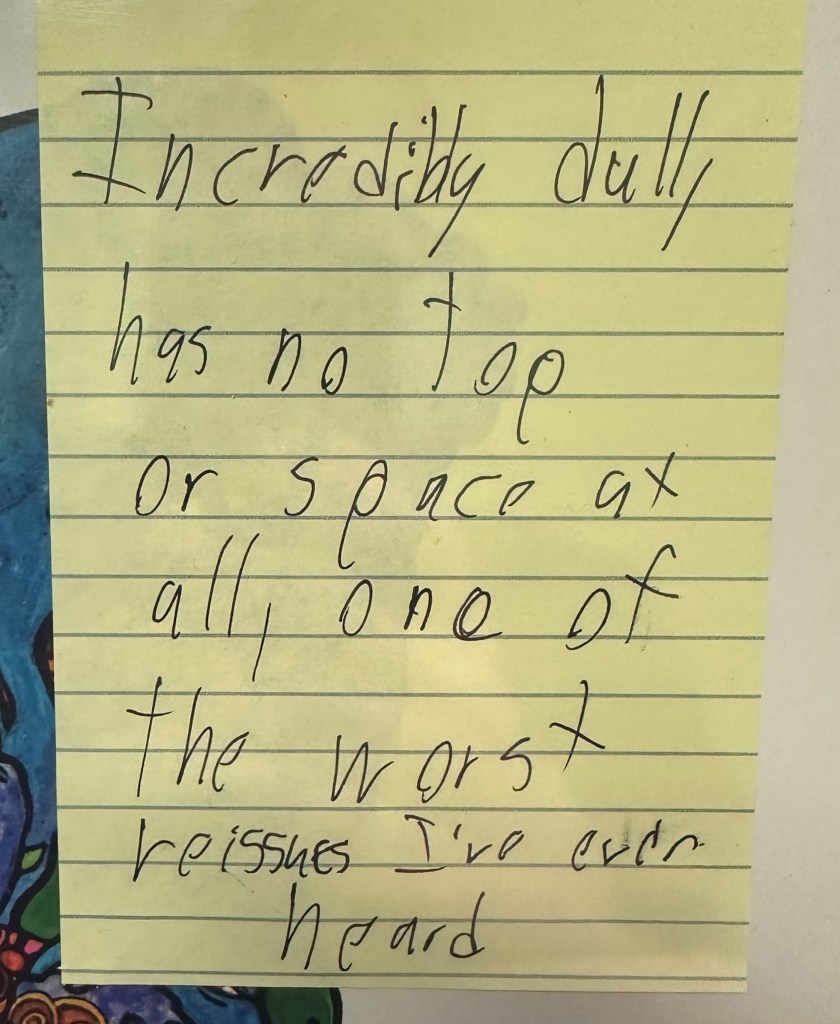
  • Incredibly dull,
  • Has no top or space at all,
  • One of the worst reissues I’ve ever heard.

You get the picture. What more needs be said? Last year I wrote the following:

Pete Hutchison of The Electric Recording Company makes some of the worst sounding records I have ever played in my life.

If you play me one of his awful records, and don’t tell me who made it, I can judge the record on its merits, the way we judge all records. We test records blindly for precisely this reason. We let the record tell us how well it was made, what it does right and wrong relative to other pressings of the same album, comparing apples to apples.

His records tell me he loves the sound of the murkiest, muddiest vintage tube equipment ever made, and wants every record he produces to have that sound.

In my book that is an egregious case of My-Fi, not Hi-Fi. We wrote about it here.

It’s astonishing to me that anyone takes this guy seriously.

In the Washington Post video, we did a little comparison on camera for two pressings of Quiet Kenny, a record I will have more to say about in Part Two of this commentary. Here is Geoff Edgers’ description in the article of how it all went down.

(more…)

Stick with Porky on East Side Story

More Hot Stamper Pressings We Only Offer on Import Vinyl Available Now

Porky cut the original British pressings of this Squeeze album, one of countless personal favorites of yours truly. They are records (and cassettes and CDs) I have played hundreds of times and still listen to regularly to this very day, in this case more than forty years after I purchased my first copy. (Good albums age well.)

I would have picked the record out of the bin at my local Tower Records, probably based on the radio play Tempted was getting.

That copy undoubtedly would have been domestic and made from a sub-generation tape, although I’m quite sure I could not have recognized what constituted dubby sound back then. In 1981, what I understood about the importance of different record pressings would have fit comfortably in a thimble.

I had my MoFi’s, and although I hate to admit it, that’s about as far as I had gotten in my quest for superior sounding pressings. You could add Nautilus and a few other Half-Speeds to the list of what pressing I thought were impressive, leaving plenty of room in that thimble unfilled.

Thankfully those bad old days are gone, and the music can now, finally, live and breath on the best of these imports from the UK. Of course they are the only ones we buy these days for our shootouts. The others are what are known around these parts as “mistakes.”

Sometimes the imported pressings are mastered by Porky and sometimes they are not. The ones that are not tend to have a lot of problems, as you can see from our stamper sheet below.

When Porky is not on side one, that side will tend to be hard, lean and bright. Side two of that copy had decent sound, earning a minimal Hot Stamper grade of 1.5+.

(more…)

Son of Schmilsson at 45 RPM – How Can It Possibly Sound This Bad?

Hot Stamper Pressings of the Music of Harry Nilsson Available Now

Alternately titled: Forty Five, Schmorty Five.

Recently someone loaned us a copy of the Mobile Fidelity pressing of this album, the one they put out in 2021 on two discs cut at 45 RPM, remastered by that notorious hack, Krieg Wunderlich.

Our last shootout took place all the way back in 2021. Although I listen to this title regularly,  unfortunately it does not sell all that well, so we haven’t been making the effort we should to find copies in order to offer the best of them to our customers.

Why the album is not more popular is a question we ask about a number of titles on our site. We love the music and we love the sound, as can be seen from what we (with the help of Allmusic) had to say about a very good sounding pressing back then:

  • This is one of Nilsson’s best albums, sonically and musically. (With Ken Scott at the board at Trident Studios the sound just has to be good, doesn’t it?)
  • Son of Schmilsson has more than half a dozen of the best songs Nilsson ever wrote, and should make it a Must Own for every right thinking audiophile with sophisticated tastes in popular music (we hope this means you)
  • 4 1/2 stars: “… this is all married to a fantastic set of songs that illustrate what a skilled, versatile songsmith Nilsson was. No, it may not be the easiest album to warm to — and it’s just about the weirdest record to reach number 12 and go gold — but if you appreciate Nilsson’s musicality and weirdo humor, he never got any better.”

So true!

The MoFi, however, is a joke next to a properly-mastered and properly-pressed RCA vintage release. Our notes for it read:

  • Big but flat
  • Voice is recessed and lacks richness
  • Rock songs, track one in particular work OK but
  • Ballads lose all the magic

(more…)

Hey, Maybe Rudy Van Gelder IS as Bad a Mastering Engineer as They Say

Hot Stamper Pressings of Recordings by Rudy Van Gelder Available Now

It’s certainly a proposition worth considering, mostly because so many audiophiles seem to believe it. Or maybe in spite of their believing it, skeptics such as myself being the troublemakers they always are.

So let’s dig down into the dirt of a record that Rudy both recorded and mastered.

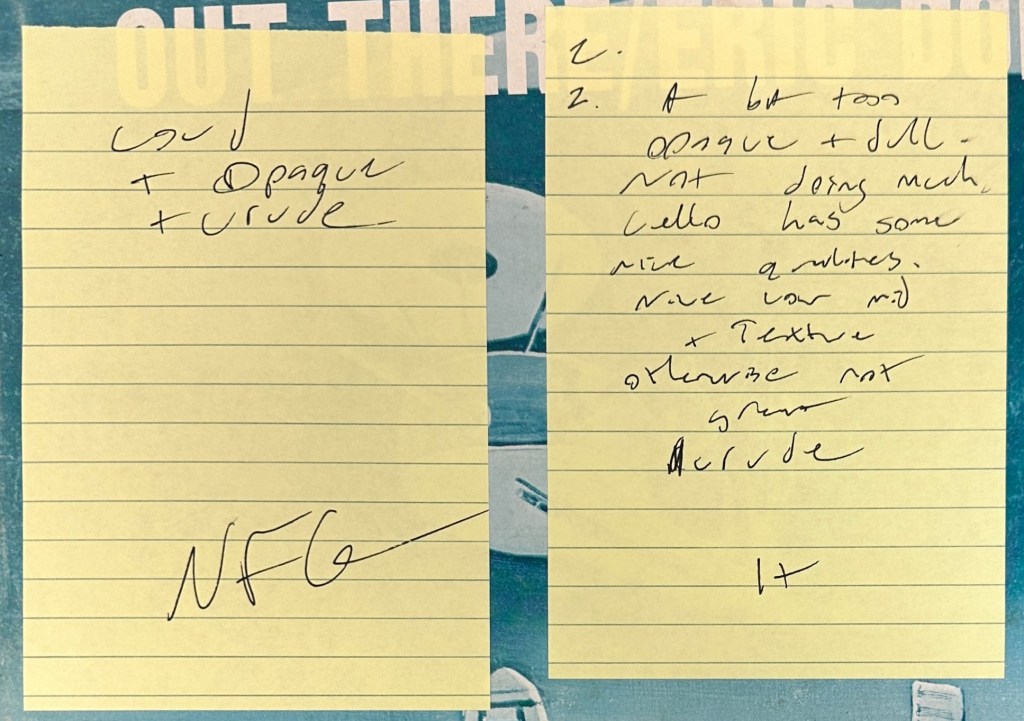
None of the Rudy Van Gelder cuttings we played of Eric Dolphy’s 1961 release of Out There were better than passable, and some had sides that were downright awful sounding, as you can plainly see from our notes.

The copies that won our most recent shootout were mastered by George Horn, and the best of them sound amazing. Here are some comments we made for the album years back as well as the Allmusic review:

Insanely good sound throughout with both sides earning Shootout Winning Triple Plus (A+++) grades. This copy was doing it all right: rich, full-bodied and Tubey Magical yet still super open and spacious.

“A somber and unusual album by the standards of any style of music, Out There explores Dolphy’s vision in approaching the concept of tonality in a way few others — before, concurrent, or after — have ever envisioned.” – 5 stars

As you will see from our notes, we played some very disappointing early pressings. All the early pressings we had on hand were expensive to acquire, the vintage jazz pressing market being what it is: expensive and full of optimistic record graders of questionable skill. (For these kinds of vintage pressings we probably return 70-80% of what comes our way.)

We have to pay top dollar to get copies that are clean, even on the 60s and 70s reissue labels. Noisy old jazz records are simply not saleable to audiophiles no matter how good they sound.

None of the early copies we played earned grades good enough to bother pursuing, not when there are wonderful sounding vintage reissues from the 80s available. On a more positive note, this being our first shootout for the album in many years, we certainly learned a lot, so let’s just chalk up the losses to the cost of doing business. Our newfound knowledge of the best pressings will continue to pay dividends for years to come now that we know what the right stampers tend to be.

The original recording of Out There was released in 1961 and was not available in stereo until 1969. (Prestige was famous for being an anti-stereo holdout long after everyone else in the jazz world had come to terms with the superiority of two channels over one. Apparently the age-old controversy over mono versus stereo is ongoing, which is why we write about it so often.)

The first record you see pictured below is the mono reissue from 1965, released with a different cover and pressed on the lovely dark blue Prestige label. It, like the stereo reissue below it, was mastered by RVG.

A word to the audiophile types who like to do their own hunting: we rarely buy vintage jazz reissue records from the 60s and 70s that were not mastered by RVG. Their track record is poor, with maybe one winner out of ten, if that.

Back to this mono reissue from 1965. It’s a mess on side one, NFG, with side two being passable at best, earning one plus.

The second record you see, the one with a different cover, is the stereo reissue from 1969, also on the dark blue label and mastered by RVG.

It too is a mess, with side one being good, not great, but side two earning a less-than-Hot Stamper grade of 1+.

Side One

  • Loud and opaque and crude
  • NFG

Side Two

  • A bit too opaque and dull
  • Not doing much
  • Cello (played by Ron Carter no less!) has some qualities
  • Nice lower mids and texture
  • Otherwise not great
  • Crude
  • 1+

(more…)

Does Year of the Cat on Mobile Fidelity Have Audiophile Sound?

Hot Stamper Pressings of the Music of Al Stewart Available Now
Our answer, judging by the copy we played not long ago, would be solidly in the negative. The final grade we awarded both sides was No, our way of saying the record is Not Good.

Below is a description for what a top copy of the album sounds like, based on our most recent shootout:

Incredible sound throughout this vintage Janus pressing of Stewart’s 1976 Masterpiece. With engineering by Alan Parsons, the top pressings are every bit the audiophile Demo Discs you remember. The best sides have sweet vocals, huge amounts of space, breathtaking transparency, and so much more.

Tubey Magical acoustic guitar reproduction is superb on the better copies of this recording. Simply phenomenal amounts of Tubey Magic can be heard on every strum, along with richness, body and harmonic coherency that have all but disappeared from modern recordings (and especially from modern remasterings).

But if you own the wrong Mobile Fidelity pressing — this one was reissued in 1981, the original came out in 1978, so there may be some other pressings that sound better than this one — you would never know how good sounding the album can be. We put a copy we had laying around in a shootout recently and the results were, not to put too fine a point on it, pretty painful.

As the notes make clear, the Mobile Fidelity pressing, with the stampers you see on the sheet above, is:

(more…)

Nilsson’s Aerial Pandemonium Ballet Sounds Absolutely Awful

Hot Stamper Pressings of the Music of Harry Nilsson Available Now
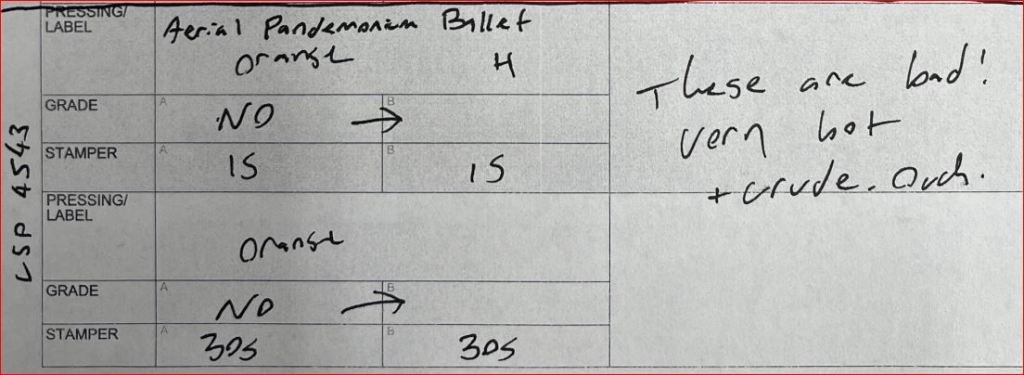
Tracks from the first two Nilsson albums were turned into this monstrosity in 1971. Some were remixed, some parts rerecorded, but whatever they did, they really screwed up the sound of the finished LP.

I cannot even say that the remixing and rerecording and editing are not an improvement on the songs found on the first album — they may be, it’s not a record I know well. What I do know is that this compilation is so bad sounding it doesn’t matter what they did or how well they did it. The record is simply unplayable.

We’ve never done a shootout for the first album, but the second album we know can have wonderful sound on the right pressings. We described a recent Hot Stamper of the second album this way:

Both of these sides are big, clear and full-bodied throughout – if you are a Nilsson fan, this copy is guaranteed to beat anything you’ve heard before, and by a wide margin.

All of the elements are working here – you get silky vocals, punchy bass, breathy brass, silky highs, superb immediacy, remarkable clarity, and the list goes on.

AMG writes:

4 1/2 stars: “As ‘Good Old Desk’ opens Aerial Ballet with a cheerful saunter, it’s clear that Harry Nilsson decided to pick up where he left off with his debut, offering another round of effervescent, devilishly clever pop, equal parts lite psychedelia, pretty ballads, and music hall cabaret.”

All true! Nilsson is one of my favorite artists to this day, 56 years after I first heard the album “Harry,” which is still a personal favorite and one I listen to regularly, along with many others, including a compilation I think is excellent, Personal Best — The Harry Nilsson Anthology.

However, this compilation is shockingly bad — It’s cut loud, and it’s very hot and crude. Ouch is right.

(more…)

Porgy and Bess Gets the Speakers Corner Treatment, from Sterling No Less

Hot Stamper Pressings of Pop and Jazz Vocals Available Now

Here is how we described a recent Shootout Winning copy of Porgy and Bess.

Spacious, full-bodied and Tubey Magical, with Ella and Louis front and center, this is the sound you want to hear on their brilliant collaboration from 1958.

Two vocal giants came together to perform Gershwin’s timeless opera, revered by both music lovers and audiophiles to this day. If you’ve never heard exceptionally well recorded male and female vocals from the 50s, this is a great opportunity to have your mind blown.

Speakers Corner contracted Ryan Smith at Sterling to remaster their Heavy Vinyl pressing in 2013, which might sound like a wise move — Sterling has a good reputation around these parts, even if RKS does not — but the results were disastrous.

Or maybe it wasn’t such a good idea after all. Our notes tell the story of the sound, and it’s not pretty. Painful is actually the word that comes to mind.

Pity our poor listening panel that had to sit through a record that sounds as bad as this one does.

(This is a four sided set but we could not see the point in playing all of them when the first two sucked so badly.)

(Technically they don’t “have to” play these Heavy Vinyl pressings. We don’t force our talented staff to waste their time on modern records. They do it because they choose to, in order to have a better idea of what the competition is up to. Turns out the competition is up to no good.)

Our two sentence review should tell you everything you need to know. Let us hope it saves you from throwing your money away the way we did.

  • Loud, dry and pinched.
  • Hot vocals, no space, very sour and lacking bass.

When the voice is wrong, the sound is wrong. What more do you need to know?

And when the voice is wrong on a legendary recording such as this, you have a worthless piece of vinyl no matter how much you may have paid for it. (Current price on Discogs: about a hundred bucks.)

(more…)

Could This Be More of the Sound Audiophiles Complain About with RVG’s Mastering?

Hot Stamper Pressings of the Music of John Coltrane Available Now

Some of the Rudy Van Gelder cuttings of this album were decent, but had you bought a copy with these stampers, you could be forgiven for using the man’s name in vain.

VAN GELDER in the dead wax is no guarantee of high quality sound, on any record. Records don’t work like that.

The 1+ grade found on side one of both discs means the sound for those two sides may be passable, but the NFG sound on side two of record one means you have at best only half an album with decent sound, and what good is that?

As you can see from our notes, the sound is way too hot and messy and thin.

Note that side two of the second record wasn’t played at all. Why waste more time on a record that clearly did not come off the press properly, whether from bad mastering or bad vinyl? Or bad something else, who can say?

We do not sell records with 1+ grades. You should have no trouble finding those on your own. The world is full of them.

Poor Rudy

Rudy Van Gelder comes in for a lot of criticism from the audiophile community, especially from audiophiles who tend to prefer the remastered Heavy Vinyl pressings made from his recordings.

Unsurprisingly, much of the criticism comes from some of the very same engineers responsible for the remastering those records.

Those who produce reissues of his recordings are notable critics as well.

(more…)