2-2023

Are You a Soundphile? I Used to Be One

More of the music of Joseph Haydn (1732-1809)

About 30 years ago I got hold of a Japanese pressing of Marriner conducting The Toy Symphony and was blown away by the quality of the sound. When listing the record for sale, I raved:

“DEMO QUALITY SOUND! This is the best sounding Toy Symphony you will ever hear!”

Now we know definitely that this is clearly not true.

We did the shootout in 2022 and found out that the best of the original EMI pressings are quite a bit better, a classic case of live and learn.

I believe I had at least one or two UK EMI pressings to play against the Japanese ones, but all the details of how I came to this conclusion — a proto-shootout, carried out long before I knew how to do a real one — are lost to the mists of time.

My stereo was dramatically less revealing back then, I had not learned how to clean records properly, and those two facts, combined with the underdeveloped listening skills that go with them, helped me to arrive at the wrong conclusion.

No, the Japanese pressing, specifically targeted to audiophiles, or “soundphiles” if you like, is not superior to a properly mastered and pressed UK LP.

If you have more than a handful of Japanese pressings in your collection, you can be sure that there is still plenty of room for improvement in your audio system.

(more…)

Why Would Anyone Want to Take All the Fun Out of CCR’s Music? Part Two

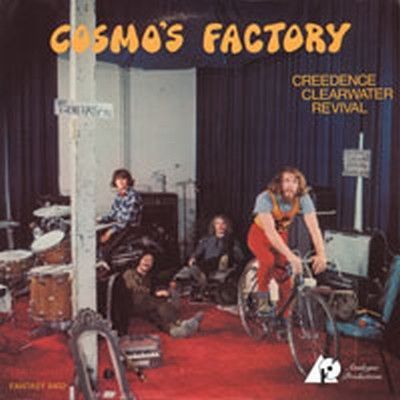
More of the Music of Creedence Clearwater Revival

This commentary is at least ten years old. Still holds up though!

The last time I played one of Chad’s CCR pressings, which I confess was close to a decade ago, it had all the bad qualities of the Bonnie Raitt disc on DCC, a sound that I’ve grown to dislike more with each passing year.

But what the new AP version really gets wrong is the guitar sound.

Creedence’s music lives or dies by its grungy guitars, and the AP pressing is as wrong as they come.


Latest Findings as of 2022

This commentary used to end this way:

The fat, smeary, overly-smooth guitars you hear on the record, lacking any semblance of the grungy energy that are the true hallmarks of this band’s recordings, probably means that some audiophile mastering engineer got hold of the tapes and tried to “fix” what he didn’t like about the sound.

You know, the sound that is all over the radio to this very day. Something was apparently wrong with it. So now that it’s been fixed, everything that’s good about CCR’s recordings is missing, and everything that has replaced those sonic elements has made the sound worse.

Nice job! Keep up the good work. Chad is proud of ya, no doubt about it.

It has now become clear that the various mastering engineers Chad hires are not the ones trying to fix what they don’t like about the sound. Chad is El Jefe, the one telling them what to fix and rejecting their work until these remastered albums sound the way he wants them to sound.

There is no use complaining about the awful work Doug Sax, Steve Hoffman, Kevin Gray, George Marino or anyone else did when hired to master for Analogue Productions. Their task was to please Chad. He is the customer, he is the one paying their fees, and he is the one getting the sound he wants.

He apparently thinks he is saving the world from bad sound, but we sure don’t see it that way. Just the opposite in fact.

If Chad wanted better sounding records — records that are more lively, more tonally accurate, less bloated down low and less smoothed-over up top — veteran engineers such as the gentlemen named above would surely have been able to master these titles more correctly than the evidence provided by the records would lead you to believe.

But Chad, like many other audiophiles, is a My-Fi guy, not a Hi-Fi guy, and he likes the sound he likes, regardless of what is on the master tapes or what other pressings — mastered by a number of different engineers, often over the course of many decades — might sound like.

He wants the sound he wants, and their job is to give it to him.

Bernie Grundman, the man in charge of remastering Aja, is finding out that his way is not going to work for Chad. If it takes seven test pressings before Aja has the sound Chad likes, then he will just have to keep working it until Chad hears “his Aja” sounding the way it should.

When it finally comes out, I have no doubt that it will be very different from any pressing of Aja you or I have ever heard. It won’t sound much like the early pressings that Bernie Grundman mastered for ABC in 1977, which are of course the ones we sell. Unless I miss my guess, it will be very different from the master tape. (Something I freely admit I have no way of ever knowing.)

It will sound the way Chad likes music to sound. He paid a small fortune for the privilege of making Steely Dan sound the way he wants them to sound. Now that the die is cast, those of us with good stereos and basic critical listening skills can go pound sand. The mid-fi guys are being pandered to — in the audiophile world, that’s where the Heavy Vinyl money is — and expecting anything else from this atrocious label means you haven’t been listening very carefully to the records they’ve been releasing for more than 30 years.

Will I Like the New Steely Dan Remasters?

If you think this pressing of Tea for the Tillerman sounds good, it’s a near certainty you will want to be the first on your block to collect all the newly remastered Steely Dan Heavy Vinyls.

The same goes for this pressing of Stand Up. If this is the sound you are looking for, you can be sure Chad will give it to you, good and hard (apologies to H.L. Mencken).

Do these records sound fine to you? You’re happy with them, are you?

Then you have much to look forward to with the release of the complete Steely Dan LP collection!

These Analogue Productions releases will no doubt share many of the sonic characteristics of the above-mentioned titles.

How could they not? They are guaranteed to sound the way Chad wants them to sound. Chad is the customer, and the customer is always right.

If you’re Bernie Grundman, it might take you six or seven runs at it until you find that indescribable and elusive “Chad” sound, but you will have to keep at it until you do, assuming you want to get paid.

Our review for the first of the series that we’ve had the chance to play is in, and here it is.

Could it have been worse? Absolutely. Is it really very good? No, it’s not.

Considering his dismal track record, it’s probably as good sounding a record as Chad is able to make.

To paraphrase Cormac McCarthy:

It’s a mess of a record, ain’t it, Tom?

If it ain’t, it’ll do till a mess gets here.

(more…)

Letter of the Week – “I have to tell you that I was floored at the sound of the hot stamper Aqualung I just bought.”

This week’s testimonial letter comes from our good customer Roger, who was blown away by the Hot Stamper pressing of Aqualung we sent him [many, many years ago].

Roger, as expected, did a thorough shootout of his own, comparing of our Hot Stamper against the audiophile usual suspects. The result? Another knockout for our Hot Stamper pressing.

Note that a well known audiophile reviewer did his own shootout for the album years ago, failing miserably, very unlike our good customer Roger, who succeeded admirably.

Hi Tom,

I have to tell you that I was floored at the sound of the hot stamper Jethro Tull Aqualung I just bought. Darn you again and your hot stampers.

To give you some idea of how many times I have heard this album, backtrack to 1971 when it came out. On a Boy Scout trip a friend of mine had a portable 8-track tape player and this one tape, Aqualung. I remember sleeping on one of the seats in a car with the Aqualung tape on infinite repeat all night. In high school I had the 8-track and listened to this record hundreds of times.

Through the years after becoming an audiophile I bought many different copies looking for the ultimate-sounding LP, finally settling on the MFSL version, which I bought when it came out.

So I had a good time comparing 4 copies:

    1. the MFSL half-speed,
    2. the DCC version,
    3. the 25th anniversary digitally remastered copy,
    4. and the Hot Stamper.

First I tried the 25th anniversary and it was just as I remembered it — it sounds digital, like a CD. Lots of detail, but hard, hyped, edgy, flat soundstage, compressed dynamics. As digital usually sounds, guitars were harsh and jumped unnaturally out of the mix.

The DCC version was surprisingly bland and undynamic as compared to the 25th, but smoother. Neither copy had any bandwidth, no bass at all and no highs whatsoever. Maybe they remastered the LP from an 8-track tape, LOL.

When I heard the MFSL version, it came back to me why I liked this reissue so much; there was lots of bass and highs, but as on most MFSL recordings, they sounded equalized like the MFSL engineers simply took a graphic equalizer and pushed up the 20-40Hz and 5-10kHz controls. I know this sound as I once had a graphic equalizer and used to do this. There was no midbass, just the lowest bass, and it just overwhelmed the rest of the sonic spectrum, which was thin and compressed. And drumsticks on cymbals and the high hat on the title song were pushed way forward in the mix and too prominent. [We call this the smile curve and lots of audiophile records have a bad case of it.]

It has been a real disappointment to have found out in the past 5 years or so that all of the money I spent on audiophile versions has not given me the ultimate-sounding copies.

I am sure I can sell them for big bucks, which I may indeed so someday.

(more…)

Years Ago the Piano on a Copy of Blue Really Took Us Aback

More of the Music of Joni Mitchell

About ten years ago we played a copy of Blue that showed us a piano we had never heard on the album before. We found it on the track The Last Time I Saw Richard.

This is not the thin and hard-sounding instrument that accompanies Joni on every pressing you have ever had the misfortune to audition, hoping against hope that someday you would find that “elusive disc” with sound worthy of such extraordinary music.

No, this piano had real weight; it has body; and it was surrounded by real, three-dimensional studio space. No vinyl pressing we had ever played up to then has managed to capture the sound of the piano on this record any better. Exactly no copies.

For those of you with a certain Heavy Vinyl pressing in your collection, we can only say that the piano on this copy will show you everything that is wrong with the piano on that one.

The piano had no smear, allowing both the percussive aspects of the instrument and the extended harmonics of the notes to be heard clearly and appreciated fully.

Pianos are very good for testing your system, room, tweaks, electricity and all the rest, not to mention turntable setup and adjustment.

A great many more records that are good for testing and improving your playback can be found here.

(more…)

Art Pepper+Eleven – Hard to Beat for Music or Sound

Hot Stamper Pressings of Contemporary Jazz Records Available Now

If you buy only one large group jazz record from us, make it this one – the music is swingin’ fun and the sound is going to blow your mind.

And that’s doubly true if you own any modern reissue. (The best early OJC pressings can be good but often suffer from the standard problems OJCs tend to have — they lack weight, Tubey Magic and can get a bit hot up top.)

This is the kind of sound no later pressing from ANY era can compete with. Last time around we noted:

This vintage Contemporary stereo pressing has plenty of Modern Jazz Classics Magic. On a copy such as this you can really pick out each of the musicians and follow them throughout the course of the track. Being able to appreciate everyone’s contributions really gives you a sense of how much work went into the making of this album. It’s nothing short of epic.

This is one DYNAMIC jazz record — drop the needle on any track and prepare to be knocked out.

The sound is full-bodied and energetic, with breathy brass and plenty of studio ambience.

As is so often is the case with the best Contemporary records, thanks must go to Howard Holzer and Roy DuNann.

If I could only have one Art Pepper record, this would be the one.

(more…)

Do I already have some Hot Stamper pressings in my collection?

More Frequently Asked Questions

Yes, you do.

You just don’t know which ones they are.

If you have a good sized collection of LPs, mastered and pressed from the 50s through the 80s, and in some cases beyond, you surely do.

In fact, it’s hard to imagine that you wouldn’t have at least some.

The problem is, how can you know which records have Hot Stampers and which ones don’t?

Familiarity with the conventional wisdom regarding which labels and stampers are supposed to have better sound is really not much help in this regard, despite what you may have heard, and is often misleading when not outright erroneous.

The only way to recognize a Hot Stamper pressing is through the shootout process.

If you’ve done shootouts for your favorite albums on your own (or with friends), pitting five or ten cleaned copies of the same record against one another, then you definitely have Hot Stampers in your collection, and you know exactly which ones they are — they’re the ones that won the shootout.

One very important fact to keep in mind: Hot Stampers and good sounding records are not the same thing.

And some shootouts are not worthy of the name. Only that rare audiophile who conducts rigorous shootouts of multiple LPs from different eras can know which are the best sounding pressings (keeping in mind that the results from any given shootout, like any scientific finding, are provisional.)

How hot your shootout winners are relative to the records we sell is a much more difficult question to answer, and can really only be answered by pitting our copy against yours, head to head.

Some of our customers have carried out their own shootouts and shared with us the results.

It’s true, we only printed the ones that made us look good, but what did you expect us to do?

Needless to say, we welcome the challenge! And we happily refund your money if you believe your copy bests ours.

(more…)

Another Bad Sounding Chet Baker Album on OJC

Hot Stamper Pressings of Top Quality Jazz Recordings Available Now
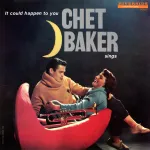
It Could Happen to You badly needed to be mastered with some tubes in the chain, but that didn’t happen. We’ve written a fair amount on that subject, and you can find more here.

It’s another case of an OJC with zero tubey magic. You might as well be playing the CD. I would bet money it sounds just like this record. Maybe even better!

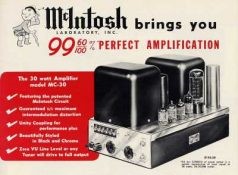
I suppose if you have a super-tubey phono stage, preamp or amp (like the Mac 30 you see below), you might be able to supply some of the Tubey Magic missing from this pressing, but then all your properly mastered records wouldn’t sound right, now would they?

The OJC pressing of this album is obviously better suited to the old school audio systems of the 60s and 70s than the modern systems of today. These kinds of records used to sound good on those older systems, and I should know, I had an old school stereo and some of the records I used to think sounded good back in the day don’t sound too good to me anymore (although this one never did).

For a more complete list of those records, click here.

(more…)