11-2024

An Amazingly Good Nashville Skyline, But Side Two Fell Short in One Area

Hot Stamper Pressings of the Music of Bob Dylan Available Now

You just can’t beat a well-produced, well-engineered Columbia from this era. There’s a richness and a naturalness to the sound that’s almost completely disappeared from the modern world of music, and by “modern world” we mean both modern recordings and modern remasterings of vintage recordings.

Practically none of them ever have the qualities of this wonderful record from 1969.

You really do have to go back to these old originals to find it. And then you have to find just the right old originals for it to be there. Here are the notes for one we played not long ago.

As you can see from the notes, side one of our most recent White Hot stamper shootout winning copy was doing everything right. We marvelled at these specific qualities in the sound:

Track three

  • Big and spacious and lively
  • The vocals and guitars are big and weighty and jumping

Track one

  • Spacious and great size and detail
  • Vocals jump out
  • Realistic acoustics

However, we had a side two that was slightly better than the side two you see here.

When we played the two best copies back to back, side one of this copy came out on top, earning a grade of 3+, but the side two of another copy showed us there was potentially even more presence to Dylan’s vocals in the recording than we had assumed. As a consequence, we felt it best to drop side two’s grade a half plus to 2.5+.

Track one

  • Tubey bass
  • Weighty
  • Very full vocals
  • A bit veiled but better than most

Track one on side two was doing practically everything right, but it slightly lacked presence, and for that we dropped the grade one half plus to 2.5+.

Midrange presence is one of the most important qualities of any rock or pop recording we might evaluate, and for a Bob Dylan album it is absolutely essential.

You want Dylan to be front and center, neither recessed nor behind a veil.

To aid you in doing your own evaluations, here is a list of records that we’ve found to be good for testing midrange presence.

(more…)

Listening in Depth to Synchronicity

Hot Stamper Pressings of the Music of Sting and The Police Available Now

The choruses get LOUD and are so POWERFUL on the best copies of this album that they make a mockery of most of the pressings out there.

Let’s face it, this is a big speaker record. It requires a pair of speakers that can move air with authority below 250 cycles and play at fairly loud levels. If you don’t own speakers that can do that, this record will never really sound the way it should.

It’s the kind of recording that has caused me to pursue Big Stereo Systems driving Big Dynamic Speakers for as long as I can remember. You need a lot of piston area to bring the this recording to life, as well as to get the size of all the instruments to match their real life counterparts.

For that you need big speakers in big cabinets, the kind I’ve been listening to for more than forty years. (My last small speaker was given the boot around 1974 or so and I have never looked back.)

To tell you the truth, the Big Sound is the only sound that I can enjoy. Anything less is just not for me.

Side One

Synchronicity I

One of the two title tracks on this record (huh?), it’s also one of the quickest ways to hear what is happening sonically on this side. It’s a high energy, take-no-prisoners rock track that usually ends up sounding bloated and brittle on the typical pressing. However, when it’s cut right it’s amazing.

The bass guitar and kick should be driving the track, not making you want to skip to the next one. Also, when you can hear the separation and detail in the multitrack army of Stings during the chorus, you’re in good shape.

Walking in Your Footsteps

Is that a pan flute I hear? More than likely it’s a synth, but if you can hear the “air” going through it and all of the ambience surrounding it, you’re not off to a bad start.

Also, the percussion should actually sound like a drum and not like a stack of textbooks getting smacked. (more…)

Letter of the Week – “Can only say that I now can enjoy three examples of my favourite music in a way that I have never experienced before.”

Hot Stamper Pressings of the Music of Steely Dan Available Now

One of our good customers had this to say about some Hot Stampers he purchased last year. (We are very far behind in posting your letters, trying to catch up.)

Hello Tom,

After your extensive explanations preceding my first purchase at Better Records, I would like to share my experience with the three records that have bought.

[Peter went on to describe the conidtion issues with our records and wanted us to know they were not as quiet as he was led to believe. We did our usual song and dance about old records and such, which apparently satisfied him as he has spent a great deal of money with us since then.]

The sound ratings. Here, I am fully convinced. All three records have fantastic sound, in all respects. I could try to describe what I am hearing, but you have already done that very eloquently in the explanation on you site. I really have nothing to add (or to deduct)

Can only say that I now can enjoy three examples of my favourite music in a way that I have never experienced before.

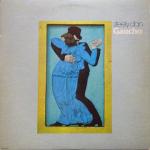
That is not completely true: I already own a pressing from “Gaucho” from the same series as your copy – it sounded way better than the European pressing that I also have. This made me believe that there ”might be something going on.”

However, be reassured: my copy of the RL mastered Gaucho is quite good but yours is better still!

A big thumbs-up to your ears and your hard work!

Due to financial constraints, I only bought “super hot” pressings – which in my opinion are already great sounding. I find it hard to believe that, apparently, there are also “white hot pressings” in existence …

The Cisco Aja

We also discussed the disappointing quality of the modern 180 gram reissues. For example: after the Gaucho I listened again to my Cisco reissue of “Aja.” In comparison, it sounds flat, dull, with muffled instruments, little soundstage depth and only half of the soundstage between my speakers occupied.

(more…)

Trying to Get at the Truth with Transistors

More Entries from Tom’s Audiophile Notebook

In 2007 we did a shootout for The Four Seasons on RCA and noted the following:

For those of you with better tube gear, the string tone on this record is sublime, with that rosin-on-the-bow quality that tubes seem to bring out in a way virtually nothing else can, at least in my experience.

Our experience since 2007 has changed our view concerning the magical power of tubes to bring out the rosiny texture of bowed stringed instruments.

We have in fact changed our minds completely with respect to that rarely-questioned belief.

It’s a classic case of live and learn, and represents one of the bigger milestones in audio that we marked in 2007, a year that in hindsight turns out to have been the most important in the history of the company.

Everything changed dramatically for the better for us sometime in 2005. That’s when we discovered the transistor equipment we still use to this day.

We found a low-power integrated amp made in the 70s that was vastly superior to our custom-built tube preamp and amp. We had an EAR tube phono stage at that time, which we quite liked.


UPDATE 2025

We recently hooked up our old 834p phono stage in the system and did not like the sound at all.

Things change. Boy do they ever!


In 2007 we auditioned the EAR 324P transistor phono stage and immediately recognized it would take our analog playback to an entirely new level, one we had simply never experienced before and really had never thought could possbily exist.

(more…)

Our Advice on the Sgt. Peppers Pressings to Avoid

beatlessgtHot Stamper Pressings of Sgt. Peppers Available Now

Chris, an erstwhile customer from a very long time ago, sent us a letter describing his search for a good sounding Sgt. Pepper.

The first thing that comes to mind when reading his letter is that many record collecting rules were broken in going about his search the way he did. But then I thought, What rules? Whose rules? Where exactly does one find these rules? If one wants to avoid breaking them they need to be written down someplace, don’t they?

Wikipedia maybe?

Sadly, no, not at Wikipedia, or any place else for that matter — until now. As crazy as it sounds, we are going to try to lay down a few record collecting rules for record loving audiophiles, specifically to aid these individuals in their search for better sounding vinyl pressings. And by “these individuals” we mean you.

See if you can spot the rules that were broken by Chris in his fruitless search for a good sounding Sgt. Pepper. Note that this letter came to us long before the new Beatles CDs and vinyl had been remastered.

Hi Tom

A few months ago, I purchased a new UK import of Sgt Pepper. Too bad it turned out to be digitally remastered. I had been checking your site for this album over the last few months, but only saw two: a sealed MFSL UHQR for $1000, and a hot stamper for $500, both out of my price range. So then I started looking at Ebay, and recently purchased two “sealed” versions of Sgt Pepper – a USA Apple, which cost me $170, and a USA Capitol (original rainbow label) for which I paid $80.

Tonight, I wanted to copy one of the Sgt Pepper’s to Hi-rez (192/24) DVD audio. Both sealed records from Ebay were cleaned with Last RCM record cleaner on a VPI 16.5, and treated with LAST record preservative. (My usual routine)

First I tried the Capitol (rainbow). It even had “mastered by Capitol” stamped on the run-out area, usually a good sign, I thought. The sound was quite good, except for two things:

1) the sound level drops about 3 db in the first track where they sing “We’d love to take you home with us , we’d love to take you home” (3 db drop occurs) followed by “I don’t really want to…” 2) the record has thousands of audible ticks. No kidding, when I recorded it, and looked at the waveform in Adobe Audition, there are really about 20 little ticks per second. If I try to clean it up manually, one click at a time, (my usual routine), it will take an eternity to finish the job. (slight exaggeration) [sic] So I tried the $170 sealed “Apple” purchased from someone named “sealedbeatles”.

This record is a total disaster. It has no high end. It’s like someone turned the treble all the way down (if my system had a treble control). I looked at the spectrum of a few seconds of music, and the level at 8 khz is the same as the level at 60 khz, down about 90 db. (duller than poor AM radio). The record is loaded with surface noise too. The record is totally useless.

Finally I tried the UK digitally remastered Parlophone, purchased probably from Music Direct, or some place like that. It sounds harsher than hell, and oddly has a tone actually recorded on the record at about 70 Khz, which you can “see” poking up from the noise floor in its spectrum.

I’m still looking.

Chris

My first thoughts upon receiving this letter:

There is almost no chance Chris would be successful with the approach he took.

The following would have been my five pieces of advice had he told me in advance what he was planning to do.

(more…)

The More Mistakes the Better, Part Three

Advice on Making More Mistakes

It’s the secret to success – ours, yours and everybody else’s.

“The essence of success is that it is never necessary to think of a new idea oneself. It is far better to wait until somebody else does it, and then to copy him in every detail, except his mistakes.” ~Aubrey Menen

Indeed, if only that were possible. Our approach to Hot Stampers and how to find them is certainly a revolutionary new idea, and undoubtedly the only way of discovering records with proven superior sound quality.

But even if we were to publish all of our secrets — the stamper numbers and labels and countries of origin of all the best pressings we’ve ever played, every last one — that would still not be the answer, for the simple reason that no two records sound the same.

As long as that’s true, either we have to play a pile of records to find the best sounding ones, or you do. There is no other way to do it.

(more…)

Santana’s Guitar Solos Soar on Inner Secrets

Hot Stamper Pressings of Albums with Especially Dynamic Guitar Solos Available Now

On side two the final guitar solo Santana takes on Well All Right gets as loud in the mix as any guitar solo on any rock record that I know of (off the top of my head).

This link will take you to some of the other records with especially dynamic guitar solos we have auditioned to date.

The sound gets louder after the first chorus, then louder still right before the second solo, and then the solo itself gets even louder until it seems to be as loud as live music. (Operative word: seems.)

Does it seem odd to you that the only audiophiles writing about the amazing sound of this recording are those who happen to work for Better Records?

Oh, we’ve gotten pretty used to it by now. It’s mostly a function of two things: cleaning and playing lots of copies of the same album to find the ones with the incredible dynamics we’re discussing here, and playing them on big speakers at loud levels so that the power of the music gets reproduced in all its glory.

Two points to keep in mind:

  • Some copies get loud and some do not.
  • Some stereos are dynamic and some are not.

If you have the right stereo, set at the right volume, and the hottest of our Hot Stamper copies, you will hear something that not one out of one hundred audiophiles (or music lovers) have ever heard on a record — LIVE ROCK SOUND.

What makes it possible to play this record so loud and still enjoy it? Simple. Just like Nirvana, when the sound is smooth and sweet, completely free of aggressive mids and highs, records get BETTER as they get LOUDER. (This of course assumes low distortion and all the rest, but the main factor is correct tonality from top to bottom, and this record has it.) 

One reason the turn up your volume test is such a great test — the louder the problem, the harder it is to ignore.

(more…)