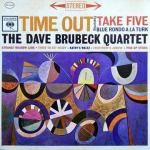
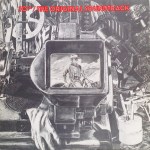
If you guessed the Cisco LP from 2007, one of the worst sounding versions of the album ever pressed, you win a prize!
When I go searching the web to find out something about a record, occasionally I come across something I had no idea existed.
Look what I found today: a survey of various pressings of Aja!
Aja is an album I think I know pretty well. I’ve been playing it since the day it came out in 1977 and still listen to it regularly.
Play the video and tell me if you think you are learning anything useful from the guy. Does he seem to understand much about the sound of the pressings he is reviewing?
I didn’t think so. If you know much about records you should be appalled at the nonsensical opinions coming out of this guy’s mouth. This video will of course garner many ten of thousands of hits, but that is to be expected.
Phony record gurus like this guy — as opposed to authentic record gurus like us — have found a home in every corner of the web, full of bad advice for those foolish enough to take it.
When you sit down to play ten or twelve copies of an album, one right after the other, patterns in the sound are going to emerge from that experience, patterns which would be very likely to pass unnoticed when playing one copy against another or two over the course of the twenty or thirty minutes it would take to do it.
In the case of this album, the pattern we perceived was simply this: About one or two out of that dozen or so will have punchy, solid, rich, deep bass. (There is a huge amount of bass on the recording, so recognizing those special copies is not the least bit difficult if you have a full-range speaker and a properly treated room.)
About one or two copies really get the top end right, which is easily heard when the cymbals splash dynamically, with their harmonics intact, and they extend high about the rest of the soundfield (precisely the way they do in live music).
(Fewer copies have an extended top end compared to those with tight punchy bass by the way.)
Like so many Mastering Lab tube-mastered records from the era, most copies tend to be somewhat smooth.
Only one copy had both the best bass and the best highs.
All the other copies fell short in one or both of these areas.
Think about it: if you do your home shootouts with three or four or even five copies of an album, what are the chances that:
1. You will detect this pattern? Or, 2. That you will run into the one copy that does it all?
This is precisely the reason we have taken the concept of doing comparisons between pressings to an entirely new level.
It’s the only way to find the outliers in the group, the “thin tails” as the statisticians like to call them. (More on outliers here.)
I had posted one of his videos here under the heading “Does it seem like this guy knows anything about Dark Side of the Moon?”
That was too generous. Apparently he does not know anything about records period. Any records. Records with any titles.
That would include records with the title Led Zeppelin II, the subject of today’s commentary.
This video has to be The. Dumbest. Video. Ever.
Never have I seen this level of vapidity on display. I had no idea people like this existed, but apparently they do, and unfortunately this person knows how to make videos.
Most of the audiophiles I’ve run into over the years had no idea how little they knew about records and audio. (I admit I was one of those guys for the first twenty years I was in high-end audio. Thank god there were no audiophile forums or youtube channels around back then.)
The audiophiles of which I speak mostly stayed in their listening rooms where their secrets were safe. With the advent of the internet and youtube, now these clueless types can make their ignorance known to the wider world, the Dunning-Kruger* effect on full display.
The Video
The concept undergirding this demonstration of — now that I think about it, I’m not sure what exactly is being demonstrated other than the fact that records, when spinning on a turntable and scratched by a needle, can make sounds, and those sounds can come out of your computer speakers when you play the video. It’s science.
Anyway, the demonstration is simplicity itself. Watch it, and then you tell me if this isn’t the dumbest video about records that you have ever seen.
It doesn’t to me, but I admit to some bias when it comes to DSOTM. I must have played more than a hundred different pressings over the last forty-odd years.
Year after year I was sure I understood exactly which copies had the best sound, and again and again I was proved wrong. (To be clear, I proved myself wrong. Shootouts have a way of doing that kind of dirty work.)
We only found out what the best sounding versions were about five or six years ago [make that ten]. We did that by doing shootout after shootout with every version we could lay our hands on, starting around 2005. We even did a shootout for two different Mobile Fidelity pressings many years ago, which we think makes for some good reading to this day.
It’s especially good reading for those who don’t appreciate how dramatic pressing variations can be for even quality controlled limited editions. The comparison of the two MoFi’s centers around the idea that midrange tonality is by far the most important quality to listen for on Dark Side, and that, surprisingly to some audiophiles, but obviously not to us, there are MoFi pressings with a correct midrange and there are some without.
Is this fellow listening for midrange tonality? If you watch the video and he says he is, then you can let me know! And if not, you can ask him in the comments why he wasn’t. Maybe he just likes the chiming clocks and the deep bass of the heartbeat.
Some audiophiles have been known to ignore fundamentals such as a proper midrange when comparing records.
And picking six random copies of six different pressings is not exactly approaching the problem scientifically either of course. It is a clear violation of the first cornerstone of Hot Stamper shootouts, which clearly states the following, accent on the must:
You must have a sufficient number of copies to play in order to find at least one “hot” one.
Impressive Records? Not Really
Most of the versions of DSOTM that this individual is reviewing have never impressed us sonically. They are the pressings that most audiophiles have probably heard about and read about in the magazines and on forums. If you know practically nothing about the album going in, these might be the six pressings you would consider playing against each other in a shootout. To be charitable, I suppose you could call it a good start.
Our reviewer seems to be the type who puts a great deal of faith in so-called audiophile pressings — the Japanese Pro-Use Series, the UHQR — the kinds of records that sound more and more artificial and/or mediocre to us with each passing year.
If your stereo is not showing you what’s wrong with these kinds of records, you have your work cut out for you. This is especially true of some of the Ultra High Quality Records put out my Mobile Fidelity in the early ’80s, like this one.
Our Take on DSOTM Pressings
The domestic pressings we have auditioned over the years have never made it into a real shootout. They have always sounded far too flat and veiled to be taken seriously. There are some very good sounding Pink Floyd pressings on domestic vinyl — Wish You Were Here and The Wall can both sound amazing on domestic vinyl — but Dark Side is not one of them in our experience.
If only their recordings were better. Most of their early albums sound like they are playing on an AM radio.
Thanks god The Beatles were so well recorded (although I have to say With the Beatles and A Hard Day’s Night are consistently thinner and brighter than they should be, and thinner and brighter than the albums that follow and Please Please Me before them).
This was my first 10cc album, and I completely fell in love with it.
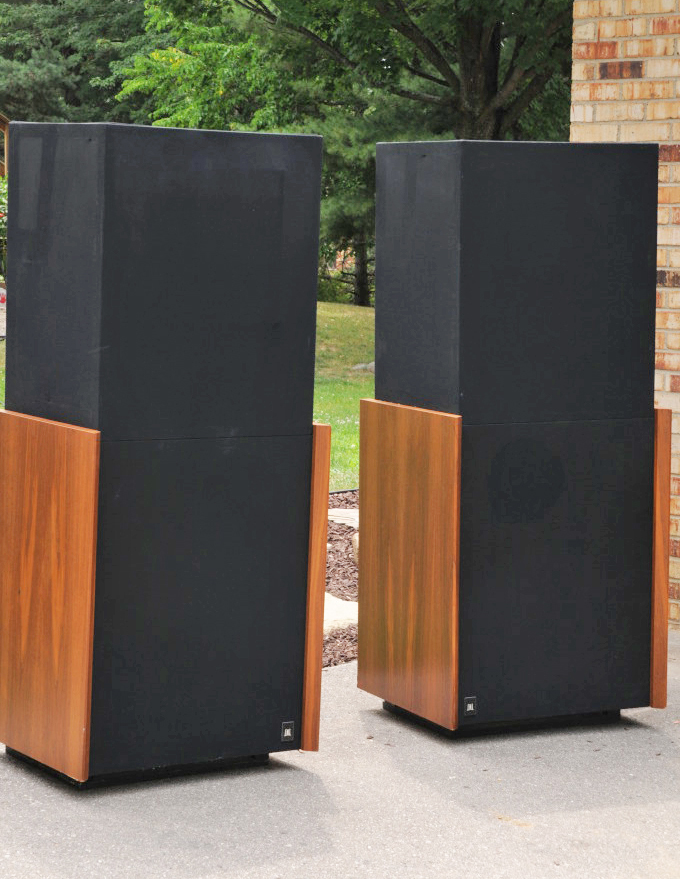
Played it all the time back in 1975, on the speakers you see pictured below, or the RTR-280DRs I had before then. Both are big and play loud and that’s what this album and especially this song needs to sound their best.
Une Nuit A Paris, the suite that opens side one, is just an amazing demo track. As you may have read elsewhere on the site, it’s the kind of sound that requires a big powerful stereo to reproduce. Even back in the mid-70s I had speakers as tall as me that weighed 300 pounds apiece (the Fulton J, shown below), so playing a record like this was just a thrill.
It still is. I still love it. And I recommend it highly for those who are fans of the band. If you don’t know who 10cc are, this album and this band will probably make no sense to you, but if you have an open mind and like “art rock” from the ’70s, you might just really get a kick out of this one.
“Do they like music? Or are they in love with equipment?”
The excellent BBC Archive account on Twitter has unearthed an audio gem.
A 1959 film called ‘Hi-Fi-Fo-Fum’ purports to reveal the burgeoning audiophile scene, with more than a little tongue-in-cheek humour for good measure.
“There is a man in Wimbledon who will go on adding to his equipment until he can hear the sigh of the conductor as the piccolo misses its entry,” says the introduction. He sounds like our kind of man.
“Is it a religion or a disease? An American psychiatrist calls it ‘audiophilia'”, reveals the voiceover, as men – and it’s largely men – shuffle in and out of hi-fi shops before rushing home for earnest listening sessions. It was ever thus.
“Do they like music? Or are they in love with equipment?”, wonders our narrator, as one excited punter buys a new tweeter for “6 pound 4 pence”.
And while much has changed – you don’t see many shops with individual listening booths nowadays – much has stayed the same. “A dream of perfection… of machines more sensitive than the ears they play to,” reminds us that arguments about audio frequencies that the human ear can’t hear are nothing new.
The video also shows the early music critic. “With a dozen different recordings of every work, how do we find the best?” wonders the voiceover. “Rely on the critic, nothing escapes him,” comes the reply.
His verdict? “Comparisons are odious but inevitable…”