Rhett Davies, Engineer – Reviews and Commentaries

Rhett Davies is one of our favorite engineers.

Diamond Head – Astonishingly Good Sound on the Right Island Pressing

More of the Music of Phil Manzanera

When it comes to blockbuster audiophile sound that jumps out of the speakers, the wind is at your back with Diamond Head because this is one seriously well-recorded album. If this record doesn’t wake up your stereo, nothing will.

Like its brother, 801 Live, this album is an amazing sonic blockbuster, with sound that positively leaps out of the speakers. Why shouldn’t it? It was engineered by the superbly talented Rhett Davies at Island, the genius behind Taking Tiger Mountain, the aforementioned 801 Live, Avalon, Dire Straits’ first album and many many more.

If we could regularly find copies of this audiophile blockbuster (and frankly if more people appreciated the album) it would definitely go on our rock and pop Top 100 list. In fact, it would easily make the Top Twenty from that list, it’s that good.

Looking for Tubey Magic? Rhett Davies is your man. Just think about the sound of the first Dire Straits album or Taking Tiger Mountain. The best pressings of those albums — those with truly Hot Stampers — are swimming in it.

Big Speakers Wanted Needed

This isn’t known as an audiophile album but it should be — the sound is GLORIOUS — wall to wall, floor to ceiling, and as rich and dynamic as it gets.

The best pressings of this album, played on big speakers at loud levels, are Demo Discs of the highest order.

Play this one as loud as you can. (801 Live is exactly the same way and needs high volumes to work its magic.)

A Personal Favorite

This album basically became the set list for 801 Live, the concert collaboration between Eno, Manzanera and their fellow travelers. That album is one of my all time favorites too, and a Must Own for anyone who likes British Art Rock from the ’70s.

What both of these albums share is amazing guitar work. Manzanera was the guitarist for Roxy Music, and this album can be enjoyed simply as an exercise in hearing every possible kind of sound the guitar can make. It also helps to have Eno doing electronic treatments for the instrument and coming up with a whole new sound.

One listen to a song like Diamond Head is all it should take to make you a fan. If that song doesn’t do it for you, the rest of the album won’t either, but I can’t imagine how that could be.

The best copies of this album excel in every area we prize.

It’s energetic, dynamic, the sound just jumps out of the speakers, there’s tons of bass, it’s smooth — in short, it’s doing it all.

What’s Good?

Domestic pressings suck.

German pressings too.

Don’t waste your money. We’ve never heard a good one. (And most of the British pressings you can find won’t hold a candle to this one.)

To see more reviews and commentaries for titles that we think sound their best on imported vinyl, please click here.

Want to avoid having to pay our admittedly high prices and find a top quality copy for yourself?

Consider taking our moderately helpful advice concerning the pressings that most often win our shootouts.

In the case of Diamond Head, we like it best this way:
(more…)

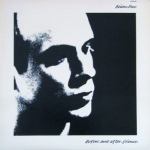
Before and After Science – Rules Are Made to Be Broken

Hot Stamper Pressings of Art Rock Recordings Available Now

The domestic pressings of Before And After Science are typically grainy, low-rez and hard sounding — they’re simply not competitive with the smoother British Polydors.

But our best Hot Stamper pressing isn’t an import; it was made right here in the good old US of A.

Say what? Yes, it’s true. We were SHOCKED to find such hot stamper sound lurking in the grooves of a domestic Eno LP. It’s the One and Only.

In thirty plus years of record playing I can’t think of any domestic Eno LP that ever sounded this good.

Now hold on just a minute. The British pressings of Eno’s albums are always the best, aren’t they?

For the first three albums, absolutely. But rules were made to be broken. This pressing has the knockout sound we associate with the best British originals of Eno’s albums, not the flat, cardboardy qualities of the typical domestic reissue.

Kinda Blind Testing

Since the person listening and making notes during the shootouts has no idea what the label or the pressing of the record is that he is evaluating — this is after all a quasi-scientific enterprise, with blind testing being the order of the day — when that domestic later label showed up at the top of the heap, our jaws hit the floor.

(more…)

Taking Tiger Mountain – A Big Speaker Tour De Force

Hot Stamper Pressings of the Music of Brian Eno Available Now

If you have a big speaker and the kind of high quality playback capable of unraveling the most complex musical creations, with all the weight and power of live music, this is the record that will make all your audio effort and expense worthwhile.

Repeat As Necessary

Like Roxy Music’s first album, this is a powerhouse that not only rewards repeated listenings but requires them. Music like this simply cannot be digested at one sitting. Like the Beatles said, It’s All Too Much. But the more you hear it the more you will be able to understand it and appreciate it and, if you’re like me, really start to love it (I hope).

I’ve been listening to this album since the mid-70s and in all that time I have never tired of it. To me it’s the very definition of a Desert Island Disc: a record that knocks me out every time I play it and never wears out its welcome. It’s still fresh and “cutting edge” (if I can use that term) forty odd years after its release. (801 Live from 1976 is the same way.)

The Sound

This album is all about sound, pure sound itself if you will: the sound of the instruments, their textures, and the textures of the soundscape Eno has created for them. Much of that information is lost or perverted on the LP reissues and of course the CD. Only these British originals sound like they are made from fresh master tapes on rich, sweet tubey-magical, super high resolution cutting equipment.

With the subtle harmonics of Eno’s treated sounds captured onto vinyl intact, the magic of the experience far exceeds just another batch of catchy songs with clever arrangements. It truly becomes an immersive experience; sounds you’ve never heard in quite that way draw you into their world, each more interesting than the next.

Brian Eno and other Art Rockers of the period were clearly dedicated to making higher quality recordings, recordings that could only come to life in the homes of those with the most advanced audio equipment. Credit the work of the amazing Rhett Davies for some of the best albums of the 70s: this one, 801 Live, Diamond Head, Dire Straits’ first album, and more.

My system was forced to evolve in order to reproduce the scores of challenging recordings issued by Eno in the 70s. The love you have for your favorite music has to be the driving force of your progress in audio if you want to achieve world class sound.

(more…)

I Misunderstood – Clarity Was Never the Point

Hot Stamper Pressings of Live Recordings Available Now

Some audiophiles get worked up listening for details in their favorite recordings. I should know; I was as guilty as anyone of that behavior.

But is that where the music is – in the details? Lots of details come out when one copy is brighter than another. Brighter ain’t necessarily better. Most of the time it’s just brighter

Listening for the details in a recording can be a trap, one that is very easy to fall into if we are not careful or don’t know better.

801 Live isn’t about clarity. It’s about the sound of a rock concert.

It’s about the raw power of one of the most phenomenal rhythm sections ever captured in performance on analog tape.

That’s what makes it a good test disc. When you play the hardest rocking tracks, the harder they rock, the better.

Next time you try out some audiophile wire or a new tweak, play this record to make sure you haven’t lost the essential energy, weight and power of the sound. This album doesn’t care about your love of detail. It wants you to feel the energy of the band pulling out all the stops. If the new wire or the new tweak can’t get that right, it’s not right and it’s got to go.

(more…)

Roxy Music, Rhett Davies, Yanick Etienne and the Making of Avalon

Hot Stamper Pressings of Roxy Music’s Albums Available Now

I consider Roxy Music to be one of the greatest Art Rock bands in the history of music.

The general public and most audiophiles would no doubt cast their vote for Avalon as the band’s masterpiece, but I much prefer their eponymous first album, along with Stranded, Country Life and Siren to the more “accessible” music found on Avalon.

To be fair, that’s splitting hairs, because any of those five titles are absolute Must Own albums that belong in any serious popular music collection.  

Roxy Music’s “Avalon”

By Rick Clark

When asked in 1982 about the concept of Avalon, Ferry responded, “I’ve often thought I should do an album where the songs are all bound together in the style of West Side Story, but it’s always seemed like too much bother to work that way. So instead, I have these 10 poems, or short stories, that could, with a bit more work, be fashioned into a novel.

“Avalon is part of the King Arthur legend and is a very romantic thing,” Ferry added. “When King Arthur dies, the Queens ferry him off to Avalon, which is sort of an enchanted island. It’s the ultimate romantic fantasy place.”

Regardless, the entire album sustains a cohesive mood that isn’t just a product of Ferry’s lyrical thematic vision. It was a product of the process that Davies and the band employed in laying down grooves and having players interact with them, and then shaping those performances in a way that would ultimately inspire Ferry to articulate his melodies and words.

“We were creating tracks back then,” Davies says. “We didn’t have the songs. The songs were virtually the last things to go on there. We were very much creating a musical atmosphere that we wanted the musicians to respond to.

“In those days, Bryan and Roxy would have a musician in for a day or two and they would want that musician to play on all the songs and see what came out of that,” Davies continues. “I would have to be able to throw the tracks up pretty quickly and they had to sound the same every time. Rather than spending half-an-hour putting the track up and then another half-an-hour getting the bass sound, we wanted to work fast. In the initial stage of throwing a track at somebody, it was always that first response that you got when someone was fresh that was very important. Then we would spend days and weeks agonizing over it and fiddling around with it,” he adds with a laugh. “But the initial process we wanted to keep fast.” (more…)

Dire Straits – Energy Is the Key to the Best Pressings

Reviews and Commentaries for Dire Straits’ Debut

Hot Stamper Pressings of the First Album Available Now

What separates the best copies from the merely good ones? In a word, ENERGY. The best copies make this band sound like they are on fire, ready to go head to head with the world, fiercely proud of the new sound they’ve created.

The not-so-good copies make Dire Straits sound the way Dire Straits usually does — laid back and well under control, perhaps even a bit bored with the whole affair. The best copies show you a band that wants to rock with the best of them, and can.

Back in 2007 or thereabouts we wrote about this subject after playing a particularly lively copy of Revolver:

At the risk of being definitive about things that are better left ill-defined, I would say that the Number One quality we look for in a pressing is the element of Life or Energy. We can put up with many shortcomings, including even some tonality problems, but when a record fails to convey the spirit and enthusiasm of the musicians, it’s pretty much over.

Water Of Love and Sultans of Swing on a Hot Stamper copy have the kind of Demo Disc sound that will have your audiophile friends drooling and turning green with envy. We can’t all afford $100,000 turntables, but when you have a record that sounds this good, you don’t need one! This record makes it sound like you have 100k in your rig, whether you do or not.

(more…)

Listening in Depth to Avalon

Hot Stamper Pressings of the Music of Roxy Music Available Now

The best British original Super De Luxe pressings of Avalon are sweet and silky, big and lively, with the kind of sound that drives us audiophiles wild — which of course is the main reason this album was on Extra Heavy Rotation at most stereo stores back in the day.

It’s records like this that get people (otherwise known as audiophiles) to spend wads and wads of money in pursuit of expensive analog equipment good enough to bring this wonderful music to life.

This album rewards a stereo with the qualities that audiophiles prize most highly when selecting equipment — spaciousness, transparency, clarity, detail, depth, soundstaging, speed, high frequency extension, and the like. Those qualities are important but not enough for big speaker rock and roll guys like us here at Better Records, but on this record they are key to reproducing the best of what Avalon has to offer.

We would add to that list presence and energy, along with warmth, fullness and lack of smear on the transients. Whomp and rock and roll power do not seem to play much part in separating the best from the rest, although it’s nice when the bottom end is big and solid.

That said, the copies that are exceptionally open, clear and big are the ones that do a better job of presenting this music the way we think it was meant to be heard.

The mix is as dense as any we know. Only the best copies have the ability to show you everything that’s on the tape. Credit must go to the amazingly talented Rhett Davies for creating the space in which so many instruments and sounds can fit comfortably.

(more…)

Listening in Depth to Taking Tiger Mountain by Strategy

More of the Music of Brian Eno

More Arty Rock Records

Presenting another entry in our extensive listening in depth series with advice on what to listen for as you critically evaluate your copy of Taking Tiger Mountain.

Here are some albums currently on our site with similar track by track breakdowns.

This album is all about sound, pure sound itself if you will: the sound of the instruments, their textures, and the textures of the soundscape Eno has created for them.

With the subtle harmonics of Eno’s treated sounds captured onto vinyl intact, the magic of the experience far exceeds just another batch of catchy songs with clever arrangements. It truly becomes an immersive experience; sounds you’ve never heard in quite that way draw you into their world, each sound more interesting than the next.

Only these British originals sound like they are made from fresh master tapes on rich, sweet tubey-magical, super high resolution cutting equipment.

Engineering

Rhett Davies was behind the board for Tiger Mountain. He’s one of our favorite producers and recording/mixing engineers. Click on the link to find our in-stock Rhett Davies engineered or produced albums, along with plenty of our famous commentaries.

The man may be famous for some fairly artificial sounding recordings — Eno’s, Roxy Music’s and The Talking Heads’ albums come to mind — but it’s obvious to us now, if it wasn’t before, that those are entirely artistic choices, not engineering shortcomings.

Rhett Davies, by virtue of the existence of this album alone, has proven that he belongs in the company of the greatest rock and pop engineers of all time, right up there with the likes of Bill Porter, Ken Scott, Stephen Barncard, Geoff Emerick, Glyn Johns and possibly one or two others found on this list.

Side One

(Which, by the way, is BRILLIANT from the opening guitars of Burning Airlines to the never-ending chirping crickets of The Great Pretender. I mean that literally: on these early British pressings the run-out groove has the sound of the crickets embedded in it so that the crickets chirp until you pick up the arm, much in the same way that Sgt. Pepper has sound in the run-out groove at the end of A Day In The Life.)

Burning Airlines Give You So Much More

Pure Pop for Now People. Listen to all those multi-layered harmonies! They’re sweet as honey, and only the best British copies get them to sound that way. You can make out practically every voice. This is what we mean by Midrange Magic.

Back in Judy’s Jungle

This track has a BIG BASS DRUM that will rattle the walls and threaten to bring your house crashing to the ground if you are not careful with the volume. Love that whistling too — genius!

The Fat Lady of Limbourg

This song is so good I found the lyrics on the web and have included them for your edification below. Once you fit the words to the melody you will no doubt be as convinced as I am as to the brilliance of Eno’s songwriting skills.

Mother Whale Eyeless

The high pitched chorus about the man without his raincoat in the body of the whale can be a bit much on the copies that are not cut cleanly. Those kinds of high frequencies at loud levels are hard to cut and hard for your arm/cart to track.

The Great Pretender

Pure Eno magic to finish out the side on a high point; it doesn’t get much better than this! Listen to those sustained lower piano notes — on the best copies they are deep and powerful and keep resonating seemingly forever. It’s one of the most interesting sounds on an album that’s full of NOTHING BUT interesting sounds.

Side Two

Note that on most copies side two is cut a db or two lower than side one. Please increase your volume level accordingly when playing side two.

(more…)

Diamond Head – A Truly Awesome Feat of Engineering by Rhett Davies

More of the Music of Phil Manzanera

Reviews and Commentaries for the Music of Phil Manzanera

You may recall reading this bit about Rhett Daviesengineering on Dire Straits’ debut:

“…until something better comes along, this is his Masterpiece. It has to be one of the best sounding rock records ever made, with Tubey Magical mids, prodigious bass, transparency and freedom from hi-fi-ishness and distortion like few rock recordings you have ever heard.”

Well, something better has now come along, and it’s called Diamond Head.

It has some of the Biggest, Boldest Sound we have ever heard. Diamond Head isn’t known as an audiophile album but it should be — the sound is glorious — wall to wall, floor to ceiling, and as rich and dynamic as it gets.

It’s clearly a Big Speaker Demo Disc. Play this one as loud as you can. The louder you play it, the better it sounds.

The best copies have Room Shaking Deep Bass with the kind of Whomp that can drive this music to practically unexplored heights.

It’s also transparent, with a large, deep soundfield that really allows you to hear into the music and the studio space in which it was created. The clarity is superb with all the detail and texture one could hope for, but the real kicker is the amount of Energy and Musical Drive that these two sides have going for them.

This is what the Master Tape is really capable of — Mind Bogglingly Good Sound.

Looking for Tubey Magic? Rhett Davies is your man. Just think about the sound of the first Dire Straits album or Avalon. The best pressings of those albums — those with truly Hot Stampers — are swimming in it. (more…)

Dire Straits Gets the Mobile Fidelity Treatment (Just Updated)

Reviews and Commentaries for Dire Straits’ Debut

More of the Music of Dire Straits

Geoff Edgers watched me and my lovely assistant, Sunshine, do a lengthy shootout for Dire Straits first album, but licensing problems prevented the Washington Post from using the footage. You can still see Sunshine in the video, and the yellow Phonogram label you see at one point is attached to one of the Dire Straits pressings we played that day.

Toward the end of the shootout for the first side, we put on the Mobile Fidelity pressing, and, interrupted from time to time by the sound of howling and gnashing of teeth, I pointed out for Geoff’s edification everything that was wrong with their pressing.

This took some time.

I will be writing more about their dismal effort one of these days, but for now let me leave you with this thought.

When you read the comments section for the article, it seems that quite a number of those discussing my lifelong interest in the world of audio and records go out of their way to state the obvious: that folks my age cannot hear high frequencies.

This is true, and I have never denied it. Case in point: After playing the MoFi pressing of Dire Straits, Sunshine, sitting at the turntable, asked what all that weirdly high-pitched, swirling, shusshing sound was. It wasn’t on the Phonogram pressings she had played. Only the MoFi.

I looked at her and asked “What shusshing sound?”

Sunshine had clearly heard it, Geoff may have, I don’t remember, but I had no idea there was anything untoward happening way up in that area of the frequency range. [1]

In my defense, not that I need one, I had no trouble telling how bad that Mobile Fidelity pressing was, or which of the five Dire Straits pressings sounded the best, or what each of them were doing, good, bad and otherwise.

What I was noting and explaining about the sound of these identical-looking UK pressings, their strengths and weaknesses, was clear enough for everyone in the room to hear over the course of the hour or so we spent doing it.

My goal was to walk Geoff through the steps of the shootout, and as far as I could tell he was with me all the way.

Those commenting about high frequency hearing loss are engaging in the fallacy of “begging the question,” assuming what they are trying to prove instead of proving it, which I suppose is the kind of thing you can expect to read in the comments left by those with a great deal of regard for their own opinions but little for the evidence required to support them. More here.


Robert Brook has a blog which he calls

A GUIDE FOR THE DEDICATED ANALOG AUDIOPHILE

Below you will find his review of a record I too know a fair bit about, the first Dire Straits album on Mobile Fidelity. I hope to write my review of the Mobile Fidelity pressing soon.

Ugh! Mobile Fidelity’s Remaster of DIRE STRAITS

As of 2015, this label may have entered a new and even more disgraceful era, but considering how bad their records have been from the very start — something that should be obvious to any audiophile with a high quality playback system, the kind of system that should have no difficulty exposing the manifold shortcomings of their remastered pressings — how much lower can they possibly fall?

Only time will tell.


[1.] Did Mobile Fidelity’s engineers hear this high-frequency hash? Will any audiophile come forward to expose this problem? The answers to both questions are very likely to be no.