Bruce Botnick, Engineer – Reviews and Commentaries

How Do the Butterfly and Small Red E Pressings Sound on Strange Days?

Hot Stamper Pressings of the Music of The Doors Available Now

The Butterfly and Small Red E labels are so contemptibly thin and harsh they are not worth the vinyl they were pressed on.

You would be much better off with the DCC Gold CD than any of the reissue vinyl we’ve played.

The fact of the matter is that good digital beats bad analog any day.


This a Must Own Record, a 1967 recording with unbelievable RAW POWER. Most audiophiles very likely have no idea how well recorded this album is, simply because most pressings don’t do a very good job of translating the energy and life of the master tape onto the vinyl of the day.

The second Doors album is without a doubt one of the punchiest, liveliest, most POWERFUL recordings in the entire Doors catalog, right up there with their debut.

I’m guessing this statement does not comport with your own experience, and there’s a good reason for that: not many copies of the album provide evidence of any of the above qualities. Most pressings are opaque, flat, thin, veiled, compressed and lifeless. They sound exactly the way so many old rock records sound: like any old rock record.

Botnick Knocks It Out of the Park

But this album is engineered by Bruce Botnick. The right pressings give you the kind of low-end punch and midrange presence you hear on Love’s first album (when you play the right gold label originals). Botnick engineered them both, and what’s even more amazing is that The Doors second is in many ways an even better recording than Love’s!

Very tubey from start to finish, the energy captured on these Hot Stampers has to be heard to be believed. Not to mention the fact that the live-in-the-studio musicians are swimming in natural ambience, with instruments leaking from one mic to another, and most of them bouncing back and forth off the studio walls to boot.

But the thing that caught us most by surprise is how much LIFE there is in the performances on the better Hot Stamper copies. Morrison pulled out all the stops on songs like Love Me Two Times and the last track on the album, When the Music’s Over. Unless you have a very special pressing there is almost no chance you will ever hear him with this kind of raw power.

Top 100? If we could find more than a sporadic few clean, good sounding copies each year it would surely make the list, joining the other two of the band’s first four albums on there now.

We Used to Sell the Dubby Reissues of Bud Shank And the Sax Section, Ouch

More of the Music of Bud Shank

I used to sell reissues of this record back in the day some twenty odd years ago. While they aren’t terrible — lackluster is a more apt description — we can clearly hear now that they are made from second generation tapes.

The stage is recessed and collapsed, and the sound never gets big enough nor lively enough to free itself from the speakers. (This happens to be our all-too-common experience with many of the Heavy Vinyl pressings we audition and consequently write mean things about. Can you blame us? We loathe that sound.)

It’s yet another example of a record we was wrong about. Live and Learn, right?

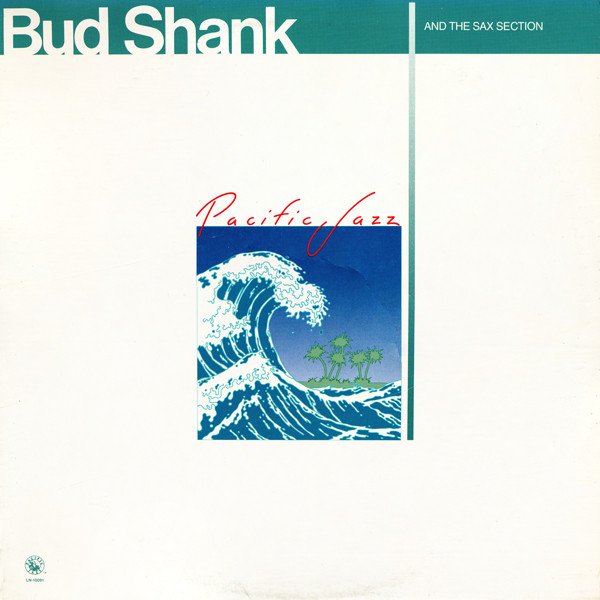
I would not buy any Pacific Records pressing with this style reissue cover. We’ve never heard one sound better than mediocre on our current system.


This record sounds best this way:

(more…)

How to Make All Your Records Sound Like MoFi’s – For Free!

Hot Stamper Pressings of the Music of The Doors Available Now

The Doors first album is yet another obvious example of MoFi’s predilection for a sucked-out midrange.

Scooping out the middle of the midrange has the effect of creating an artificial sense of depth where none belongs. Play any original Bruce Botnick engineered album by Love or The Doors and you will notice immediately that the vocals are front and center.

When the DCC Doors first album was released on vinyl, we noted that the vocals were finally back where they belonged. After having lived with the MoFi for so many years, we’d almost forgotten.

And now of course we can’t tolerate the smear and opacity of the DCC. We like to think we’re simply setting higher standards these days.

The midrange suckout effect is easily reproducible in your very own listening room.

Pull your speakers farther out into the room, and also farther apart, and you can get that MoFi sound on every record you play. I’ve been hearing it in the various audiophile systems I’ve been exposed to for years.

(more…)

What Happens When the Gold Label Doesn’t Have the Best Sound on Both Sides?

More of the Music of The Doors

It gets marked the sonic grade it earns.

If a Big Red E label pressing sounded better to us on side two, if it somehow managed to sound better than any of our Gold Label originals, then it would earn the top grade on side two.

Here is how we described a killer copy we had not long ago:

With a Triple Plus (A+++) shootout winning side two and a Double Plus (A++) side one, this copy is practically as good as it gets. The sound on this Gold Label pressing is incredibly powerful — big, rich, full-bodied, present and lively. It’s HUGE, RICH, and FULL-BODIED, exactly the way it should be.

But note that side two was clearly not as good as side one. Even the best early pressings cannot be relied on to get both sides right. The pressing above is proof. We discuss the issue in the commentary below.

(more…)

Sergio Mendes’ Discography – Courtesy of brasil66.com

More of the Music of Sergio Mendes and Brasil ’66

Discography by brasil66.com

1966 Sergio Mendes & Brasil ’66

The Brasil ’66 debut album on A&M opens with a bang–“Mas Que Nada” was, and still is, one of Mendes’ finest recordings. Using a sparse combination of female vocalists, drums, piano, bass and percussion, this album was Brasil ’66 at its leanest. “One Note Samba/Spanish Flea” cleverly combines two popular songs, one of Bossa Nova fame, the other straight out of the Tijuana Brass catalog. Henry Mancini’s “Lujon” (from the excellent Mr. Lucky Goes Latin album) is given vocals and retitled “Slow Hot Wind”. “O Pato” and “Agua De Beber” cover a couple more tracks from the popular Brazilian repertoire, and the American popular scene is represented by “Going Out Of My Head” and “Day Tripper”. One of the more interesting tunes here is “Berimbau”, based on a Brazilian chant. (Interesting tidbit: “Mas Que Nada” has been misspelled, in perpetuity, as “Mais Que Nada” on Brasil 66 albums!)

1967 Equinox

This sophomore effort of Brasil ’66 covers a lot of the same ground as the first album. Most notable is the addition of guitarist John Pisano, from the Tijuana Brass. There are more excellent arrangements; the standouts are “Triste”, “Chove Chuva” and “Night and Day.”

1967 Look Around

Comprised of the same musicians as the first two Brasil ’66 album, there are a few new twists. The most prominent are the two Lani Hall showcases, “Like A Lover” and “So Many Stars”, both lightly sprinkled with strings. Other favorites include “Roda”, “Batucada”, the title track and the distinctly Mendes arrangement of “With A Little Help From My Friends”.

1968 Fool on the Hill

This album presents a second version of Brasil ’66, including the excellent Brazilian musicians Rubens Bassini, Sebastiao Neto and Dom Um Romao. The string arrangements were written by Dave Grusin. What’s different is the direction in which the music on this album took. Turning from pop music influences, these songs reflect more of the Brazilian heritage of the musicians, and are more adventurous as a result. The most-recognized arrangements from this album would be the two cover versions: “Fool On The Hill” and “Scarborough Fair”. In case you’re wondering what kind of “hill” the “fools” on the cover are sitting on, on the original LP gatefold jacket, take a closer look!

(more…)

Our First and Only Shootout for the DCC Pressing of Pet Sounds

Hot Stamper Pressings of the Music of The Beach Boys Available Now

Sonic Grade: D to C+

Not long ago [2014 or so, time flies!] we pulled out the three copies we had in our leftover stock of DCC vinyl and gave them a spin. They weren’t awful, but they weren’t very good either. They sounded like most Heavy Vinyl we’ve played over the years: airless, blurry, smeary, two-dimensional, dull and opaque.

Not surprisingly (to us anyway) one copy was quite a bit better than the other two. I would say that the sound of the three copies would plot on a curve from about a D to maybe a C+, so let’s figure the average would be around a C- or so.

I’d be surprised if the DCC Gold CD didn’t sound better.

More often than not it does. (Kevin Gray’s lousy cutting system would not be involved and that is almost a guarantee that the sound would improve and markedly. We discuss that subject in more depth here.)

If you own the DCC vinyl, buy the CD and find out for yourself if it isn’t better sounding.

The no-longer-surprising thing about our Hot Stamper pressings of Pet Sounds is how completely they trounce the DCC LP. Folks, it’s really no contest. Yes, the DCC is tonally balanced and can sound decent enough, but it can’t compete with the best “mystery” pressings that we sell. It’s missing too much of the presence, intimacy, immediacy and transparency that we’ve discovered on the better Capitol pressings.

As is the case with practically every record pressed on Heavy Vinyl over the last twenty years, there is a suffocating loss of ambience throughout, a pronounced sterility to the sound. Modern remastered records just do not BREATHE like the real thing. Good EQ or Bad EQ, they all suffer to one degree or another from a bad case of audio enervation. Where is the life of the music? You can try turning up the volume on these remastered LPs all you want; they simply refuse to come to life.

(more…)

Listening in Depth to Waiting For The Sun

Presenting another entry in our extensive listening in depth series with advice on what to listen for as you critically evaluate your copy of Waiting For The Sun.

Here are some albums on our site you can buy with similar track by track breakdowns. 

My favorite of the first three Doors album, this one is imbued with more mystery and lyricism than previous efforts. The album shows them maturing as a band, having smoked large amounts of pot and preparing themselves for the wild ride of their next opus, the ambitious Soft Parade.

Actually, as I listen to this album it reminds me more and more of that one. Now that it sounds as good as The Soft Parade, I find I’ve gained a new respect for Waiting for the Sun.

Side One

Hello, I Love You
Love Street
Not To Touch The Earth

Listen to the hard rockin’ duel between the keyboards (left channel) and the guitar (right channel) in the middle of the song. Morrison is screaming is head off and Densmore is really slamming the drums. There’s a HUGE amount of information in the grooves there, and only the best copies will be open and spacious enough to not get a bit congested.

Summer’s Almost Gone

On a Hot Stamper pressing, this song is Tubey Magical analog at its best — warm, sweet, rich, and full-bodied.

Wintertime Love
The Unknown Soldier

Side Two

Spanish Caravan
My Wild Love
We Could Be So Good Together

This song is a bit midrangy on every last copy we’ve played. On a Hot Stamper copy, it can still sound quite wonderful, just a little boosted in the midrange.

Yes, The River Knows

This song is the best test for transparency and bass definition on side two. You should be able to hear the bassist really pulling on the strings and sliding his fingers up and down the fretboard.

Five to One

(more…)

Letter of the Week – “Love in Vain sounds as if they are playing live in my living room!”

Hot Stamper Pressings of the Music of The Rolling Stones Available No

One of our good customers had this to say about a Hot Stamper Rolling Stones title he purchased recently:

Hey Tom,   

I was blown away by Let It Bleed. Despite the only noise on the record being on Love in Vain… that particular song sounds as if they are playing live in my living room!

The richness of the guitars is unbelievable.

And the bass on Live With Me, wow…. Great pressing! (more…)

Sergio Mendes & Brasil ’66 – Our First Shootout Winner

This copy is ALIVE! The drums and percussion are powerful and punchy with lots of room around them, and the bass is PERFECTION. There’s plenty of whomp and lots of extension on the top end.

This side two really conveys a sense of the amazing performances of these great musicians. It’s rich, full, smooth, sweet, open, spacious — everything you’d expect from an A+++ / A+++ record.

Funky Brazilian Music For Audiophiles

This is one of my favorite albums, one which certainly belongs in any Audiophile’s collection. Better sound is hard to find — when you have the right pressing. Unfortunately those are pretty hard to come by. Most LPs are grainy, shrill, thin, veiled and full of compressor distortion in the louder parts: this is not a recipe for audiophile listening pleasure.

But we LOVE this album here at Better Records, and have since Day One. One of the first records I ever played for my good audio buddy Robert Pincus (Cisco Records) to demonstrate the sound of my system was Sergio’s syncopated version of Day Tripper off this album. That was close to twenty years ago [now more than 30], and I can honestly say I have never tired of this music in the intervening decades.

We’re glad to see that our customers share our enthusiasm for the band; note that there is not a single good sounding used Mendes record on the site at present (September ’08). They all seem to have sold, and most of the Hot Ones flew out of here.

[We do regular shootouts for the band’s albums, but their debut is tough to find in clean shape and it’s been years since we’ve had enough to play for a shootout.]

(more…)

Listening in Depth to The Soft Parade

doorssoftinner

Our shootout from way back (2014) included a minty Gold Label pressing, which did reasonably well, but not great, on side one. Side two however was OFF THE CHARTS and won the shootout on that side handily. The fact that side one wasn’t a knockout is yet more evidence that individual pressings with the same label — even the “right” label — vary dramatically in sound.

In-Depth Track Commentary

Side One

Tell All the People

Jim Morrison, a man with no professional experience as a singer before he formed The Doors, was blessed with one of the most beautiful baritones in the history of Rock and Roll. If his voice isn’t rich, full and Tubey Magical on this track, the sound on side one isn’t likely to be either. If that’s the case you are not in for an easy ride my friend. Chuck that sucker in the trade-in pile and move on.

Touch Me

There’s big bass on this track; you need to be able to hear it right from the start or this track is going to sound like it’s playing through a car radio.

Listen also for the texture on the strings. If you have that rare, tonally correct early pressing with a real top end, the strings won’t sound steely, strident or smeared (the three S’s, don’t you know).

Shaman’s Blues
Do It
Easy Ride

Side Two

Wild Child
Runnin’ Blue

Fiddle and mandolin (we thought it might be a banjo at first but we’re pretty sure it’s a mandolin; listen for strumming at the end) accompaniment on a Doors song? Hey, why not? Let the guys stretch out a bit.

That’s what this album is all about. They’re not trying to be Blood Sweat and Tears. They’re trying to add some new colors to their palette, and I for one am glad they did. (When they went back to the basics for Morrison Hotel, they turned in one of their weakest efforts ever, if not The Weakest.)

Wishful Sinful

Bruce Botnick Tubey Magic To Die For! Does it get any better for audiophiles than this?

Listen for the lovely timbre of the oboe, a featured element of this track. The orchestral arrangements here rival those of the legendary George Martin (himself an accomplished oboist). If large scale orchestral arrangements are good enough for The Beatles, how can The Doors be criticized for incorporating them into their music?

The Soft Parade

Ya gotta love that spoken word intro. Once you’ve heard it you’ll never forget it as long as you live. The best early copies (gold label or big red E) have echo bouncing off every wall of the studio endlessly.

The weight the best copies have below 250 cycles is where much of the studio ambience is. Play the typical leaned-out copy and all that space collapses.