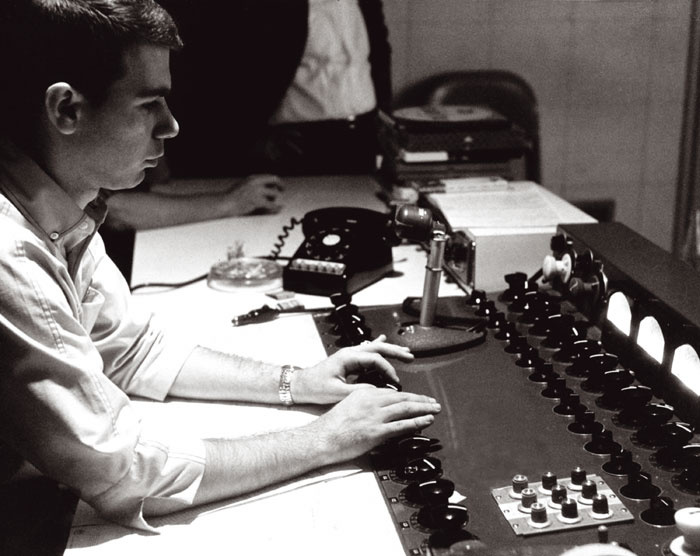
Bruce Botnick, Engineer – Reviews and Commentaries

Every Day Is Record Store Day at The Electric Recording Company

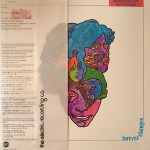
Our Review of The Electric Recording Company’s Release of Forever Changes

Recently we took the Electric Recording Company to task for their botched mastering of Love’s Forever Changes.

At ERC they like to point out they are doing things differently, and boy are they ever. They do not remaster the tapes, they simply transfer the tapes onto disc without any interference from equalizers, compressors and the like.

Naturally, they seem less willing to discuss the sludge-like sound their vintage tube cutting amplifiers bring to every tape that’s forced to go through them before it gets to the cutting stylus. I hope to discuss this issue in more depth down the road.

What Is It, Exactly

For now, let’s try to get to the heart of what this pressing is.

This is not an audiophile record, properly understood.

No member of the audiophile community, those lovers of sound you’ve heard so much about, could possibly put up with a record that sounds as bad as this one does.

Having played two of their releases and knowing how all of them are made, I would be surprised if any of this company’s records are any better than awful.

No, this is plain and simply a collectible.

It exists because it could be made as a very limited edition at a profit.

It exists because it could be made with exceptionally high quality packaging.

The vinyl inside the fancy packaging is only there to make sure that all the elements of a collectible release are accounted for.

All the value is tied up in the collector appeal of the release, none in the vinyl, because the vinyl is junk.

(more…)

Diminishing Returns in Audio? Sez Who?

More of the Music of Sergio Mendes and Brasil ’66

UPDATE 2026

The commentary you see below was written in 2005 or thereabouts. Some changes have been made and links to newer commentaries added.


Thoughts from 2005

I often read about the idea of “diminishing returns” regarding the piece of equipment under review in an audio magazine, as if to say that we are so close to audio perfection that a gain of a few percent is the most we can hope for from this or that new megabuck amp or speaker.

In my experience, precisely the opposite is true. 

There are huge improvements to be made on a regular basis, even without spending all that much money (keeping in mind that this is not exactly a poor man’s hobby).

If you are actively involved in seeking out better equipment, trying new things, and tweaking the hell out of your system as much as time and patience permit, I think an improvement of 10-25% per year in perceived sound quality is not an unreasonable expectation.

The Hallographs, for example, can easily make a system improvement of that magnitude. I have heard it happen on a number of occasions. Is the system twice as good with the addition of the Hallographs? Technically, no. Is it twice as enjoyable? Is it twice as musically involving? Absolutely. Was the system fine before? Of course. Could you even listen to it after removing the Hallographs from the room? Not in a million years.

A similar situation occurred not that long ago with the Townshend Seismic Platter you may have read about on the site. I put a second and third unit under different pieces of equipment (integrated amp, VPI SDS) and the sound just soared. Same equipment, playing the same records, night and day more musically satisfying sound. For relatively small amounts of money. I’ve heard the same thing happen in other systems, so this is no fluke. It can be done.

Change What Exactly?

What specifically needs to be changed in a given system no one can really know. All you can do is take your best shot and hope for a good result.

There is simply no alternative to the ‘hard” work of experimentation and critical evaluation.

The results of these experiments cannot be predicted with much accuracy.

But one thing I can guarantee you: if you don’t change at least something in your system, you can be sure it will never sound any better than it does today. Why would it?

Sergio Mendes and James Taylor

Of course the same principle applies to records. A while back I stumbled upon two pressings that really changed my understanding of the recordings themselves. One was an original copy of Sweet Baby James (similar to this one). The sound was so tonally perfect I could hardly believe what I was hearing. This stamper was so hot it was on fire! No copy in my experience had ever gotten it this right. It was a singular thrill. I was still thinking about it weeks later.

The other amazing LP was a copy of Sergio Mendes and Brazil 66’s first album (similar to this one), with a side two that murdered my best copy. We’re talking here about an album that I have literally been collecting for over 20 years. An album that I have auditioned more than 50 pressings of, maybe even 100. An album that I would have said I know what the best stampers are and that’s that.

But I would have been dead wrong. This stamper for side two takes this familiar recording to a level heretofore unimagined by me. It not only had more smoothness that my best copy — a chronic problem with this title, as they are often tizzy and aggressive — but there was quite a bit more ambience than ever before.

Normally, brighter records appear to have more ambience, as ambience is heard mostly in the treble region. Here we have a copy with “less’ treble (actually more correct treble) that gives us more ambience. More ambience than I have ever heard. A lot more.

And with ambience comes resolution. For the first time ever I can clearly make out the Portuguese words the female vocalists are singing. I still don’t know what they mean, but I can clearly hear the words. Portuguese is a language that is often pronounced with a slur: all the sounds seem to run together. That’s the way I always heard it on this album, so I assumed that’s the way it was always going to sound. Wrong. This pressing showed me a recording I never knew existed — until last week.

This is a perfect example of the thrill one can only get through record collecting. There’s nothing like it.

Actually that’s not true. There is something like it: Making your stereo sound better. Then all your records become less familiar – in a good way.

(more…)

L.A. Woman – Rhino Heavy Vinyl Reviewed

Hot Stamper Pressings of the Music of The Doors Available Now

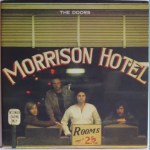
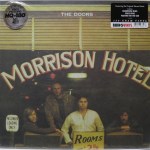
The Rhino pressing we auditioned from the Doors Box Set was surprisingly good. It’s rich and smooth with an extended top end — tonally correct, in other words — and there’s lots of bass.

This is all to the good. For the thirty bucks you might pay for it you’re getting a very good record, assuming yours sounds like ours, something we should really not be assuming, but we do it because there is simply no other way to write about records other than to describe the sound of the ones we actually have played.

What it clearly lacks compared to the best originals is, first and foremost, vocal immediacy.

Jim Morrison seems to be singing through a veil, an effect which becomes more and more bothersome over time, as these kinds of frustrating shortcomings have a habit of doing.

A bit blurry, a bit smeary, somewhat lacking in air and space, on the plus side it has good energy and better bass than most of the copies we played. All in all we would probably give it a “B.” You could do a helluva lot worse.

(more…)

Bruce Botnick Is One of Our Favorite Engineers

Bruce Botnick Engineered Albums with Hot Stampers

Bruce Botnick Engineered Albums We’ve Reviewed

More of Our Favorite Engineers

Bruce Botnick is one of our favorite recording and mixing engineers. Click on the links above to find our in-stock Botnick engineered or produced albums, along with plenty of our famous commentaries.  

(more…)

Alone Together – What’s with All the Bad Vinyl and Murky Sound?

Reviews and Commentaries for the Music of Dave Mason

What follows is some advice on What to Listen For.

If you are interested in digging deeper, our Listening in Depth commentaries have extensive track by track breakdowns for some of the better-known albums for which we’ve done multiple shootouts.

On to Alone Together.

Some records are consistently too noisy to keep in stock no matter how good they sound.

This is one of them. We have a section for records that tend to be noisy, and it can be found here.

We struggled for years with the bad vinyl (on the original vomit-colored vinyl pressings, those are the ones that have the potential to win shootouts) and the murky sound of this album.

Finally, with dozens of advances in playback quality and dramatically better cleaning techniques, we have now [circa 2012] managed to overcome the problems which we assumed were baked into the recording.

I haven’t heard the master tape, but I have heard scores of pressings made from it over the years. I confess I actually used to like and recommend the Heavy Vinyl MCA pressing. Rest assured that is no longer the case. Nowadays it sounds as opaque, ambience-challenged, lifeless and pointless as the rest of its 180 gram brethren.

You want to keep what is good about a Tubey Magical analog recording from The Golden Age of Rock while avoiding the pitfalls so common to them:

  • poor resolution,
  • heavy compression,
  • thickness,
  • opacity,
  • blubber,
  • compromised frequency extremes,
  • lack of space and
  • lack of presence.

How’s that for a laundry list of all the problems we hear on old rock records, old classical records, and old jazz records?

All records when you stop to think about it.

What record doesn’t have at least some of these faults? Not many in our experience. A copy with few or none of these problems would do very well in our Hot Stamper shootouts indeed.

This is, of course, a list of all the faults we hear just as often in the Heavy Vinyl pressings we audition.

Records are records. Thick ones have the same problems as thin ones. Why wouldn’t they?

(more…)

Waiting for the Sun – Don’t the DCC Pressings All Sound Different Too?

More of the Music of The Doors

I recently had a chance to listen again to this DCC pressing for the first time in many years. I was putting it up on ebay to sell and dropped the needle to check the sound. I can’t say I liked what I heard. Knowing the record as well as I do, I could her that the DCC was clearly to be brighter in the midrange.

When I went back to read what I had said about the DCC years ago, I saw that I had described that copy the same way. You can read it for yourself.

Our old review follows.

We rate the DCC LP a B Minus

We used to like the DCC pressing of this Doors album. Now… not so much. It’s a classic case of Live and Learn.

Keep in mind that the only way you can never be wrong about your records is simply to avoid playing them. If you have better equipment than you did, say, five or ten years ago, try playing some of your MoFi’s, 180 gram LPs, Japanese pressings, 45 RPM remasters and the like. You might be in for quite a shock.

Of course the question on everyone’s mind is, “How does this Hot Stamper copy stack up to the famous DCC pressing?” After all, the DCC was the one we were touting all through the ’90s as The One To Beat.

Well, to be honest, the DCC is a nice record, but a really special original copy throws a pretty strong light on its faults, which are numerous and frankly fairly bothersome.

The top end on the copy I played was a touch boosted, causing a number of problems.

For one, the cymbals sounded slightly tizzy compared to the real thing, which had a fairly natural, though not especially extended, top end.

But the real problem was in the midrange. Morrison sounded thinner and brighter, more like a tenor and less like a baritone, with a somewhat hi-fi-ish quality added to the top of his voice. Folks, I hate to say it, but if someone had told me that the record playing was half-speed mastered, I probably would have believed it. I detest that sound, and the DCC pressing bugged the hell out of me in that respect.

Morrison has one of the richest and most distinctive voices in the history of rock. When it doesn’t sound like the guy I’ve been listening to for close to forty years, something ain’t right.

The mid-bass was also a tad boosted — not in the deep bass, but more in that area around 100-200 cycles, causing the sound to be overly rich. None of the originals we played had anything like it, so I’m pretty sure that’s a bit of added EQ Hoffman introduced for reasons best known to him. (Did he like it that way, or was he pandering to some of the audiophile community’s preference for overly rich sound, the kind they confuse with “analog”? Nobody knows.)

Not So Fast There, O Hot Stamper Guru

But wait a minute — don’t all records sound different? Is it really fair to paint his version with such a broad brush on the basis of having played only one copy?

Of course not. Perhaps other copies sound better. It wouldn’t be the first time. (Maybe they sound worse. Think about that.)

So here’s our offer to you, dear customer: We absolutely guarantee our Hot Stamper copies will handily beat the DCC pressing or your money back. We’ll even pay the return domestic shipping if for some reason you are not 100% satisfied with the sound of our Hot Stamper. Now there’s an offer you can’t refuse, for any one of you who love the album and have a wad of money burning a hole in your pocket.

(more…)

Love’s Debut and Forever Changes on Heavy Vinyl – Indefensible Dreck from Sundazed

More of the Music of Love

Two audiophile hall of shame titles, and another two Sundazed records reviewed and found seriously wanting.

We got hold of a minty original pressing of the first Love album back around 2007, so in preparation for the commentary I pulled one of the Sundazed pressings off the shelf, (Forever Changes, the only one we ever bothered to sell), cracked it open and threw it on the turntable. 

Gag, what a piece of crap. When I had auditioned them all those years ago (2002), it was — I’m not kidding — the best of the bunch.

The sound to me back then was nothing special, but not bad. Knowing how rare the originals were, we gave it a lukewarm review and put it in the catalog, the single Sundazed Love album that (just barely) made the cut.

Now I wish I hadn’t, because no one should have to suffer through sound that bad. Here’s what I wrote for the shootout:

You’d never know it from those dull Sundazed reissues, but the right pressings of Love albums are full of Tubey Magic! With Bruce Botnick at the controls you can expect a meaty bottom end and BIG rock sound, and this recording really delivers on both counts.

With Sundazed mastering engineers running the show, you can expect none of the above.

No Tubey Magic, no meaty bottom end, no big rock sound.

After the shootout, I took the two copies we had in stock right down to my local record store and traded them in. I didn’t want them in my house, let alone on my site.

I’m glad that title didn’t sell very well because now I feel I owe a personal apology to anyone who might have bought one from me, thinking they were getting a half-way decent record.

They were getting no such thing. They were getting a piece of garbage. 

A textbook case of live and learn.

Love – Revisited

Hot Stamper Pressings of Psych Rock Albums Available Now

This is a very old review. The sound of this “greatest hits” compilation, on even the best copies, is unlikely to be good enough to qualify for Hot Stamper status these days.

We will never really know of course, as we no longer buy these pressings or take the time to clean and play them.

Love is a shockingly well-recorded band, one that deserves to be heard on top quality vintage pressings.

Our review from way back when:

This album was made from dub tapes and has some of that dubby sound (smeary, veiled, lacking in space), but in its defense we can say that it was very well mastered from those copy tapes and for the casual fan of the band is worth picking up if the price is right.

We had a chance to shootout a handful of copies recently and didn’t hear any others that could compete with this Elektra Original Pressing. We are HUGE fans of Love and this copy will show you why.

(more…)

The Doors’ Debut – MoFi Reviewed

More of the Music of The Doors

Sonic Grade: D 

If anyone still thinks that this pressing is anything but a bad joke played on the audiophile public — so sucked out in the midrange, bass shy and compressed to death — that person still has a way to go in this hobby.

A very long way.

You can hear that something is off with this pressing from another room. The sound is bad enough to have earned a place in our Mobile Fidelity Hall of Shame.

But wait just a gosh darn minute.

I liked the MoFi just fine when it came out. I guess I had a way to go in this hobby too.

That was back in the early ’80s. I like to think I’ve learned a thing or two in the last forty years.

Some reviewers and a great many audiophiles may be stuck in the 80s, but I sure as hell don’t think I am one of them.

(more…)

Letter of the Week – “Thanks to everyone for all the great sounding vintage LPs”

Hot Stamper Pressings of the Music of The Doors Available Now

One of our good customers had this to say about some Hot Stampers he purchased recently:

Hi Tom,

Thanks everyone for all the great sounding vintage LP’s. The WHITE HOT DOORS STRANGE DAYS I recently purchased is off the chart! Keep up the great work.

Dennis

Dennis,

Thanks for your letter. White Hot and off the chart are pretty much the same thing to us. As Good As It Gets is another way of saying it.

Best, TP


Further Reading