Top Artists – Michel Legrand

These Two Recordings of Michel LeGrand Didn’t Make the Grade

Hot Stamper Pressings of Top Quality Jazz Albums Available Now

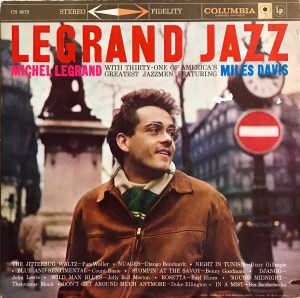
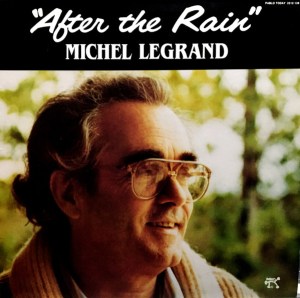
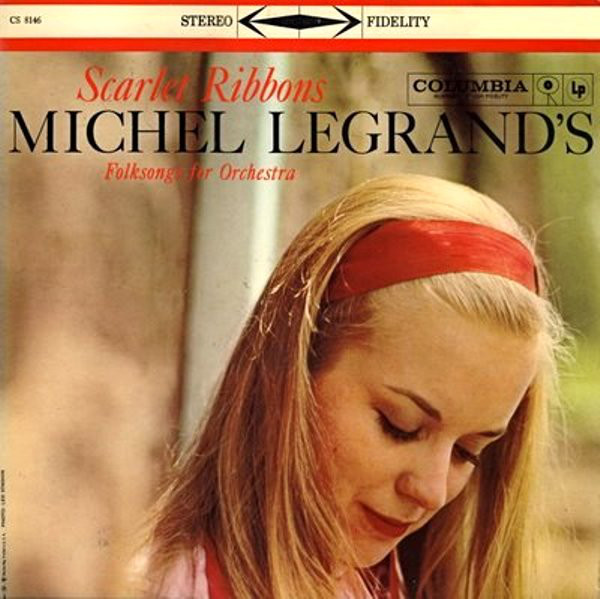
Pictured are two Michel Legrand albums we auditioned at some point in the past and found less than impressive.

Without going into specifics — our notes are long gone at this point — we’ll just say these two albums suffer from weak music, weak sound, or both, and therefore do not deserve a place in most audiophile collections — unless that audiophile happens to be a huge fan of the artist.

My guess is that if these two records are sitting in a record collection, they have not been played in many years, if ever.

Here’s an idea: If you own either of these two albums, pull them out and play them.

You may find that making more room on your shelves for records you may actually enjoy playing is easier than you think.

Our Pledge of Service to You, the Discriminating Audiophile 

We play mediocre-to-bad sounding pressings so that you don’t have to, a free service from your record-loving friends at Better Records.

(more…)

Michel Legrand – Legrand Jazz

More Large Group Jazz Recordings

  • This original 6-Eye Stereo pressing was doing just about everything right, earning solid Double Plus (A++) grades from start to finish
  • Both of these sides are open and spacious with real depth to the soundfield and lots of separation between the various instruments, a very important quality for a recording of a large ensemble recording such as this
  • Rich, solid bass; you-are-there immediacy; energy and drive; instruments that are positively jumping out of the speakers – add it all up and you can see that this copy had the sound we were looking for
  • Legrand rounded up 31 of the greatest jazz players of the 50s, divided them up into three groups, and the result was a landmark 30th Street Studio recording with audiophile sound to die for
  • We’re talking jazz giants: John Coltrane, Miles Davis, Bill Evans, Ben Webster, Herbie Mann, Art Farmer, Donald Byrd, Phil Woods — everybody who was anybody is on this record
  • 4 1/2 stars: “Throughout this superlative album, the arrangements are colorful and unusual, making one wish that Legrand had recorded more jazz albums through the years.”
  • Robert Brook recently played the “award winning” Impex 45 RPM pressing from 2019 (as did we) and wants to know what you think of the sound

This album is more common in mono than stereo, but we found the sound of the mono pressing we played seriously wanting. It’s dramatically smaller and more squawky and crude than even the worst of the stereo pressings we played.

We had a copy we liked years ago, but that was years ago. We don’t have that copy anymore and we don’t have a stereo that sounds the way our old one did either.

The unique voices of each of the jazz giants featured on this landmark recording contributes memorable solos then receeds into the group to provide the structure for the rest of the music. Which is an awkward way of saying everybody does his thing in service to the song and then gets out of the way. “The Jitterbug Waltz,” which opens up side one, is a perfect example: the arrangement is completely original, and within its structure, Miles DavisPhil WoodsJohn Coltrane and others solo beautifully, each taking a turn at the melody. If three minutes into this song you don’t like what you’re hearing, jazz is just not for you.

(more…)

Our Guide to Legrand Jazz on Impex

Hot Stamper Pressings of 30th St. Recordings Available Now

Years ago I wrote about how important the Legrand Jazz album was in my growth as a critical listener.

It’s yet another example of an album that helped make me a better audiophile by showing me the error of my tweaking and tuning ways.

Now there is a new pressing of it. Well, new to us anyway. (We readily admit to being behind the times and make no apologies for it. With records like these, we often find ourselves wondering why we bother.)

Two new pressings in fact. One on a single disc at 33 RPM as of 2017, and one mastered at 45 RPM on 2 LPs as of 2019, still in print and available for $59.99.

Production details can be found at the end of this review, along with some favorable comments, some from none other than Steve Hoffman himself.

But first let’s hear from the personification of the well-meaning audiophile reviewer, Michael Fremer. He gives the Impex pressings an 11 for sound. He writes (emphasis added):

This IMPEX reissue is sourced from an “analog mix-down transfer of the original 1958 work tape by Mark Wilder at Battery Studios” and cut by Chris Bellman and Bob Donnelly at Bernie Grundman Mastering on Grundman’s all-tube mastering system. I have a clean, original 6-Eye pressing that this superbly pressed reissue betters in every way. This will make both your stereo and your heart sing. Some of the greatest jazz musicians of that or any era wailing and clearly having a Legrand time. Limited to 3000 copies. Don’t miss it!

Who are you going to believe, the Self-Appointed Vinyl Experts of the World or some guy like me who thinks he knows a thing or two about the sound of records, especially, as in this case, a record I have been playing since 1990 or thereabouts.

(Back in those early days I also had the standard CD, which is excellent and highly recommended. Since I couldn’t clean or play my original vinyl pressing at a very high level, my guess would be that the CD had the better sound at the time.)
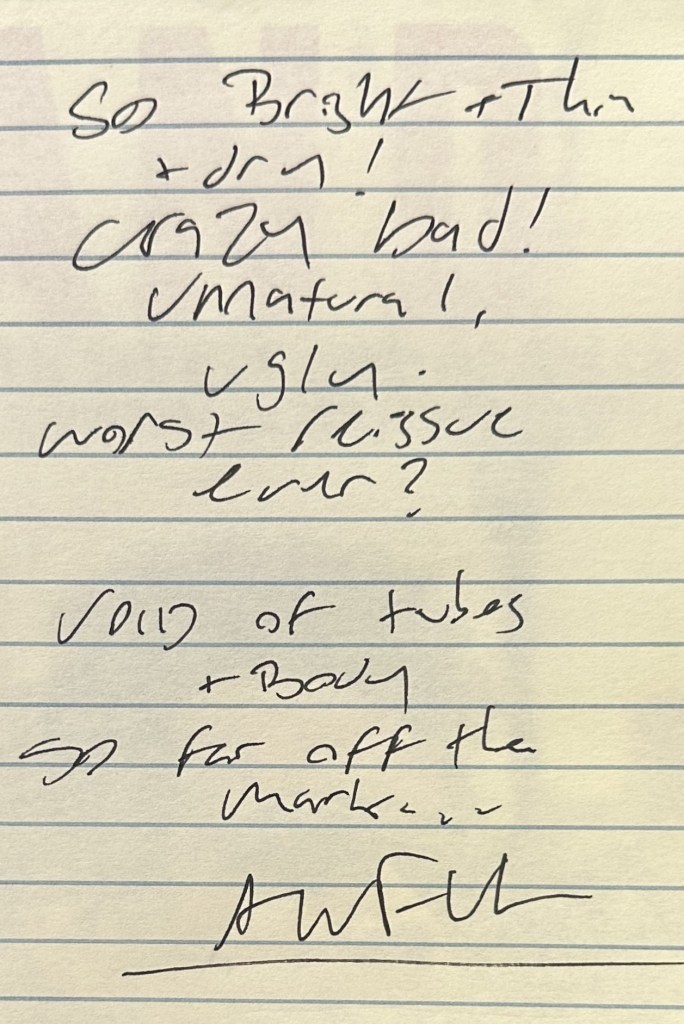
Our notes (for those who have trouble reading our scratch)

So bright and thin and dry.

Crazy bad!

Unnatural, ugly.

Worst reissue ever?

Void of tubes and body.

So far off the mark.

Awful.

A second opinion

Robert Brook reviewed this pressing a while back. He does his best to remain positive when choosing the words that he thinks will help the reader bette understand the experience of playing the Impex release of Legrand Jazz that we had loaned him. In the end he goes with the spoken word over the written one.

Legrand Jazz (featuring Miles Davis) – the 2019 IMPEX Double 45 rpm

I think it’s safe to say Robert has learned a great deal regarding the state of modern remastering. Impex’s recent release may have shown him just how low it can go.

And this is a man who’s played records from The Electric Recording Company!

When you play those, it’s hard to imagine worse sound, but one doesn’t need to imagine it, one only needs to be one of the 3000 unlucky souls who took Michael Fremer’s and Steve Hoffman’s advice and actually paid good money for this Impex pressing.

I might give it an 11 rating if the scale was 1 to 100.

Even that might be too generous. Let’s be honest, it’s a zero on any scale worth a damn, a complete failure and proof, as if more were needed, that Michael Fremer has been as deaf as a post since at least 2017, when he favorably reviewed the first Impex iteration of Legrand Jazz.

No one with two working ears should have anything good to say about this record. If you own these ridiculously bad pressings, buy the CD and find out for yourself if it isn’t better sounding.

(more…)
Michel Legrand – After the Rain

More Jazz Recordings of Interest

  • After the Rain returns to the site for the first time in years, here with solid Double Plus (A++) sound throughout this original Pablo pressing
  • Both of these sides are open and spacious with real depth to the soundfield and lots of separation between the various instruments
  • Rich, solid bass; you-are-there immediacy; energy and drive; instruments that are positively jumping out of the speakers – add it all up and you can see that this copy had the sound we were looking for
  • 4 stars: “This high-quality outing features composer Michel Legrand faring quite well as a jazz pianist. He performs six of his compositions with a lyrical septet also including altoist Phil Woods (doubling on clarinet), tenor saxophonist Zoot Sims, trumpeter Joe Wilder, guitarist Gene Bertoncini, bassist Ron Carter, and drummer Grady Tate.”

This album is pure magic! I know of no other jazz album like it. It’s lyrical and moody, yet comes to life at a moment’s notice when the horn players start to feel the spirit. If you’re familiar with the music he wrote for The Thomas Crown Affair (he won an Academy Award for “Windmills of Your Mind”), you may have a good feel for subtle, impressionistic, often moody quality of After the Rain. Or check it out on YouTube (while trying to imagine the sound being at least one million times better).

Michel’s idea was to assemble a group of his favorite musicians, especially those who were ordained in the lyrical persuasion, to record his next album.

With Zoot Sims and Phil Woods trading off stylistically opposed solos within the gentle, subtly ‘French’ atmosphere, aided by guitar, trumpet, Michel’s piano, and rhythm, you have something new, even unique.

Phil Woods doubles on clarinet, and his lead work on “Martina” is the one of the finest examples of jazz clarinet I’ve ever heard. (Art Pepper is another guy who can really swing on the clarinet without sounding dated.)

(more…)

Robert Brook’s Guide to Legrand Jazz on Impex

Robert Brook has a blog which he calls

A GUIDE FOR THE DEDICATED ANALOG AUDIOPHILE

Robert tries to remain positive when choosing the words that would best describe the award winning Impex release of Legrand Jazz. In the end he goes with the spoken word over the written one.

Years ago I wrote about how important the Legrand Jazz album was for me in my growth as a critical listener. It’s yet another example of an album that helped make me a better audiophile by showing me the error of my tweaking and tuning ways.

Let’s watch the video and see what Robert has learned about Impex’s recent release.

Legrand Jazz (featuring Miles Davis) – the 2019 IMPEX Double 45 rpm

Michael Fremer gives the Impex pressings an 11 for sound. He writes (bolding added by me):

(more…)

60s 360 Vs. 70s Red Label on Je m’appelle Barbra

More Titles that (Potentially) Sound Their Best on the Right Reissue

For Barbra Streisand’s early albums, the original pressings on the 360 label just have to be better, right? 

Not in this case. It’s just another rule of thumb, one that will sometimes lead you astray if what you are trying to find are not just good sounding pressings of albums, but the best sounding pressings of albums.

Same with reissue versus original. Nice rule of thumb but only if you have enough copies of the title to know that you’re not just assuming the original is better. You actually have the data — gathered from the other LPs you have played — to back it up.

The best of the 360 pressings in our shootout did well, just not as well.

A classic case of compared to what? Who knew the recording would sound better on the Red Label Columbia reissue pressing from the ’70s? Certainly not us, not until we had done the shootout.

This is why we do shootouts, and why you must do them too, if owning the highest quality pressings is important to you.

Our good later label pressings had all the richness and Tubey Magic of the 360s — one really couldn’t tell which pressing was on the turntable by the sound — but had a bit more space, clarity and freedom from artificiality.

Watch your levels because she really gets loud on some of this material. The best copies, such as this side one, hold up. The lesser copies get congested, shrill and crude at their loudest, and of course get marked down dramatically when that happens.

Side two as very rich and smooth, yet clear and breathy – this is the right sound for ol’ Babs. The first track has tons of Tubey Magical reverb – check it out!

(more…)

Legrand Jazz – Skip the Mono

Hot Stamper Pressings of Large Group Jazz Recordings Available Now

This review is from well over ten years ago.

This album is more common in mono than stereo, but we found the sound of the mono pressing we played seriously wanting. It’s dramatically smaller and more squawky and crude than even the worst of the stereo pressings we played. 

We had a copy we liked years ago, but that was years ago.

We don’t have that copy anymore and we don’t have a stereo that sounds the way our old one did either.

More on the subject of mono versus stereo.

(more…)

I Once Fell Into a Common Audiophile Trap – This Album Helped Me Find My Way Out

More Vintage Hot Stamper Pressings on Columbia Available Now

This 2005 commentary discusses how easy it is to be fooled by tweaks that seem to offer more transparency and detail at the expense of weight and heft. Detail is everything to some audiophiles, but detail can be a trap that’s easy to fall into if we do not guard against it.

The brass on this wonderful Six Eye Mono pressing of the album set me straight. [Since that time I have not been able to find mono pressings that sounded as good as I remember this one sounding. That sh*t happens.]

I was playing this record today (5/24/05) after having made some changes in my stereo over the weekend, and I noticed some things didn’t sound quite right. Knowing that this is an exceptionally good sounding record, albeit a very challenging one, I started playing around with the stereo, trying to recapture the sound as I remembered it from the last copy that had come in a few months back.

As I tweaked and untweaked the system around this record, I could hear immediately what was better and what was worse, what was more musical and what was more Hi-Fi. The track I was playing was Night In Tunisia, which has practically every brass instrument known to man, in every combination one can imagine.

Since this is a Mono pressing, I didn’t have to worry about issues like soundstaging, which can be misleading, or perhaps distracting is a better way to describe the problem.

I was concerned with tonality and the overall presentation of the various elements in the recording.

To make a long story short, I ended up undoing all the things that I had done to the system over the weekend! In other words, what improvements I thought I had made turned out not to be improvements at all. And this is the album that showed me the error of my ways.

Brass instruments are some of the most difficult to reproduce, especially brass choirs.

(more…)

Michel Legrand / After the Rain – A Personal Favorite

This album is PURE MAGIC! I know of no other jazz album like it. It’s lyrical and moody, yet comes to life at a moment’s notice when the horn players start to feel the spirit. If you’re familiar with the music he wrote for The Thomas Crown Affair (he won an Academy Award for “Windmills of Your Mind”), you may have a good feel for subtle, impressionistic, often moody quality of After the Rain . Or check it out on youtube (while trying to imagine the sound being at least one million times better).

Michel’s idea was to assemble a group of his favorite musicians, especially those who were ordained in the lyrical persuasion, to record his next album.

With Zoot Sims and Phil Woods trading off stylistically opposed solos within the gentle, subtly “French” atmosphere, aided by guitar, trumpet, Michel’s piano, and rhythm, you have something new, even unique.

Phil Woods doubles on clarinet, and his lead work on Martina is the one of the finest examples of jazz clarinet I’ve ever heard. (Art Pepper is another guy who can really swing on the clarinet without sounding dated.) (more…)

Bud Shank – Windmills Of Your Mind

Hot Stamper Jazz Recordings Featuring the Saxophone

Yet Another Record We’ve Discovered with (Potentially) Excellent Sound

  • Bud Shank’s 1969 release makes its Hot Stamper debut with a Shootout Winning Triple Plus (A+++) side two and outstanding Double Plus (A++) sound on side one
  • Fully extended from top to bottom with a wide-open soundstage – for this music this is the right sound
  • Features a collection of compositions by jazz great Michel Legrand, who lends his talents here on piano and harpsichord as well
  • “Every track is a French twist on the swinging ’60s, with superb arranging by Legrand and crisp playing by Bud and the orchestra.”

(more…)