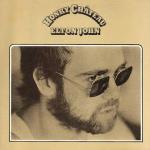
Top Artists – Elton John

Too Low For Zero – The Last in a Great Run

Hot Stamper Pressings of the Music of Elton John Available Now

Much of the production — the smooth, sweet harmony vocals, the rich, grungy guitars, the solid, warm piano — reminds me of Goodbye Yellow Brick Road, one of the classics from back in the day when Gus Dudgeon was running the show.

Caribou (1974) and Captain Fantastic and the Brown Dirt Cowboy (1975) have a similarly glossy, perfectionist approach to production as well, of course.

It was 1975’s Rock of the Westies that went off in another direction.

The next six albums, from Blue Moves to Jump Up, at least to these ears, don’t sound good enough or have enough consistently good material compared to the six albums recorded from 1970 to 1973.

Four of those are in our Top 100 Rock and Pop album list, and all four are Must Owns in my book. Pop music just doesn’t get any better.

So if Too Low For Zero reminds us in any way of those albums, especially in the songwriting department now that Bernie Taupin has rejoined team Elton after a too-long hiatus, that is all to the good.

(more…)

Elton John – Too Low For Zero

More Elton John

  • You’ll find KILLER Shootout Winning Triple Plus (A+++) sound or close to it on both sides of this early British import LP – exceptionally quiet vinyl too
  • There’s real Tubey Magic on this album, along with breathy vocals and plenty of rock and roll energy
  • “I Guess That’s Why They Call It The Blues” – the best song Elton’s done in the last 35 years – is the best reason to own the album
  • One of engineer Bill Price‘s best efforts behind the boards in the ’80s, and Chris Thomas’s production is State of the Art as usual
  • 4 1/2 stars: “Happily, this is a reunion that works like gangbusters, capturing everybody at a near-peak of their form.”
  • If you’re an Elton John fan, and what audiophile wouldn’t be?, this title from 1983 is surely a Must Own

Much of the production – the smooth, sweet harmony vocals, the rich, grungy guitars, the solid, warm piano – reminds me of Goodbye Yellow Brick Road, one of the classics from back in the day when Gus Dudgeon was running the show.

Caribou (1974) and Captain Fantastic and the Brown Dirt Cowboy (1975) have a similarly glossy, perfectionist approach to production as well. It was 1975’s Rock of the Westies that went off in another direction.

The next six albums, from Blue Moves to Jump Up, at least to these ears, don’t sound good enough or have the kind of consistently high-quality material that was the hallmark of the six albums recorded from 1970 to 1973. Four of those are in our Top 100 Rock and Pop album list, and all four are Must Owns in my book. Pop music just doesn’t get any better.

So if Too Low For Zero reminds us in any way of those albums, especially in the songwriting department now that Bernie Taupin has rejoined team Elton after a too-long hiatus, that is all to the good.

(more…)

Elton John – Don’t Shoot Me I’m Only The Piano Player

More of the Music of Elton John

  • This vintage copy of Elton’s 1973 release (the first to hit the site in over three and a half years) boasts INCREDIBLE Shootout Winning Triple Plus (A+++) sound or close to it from start to finish
  • Forget the dubby, closed-in and transistory domestic pressings – here is the relaxed, rich, spacious, musical, lifelike sound that only the best imports can show you
  • Thanks to Ken Scott‘s brilliant engineering and Gus Dudgeon‘s production savvy, every song here sounds better than you imagined, because finally you are hearing it right
  • 4 stars: “His most direct, pop-oriented album… a very enjoyable piece of well-crafted pop/rock.”

The amazing engineer Ken Scott (Ziggy Stardust, Magical Mystery Tour, Honky Chateau, Crime of the Century, Truth, Birds of Fire) is the man responsible for the stunning sound here.

The kind of Tubey Magical richness, smoothness and fullness he achieved at Trident in the early ’70s, as well as here at a certain French country estate, have never been equaled elsewhere in our opinion. (more…)

Living and Learning Is How the Game Is Played

Hot Stamper Pressings of the Music of Elton John Available Now

A classic case of live and learn.

Scroll down to read more about what we learned from a big shootout we did many years ago for the Self-Titled album.

To illustrate how the game is played, we’ve copied some of the previous commentary into this listing to clarify how our understanding had changed from 2004 to roughly 2010, which is when all the comments you see below were written.

Live and Learn, Part One

These domestic original pressings have the very same stamper numbers as the British pressings. It appears that the metalwork was produced in England and shipped to America for pressing on domestic vinyl. What’s strange is that the American pressings are consistently brighter than the British pressings. Why this should be is a mystery, but I have a theory to explain it. The British stampers are used to make British LPs on that lovely see-through purple vinyl, and I’m guessing that that compound is a little smoother sounding than the vinyl that Uni uses. Either that or there is some other way that Uni produces their records so that they end up being brighter, even using the exact same stampers as the British ones.”

Partly true.

We have five British copies in stock, and the reason they don’t sound as good probably has less to do with British vinyl and more to do with the fact that the British ones we have are not the stampers we like the best. The domestic pressings with our favorite stampers have more highs and better highs and just plain sound better to us now.

Notice how I completely contradict myself below, yet both listings were up on the site all this time and nobody, especially me, seems to have noticed.

Live and Learn, Part Two

These original British pressings, with the lovely see-through purple vinyl, are the only good sounding versions of this album that I have ever heard. As you can imagine they are extremely difficult to come by in clean condition.

What is there to say about such a bald-faced turnabout?

Simple. We make our judgments based on the records we have on hand to play. When better pressings come along, or our equipment has improved to the point where we can appreciate other pressings, we will happily and unhesitatingly report what we hear.

The Best Version?

(more…)

Letter of the Week – “Wish You Were Here is maybe the best sounding record I’ve ever heard…”

Hot Stamper Pressings of the Music of Pink Floyd Available Now

One of our good customers had this to say about some Hot Stampers he purchased a while ago:

Hey Tom,  

I want to say a big THANK YOU for the Hot Stampers you sent to me.

Wish You Were Here is maybe the best sounding record I’ve ever heard (as you know I have a lot of Hot Stampers). I’m so amazed and lucky – I can’t describe it. The copy sounds out of this world with soooo well-defined bass, stunning clarity, warmth and richness, immediacy, astonishing transparency…

It murders my old copy.

Another Passenger and Honky Chateau are also Demo Discs of the highest order. 

Erik S.

Erik,

Glad to hear it, all great albums in my book.

Another Passenger is unfortunately one of those records that should be more popular with audiophiles and music lovers but just isn’t. It’s been years since we did a shootout for it. If any of you out there want a good Carly Simon record, pick that one up, it’s well worth a listen.

(more…)

Letter of the Week – “It realized what I was imagining when I read your description on the website.”

Hot Stamper Pressings of the Music of Elton John Available Now

One of our good customers had this to say about some Hot Stampers he purchased a while back:

Hey Tom, 

You got me again. After hearing the Elton John record I was thoroughly pleased.

It realized what I was imagining when I read your description on the website. I can only imagine what the Super Hot Stamper LP would sound like as a White Hot Stamper.

Andrew S.

Andrew,

Glad you are enjoying that amazing pressing of Madman. We thought it sounded great too, and naturally that’s why we had so many nice things to say about it in our review. We discussed what separates the White Hot winners from the Super Hot second place finishers here:

(more…)

The Strings on Elton John’s Second Album Are a Tough Test

Hot Stamper Pressings of the Music of Elton John Available Now

What’s especially remarkable about this album is the quality of Paul Buckmaster‘s string arrangements. I don’t know of another pop record that uses strings better or has better string tone and texture. Strings are all over this record, not only adding uniquely interesting qualities to the backgrounds of the arrangements but actually taking the foreground on some of the songs, most notably Sixty Years On.

When the strings give in to a lovely Spanish guitar in the left channel (which sounds like a harp!) just before Elton starts singing, the effect is positively glorious. It’s the nexus where amazing Tubey Magical sound meets the best in popular music suffused with brilliant orchestral instrumentation. Who did it better than The Beatles and Elton John? They stand alone.

Correct string tone and texture are key to the best-sounding copies. The arrangements are often subtle, so only the most transparent copies can provide a window into the backgrounds of the songs that reproduce the texture of the strings.

Without extension on the top, the strings can sound shrill and hard, a common problem with many pressings.

Without a good solid bottom end, the rockers (“Take Me to the Pilot”) don’t work either of course, but you can even hear problems in the lower strings when the bass is lightweight.

String tone on a pop record is a tough nut to crack, even more so on a record like this where the strings play such a prominent role. It’s the rare copy that allows you to forget the recording and let you just enjoy the music.

For that you really need a Hot Stamper.

These Are Some of the Qualities We’re Listening For on Elton’s Albums

There are probably closer to a dozen, but some of the more important ones would be these:

(more…)

Elton John – Self-Titled

More of the Music of Elton John

  • With two STUNNING Shootout Winning Plus (A+++) sides or close to them, this copy was giving us the sound we were looking for on Elton’s sophomore release
  • Finding copies that play as quietly as this one has been difficult for as long as we have been buying them – British DJM vinyl is what it is and there’s no cleaning solution on earth that can make it as quiet as we would like
  • These sides are huge, and the music positively jumps out of the speakers – accept no substitutes!
  • A vintage British DJM pressing with sound this good is a Must Own for all right thinking music lovers of the audiophile persuasion – this is a very special recording, one that will reward countless plays for as long as you live
  • Some of the most remarkable string arrangements (and Tubey Magical string sound) ever recorded for a pop album
  • Top 100 and 4 1/2 stars: “Even with the strings and choirs that dominate the sound of the album, John manages to rock out on a fair share of the record. …Elton John remains one of his best records.”
  • A permanent resident of our Top 100 rock and pop list — this album is a Must Own from 1970
  • We’ve recently compiled a list of records we think every audiophile should get to know better, along the lines of “the 1001 records you need to hear before you die,” with an accent on the joy these amazing audiophile-quality recordings can bring to your life. Elton John is a good example of a record many audiophiles may not know well but would certainly benefit from getting to know better.

Folks, if you’re looking for classic popular music that still appeals to sophisticated adults fifty-plus years after it came out, this is the album for you. It’s one of the four classic Elton John records (five if you count GYBR) that belong in every right-thinking audiophile’s collection.

(The others are, in order of quality: #1) Tumbleweed Connection, #2) Honky Chateau, #3) Goodbye Yellow Brick Road , and #4) Madman Across the Water.)

It’s full of analog Tubey Magic — the richness, sweetness, and warmth are nothing short of stunning. The transparency, clarity, texture, dynamics, energy, spaciousness, and three-dimensionality of this recording are really something to be heard.

The piano has real weight, the vocals are breathy and full, and the string tone is some of the best we have ever heard on a pop album.

Drop the needle on “Border Song.” When it hits the big Holy Moses chorus, you can pick out and follow all the different voices. What sounds like a harp on “Sixty Years On” is actually a Spanish Guitar. Whatever it is, it’s positively sublime on the better pressings.

(more…)

Elton John / Captain Fantastic and The Brown Dirt Cowboy

More of the Music of Elton John

  • With two solid Double Plus (A++) sides, this vintage DJM import will be very hard to beat
  • Forget the domestic pressings, forget whatever lousy reissues have come or will come down the pike – if you want to hear this album right, a killer Hot Stamper early British pressing like this one is the only way to go
  • Includes two of our favorites: “(Gotta Get A) Meal Ticket” and the massive hit “Someone Saved My Life Tonight”
  • Marks in the vinyl are sometimes the nature of the beast with these vintage LPs – those on “Curtains” are especially bad – but if you can tough those out, this copy is going to blow your mind
  • 5 stars: “Elton John and Bernie Taupin recalled their rise to power in Captain Fantastic and the Brown Dirt Cowboy, their first explicitly conceptual effort since Tumbleweed Connection. It’s no coincidence that it’s their best album since then, showcasing each at the peak of his power, as John crafts supple, elastic, versatile pop and Taupin’s inscrutable wordplay is evocative, even moving.”

(more…)

Building a Store of Knowledge, One Record at a Time

Hot Stamper Pressings of the Music of Elton John Available Now

We recently ran across the commentary below in a reply to a Hot Stamper testimonial for Honky Cat. Drawing on our own experience, we give a quick and dirty primer on how one can build up one’s knowledge of records, stampers, labels, pressing variations and the like.

We don’t really give out much in the way of specific information about any of those things; we just tell you how it can be done. It’s your job to go out and do it. It’s simple: just follow the path we have laid out for you. How tough can it be?

Phil wondered how we could find such an amazing sounding record, which in this case is a rhetorical question.

Phil knows exactly how we find them, because he shops at the same L.A. stores we do and finds a few himself — the only way it can be done, the old-fashioned way.

We buy them, clean them and play them, just like Phil does.

The difference these days is one of scale. With seven or eight people [now ten to twelve] finding, cleaning and playing records every day, we can probably shootout forty or fifty or even a hundred times as many records as any suitably dedicated single person working by himself could.


It turns out, as a practical matter, no such person seems to exist. At least we can find no evidence to support the existence of anyone doing shootouts like the ones we do.

Sure, these kind get done, which may fool some people, but they don’t fool us.


And to find the raw material (LPs, what else?), it helps immensely if you live in a major city like L.A., where records, even high-quality ones, are still abundant, if not ubiquitous. [Not so much anymore.]

After a shootout, one of my favorite things to do is [was, I’m retired now] jot down the stampers for the hottest copies.

I then head right out to my favorite record stores to search through the bins and — even better — the overstock underneath.

So many times I’ve thrilled to the purchase of an album with exactly the right stampers that very day, a copy that I would never have known to buy had we not just done the shootout.

Streamlining the Process

This is how record knowledge builds: one LP at a time. To that end we’ve streamlined the system of finding Hot Stampers, turning the process into a rough kind of science and devoting well over a hundred manhours a week to the effort.

It’s time-consuming and expensive, but every week we find Hot Stamper copies of great albums that MURDER the competition, in the process often dramatically changing our expectations of how good that music can sound. We call them breakthrough pressing discoveries.

It’s the most fun part of the record business.

The rest of it, if I can be honest, I could happily do without. 

(more…)