Top Arrangers / Performers – Marty Paich

Getting the Balance Right on Mean to Me

Hot Stamper Pressings of Pop and Jazz Vocals Available Now

Mean to Me is a favorite test track for side one, with real Demo Disc quality sound. We credit it with helping us dramatically improve our playback.

Roy DuNann at Contemporary was able to get all his brass players together in one room, sounding right as a group as well as individual voices.

The piano, bass, and drums that accompany them are perfectly woven into the fabric of the arrangement.

What makes this song so good is that when the brass really starts to let loose later in the song, with the right equipment and the right room, you can get the kind of sound that’s so powerful you could practically swear it’s live.

Helen was recorded in a booth for this album, and her voice is slightly veiled relative to the other musicians playing in the much larger room that of course would be required for so many players.

When you get the brass correct, the trick is to get her voice to become as transparent and palpable as possible without screwing up the tonality of the brass instruments.

The natural inclination is to brighten up the sound to make her voice more clear.

But you will quickly be made painfully aware that brighter is not better when the brass gets too “hot” and starts to tear your head off.

The balance between voice and brass is key to the proper reproduction of this album.

Once you have achieved that balance, tweak for transparency while guarding against too much upper midrange or top end. Which also means watch out for audiophile wires that may have fooled you into thinking they were more resolving when actually they were just peakier in some portion of the frequency range.

(more…)

Helen Humes / Songs I LIke to Sing – A Forgotten Jazz Vocal Classic

More Pop and Jazz Vocal Albums

  • With a STUNNING Shootout Winning Triple Plus (A+++) side two mated to a solid Double Plus (A++) side one, this vintage Contemporary pressing was giving us the sound we were looking for on our all time favorite Big Band Vocal album – fairly quiet vinyl too
  • Both of these sides are exceptionally Tubey Magical, yet incredibly clean and clear
  • Helen’s voice is perfection — breathy, full, and sweet; and the orchestra sounds just right — just listen to the nice bite of the brass
  • 5 stars: “One of the high points of Helen Humes’ career, this Contemporary set features superior songs, superb backup, and very suitable and swinging arrangements by Marty Paich. Humes’ versions of ‘If I Could Be With You,’ ‘You’re Driving Me Crazy,’ and ‘Million Dollar Secret,’ in particular, are definitive… This classic release is essential and shows just how appealing a singer Helen Humes could be.”

(more…)

Don’t Skip the OJC, Put It in a Shootout

Of the three early OJC pressings of West Coast Sound we played recently, only one met our standards. At 2+/1.5+, the sound was good, not great.

One copy earned grades of 1+/1+, which means the sound was passable. The last copy had an NFG side two, which means it was just awful.

(Many of the Heavy Vinyl disasters we’ve been cataloging lately have earned that notorious grade. The unacceptably lo- to mid-fi sound even the better ones offer doesn’t seem to bother the audiophiles who rave about them, however.)

So does side two of the OJC pressing have fairly good sound, merely passable sound, or is the sound hopelessly bad?

In the case of this Shelly Manne album, all three, and the only way we were able to discover that is by cleaning up three of them and playing them head to head with real Contemporary pressings in a blinded experiment.

Obviously we were hoping for better results from our OJCs — only one of the copies we played will turn out to be saleable.

Why did we bother? That old bugaboo the profit motive was all that was needed to make us give the OJC pressings a try. We thought we could make money on them but it turns out that the opposite will happen. Oh well, nothing ventured, noting gained.

More importantly, we are not the least bit shy about coming clean and sharing the results with our readers and customers, especially the part about three identical looking copies with the same stamper numbers all sounding very diffferent from each other.

An added bonus is that side two was worse than side one most of the time. That happens often enough, but nobody but us ever seems to want to talk about it.

If we had had ten OJC pressings to play, we probably would have be able to find at least one or two with a grade of 2+/2+, meaning that George Horn probably did a creditable job mastering the album back in 1984 when he cut it for Fantasy, to sell for the very affordable price of $5.98. It’s most likely the pressing plant that let listeners down.

Needs Tubes

The problem here is that this title needs tubes, or, at the very least, the sound of tubes, and George apparently did not have them, or enough of them, in his mastering chain.

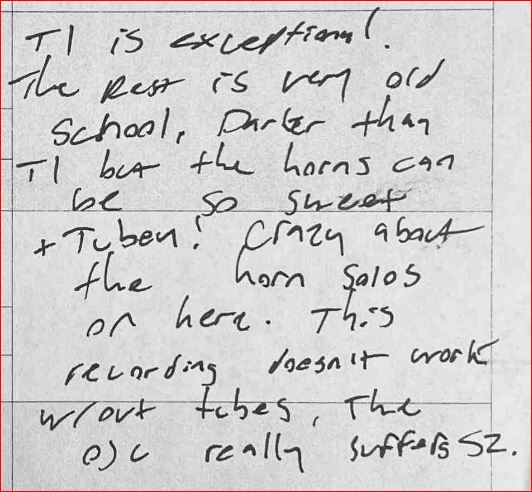
Our specific notes can be seen on the left. We mention that the first track has the best sound (1956 dates), the rest falling short for being darker and more crude (“old school,” some dating from 1953).

The West Coast horn players are the reason to buy this title, with horns that are “sweet and tubey,” but of course to hear that kind of sound you will need a real Contemporary pressing, not an OJC — or anything made in the modern era for that matter.

(more…)

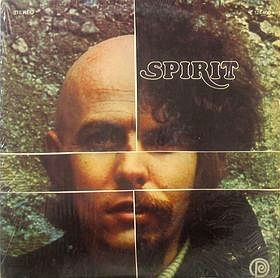
A Psych Rock Masterpiece (The First of Two)

More Psychedelic Rock

  • Wall to wall, with layered studio depth like you will not believe, the kind of space you hear on an engineering classic like Dark Side of the Moon
  • 4 1/2 stars on Allmusic, but in our estimation it deserves five – it’s simply one of the All Time Greats from the era
  • We’ve recently compiled a list of records we think every audiophile should get to know better, along the lines of “the 1001 records you need to hear before you die,” with an accent on the joy these amazing audiophile-quality recordings can bring to your life. Spirit’s First Album is a good example of a record many audiophiles may not know well but would be well advised to get to know better.
  • If I were to make a list of my favorite Rock and Pop albums from 1968, this album would definitely be on it, close to the top I should think.

Need a refresher course in Tubey Magic after playing too many modern recordings or remasterings? These Ode pressings are overflowing with it. Rich, smooth, sweet, full of ambience, dead-on correct tonality — everything that we listen for in a great record is here.

No recordings will ever be made that sound like this again, and no CD will ever capture what is in the grooves of this record. There is of course a CD of this album, quite a few I would guess, but those of us with a good turntable could care less. (more…)

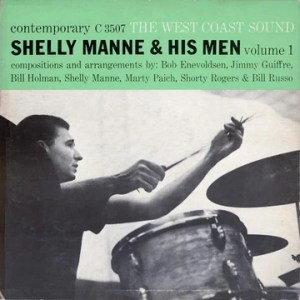
Shelly Manne & His Men – The West Coast Sound, Vol. 1

More Shelly Manne

  • This early MONO pressing was doing practically everything right, with both sides earning INCREDIBLE Shootout Winning Triple Plus (A+++) grades or close to them
  • The first track here is by far the best sounding — it’s amazing and the perfect illustration of just how good 1956 mono sound can be if you know what you are doing
  • The sound may be a bit dated but the horns are enchantingly sweet and Tubey Magical, with solos that show off the jazz chops of “His Men” about as well as any Manne and His Men album ever has
  • Tube mastering is essential for this recording – without vintage tubes in the chain, you end up with the kind of modern sound that the average OJC pressing suffers from (this is especially noticeable on side two of the OJC pressings we played, which were mostly awful)
  • Contemporary in 1956 was making some awfully good jazz records, with room-filling, natural and realistic mono sound, the kind of sound that still holds up today and doesn’t need a lot of “mastering help” to do it
  • Good luck finding quieter early copies of this title — we sure couldn’t do it, not with top quality sound anyway
  • 5 stars: “The music has plenty of variety yet defines the era… Highly recommended and proof (if any is really needed) that West Coast jazz was far from bloodless.”
  • If you’re a fan of West Coast Jazz, this is a Top Title from 1956, and one that certainly belongs in any right-thinking audiophile’s collection.

(more…)

Skip the Original OJC of West Coast Sound (C3507)

Hot Stamper Pressings of Contemporary Jazz Albums Available Now
UPDATE 2025

A new shootout for this title gave us a better understanding of the OJC relative to the other pressings we were playing. We came across one fairly good sounding OJC pressing out of the three we played, one that earned grades of 2+/1.5+, so if you have an OJC, play it and see whether it is one of the good ones or, as is most likely the case, one of the bad ones.

Side two is the side to play to hear what we are on about. The grades ranged from decent, 1.5+, to just awful, NFG.


The sound of the early OJC pressings of West Coast Sound that we played recently were not to our liking.

They are brighter and thinner than even the worst of the real Contemporary pressings.

That is decidedly not our sound.

We have to admit that we used to find the sound of many of these OJC pressings much more tolerable in the past.

More than tolerable. Enjoyable. Recommendable. Saleable even.

Nothing to be ashamed of, that was many years ago. As you may already know, live and learn is our motto. Getting it wrong is a feature, not a bug, of collecting if your goal is to find the best sounding pressings of the music you love.

(If you have some other goal, this may not be the right blog for you. Definitely steer clear of this website. The prices there are ridiculous!)

It’s true: Our old system from the 80s and 90s was tubier, tonally darker and dramatically less revealing, which strongly worked to the advantage of leaner, brighter, less Tubey Magical titles such as this one.

That was thirty or more years ago. Pretty much every dynamic speaker system I ran into had that sound. And I was never a fan of screens or horns. Like most audiophiles, I thought my stereo sounded great. It sure sounded right to me at the time.

And the reality is that no matter how hard I worked or how much money I spent, I would never have been able to achieve substantially better sound for one simple reason: most of the critically important revolutions in audio had not yet come to pass. It would take many technological improvements and decades of effort until I would have anything like the system I do now.

Toto – Self-Titled

More Toto

Reviews and Commentaries for the Music of Toto

  • Outstanding sound for the band’s debut LP, with both sides earning Double Plus (A++) grades
  • Toto’s albums have the kind of analog sound we love here at Better Records – they’re rich, huge and present, with tons of Tubey Magic and wall to wall spaciousness
  • Lukather’s overdriven guitar adds so much power to the music – the perfect combo of grungy guitars and rock star vocals makes “Hold the Line” a staple of rock radio to this day
  • 4 stars: “Toto’s rock-studio chops allowed them to play any current pop style at the drop of a hi-hat: one minute prog rock, the next hard rock, the next funky R&B. Singles like ‘I’ll Supply the Love’ made the charts, and ‘Hold the Line’ hit the Top Ten.”

This is analog, make no mistake about it. Those smooth sweet vocals, open top and rich full bottom are a dead giveaway that you are playing a record and not a CD. (I understand the CD for this title is awful; bright, thin and downright painful. This is the problem with the CD: if they do a bad job making it, and you no longer own a turntable, what are your options? Squat, pretty much.)

Pop production techniques were very advanced by 1978, providing plenty of natural sounding roomy reverb around the vocals and guitars. Lukather’s overdriven, distorted guitar has near-perfect tonality; it adds so much power to the music.

Just like the Hot Stampers for Aqualung, when the guitar sounds this good, it really makes you sit up and take notice of the guy’s playing. When the sound works the music works, our definition of a Hot Stamper in seven words or less.

Turn up the volume? You better believe it!

(more…)

Toto – IV

More of the Music of Toto

  • A vintage copy of Toto’s Must-Own Masterpiece that was doing just about everything right, earning excellent Double Plus (A++) grades from start to finish – exceptionally quiet vinyl too
  • Huge and clear with the kind of smooth, rich, Tubey sound you sure don’t hear on too many ’80s pop albums
  • “Rosanna” and “Africa” are both knockouts here – we’ve rarely heard them with this kind of weight, scale and energy
  • 4 1/2 stars: “It was do or die for Toto on the group’s fourth album, and they rose to the challenge… Toto IV was both the group’s comeback and its peak …Toto’s best and most consistent record.”
  • This is clearly the band’s best sounding album. Roughly 100 other listings for the Best Sounding Album by an Artist or Group can be found here
  • In our opinion, IV is the only Toto record you’ll ever need. Click on this link to see more titles we call One and Done

If more records sounded like this we would be out of business (and the CD would never have been invented). Thankfully we were able to find this TOTO-ly Tubey Magical copy and make it available for our customers who love the album.

Africa Has The Whomp We Love

Side two ends with the huge hit “Africa.” Jeff Porcaro’s drums are alive and bouncy with the clarity and attack of the real live thing. When the bass kicks in, the whomp factor really gets your head bobbing. Dynamic contrasts were dramatic as well: with the best copies, the delicate sound of the ballads really took our breath away.

The brass section hired for this record, including some of the ‘Chicago’ horns, are showcased on side one. The best copies really have weight to the horn sound that the most pressings lacked, making the horns edgy and shrill. (Ugh.)

This was our first shootout for Toto in several years and it was quite a fun listen. It’s obvious why Toto IV was a Platinum Record. What’s not to like?

(more…)

Toto – Copy Number Three Finally Showed Us the Magic We Were Looking For

More of the Music of Toto

Our first shootout from way back when [2010?] got off to a very rocky start; we were on the verge of giving up after playing two very bad, sub-generation side ones, cut at The Mastering Lab just like all the rest, but so bad even the CD might be better. If you have an awful copy, we feel your pain.

But Copy Number Three showed us the real Toto sound: the kind of sweetness and warmth we had been hoping to hear and fearing might not exist.

Sure, Toto IV has killer sound, but that’s no guarantee that the first album would be recorded (or mastered or pressed) as well.

In the world of audio — vinyl, equipment, what have you — there are no guarantees. The average 180 gram remastered audiophile pressing should be all the proof you need.

Good intentions don’t count for much in this business, or anywhere else for that matter.

Enough about bad audiophile records.

Copy number three also had jump-out-of-the-speakers presence without being aggressive, gritty or strident, no mean feat for a pop record from this era. Like all the best rock records, the good ones make you want to turn up the volume; the louder they get the better they sound.

(more…)

Mel Torme / Swings Shubert Alley – Another Reissue that Kills the Original

More Mel Torme

Mel Torme Albums We’ve Reviewed

  • Outstanding Double Plus (A++) sound brings Torme’s 1961 release to life on this vintage Verve Stereo pressing
  • One of our favorite male vocal albums – exceptionally well recorded and really involving on a copy that sounds as good as this one does
  • Lovely richness and warmth, you may just find yourself using it as a Analog Demonstration Disc – Mel is in his prime and magnificent throughout
  • 5 stars: “Though the nominal concept for Swings Shubert Alley is Broadway standards, this last moment of pure Mel Tormé brilliance swings much too fast and hard for the concept to be anything but pure swing. The overall mood is unrestrained enthusiasm, and it makes for an excellent record.”
  • These are the top titles from 1961 we’ve reviewed to date. From an audiophile perspective, depending on your taste in music, most should be worthy of a place in your collection
  • We’ve recently compiled a list of records we think every audiophile should get to know better, along the lines of “the 1001 records you need to hear before you die,” but with the accent on the joy these amazing audiophile-quality recordings can bring to your life. Swings Shubert Alley is a good example of a record many audiophiles may not know well but would benefit from getting to know better

Mel Torme Swings Shubert Alley is one of our very favorite male vocal albums, and a great copy like this will show you why — the audiophile quality sound and swinging jazz vocal music are simply hard to beat.

This album from 1961 finds Mel in his prime. By the ’70s he was a shadow of himself, and more modern (read: less natural) recording technology wasn’t doing him any favors. None of those later albums means much to us here at Better Records.

His Bethlehem recordings can have outstanding sonics and music to match, but try to find a clean one. It’s been years since one came our way that wasn’t noisy or groove damaged. (more…)