Testing Bass Definition

These records are good for testing bass definition.

On Trust, the Bass Is (Almost) All

Hot Stamper Pressings of Elvis’s Albums Available Now

Notes from a Hot Stamper shootout we did quite a while back.

There’s a TON of low-end on this record. Regrettably, most copies suffer from either a lack of bass or a lack of bass definition. I can’t tell you how much you’re missing when the bass isn’t right on this album. (Or if you have the typical bass-shy audiophile speaker, yuck.) 

It’s without a doubt THE SINGLE MOST IMPORTANT ASPECT of the sound on this album. When the bass is right, everything falls into place, and the music comes powerfully to life. When the bass is lacking or ill-defined, the music seems labored; the moment-to-moment rhythmic changes in the songs blur together, and the band just doesn’t swing the way it’s supposed to.

On the best pressings, you get the full-on bottom end WHOMP you paid for, with no loss in control. You can clearly follow Bruce Thomas’s bass lines throughout the songs, a real treat for any music lover. (He and Elvis don’t get along, hence the end of the Attractions as his backing band. I guess we should be thankful for the nine albums on which they were together; many of them are Desert Island Discs for me.)

Not only that, but the drums have real body and resonance, a far cry from the wimpy cardboard drum sound you’ll hear on most copies.

Hey, these are The Attractions: the pro’s pros. You can’t ask for better, and as expected they deliver big time on this album. But the mastering and pressing problems of most British copies typically make them sound half-hearted and uninspired, which is certainly nothing like what they sound like on the master tape. On the master tape, they play GREAT. You need a very special copy of the LP to hear them play that way, and that’s all there is to it. 

The better the pressing, the better the band.

A Must Own Title

This, along with My Aim Is True and Armed Forces, is as good as it gets for Elvis on LP.

All three are absolute Must Owns that belong in any serious rock collection. This is that rare breed of music that never sounds dated (especially considering the era in which it was produced). Music with real depth such as this only gets better with the passage of time. The more you play it, the more you appreciate it, and love it.

(more…)

Bones Howe Knocked Windy Right Out of the Park

More Hot Stamper Pressings of Tubey Magical Rock Recordings Available Now
We describe the 2-pack currently on the site (as of 4/2025) this way:

The Tubey Magical sound, the lively, tight playing by The Wrecking Crew, not to mention some killer chart-topping 60s pop, make this THE Association album to own.

With these copies the Sound of the Sixties will fill your room like never before – wall to wall, floor to ceiling, with layers upon layers of analog depth.

These original Gold Label stereo pressings are have the potential to be the best sounding, with the ideal balance of richness and clarity.

Potentially is the key concept when it comes to understanding this and every other record. Again, the label is no guarantee of top quality sound. Only proper cleaning, revealing stereos and careful shootouts make it possible to recognize the best sounding pressings.

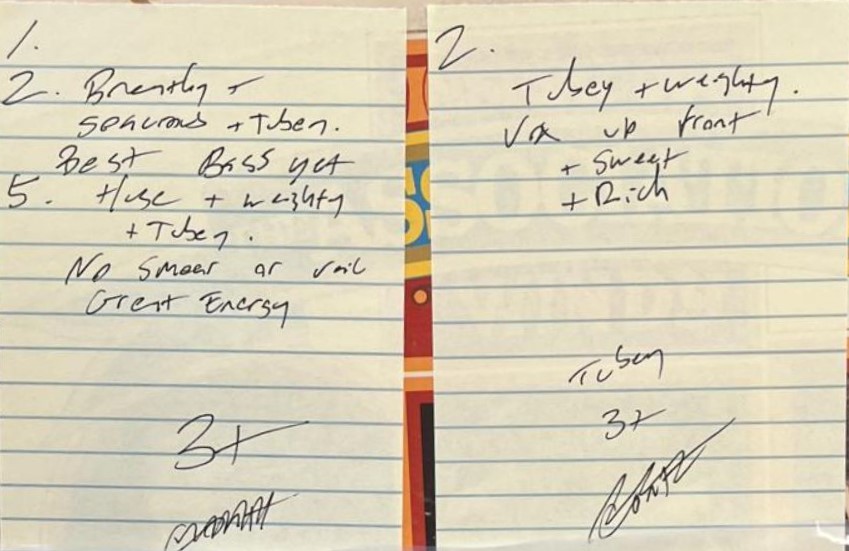
As you can see by the notes for a different, but equally good copy below, many aspects of the sound caught our attention on side one of this particular copy. (It turned out to have unacceptable amounts of noise on one of its side, hence the 2-pack.)

I have boldened three that I think did the most heavy lifting to put it over the top:

  • Breathy
  • Spacious and tubey
  • Best bass yet
  • Huge and weighty and tubey
  • No smear or veil
  • Great energy

Side two was every bit as good:

  • Tubey and weighty
  • Vocals up front and sweet and rich
  • Tubey (I tell you!)

The master of Tubey Magical pop recording is, of course, a Mr. BONES HOWE.

 You would be very hard pressed to find a pop or rock recording from 1967 that sounds as good as a Hot Stamper Insight Out. (Sgt. Pepper comes to mind, as well as some of these other Must Own titles, but Insight Out sets a fairly high bar most of them will have trouble getting over.)

Can you imagine the Mamas and the Papas or The Jefferson Airplane with this kind of rich, sweet, open, textured, natural, tonally correct sound quality?

The midrange is pure Tubey Magic. If you have the kind of system that brings out that quality in a recording, you will go wild over this one. In fact, it’s so good it made me appreciate some of the other songs on the album which I had previously dismissed as filler. When you hear them sound this good, you may change your mind about them too.

Hal, Joe and Bones

The real stars of Windy (and the album itself) are Hal Blaine and Joe Osborne, the famous session drummer/ bass player team. It is they who create the driving force behind these songs. Osborne’s website puts Windy front and center as the first track demonstrating what a top rhythm section can do for a pop song. This whole album can be enjoyed simply for the great drum and bass work, not to mention the sound that both of those instruments are given by the pop recording master Bones Howe.

He produced and engineered the show here; Bones is a man who knew his way around a studio as well as practically anybody in the 60s. He’s the one responsible for all the Tubey Magic of the recording. That’s his sound. If you are a fan of that sound, will find much to like here.

Bouncing Tracks

Never My Love is clearly the best sounding track on the album. Those of you with better front ends will be astonished at the quality of the sound. Windy also sounds excellent, but I hear some sub-generation harmonic distortion, probably caused by bouncing down some of the tracks to make room for others.

This is the era of the four track machine, and when four of the tracks are used up they are bounced down to one track, making available three new tracks. Some of the albums from this era — the Mamas and the Papas come to mind — have multiple bounces, three and four deep, which accounts for the distortion that you hear all through their recordings. The two-track finished master might have upwards of five tape generations or more on some instruments or vocal parts.


UPDATE 2025:

In our shootout notes, no mention was made of any problems with the sound of the song Windy.  The harmonic distortion we mentioned above may be an artifact of some of our previous limitations in cleaning and playback. Those of you with a top quality copy may want to listen for yourself and see if you hear the harmonic distortion we describe.


(more…)

Listening for a Bit Too Much Tubey Magic Down Low on Buffalo Springfield

Hot Stamper Pressings of Personal Favorites Available Now

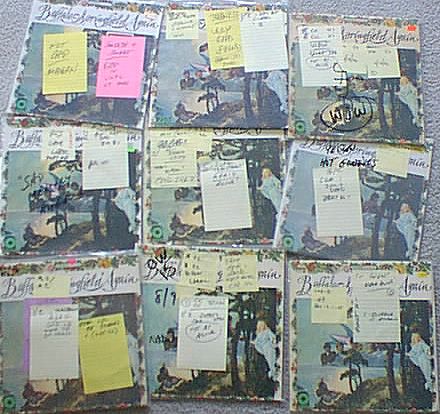
Note to customers: We rarely have Hot Stamper pressings of Buffalo Springfield available on the site, so albums with Stephen Stills or Neil Young playing on them are about the best we can do these days. We regret we must go many years between shootouts for this seminal band’s albums, two of which are personal favorites of mine and have been since they were first released, 1968’s (Again) and 1969’s (Last Time Around) Thank god my older stepbrother had good taste in music. I doubt that many 14-year-olds were playing Buffalo Springfield albums, but I was, even though most of the time it was on 8-track tape.


On even the best copies I regret to say there’s a bit too much Tubey Magic in the bass. Tubbiness and bloat were par for the course. This may explain why so many copies have rolled off bass; the engineer cut the bass because he heard how tubby it was and figured no bass is better than bad bass. 

Which is just not true. Cutting the bass leans out and “modernizes” the sound, making the voices sound thinner and dryer. Less rich. This pretty much ruins everything on this album, just the way it ruins everything in many of the modern recordings I hear.

Having your bass under control on the playback side isn’t easy — in fact it’s probably the hardest thing to achieve in audio — but it can be done, and with good bass control the slightly wooly bass is just a part of the sound you learn to accept.

It doesn’t actually interfere much with your enjoyment of the music, mostly because all the other instruments and voices sounds so magical.


The post-it notes you see are very old, probably from the early 2000s.

Until we got our cleaning system sorted in 2007, shootouts for any of this band’s first three albums were going to be tough sledding, if not downright impossible.

In this commentary we describe what needed to change in order to make Buffalo Springfield shootouts a reality.


Want to find your own killer copy?

Consider taking our moderately helpful advice concerning the pressings that tend to win our shootouts. This album sounds its best:

(more…)

Jazz Impressions of Black Orpheus Is a Bloated Mess at 45 RPM from Hoffman, Gray and Kassem

Hot Stamper Pressings of Jazz Piano Recordings Available Now

We played an amazing Hot stamper copy that got the bottom end on this album as right as we’ve ever heard. The contribution of the bass player was clear and correctly balanced in the mix, which we soon learned to appreciate was fundamentally important to the rhythmic drive of the music.

The bass was so tight and note-like you could see right into the soundstage and practically picture Monte Budwig plucking and bowing away.

This is precisely where the 45 RPM pressing goes off the rails.

The bloated, much-too-heavy and poorly-defined bass of the Heavy Vinyl remaster makes a mess of the Brazilian and African rhythms inherent in the music. If you own that $50 waste of money, believe me, you will not be tapping your foot to Cast Your Fate to the Wind or Manha de Carnival.

Our rule of thumb: he better the system, the more second-rate Hoffman’s remastered records will sound when they aren’t just terrible.

Is this the worst version of the album ever made? That’s hard to say.

But it is the worst sounding version of the album we’ve ever played, and that should be good enough for any audiophile contemplating spending money on this kind of trash. Take our advice and don’t do it.

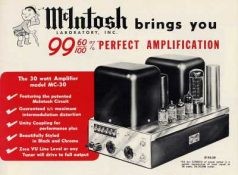
If you like the sound of old McIntosh tube equipment like the Mac 30s shown here, a sound Steve Hoffman apparently cannot get enough of, these remastered records have your name all over them.

We don’t sell junk like this, but every other audiophile record dealer does, because most of the current group of mastering engineers making records for audiophiles have somehow gotten into their heads that this is the way records should sound.

We’ve been telling them they are wrong about that for years now, that good records have never sounded this way, but the collectors and audiophiles of the world keep buying their wares, so why should they listen to us?

If you want to know what a properly-mastered, properly-pressed copy sounds like, we put the last one up in 2023.

(more…)

Wish You Were Here – An Overview

Hot Stamper Pressings of the Music of Pink Floyd Available Now

We have added some helpful title specific advice at the bottom of the listing for those of you want to find your own Hot Stamper pressing.

This is the perfect example of everything we look for in a recording here at Better Records: it’s dynamic, present, transparent, rich, full-bodied, super low-distortion, sweet — good copies of this record have exactly what we need to make us audiophiles forget what our stereos are doing and focus instead on what the musicians are doing.

For those of you who aren’t familiar with the album, Pink Floyd managed to record one of the most amazing sounding records in the history of rock music. The song Wish You Were Here starts out with radio noise and other sound effects, then suddenly an acoustic guitar appears, floating in the middle of your living room between the speakers, clear as a bell and as real as you have ever heard. It’s obviously an “effect,” but for us audiophiles it’s pure ear candy.   

Shine on You Crazy Diamond, Pts. 1-5

Right from the dynamic intro you can tell this is going to be a wild ride. David Gilmour’s haunting guitar line that comes cutting from out of the abyss should be warm with tons of room for his phasers to do their phasing.

After the band comes in and the vocals begin (listen for the man chuckling in the left channel) you should pay attention to the balance of the mix. Most copies tend to be very midrangy which can make the guitars aggressive and harsh, often times taking emphasis away from the vocals. The good copies have lots of transparency and allow everything to sit in their respectively places. This is probably most noticeable during the saxophone solo.

The tenor that starts off this section needs to be breathy, full-bodied, and sitting delicately in the center of your speakers. It does NOT need be be honky and hard sounding without any top extension. As the solo slowly crescendos, notice the guitar line spread across the soundstage that actually bookends the saxophone. The more dynamic copies really let you hear the intricacy and delicacy of his picking that foreshadows the time signature shift about to come.

When the time does change to 6/4, the saxophone player changes to alto, totally changing the sound of the solo! You can clearly hear on the better copies that he is further away from the mic than during the previous section, but if you listen closely, it sounds as though he is moving on and off axis. Whether this is part of his mic technique or him just dancin’ and groovin’ to the music, we may never know. I certainly hope for the latter.

Other Pressings

Most copies of the CBS Half-Speed lack deep bass, and for that matter bass in general.

They’re also consistently brighter. The upper mids and highs call attention to themselves at every turn. When you switch back to a good domestic copy or import, you might not notice as much detail, but everything will sound correct and balanced: less like a recording and more like music.

Phony highs cause listener fatigue for the same reason that bright CDs get tiresome.

Just listen to the sax break on side one. If your pressing is too bright that sax will tear your head off.

The Seventies – What a Decade!

Tubey Magical acoustic guitar reproduction is superb on the better copies of this recording. Simply phenomenal amounts of Tubey Magic can be heard on every strum, along with richness, body and harmonic coherency that have all but disappeared from modern recordings (and especially from modern remasterings).

Big Production Tubey Magical British Prog Rock just doesn’t get much better than Wish You Were Here.

A Big Speaker Record

Let’s face it, this is a big speaker recording. It requires a pair of speakers that can move air with authority below 250 cycles and play at loud levels. If you don’t own speakers that can do that, this record will never really sound the way it should.

It demands to be played loud. It simply cannot come to life the way the producers, engineers and artists involved intended if you play it at moderate levels.

Obsessed? You Better Believe It

Wish You Were Here is yet another record we admit to being obsessed with.

Currently we have identified about 150 that fit that description, so if you have some spare time, check them out.

(more…)

Listening in Depth to Off The Wall

More of the Music of Michael Jackson

On the better copies the multi-tracked chorus and background vocals are as breathy, rich, sweet and Tubey Magical as any pop recording we know of.

An extended top end opens up the space for the huge, dense production to occupy.

There is Midrange Magic To Die For, exceeding anything to be found on Thriller.

Side One

Don’t Stop ‘Til You Get Enough

The first single from the album was designed to go to Number One and it certainly met all expectations in that regard.

On the properly mastered and pressed copies the vocals and percussion will be a bit brighter than those on most of the tracks that follow. The percussion is often somewhat brittle on even the best copies; it’s surely on the tape that way.

It should be big, clear and lively right out of the gate.

 Rock With You

The balancing act to the first track, Rock With You has some of the richest, smoothest, sweetest, most ANALOG sound on the entire album. There is no track on Thriller that sounds as Tubey Magical, assuming you have a top quality pressing.

As is always the case with rich and smooth sound, transparency is key. The sound should not be thick and dark, it should be both rich and clear.

Don’t Stop ‘Til You Get Enough gets hot in the higher frequencies with the volume cranked. Rock With You is just the opposite; the louder you play it the better — the more right — it sounds from top to bottom.

Working Day and Night
Get on the Floor

Side Two

Off the Wall

On the better copies the multi-tracked chorus and background vocals are as breathy, rich, sweet and Tubey Magical as any pop recording we know of. An extended top end opens up the space for the huge, dense production to occupy. There is Midrange Magic To Die For exceeding anything to be found on Thriller.

The top end at the start of a side is sometimes lacking so pay attention to see if more top end can be heard later on in the song.

Watch for smear on the horns. They are rich and smooth and on some copies their transient bite will get blurry.

Girlfriend

Girlfriend can achieve the status of a top Demo track on the better copies, no question about it. Turn it up to hear some of the biggest, tightest, most note-like bass on the album. The best copies pull off that monstrous bottom end without bloat, while maintaining some of the loveliest, most tubey rich mids on the album.

On the better copies the stage is wide and the vocals as breathy as on any track on the album. Potentially the Demo Disc track of side two.

(more…)

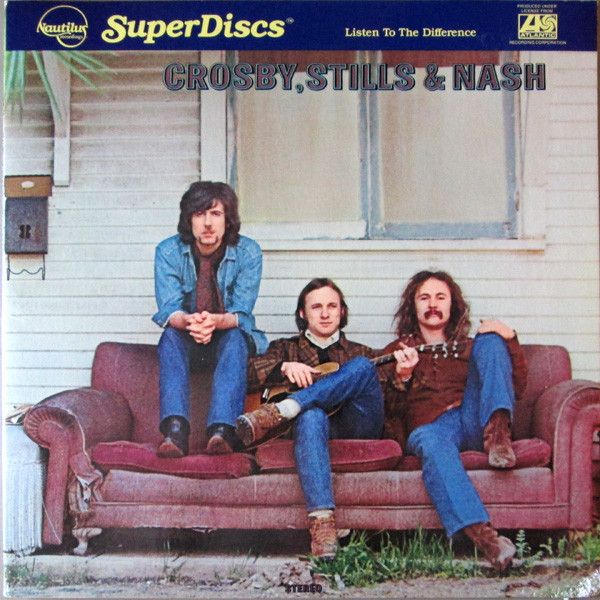
This Nautilus LP Has the Most Bloated, Ill-Defined, Overblown Bass in the Sad, Sordid History of Half-Speed Mastering

Hot Stamper Pressings of the Music of Crosby, Stills and Nash Available Now

An audiophile hall of shame pressing and a Half-Speed mastered disaster if there ever was one.

An audiophile record dealer (of course; who else?) once raved to me about Crosby Stills and Nash on Nautilus. I said “What are you talking about? That version sucks!” He replied “No, it’s great. Helplessly Hoping sounds amazing.” 

Now one thing I know about the Nautilus is this: although it is wonderfully transparent in the midrange, it may very well take the cake for the most bloated, out of control bass in the history of Half-Speed mastering.

What song on that album has almost no bass, just lovely voices in the midrange? You guessed it. Helplessly Hoping.

The Nautilus got one track right, and ruined the rest.

Using that track for comparison will fool you, and when it comes time to play a side of the album, you will quickly hear what a disaster it is.

(more…)

Robert Brook Discusses His Evolving Understanding of Bass

More from Robert Brook

Robert Brook has a blog which he calls

A GUIDE FOR THE DEDICATED ANALOG AUDIOPHILE

Below you will find a link to Robert’s story about the famous Charlie Mingus record you see pictured.

He had a number of different pressings, each of which showed him some qualities that the others lacked. Ultimately you have to pick one to play, and he did.

“GETTING” BASS with Charles Mingus’ BLUES & ROOTS

Robert went from a $20,000 speaker with one eight inch woofer to the Legacy III’s, a speaker costing less than half as much, with three ten inch woofers, to the Legacy Focus, a speaker quite a bit less than $20k, with three twelve inch woofers.

Robert learned something about his Parsifals by playing a speaker that could do so much more down low:

But I’ve learned since that, for all their strengths, the Parsifal had at least one fatal flaw – they made just about every record sound good.

Adding:

Making every record sound good is, it turns out, not a good quality to have in a speaker, nor in any other piece of equipment you use. At least it’s not if you want the best possible sound from your analog system.

(more…)

Two Tracks on Teaser and the Firecat Are Key

Hot Stamper Pressings of the Music of Cat Stevens Available Now

Just ran across the following in an old listing. We’re nothing if not consistent here at Better Records!

“And if you are ever tempted to pick up one of those recently remastered versions on heavy vinyl, don’t do it. There is simply no one alive today making records that sound like these good originals. Not to these ears anyway. We may choose to indulge ourselves in the audacity of hope, but reality has to set in sooner or later. After thirty years of trying, the modern mastering engineers of the world have nothing to show for their efforts but a ever-growing pile of failures. The time to call it quits has come and gone. Let’s face facts: when it comes to Teaser and the Firecat, it’s the Real Thing or nothing.”

If you’re looking for an amazing Demo Quality rock recording, you’ve come to the right place.

If you want a timeless classic rock record, it’s here too.

They just don’t know how to make them like this anymore. Those of you waiting for audiophile vinyl reissues with the kind of magic found on these originals will be in your graves long before it ever comes to pass.

Analogue Productions tried and failed — more than once — to produce a good sounding Heavy Vinyl pressing of Tea for the Tillerman.

You can be sure of one thing: there is little chance they would have better luck with Teaser and the Firecat.

Changes IV 

On this song there is a tremendous amount of energy in the grooves. On a copy I had a while back it sounded good to start with, but an intense cleaning regimen made it sound so alive I could hardly believe my ears. Listen to it VERY LOUD (as it was meant to be played) and then notice how quiet the next solo guitar intro is, with lots of space between the notes. Never heard it like that before. That’s when audio is FUN.

It’s always a roller coaster ride around here, as one day the system is cooking, and the next it ain’t, and nobody knows why. But the night that Teaser sounded great is one I will remember for a long time. Those big bass drum thwacks and that high hat being slapped to the point of abuse way out in front of the mix just blew my mind.

Tuesday’s Dead

There is a good-sized group of singers behind Cat Stevens that back him up when he says “whoa” right before the line “Where do you go?”. What often separates the best copies from the also-rans is how clearly those singers can be heard, assuming the tonal balance is correct and there’s plenty of energy in the performances.

The most transparent copies make it easy to appreciate the enthusiasm of the individual singers; they’re practically shouting.

For twenty years Tuesday’s Dead has been one of my favorite tracks for demonstrating what The Big Speaker Sound is all about. Now I think I better understand why. Big speakers are the only way to reproduce the physical size and tremendous energy of the congas (and other drums of course) that play such a big part in driving the rhythmic energy of the song.

In my experience no six inch woofer — or seven, or eight, or ten even — gets the sound of the conga right, from bottom to top, drum to skin. No screen can do it either. It’s simply a sound that large dynamic drivers reproduce well and other speaker designs do not reproduce so well.

Since this is one of my favorite records of all time, a true Desert Island Disc, I would never want to be without a pair of big speakers to play it, because those are the kinds of speakers that play it well.


(more…)

Bass Blockage Is Often a Problem on One Man Dog

More of the Music of James Taylor

Play Chili Dog here, one of our favorite tracks, and note not only the clarity and spaciousness, but the PUNCH and LIFE of the music. This song is supposed to be fun. The average somewhat compressed and dull copy only hints at that fact.

Then skip on down to the hit at the end of the side, Don’t Let Me Be Lonely Tonight, another favorite track for testing.

There’s a lot of bass in the mix on this track, but the best copies keep it under control.

When it gets loose and starts blurring the midrange, the vocals and guitars seem “blocked.” The best copies let you hear all that meaty bass, as well as letting you hear into the midrange too.

One Man Dog, like many early WB pressings, has a tendency to be dull and opaque. (Most side twos have a real problem in that respect.)

When you get a good one, with more of an extended top end, it tends to come with much more space, size, texture, transparency, ambience and openness.

Of course it does; that’s where much of that stuff is, up high.

Most copies don’t have nearly enough of it, but thankfully the best copies do.

(more…)