Testing Bass Definition

These records are good for testing bass definition.

Two Tracks on Teaser and the Firecat Are Key

Hot Stamper Pressings of the Music of Cat Stevens Available Now

Just ran across the following in an old listing. We’re nothing if not consistent here at Better Records!

“And if you are ever tempted to pick up one of those recently remastered versions on heavy vinyl, don’t do it. There is simply no one alive today making records that sound like these good originals. Not to these ears anyway. We may choose to indulge ourselves in the audacity of hope, but reality has to set in sooner or later. After thirty years of trying, the modern mastering engineers of the world have nothing to show for their efforts but a ever-growing pile of failures. The time to call it quits has come and gone. Let’s face facts: when it comes to Teaser and the Firecat, it’s the Real Thing or nothing.”

If you’re looking for an amazing Demo Quality rock recording, you’ve come to the right place.

If you want a timeless classic rock record, it’s here too.

They just don’t know how to make them like this anymore. Those of you waiting for audiophile vinyl reissues with the kind of magic found on these originals will be in your graves long before it ever comes to pass.

Analogue Productions tried and failed — more than once — to produce a good sounding Heavy Vinyl pressing of Tea for the Tillerman.

You can be sure of one thing: there is little chance they would have better luck with Teaser and the Firecat.

Changes IV 

On this song there is a tremendous amount of energy in the grooves. On a copy I had a while back it sounded good to start with, but an intense cleaning regimen made it sound so alive I could hardly believe my ears. Listen to it VERY LOUD (as it was meant to be played) and then notice how quiet the next solo guitar intro is, with lots of space between the notes. Never heard it like that before. That’s when audio is FUN.

It’s always a roller coaster ride around here, as one day the system is cooking, and the next it ain’t, and nobody knows why. But the night that Teaser sounded great is one I will remember for a long time. Those big bass drum thwacks and that high hat being slapped to the point of abuse way out in front of the mix just blew my mind.

Tuesday’s Dead

There is a good-sized group of singers behind Cat Stevens that back him up when he says “whoa” right before the line “Where do you go?”. What often separates the best copies from the also-rans is how clearly those singers can be heard, assuming the tonal balance is correct and there’s plenty of energy in the performances.

The most transparent copies make it easy to appreciate the enthusiasm of the individual singers; they’re practically shouting.

For twenty years Tuesday’s Dead has been one of my favorite tracks for demonstrating what The Big Speaker Sound is all about. Now I think I better understand why. Big speakers are the only way to reproduce the physical size and tremendous energy of the congas (and other drums of course) that play such a big part in driving the rhythmic energy of the song.

In my experience no six inch woofer — or seven, or eight, or ten even — gets the sound of the conga right, from bottom to top, drum to skin. No screen can do it either. It’s simply a sound that large dynamic drivers reproduce well and other speaker designs do not reproduce so well.

Since this is one of my favorite records of all time, a true Desert Island Disc, I would never want to be without a pair of big speakers to play it, because those are the kinds of speakers that play it well.


(more…)

Bass Blockage Is Often a Problem on One Man Dog

More of the Music of James Taylor
Play Chili Dog here, one of our favorite tracks, and note not only the clarity and spaciousness, but the PUNCH and LIFE of the music. This song is supposed to be fun. The average somewhat compressed and dull copy only hints at that fact.

Then skip on down to the hit at the end of the side, Don’t Let Me Be Lonely Tonight, another favorite track for testing.

There’s a lot of bass in the mix on this track, but the best copies keep it under control.

When it gets loose and starts blurring the midrange, the vocals and guitars seem “blocked.” The best copies let you hear all that meaty bass, as well as letting you hear into the midrange too.

One Man Dog, like many early WB pressings, has a tendency to be dull and opaque. (Most side twos have a real problem in that respect.)

When you get a good one, with more of an extended top end, it tends to come with much more space, size, texture, transparency, ambience and openness.

Of course it does; that’s where much of that stuff is, up high.

Most copies don’t have nearly enough of it, but thankfully the best copies do.

(more…)

Huge, Powerful Choruses Like These Are a Thrill

Hot Stamper Pressings with Huge Choruses Available Now

This is one of the rare pop/rock albums that actually has actual, measurable, serious dynamic contrasts in its levels as it moves from the verses to the choruses of many songs . The second track on side two, Demon Lover, is a perfect example. Not only are the choruses noticeably louder than the verses, but later on in the song the choruses get REALLY LOUD, louder than the choruses of 99 out of 100 rock/pop records we audition. It sometimes takes a record like this to open your ears to how compressed practically everything else you own is.

The sad fact of the matter is that most mixes for rock and pop recordings are much too safe. The engineers believe that the mixes have to be designed to be played on the average (read: crap) stereo.

We like when music gets loud. It gets loud in live performance. Why shouldn’t some of that energy make it to the record? It does of course, especially in classical music, but all too rarely even then.

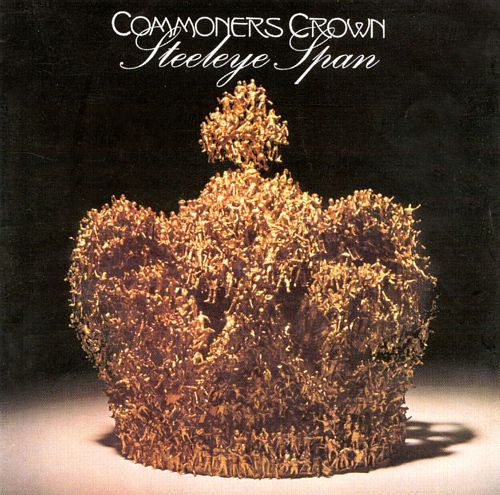
We happened to do the shootout for Thick as a Brick the same week as Commoner’s Crown, and let us tell you, those are two records with shockingly real dynamics in the grooves of the best copies. If you like your music loud — which is just another way of saying you like it to sound LIVE — then the better copies of either album are guaranteed to blow your mind with their dynamic energy and power.

It’s the Engineer?

That can’t be a coincidence, can it? Well, it can, but in the case of these two albums it seems it isn’t. The engineering for both records was done by none other than Robin Black at Morgan Studios. Robin co-produced Commoner’s, takes the main engineering credit, and is solely credited with the mix. He is the sole engineer on TAAB (along with lots of other Tull albums, including Benefit and Aqualung).

Apparently he has no problem putting the dynamic contrasts and powerful energy of the live performance into his recordings and preserving them all the way through to the final mix. God bless him for it.

Thrills R Us

We admit to being thrillseekers here at Better Records, and like most of the things we do, and the wildly unpopular opinions we hold, we make no apologies for it.

The better the system and the hotter the stamper, the bigger the thrill.

It’s precisely the dynamic sound found on these two albums that rocks our world and makes our job fun. It makes us want to play records all day, sifting through the crap to find the few — too few — pressings with truly serious Hot Stamper sound. There is, of course, no other way to find such sound, and, of course, probably never will be.

(more…)

What to Listen For on Quadrophenia

Hot Stamper Pressings of the Music of The Who Available Now

Moon’s drums need to blast away like cannons. This is the quintessential Who sound. Everybody who’s ever seen them live knows it. I saw them back in the day when Moon was still behind his kit and it’s a sound I’ll never forget. 

Most copies don’t have nearly this much Tubey Magic — you aren’t going to believe all the richness, sweetness, and warmth here. The clarity and transparency are superb in their own right, and the impressive dynamics really allows this copy to communicate the explosive energy of The Who at their peak.

(more…)

Listening in Depth to Deceptive Bends

Hot Stamper Pressings of the Music of 10cc Available Now

If you are interested in digging deeper, our listening in depth commentaries have extensive track by track breakdowns for some of the better-known albums we’ve done multiple shootouts for.

Side One

Good Morning Judge

There’s a wonderful guitar duel in this song, but notice how the guitar in the right channel is softer than the one in the left. It’s the same way on every copy we played, so it must be that way on the tape. The guitar in the left channel is louder so it wins.

The Things We Do for Love

A big hit for the band on both sides of the pond, and as such, there’s always a touch of radio EQ to the lead vocals on this track. If you have an suitably transparent copy you’ll be able to hear that the background vocals actually sound much more natural. They’re tonally correct, assuming your copy is right enough in the first place to let you hear it.

Marriage Bureau Rendezvous

This track has wonderful Tubey Magical Tillermanesque guitars. They sound out of this world on a copy with the kind of clarity and sweetness found on the best pressings.

People in Love
Modern Man Blues

Side Two

Honeymoon With B Troop

Amazing DEMO DISC SOUND on the best copies! Some of the punchiest sound we have ever heard, bar none.

I Bought a Flat Guitar Tutor

This track has a richer, more relaxed sound than most of the rest of the album. The sparse instrumentation allows the various elements more room to breathe. On a Hot Stamper copy even the whistling will sound full-bodied.

This is Analog Magic at its best. The sound is effortless, completely natural, and totally free from any hint of hi-fi-ishness. Not one out of a hundred rock records has a track this well recorded.

As long as it’s not too bright. If it is it will spit like crazy.

(more…)

Listening in Depth to Tarkio

More Albums with Key Tracks for Critical Listening

Analog richness, sweetness and Tubey Magic are elements absolutely indispensable to the sound of these recordings. Without them you might as well be playing a CD.

Some of the reissue pressings actually do sound like CDs and are not part of the shootouts for this album anymore. Who wants a record that sounds like a CD? They may be pressed on vinyl but they’re no less an embarrassment to analog for it. As you can imagine we feel the same way about most of the Heavy Vinyl records being made today. They’re just embarrassing.

The best pressings, on the other hand, are everything that’s good about the analog medium — smooth, sweet, relaxed and involving. You had best have a fast cartridge and not overly rich electronics to get the most out of this one. The richness on this record is already baked-in; no need to add more.

Side One

One Toke Over the Line

This track is almost always ever so slightly too bright on even the best copies. How many records do we know that have the projected hit single EQ’d a little brighter (or a lot brighter) than the rest of the album? Sergio Mendes’ first album and Mona Bone Jakon spring immediately to mind and I’m sure if I thought about it for a while I could think of many more. It’s a common practice and there’s nothing that can be done about it.

But what this slightly bright track helps the listener to notice is whether there is grain to those brighter highs. The Hot Stamper copies will still be sweet and clear even though they are a little tipped up on the top. The typical copy, pressed on the typically bad vinyl Buddah records is infamous for, will be edgy and aggressive when the vocals get loud.

(more…)

Eric Dolphy – Rarely have I heard a string bass sound better than it does here.

More of the Music of Eric Dolphy

Do the originals sound as good as these ’70s pressings?

Not a clue. Never ran into a clean one in my life.

Rarely have I heard a string bass sound better than it does here. The flute is equally gorgeous. Amazing that they could record a live jazz concert this well in 1961.

Although this is only our second Hot Stamper listing for the album, I’ve known about Dolphy’s legendary Copenhagen Concert for close to thirty years. When an audiophile hears a bass clarinet reproduced the way it is on this record he is very unlikely to forget it.

With the hundred-plus changes to the system and room I’ve made over that span of time the reproduction of the bass clarinet has only gotten more real.

It’s proof positive that everything in audio can get dramatically better with constant effort and attention to every aspect of sound. From the room to the electricity to the right cleaning techniques, everything can come together to make that instrument sound like it is in the room with you, a room that sounds like you imagine a jazz club might sound in 1961.

What a thrill. It’s what we audiophiles live for. It’s what keeps us going in this hobby.

If you know people who used to be into audio and aren’t anymore it’s because they just never got to the point where they were doing it right.

Can You Hear the Bloated Bass on This DCC Pressing?

More of the Music of Linda Ronstadt

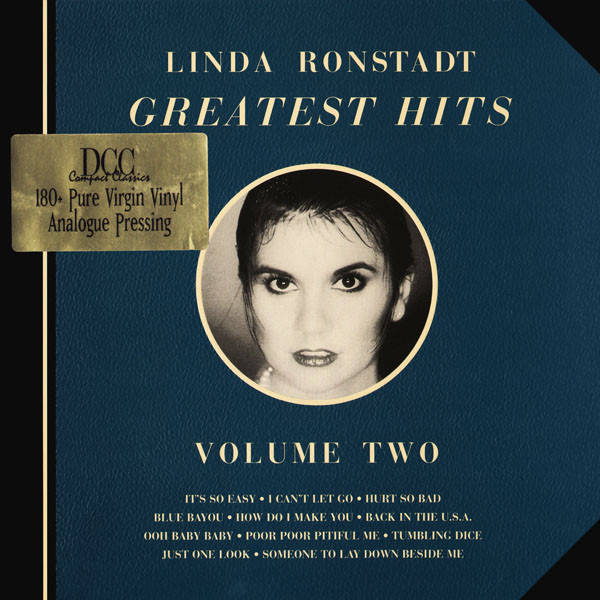
This review was written many years ago, around 2004 I think. This was one of the first DCC records I did a shootout with up against run-of-the-mill Mastering Lab domestic pressings, only to find, somewhat surprisingly, at least at that time, that the DCC came up short, as you will see in the review below.


As much as I admire Steve Hoffman’s work for DCC, on this title the DCC is not as good as the best domestic copies. The best domestic pressings are just plain more fun.

The DCC sounds thick in the midrange and fat in the bass, although some of that boost in the bass could have been used to the advantage of some of the domestic pressings we played. 1 DB or so at 50-60 cycles would help, but the DCC has a boost in the middle and upper bass that causes the bass to sound bloated next to a properly mastered, properly pressed LP. 

I like rich sounding records just like Steve does, but his version of this title is too rich for my blood. If your system is lean sounding you may prefer the DCC, but we found it less than agreeable over here.

Not sure why so few reviewers and audiophiles notice these rather obvious shortcomings, but we sure do, and we don’t like it when records sound that way. These are records for those who are not sufficiently advanced in the hobby to know just how compromised and wrong they are.

(more…)

The Pentangle – It Doesn’t Get Much More Real on Vinyl Than This

Hot Stamper Pressings of British Folk Rock Albums Available Now

Pentangle’s first album is an honest-to-goodness Demo Disc.

When for a (thankfully) brief time back in the 70s I was selling audio equipment, the song “Pentangling” was a favorite demo cut to play in the store. The sound of the string bass and snare drum are amazingly natural; I don’t know of any other pop album from the era that presents the vibrant timbre of those two instruments better.

The Transatlantic British originals can be quite good as well, but are very tough to come by in good condition these days, and pricey when you find them.

This record easily qualifies for our Top 100 List, it’s that good (but unfortunately too rare to make the cut).

The Best Sides

The true foundation of the music is provided by two legendary guitar heavyweights, Bert Jansch and John Renbourn. With Jacqui McShee’s almost unbearably sweet vocals soaring above them, this album presents the classic lineup at its best, with superior sonics to boot.

It’s Acoustic!

The unprocessed folky sound found throughout the album has its audiophile credentials fully in order, especially in the area of guitar harmonics, as well as drums that sound like real drums actually sound. (How many of the ’70s rock albums in our Top 100 have that natural drum sound? Not many when you stop to think about it.)

(more…)

Listening in Depth to The Fantasy Film World

More of the Music of Bernard Herrmann

Reviews and Commentaries for the Music of Bernard Herrmann

Music like this taxes the limits of LP playback itself, with deep organ notes (listen for the famous Decca rumble accompanying the organ if you have the deep bass reproduction to hear it); incredible dynamics from every area of the stage; masses of strings playing at the top of their registers with abandon; huge drums; powerful brass effects everywhere — every sound an orchestra can produce is found on this record, and then some.

You will hear plenty of sounds that defy description, that’s for sure. Some of the time I can’t even imagine what instrument could possibly make such a sound!

TRACK LISTING

Side One

Journey to the Center of the Earth

All those lovely harps! You can practically feel the cool air of the cave as you descend into the blackness.

The Seventh Voyage of Sinbad

Side one boasts some wonderful material from Jason and the Argonauts, including the fight with the skeletons that we all remember from our Saturday matinee movie days. Who else could have orchestrated such a film?

Side Two

The Day the Earth Stood Still

Astonishingly powerful deep bass and drum sounds!

Fahrenheit 451

One of our key tests for side two is the string tone on the Fire Engine sequence here. The best copies had wonderfully textured and tonally correct strings, with just the right amount of sheen — not glossy, not gritty, not blurry, but just right.

Any orchestral recording without good string tone is a lost cause. (Almost all Classic Records fail miserably in this regard. They may be on the TAS List but that sure doesn’t mean they sound any good!)

(more…)