Testing Midrange Congestion

The records listed here are often congested in the midrange, making them a good test for both the system and how good the pressing you own may be.

Why Are We Guessing (Again)?

More of the Music of The Pretenders

German pressings? Not British?

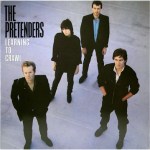
We discovered that only the best German pressings convey the energy and enthusiasm of the band while avoiding the grunge, flatness and hardness that make the typical pressing of this album all but unlistenable at loud volumes.

Isn’t this a British band that just happens to be led by an American? And wasn’t the album produced by the clearly British Chris Thomas and recorded at George Martin’s AIR studios in London? How is it possible that the best German pressings consistently sound better than the best British pressings?

Your guess is as good as mine. And, if you stop to think about it, who in his right mind would think that any answer they might give to such a question is anything other than a guess?

But that’s not the half of it. It’s not simply the fact that the Germans seem to be the only ones able to work their magic on this title. Most German pressings are not nearly as good sounding as this one. It is only this specific German pressing that does everything right. It has won every shootout for the last five years if that tells you anything.

What to Listen For

In the chorus of Time the Avenger, the better copies do not get as harmonically distorted, edgy and hard as most. The best really “bloom,” but they are few and far between.

A Top Pretenders Title

This is where Chrissie Hynde matured into a top class songwriter; every track is good and many are brilliant. With Robbie McIntosh having joined the band, this is first and foremost a guitar rock record; his jangly, grungy riffs drive every song. Great songs and great guitar work — what more do you need in a rock record?

Think of Middle of the Road — everything that’s good about this band on this album is there in that song: it’s uptempo, with a driving beat, a rock solid rhythm section and a beautifully distorted guitar out front and high up in the mix.

(more…)

Bashin’ – A Difficult to Reproduce Jazz Masterpiece

More of the Music of Jimmy Smith

Rudy Van Gelder Is One of Our Favorite Engineers

In the past we’ve complained about “Rudy Van Gelder’s somewhat over the top echo-drenched brass,” but on a copy such as this there is nothing to complain about!

All that reverb on the brass sounds RIGHT. If you have a top quality front end (and the system that goes with it), this recording will be amazingly spacious, three-dimensional, transparent, dynamic, and open.

Copies of this album are sometimes so sour or dull (or both) that they go right in the trade pile. Add to that the difficulty of finding copies that are scratch-free and not too noisy and you have one tough shootout. Inner Groove Distortion caused by the non-anti-skate-equipped turntables of the day is a chronic problem with vintage jazz records, and this title is typically no exception — except in this case! 

A Must Own Jazz Record

This Demo Disc Quality recording should be part of any serious Jazz Collection.

It also ranks fairly high on our Difficulty of Reproduction Scale. Do not attempt to play it using any but the best equipment.

Unless your system is firing on all cylinders, even our hottest Hot Stamper copies — the Super Hot and White Hot pressings with the biggest, most dynamic, clearest, and least distorted sound — can have problems .

Your system should be thoroughly warmed up, your electricity should be clean and cooking, you’ve got to be using the right room treatments, and we also highly recommend using a demagnetizer such as the Walker Talisman on the record, your cables (power, interconnect and speaker) as well as the individual drivers of your speakers.

This is a record that’s going to demand a lot from the audio enthusiast, and we want to make sure that you feel you’re up to the challenge. If you don’t mind putting in a little hard work, here’s a record that will reward your time and effort many times over, and probably teach you a thing or two about tweaking your gear in the process.

(more…)

Top End Extension Is Key on Whipped Cream and Other Delights

Hot Stamper Pressings of Sixties Pop Recordings Available Now

The better pressings have the kind of Tubey Magical, big-bottomed, punchy, spacious sound that we’ve come to expect from Larry Levine‘s engineering for A&M. If you have any Hot Stamper pressings of Sergio Mendes & Brasil ’66’s albums, then you know exactly the kind of sound we’re talking about.

Top end extension is critical to the sound of the best copies. Lots of old records (and new ones) have no real top end; consequently, the studio or stage will be missing much of its natural air and space, and instruments will lack the full complement of harmonic information.

In addition, when the top end is lacking, the upper midrange and high frequencies get jammed together — the highs can’t extend up and away from the upper mids.

This causes a number of much-too-common problems that we hear in the upper midrange of many of the records we play: congestion, hardness, harshness, and squawk.

Painstaking Vertical Tracking Angle adjustment is absolutely critical if you want your records to play with the least amount of these problems, a subject we discuss in the Commentary section of the site at length.

Full-bodied sound is especially critical to the horns.

Any blare, leanness or squawk ruins at least some of the fun, certainly at the louder levels the record should be playing at.

The frequency extremes (on the best copies) are not boosted in any way. When you play this record quietly, the bottom and top will disappear (due to the way the ear handles quieter sounds as described by the Fletcher-Munson curve).

Most records (like most audiophile stereos) are designed to sound correct at moderate levels. Not this album. It wants you to turn it up. Then, and only then, will everything sound completely right musically and tonally from top to bottom.

What the Best Pressings of Long After Dark Get Right

More of the Music of Tom Petty

Energy and rock and roll rhythmic drive are of course paramount on any Tom Petty album.

Many copies were brighter than ideal, which is nothing new for Petty’s body of work but not the sound we find most pleasing.

Some copies in our shootout were dark and small. We took serious points off for both of these shortcomings.

The climaxes of the songs should be as uncompressed and uncongested as possible to earn our higher grades. When the music gets loud it should stay tonally correct and undistorted, and not all copies can do that, not at the serious levels we like to play our records.

Choruses Are Key

Watch out for too many instruments and voices jammed into too little space in the upper midrange. When the tonality is shifted-up, even slightly, or there is too much compression or distortion, there will be too many upper midrange elements — voices, guitars, drums — vying for space, resulting in congestion and a loss of clarity.

With the more solid-sounding copies, the lower mids are full and rich. Above them, the next “level up” so to speak, there’s plenty of space in which to fit all the instruments and voices comfortably, without piling them on top of one another as so often happens. Consequently, the upper midrange “space” does not get overwhelmed with musical information.

Also watch for edge on the vocals, which is of course related to the issues above. Most copies have at least some edge to the vocals — the band wants to really belt it out in the choruses, and they do — but the best copies keep the edge under control, without sounding compressed, dark, dull, or smeary.

The highest quality equipment, on the hottest Hot Stamper copies, will play the loudest and most difficult-to-reproduce passages with virtually no edge, grit, or grain, even at very loud levels.

(more…)

Punch The Clock – Drums, Bass and Horns Are Key to the Best Imports

Hot Stamper Pressings of Elvis’s Albums Available Now

The bottom end is as punchy, well-defined and powerful as they come. There’s plenty of low-end on this record; regrettably most copies suffer from either a lack of bass or a lack of bass definition. I can’t tell you how much you’re missing when the bass isn’t right on this album. (Or if you have the typical bass-shy audiophile speaker, yuck.) When the bass is lacking or ill-defined, the music seems labored; the moment-to-moment rhythmic changes in the songs blur together, and the band just doesn’t swing the way it’s supposed to.

The bass, along with the horn sound, are the two key elements to getting a good copy of this record.

The horns are often compressed, making them lose their bite and smearing them together.

On some copies you can pick out the trombones and on some copies you can’t; you just hear horns because the individual instruments are smashed into a congested mess. This is Elvis’ Motown Album; the horns are what bring the music to life. They’re what make this album fun.

On this copy, you get the full-on bottom end WHOMP you paid for, with no loss in control. You can clearly follow Bruce Thomas’s bass lines throughout the songs, a real treat for any music lover. (He and Elvis don’t get along, hence the end of the Attractions as his backing band. I guess we should be thankful for the nine albums on which they were together; many of them are Desert Island Discs for me.)

Not only that, but the drums have real body and resonance, a far cry from the wimpy cardboard drums so many rock records have. Listen to the drum sound on Charm School. Man, those are some BIG FAT PUNCHY DRUMS. Very reminiscent of Bowie’s Let’s Dance. The drum sound on that album is some of the best we’ve ever heard, bar none.

Right out of the gate, Let Them All Talk is lively and full of energy. Elvis’ vocals have all the presence and clarity you could hope for. Since the drums are such a driving force for the Attractions, you have got to have room and spaciousness around them. This copy showcases the percussion with weight down low and harmonics on the cymbals.

The female background singers are clear, another tough test.

It should be noted that this is not an easy record to reproduce well. Everything needs to be working at its best to bring this recording to life, especially in the range of 200 cycles and under, an area where most audiophile systems are at their weakest. If you’ve got power to spare down there, this one will really rock.

Listening in Depth to Fragile

yes__fragi_depth_1392743863Hot Stamper Pressings of the Music of Yes Available Now

Eddie Offord took charge of Yes’s engineering starting with Time and a Word (1970) and we are very glad that he did.

Although his masterpiece is surely ELP’s first album, both The Yes Album and Fragile are so amazingly well recorded they clearly belong at the top of any list of All Time Great Sounding Rock Albums.

Side One

Roundabout

You can tell by the sound of the opening guitar whether you have a copy that is tonally correct, has its ambience intact, as well as the proper leading edge transients to the strings plucks. Most of the reissues will sound either thin and edgy, or dull and blunted. On the best copies, that guitar will just sound out of this world.

Cans and Brahms
We Have Heaven
South Side of the Sky

What really separates the amazing copies from the merely good copies is the WEIGHT of the sound. The lower midrange is key in this regard. When you hear the piano on this track, it should have tremendous body and sustain to the notes. If the piano comes across at all anemic, the sound will be unbearably harsh.

Side Two

Five Per Cent for Nothing
Long Distance Runaround

This is one of the best sounding Yes tracks of all time. Jon Anderson’s voice is so present; he sounds as if he’s standing right between the speakers.

Fish (Schindleria Praematurus)
Mood for a Day

The top pressings exhibit amazing transparency and sweetness on this track. We would rate this one of the best rock acoustic guitar recordings on the planet. I’ve recently come to realize that this is actually a key track for side two. The guitar can sound midrangy and hard; too fat; blunted; and I’m sure lots of other ways.

And I’m talking about ONLY the best early pressings (the four digit ones). None of the later pressings sound any good to me at all.

This is where the surface noise will be most audible. After playing a number of copies, I noticed that there was always surface noise on this track, but not necessarily others. And then it dawned on me: the surface noise has to be spread evenly throughout the record; it’s on this track that you can actually hear it. The other tracks tend to be loud and little surface noise will ever be audible.

Heart of the Sunrise

My second favorite track on the album. All those aggressive guitar parts can be very irritating if you do not have a copy that’s cut properly, which in this case means smooth and full-bodied. Any thinness or edginess will be all but unbearable on this track.

For Born In The U.S.A. We Make No Claims of Audiophile Quality Sound

Hot Stamper Pressings of the Music of Bruce Springsteen Available Now

We would be foolish to make claims for “audiophile quality” sound on Springsteen’s albums — they are what they are. The simple claim we make for our Hot Stampers is that the best of them sound as good as the album can sound, and we back that up with a 100% Money Back guarantee.

Born in the U.S.A. is yet another example of an album that must be graded on a curve.

(Technically, all Hot Stamper pressings are graded on a curve, since the record shootouts we do are simply our way of comparing one pressings with a slough of others.)

It’s tough to find great sounding copies of this album — or any Springsteen album for that matter — but we played one not long ago that was a HUGE step up, with the kind of clarity and fullness that most copies have in short supply.

Take it from us, it is the rare pressing that manages to get rid of the harshness and congestion that plague so many copies.

When you hear a copy sound relatively rich and sweet, the minor shortcomings of the recording no longer seem to interfere as much with your enjoyment of the music. Like a properly tweaked stereo, a good record lets you forget all that audio stuff and just listen to the music as music. We here at Better Records — like our customers — think that’s what it’s all about.

And we know that only the top copies will let you do that, something that not everyone in the audiophile community fully appreciates to this day. We’re doing what we can to change that way of thinking, but progress is, as you may well imagine, slow.

What To Listen For

The best copies have superb extension up top, which allows the grit and edge on the vocals to almost entirely disappear.

Some of it is there on the tape for a reason. That’s partly the sound Springsteen was going for, this is after all a Bob Clearmountain mix.

(more…)

Dynamic Vocals? Thank John Haeny

More of the Music of Bonnie Raitt

I learned only recently that John Haeny is one of the two engineers on this album, which goes a long way toward explaining the excellent ’70s analog sound. He worked on The Pretender, Don’t Cry Now, and many of the early and quite wonderful sounding albums Judy Collins did for Elektra in the earlier part of the decade. This guy knows sound.

(A good copy of The Pretender is an amazing Demo Disc that will put 99% of all the rock records you’ve ever played to shame. But the truly Hot Stamper pressings are few and far between, so most audiophiles have no idea how well recorded that album is.)

Side One

About to Make Me Leave Home 

This is where you will hear the best sound on the best copies. If it doesn’t sound BIG, you don’t have a Hot Stamper.

Runaway
Two Lives 

This is my favorite song on the album. Many copies get congested when Bonnie and the chorus are singing loudly, but this one plays it fairly clean.

Louise 

This is an easy one. The guitars are sweet and tubey magical.

Gamblin’ Man

Side Two

Sweet Forgiveness
My Opening Farewell

This track has the most dynamic vocals on the album, some of the most dynamic vocals on any pop record. She really gets LOUD on this one.

Three Time Loser
Takin’ My Time
Home 

Possibly the most beautiful song on the album. As I am writing this, it becomes more and more clear to me that this is Bonnie’s strongest album. It has more good songs than any other that I can think of.

Dynamics

The vocal dynamics on this side are the best I have ever heard. We’re not used to hearing singers get loud on pop records. Normally the compressors prevent that from happening, and even most copies of this record do not have the dynamics that this one does. You will need a high quality front end to track this LP, that I can assure you.

And the last quarter inch or so of side one will invariably have some distortion on the vocal peaks, as well as track three on side two which also gets quite loud. These may not actually be groove damage; sometimes the cutting engineer is at fault and sometimes the cutting equipment may not be up to the job of putting so much energy into those slower spinning inner grooves. Practically every copy that was dynamic had breakup to some degree somewhere on the record. We much prefer lively records to compressed ones, and sometimes overcutting is the price you have to pay.

Bonnie’s Best (more…)

The Best of Earth Wind & Fire and the Neverending Search for Balance

More of the Music of Earth, Wind and Fire

More Recordings by George Massenburg

Another in our series of Home Audio Exercises. As is usually the case when plowing through a big pile of copies, we learned pretty quickly that what makes the sound work is having these two qualities in balance:

1) Richness / Smoothness 
2) Transparency

When the vocals are thin and pinched, as they often are, the resulting edginess and harshness in the midrange take all the fun out of the music. Every track has group vocals and choruses, and the best copies make all the singers sound like they are standing in a big room, shoulder to shoulder, belting it out live and in living color.

The good copies capture that energy and bring it into the mix with the full-bodied sound it no doubt had live in the studio. When the EQ or the vinyl goes awry and their voices (and brass) start to take on a lean or gritty quality, the party’s over.

But richness and fullness are not enough. They must be balanced with TRANSPARENCY.

(more…)

Chicago II – Why Does Side Four Tend to Be the Best Sounding Side?

More of the Music of Chicago

Important Lessons We Learned from Record Experiments 

There is one, and really only one, major problem with the sound of this album — too many overdubs, meaning too many generations of tape on too many instruments. There are easily three and four generations of tape on some of the tracks, probably more, all causing compression and a loss of transient information.

When the drums sound like cardboard boxes being hit with wet noodles it’s because they recorded them early on and then bounced their tracks down to another track and then bounced that track down to another track until what’s left sounds like a cassette tape you made of a song playing on the radio.

Yes, it’s that bad.

Best Evidence?

Side four. Side four is on most copies almost always the best sounding side. It’s also the side with the simplest arrangements, which means it probably has the fewest overdubs. The second track on side four is an obvious example. It’s mostly just bass, drums, flute, vocal and guitar, sonic elements which would more or less fit on the eight tracks of their eight track machine.

Listen to how real and immediate the sound is. You don’t hear that sound on the rest of the album because the rest of the album has multiple horn overdubs, multiple vocal overdubs and all kinds of percussion overdubs everywhere you look. Foreigner used 48 tracks to record Dirty White Boy. Chicago had eight to record their much more complex arrangements.

The result? They found themselves running out of tracks over and over again, resulting in reductions and further reductions, piling losses upon losses. This album is the poster boy for bad planning in the studio.

Not So Fast

Or is it? To our surprise we actually did manage to find at least one amazing side for each of the four sides of the album. Of course almost none of the hot sides mated with any of the others, meaning that the only way to get a complete album was to have at least two copies from which to play the best sides.

Meaning that bad pressing quality and bad mastering quality had to have been the principle cause of the mediocre sound of many of the copies we played. This is easily demonstrated by the fact that the stampers found on the best copies are sometimes the stampers found on the worst.

What Stampers Mean

Stampers mean something, but sometimes, as is the case here, they don’t mean much. (If you don’t know that by now you probably haven’t done that many big shootouts on your own. Can’t blame you — without lots of helpers in the cleaning and needle-dropping departments they’d be an even bigger pain than they already are. Even with three people involved it can still take almost all day, and that’s if you just happen to have ten or fifteen copies handy. It took us about two years to find that many, shopping at multiple stores weekly.)

(more…)