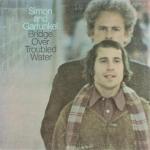
Testing Midrange Congestion

The records listed here are often congested in the midrange, making them a good test for both the system and how good the pressing you own may be.

Detail on Crosby, Stills and Nash – Holy Grail or Audio Trap?

Hot Stamper Pressings of the Music of Crosby, Stills, Nash and (Sometimes) Young

Detail may be the Holy Grail to some audiophiles, but listening for the details in a recording can be a trap we too easily fall into unless we are on our guard.

Tonal balance is the key.

Without correct tonal balance, no judgments about the details of the recording have any real value. 

A case in point: As good as the Classic Heavy Vinyl pressing is, the guitar at the opening of Helplessly Hoping tells you everything you need to know about what’s missing. The guitar on the better Hot Stamper domestic copies has a transparency and harmonic integrity that cannot be found on Classic’s version.

The Classic Records pressing gets the tonal balance right, but their guitar lacks the subtlety and harmonic resolution of the real thing.

I’m laboring here to avoid the word “detail,” since many audiophiles like bright, phony sounding records because of all their wonderful detail. Patricia Barber’s albums come to mind, along with scores of audiophile pressings. 

The MoFi guys and the CD guys are constantly falling into the trap of being impressed by the phony detail in some recordings.

The solution is to get the sound tonally balanced first, then see how much detail you have left.

Detail is not the end-all and be-all of audio. Those who think it is have systems that are sure to fall apart at louder levels. If the sound of your system on your best pressings doesn’t get better as it gets louder, you are failing one of the most important tests in all of audio, the turn up your volume test.

(more…)

Save the Life of My Child Is One Tough Test

Hot Stamper Pressings of the Music of Simon and Garfunkel Available Now

The big production songs on Bookends have a tendency to get congested on even the best pressings, which is not uncommon for four track recordings from the 60s.

Those of you with properly set up high-dollar front ends should have less of a problem than those of you without them. $3000 cartridges can usually deal with this kind of complex information better than $300 ones.

But not always. Expensive does not always mean better, since painstaking and exacting setup is so essential to proper playback.

Save the Life of My Child — A Tough Test

I used to think this track would never sound good enough to use as an evaluation track. It’s a huge production that I had heretofore found all but impossible to get to sound right on even the best original copies of the album. Even as recently as ten years ago I had basically given up on reproducing it right.

Thankfully things have changed. Nowadays, with carefully cleaned top copies at our disposal and a system that is really cooking, virtually all of the harmonic distortion in the big chorus near the opening has disappeared. It takes a very special pressing and a very special stereo to play this song. That’s precisely what makes it a good test!

America — Another Tough Test

America is another one of the toughest tracks to get right. The big ending with its powerful orchestral elements is positively stunning on the rare copies that have little or no congestion in the loudest passages.

On virtually every copy you will ever hear the voices on this track are a little sibilant. Modern records are made with what is known as a de-essing limiter. This limiter recognizes sibilance and keeps it under control, because once the cutter head sees that kind of high frequency information, which is already boosted for the RIAA curve, it will try to cut it onto the record and the result will be this kind of spitty distortion.

(more…)

Even Shootouts Won’t Teach You What You Can Learn from Variations in Your Table Setup

Hot Stamper Pressing of the Music of Joni Mitchell Available Now

As anyone familiar with album knows, Court and Spark has loud vocal choruses on a number of tracks. More often than not, during the loudest sections they sound like they are either breaking up or threatening to. This quality of “almost breaking up” is most easily heard on Down to You.

I always assumed it was compressor or board overload. But on the best of the best copies there doesn’t seem to be any breakup — the voices get loud and stay clean throughout.

Which means that instead of being on the master tape, it might be compressor distortion that is occurring during the mastering.

Regardless of the source of the distortion, or lack thereof, the loudest choruses are a tough test for any system.

Setup Advice

If you have one of our hottest Hot Stampers, try adjusting your setup — VTA, Tracking Weight, Azimuth, Anti-Skate — Especially! Audiophiles often overlook this one, at their peril — and note how cleanly the loudest passages play using various combinations of settings.

Keep a yellow pad handy and write everything down step by step as you make your changes, along with what differences you hear in the sound.

You will learn more about sound from this exercise than you can from practically any other. Even shootouts won’t teach you what you can learn from variations in your table setup.

And once you have your setup dialed in better, you will find that your shootouts go a lot smoother than they used to.

(more…)

Speakers Corner Peer Gynt Reviewed, with Handy VTA Advice

Hot Stamper Pressings of the music of Edvard Grieg Available Now

Sonic Grade: C+

The Fjeldstad has long been one of our favorite performances of Peer Gynt here at Better Records. 

This record is handy for VTA set-up as well, a subject discussed below in our listing from 2010.

The sound is excellent for a modern reissue*, but in the loudest sections the orchestra can get to be a bit much, taking on a somewhat harsh quality. (The quieter passages are superb: sweet and spacious.)

So I adjusted the VTA a bit to see what would happen, and was surprised to find that even the slightest change in VTA caused the strings to lose practically all their rosiny texture and become unbearably smeared.

This is precisely why it’s a good heavy vinyl pressing for setting up your turntable.

If you can get the strings to play with reasonably good texture on this record you probably have your VTA set correctly.

VTA

Correct VTA adjustment for classical records (as well as all other kinds of records) is critical to their proper reproduction. If you do not have an arm that allows you to easily adjust its VTA, then you will just have to do it the hard way (which normally means loosening a set screw and moving the arm up and down until you get lucky with the right height).

Yes, it may be time consuming, it may in fact be a major pain in the ass, but there is no question in my mind that you will hear a dramatic improvement in the sound or your records once you have taken the time to correctly set the VTA, by ear, for each and every record you play.

We heard the improvement on this very record, and do on all the classical LPs (and all other kinds of records) we play.

The Big Caveat

As for the asterisk (*) above, it concerns the caveat “…for a modern reissue…” What exactly do we mean by that? Allow us to reprint what we wrote about another Heavy Vinyl classical pressing, one that we actually used to like.

(more…)

Yes, We’re Getting Awfully Close To The Edge…

Hot Stamper Pressings of the Music of Yes Available Now

On the difficulty of reproduction scale, this record ranks well above most of the albums we play, in the top few percent without a doubt.

You need lots of Tubey Magic and freedom from distortion, the kind of distortion-free sound I rarely hear on any but the most heavily tweaked systems — the kind of systems that guys like me have been slaving over for more than forty years.

If you’re a weekend warrior when it comes to working on your stereo, this is not the record for you.

It took a long time to get to the point where we could clean the record properly, twenty years or so, and about the same amount of time to get the stereo to the level it needed to be, involving, you guessed it, many of the revolutionary changes in audio we tout so obsessively.

It’s also not easy to find a pressing with the low end whomp factor, midrange energy and overall dynamic power that this music needs, and it takes one helluva stereo to play one too.

If you have the kind of big system that a record like this demands, when you drop the needle on the best of our Hot Stamper pressings, you are going to hear some astonishingly good sound.

Unless your system is firing on all cylinders, even our Hottest Stamper copies can be difficult. Your electricity has got to be cooking, you’ve got to be using the right room treatments, and ideally you should be using a demagnetizer such as the Talisman on the record itself, your cables (power, interconnect and speaker) as well as the individual drivers of your speakers.

This is a record that’s going to demand a lot from the listener, and we want to make sure that you’re up to the challenge. If you don’t mind putting in the hard work, here’s a record that will reward you many times over, and probably teach you a thing or two about tweaking your gear in the process.

We’d started and abandoned this shootout multiple times before breaking through in 2008. The typical copy was just too painful to listen to, and the better pressings weren’t sounding the way we’d hoped they would.

Where was the Tubey Magical analog sound with the HUGE whomp factor that we’d been hearing on the best copies of Fragile and The Yes Album?

We just could not find that sound on Close to the Edge.

As futile as our previous attempts were, we decided in 2008 that we would take another stab at it. After all, there had been quite a few changes around here that had the stereo working really well —  the addition of the Odyssey Record Cleaning Machine and Prelude Record Cleaning System to our cleaning process, the Talisman Magnetic Optimizer, the third pair of Hallographs we added years back, tons of smaller tweaks, and a few other tricks that we’re going to leave hidden up our sleeves for now.

The Planets Align

Think about it: This is a highly COMPLEX recording, with HUGE organs, light-speed changes, lots of multi-tracking, and what amounts to an OVERLOAD of musical information. Can you imagine how irritating that would sound on a third-rate copy? We didn’t have to imagine it — we lived through it!

But that’s exactly what made the shootout so rewarding. We had finally gotten the sound we were searching for from Close To The Edge, although it was anything but easy. The toughest peaks to climb are the ones you feel the best standing at the top of, and I have no doubt that many of you will be able to get there, just as we did, as long as you’re willing to work for it. (We humbly suggest you follow our lead.)

We put a lot of time and energy into getting everything just right for our shootouts, and to hear the album sound amazing you’re going to have to do the same. If it doesn’t all come together and our Hot Stamper Close to the Edge leaves you cold, feel free to send it back for a full refund. That’s always our policy, but we wanted to stress it in regards to this album, because it is VERY difficult to reproduce. (Big speakers are pretty much a must on this one as well.)

And it should be noted that there is distortion on the tape. It’s on every LP copy and it’s on the CD too. There are cacophonous passages that have what sounds like board overload, mic preamp overload, tape saturation or some combination of all three.

(more…)

The Best of Earth Wind & Fire – Hard and Honky Brass Is a Dealbreaker

More of the Music of Earth, Wind and Fire

As you can imagine, most copies of this album leave a lot to be desired. Most were, to one degree or another, dull, smeary, opaque, gritty or shrill.

Our Hot Stampers, on the other hand, depending on hot hot they are, will give you the sound you’re looking for. If you’re a fan of BIG HORNS, with jump-out-of-the-speakers presence, this is the album for you. Some of the best R&B-POP brass ever recorded can be found here — full-bodied, powerful, fast, dynamic and tonally correct.

Advice

Here is some specific advice on What to Listen For as you critically evaluate your copy of The Best of Earth Wind & Fire.

When the brass sounded the least bit squawky on a given copy, that was almost always a dealbreaker and out it went.

When the BIG, MULTI-TRACKED vocals get going they need to have plenty of space to expand into. They also need to be breathy and warm, with airy extension for the harmonies (and those crazy high notes that only Philip Bailey can sing). Proper tape hiss is a dead giveaway in this respect.

This advice will of course work for any Earth Wind & Fire record you happen to have multiple copies of.

Here are a couple of hundred other albums with specific advice on what to listen for.

Choruses Are Key

Three distinctive qualities of vintage analog recordings — richness, sweetness and freedom from artificiality — are most clearly heard on a Big Production Recording like this one in the loudest, densest, most climactic choruses of the songs.

We set the playback volume so that the loudest parts of the record are as huge and powerful as they can possibly become without crossing the line into distortion or congestion. On some records, Dark Side of the Moon comes instantly to mind, the guitar solos on Money are the loudest thing on the record.

(more…)

What the Best Copies of Boston Really Get Right

Hot Stamper Pressings of Albums with Huge Choruses Available Now

The multi-tracked layers of guitars really come to life on the better copies. The not-so-great pressings tend to be congested and compressed, thickening the sound and diffusing the layers of multi-tracked harmonies. Tom Scholz’s uniquely overdriven, distorted leads have near-perfect timbre. On the top copies you can really hear how much power that sound adds to the music.

As is the case for the better pressings of Aqualung,just to take one example, when the guitar sounds this good, it really makes you sit up and take notice of the guy’s playing. When the sound works the music works, our seven word definition of a Hot Stamper.

Our killer copies have sweetness and tubey warmth we didn’t expect to hear. Better yet, the best copies have jump-out-of-the-speakers presence without being aggressive, no mean feat.

The good ones make you want to turn up the volume; the louder they get the better they sound. Try that with the average copy. When playing mass-market pop-rock music like this, more level usually means only one thing: bloody eardrums.

The typical Boston EQ is radio-friendly, not audiophile-friendly. But some were cut right, with the kind of richness, sweetness and smoothness that we fondly refer to here at Better Records as the sound of analog.

(more…)

Bridge Over Troubled Water – A Price Must Be Paid

More of the Music of Simon and Garfunkel
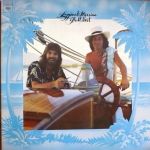
Reviews and Commentaries for Bridge Over Troubled Water

One of the most interesting findings in this shootout was that no Red Label copy scored as high as the best 360 Label copies. The later labels can be very clean and clear, but ultimately they lack the midrange magic, warmth and sweetness of the best early pressings.

Since this recording has a problem in all those areas to start with, most red label copies suffer from a pronounced deficit of  Simon & Garfunkel magic, the kind of magic that is so wonderfully evident on their two previous outings: Parsley, Sage… and Bookends.

The Last of the Four Track Recordings

Why do the two previous albums have more magic?

They’re simpler productions, the kind that can be handled by the four track machine they were recorded on.

Bridge, on the other hand, is the boys’ Grand Musical Statement for All Time, with production and scope far exceeding their previous work. Like the Beatles with Abbey Road, they gave it their all and went out on a high note. (The Beatles planned it that way, while S and G fell victim to their ambition, which you can read about in the AMG review below.)

What a Masterpiece they achieved. Ten weeks at Number One on the charts. Depth and breadth of material only hinted at on their earlier efforts.

Who can argue with this as one of the most important achievements in popular music of the last fifty years? [Make that sixty.]

It’s on this short list for a reason.

Back Away From The Console

The sonic problems and promise of the multi-track approach can both be heard in one track: The Only Living Boy In New York. The song starts out simply, focusing on the duo’s lovely voices, with only minimal instrumentation. It sounds PHENOMENAL on the best pressings, and very good on even the typical copies. Halfway through the song, heavy-handed production kicks in, and the sound suffers significantly. You can’t fault the band for going big, but nor can you blame audiophiles for wishing they had kept it simple.

(more…)

These Choruses Really Get Up and Going

Hot Stamper Pressings with Big, Clear and Lively Choruses Available Now

At about the two minute mark the big chorus in Watching the River Run is also a great test for weight, resolution, dynamic energy, and freedom from strain in the loudest parts. When the whole band is really belting it out, the shortcomings of any copy will be exposed, assuming you are playing the album at loud levels on big dynamic speakers.

It was a key test every pressing had to pass. That’s what makes it a good test disc.

When the music gets loud you want it to get better, with more size, energy and, especially, emotional power, just they way it would be heard in concert.

Any strain or congestion in the choruses we hear in our shootout causes the pressing in question to be downgraded substantially.

Hot Stampers are all about the life of the music, and when this music gets lively, it needs to be clear and clean.

This is of course one of the biggest issues we have with Heavy Vinyl — it never gets up and it never gets going the way vintage records can. “Boring” is the adjective we most commonly use to critique the few we hear, and who wants to listen to boring records?

EQ Issues

Practically all copies have a midrange equalization problem, with a lack of lower mids and boosted upper mids, which often thins out the vocals and leads to hardness and honkiness.

The better copies manage to keep the EQ anomalies within bounds while giving us full-bodied pianos; rich, lively vocals, full of presence and brimming with enthusiasm; harmonically-rich guitars, and a three-dimensional soundstage that reveals the space around them all.

(more…)

Bass, Choruses and Energy Are Key to the Best Pressings of War’s Albums

More Jazz / Rock Fusion Records with Hot Stampers

[This review was originally published about 2012 or so. Note that we rarely have any War records in stock. If you see one, grab it, the recordings on the best pressings are positively amazing on big speakers at loud levels.]

We just finished our first big shootout for this fun album — the All Music Guide calls it “a magical ride with plenty of surprises to keep the listener on his or her toes” and we couldn’t agree more.

This copy gives you punchy bass, airy flutes, hard-hitting percussion and loads of Tubey Magic. Many copies we played had too much hardness, edge, and midrange honk, but this one is smooth, sweet and rich.

Engineered by the brilliant Chris Huston, this recording displays all his trademark gifts.

His mixes feature:

The links above will take you to other albums that are good for testing all of these qualities.

As for the choruses, allow me to paraphrase our listing from Commoner’s Crown.

This is one of the rare pop/rock albums that actually has actual, measurable, serious dynamic contrasts in its levels as it moves from the verses to the choruses of many songs. The first track on side two, Four Cornered Room, is a perfect example. Not only are the choruses noticeably louder than the verses, but later on in the song the choruses get REALLY LOUD, louder than the choruses of 99 out of 100 rock/pop records we audition. It sometimes takes a record like this to open your ears to how compressed practically everything else you own is.

The Top Is Important Too

Richness and weight are key to the sound, but oddly enough an extended top end was almost as crucial to the success of the best copies. When the top end extends, the sound is open and relaxed. When the various songs build to their climaxes, the copies with lots of clean top end had a sense of “ease” that simply was not to be found on the smoother (read: duller) brethren.

(more…)