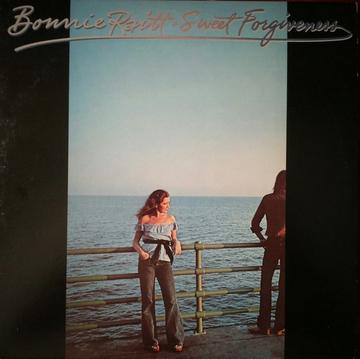
The three most consistent and enjoyable albums from her Warner Brothers period are this and Home Plate (the album that preceded this one). Nine Lives is a favorite too but the sound is problematic and nobody knows the album so we simply cannot make the case for a shootout of it.
All are Must-Owns if you’re a Bonnie Raitt fan.
Sweet Forgiveness is probably her most consistent album, and quite possibly her masterpiece. It strikes me as being the truest reflection of Bonnie Raitt’s musical talents.
Her Capitol period albums, as good as they are, don’t have this kind of heart and they certainly don’t have this kind of energy.
Like a lot of the best recordings from the mid-70s, the production and recording quality are clean and clear, and we mean that in a good way.
There is very little processing to the sound of anything here; drums sound like drums, guitars like guitars, and Bonnie sings without the aid of autotuning — because she can sing on-key, and beautifully. Her vocals kill on every song. (Her dad had a pretty good set of pipes too.)
Turn Up Your Volume
This is a classic case of a record that really comes alive when the levels are up. It’s so free from distortion and phony processing it wants to be played loud, and that’s the level this music works at. It’s the level it was no doubt mixed at, and that mix sounds pretty flat at moderate levels. If you want to hear the real rockin’ Bonnie Raitt you gots to turns it up!
The vocal dynamics here are some of the best I have ever heard. We’re not used to hearing singers get loud on pop records. Normally the compressors prevent that from happening, and even most copies of this record do not have the dynamics that this one does. You will need a high-quality front end to track this LP, that I can assure you.
And the last quarter inch or so of side one might possibly have some distortion on the vocal peaks, as well as track three on side two, which also gets quite loud. These may not actually be groove damage; sometimes the cutting engineer is at fault and sometimes the cutting equipment may not be up to the job of putting so much energy into those slower spinning inner grooves. We much prefer lively records to compressed ones, and sometimes overcutting is the price you have to pay.