Island – Reviews and Commentaries

Cat Stevens on 2 Heavy Vinyl 45 RPM Discs, Part 1 – Is This the Truest Tillerman of Them All?

About ten years ago we auditioned and reviewed the 2011 edition of Tea for the Tillerman pressed by Analogue Productions, the one that came on a single Heavy Vinyl 33 RPM LP.

I wrote a very long commentary about the sound of that record, taking it to task for its manifold shortcomings, at the end of which I came to the conclusion that the proper sonic grade for such a record is F as in Fail. My exhaustive review asked the not-very-subtle question, this is your idea of analog?

Our intro gave this short overview:

Yes, we know, the folks over at Acoustic Sounds, in consultation with the late George Marino at Sterling Sound, supposedly with the real master tape in hand, and supposedly with access to the best mastering equipment money can buy, labored mightily, doing their level best to master and press the Definitive Audiophile Tea for the Tillerman of All Time.

It just didn’t come out very well, no matter what anybody tells you.

Recently I was able to borrow a copy of the new 45 cutting from a customer who had rather liked it. I would never have shelled out my own money to hear a record put out on the Analogue Productions label, a label that has an unmitigated string of failures to its name. But for free? Count me in!

The offer of the new 45 could not have been more fortuitous. I had just spent a number of weeks playing a White Hot Stamper Pink Label original UK pressing in an attempt to get our new Playback Studio sounding right.

We had a lot of problems. We needed to work on electrical issues. We needed to work on our room treatments. We needed to work on speaker placement.

We initially thought the room was doing everything right, because our Go To setup disc, Bob and Ray, sounded super spacious and clear, bigger and more lively than we’d ever heard it. That’s what a 12 foot high ceiling can do for a large group of musicians playing live in a huge studio, in 1959, on an All Tube Chain Living Stereo recording. The sound just soared.

But Cat Stevens wasn’t sounding right, and if Cat Stevens isn’t sounding right, we knew we had a Very Big Problem. Some stereos play some kinds of records well and others not so well. Our stereo has to play every kind of record well because we sell every kind of record there is. You name the kind of music, we probably sell it. And if we offer it for sale, we had to have played it and liked the sound, because no record makes it to our site without being auditioned and found to have excellent sound.

But I Might Die Tonight

The one song we played over and over again, easily a hundred times or more, was But I Might Die Tonight, the leadoff track for side two. It’s short, less than two minutes long, but a lot happens in those two minutes. More importantly, getting everything that happens in those two minutes to sound not just right, but as good as you have ever heard it, turned out to be a tall order indeed.

I could write for days about what to listen for in the song, but for now let me just point the reader to one of the most difficult parts to reproduce correctly.

At about 50 seconds into the track, Cat repeats the first verse:

I don’t want to work away
Doing just what they all say
Work hard boy and you’ll find
One day you’ll have a job like mine, job like mine, a job like mine

Only this time he now has a multi-tracked harmony vocal singing along with him, his own of course, and he himself is also singing the lead part louder and more passionately. Getting the regular vocal, call it the “lower part,” to be in balance with the multi-tracked backing vocal, call it the “higher part,” turned out to be the key to getting the bottom, middle and top of the midrange right.

When doing this kind of critical listening we play our records very loud. Live Performance level loud. As loud as Cat could sing, that’s how loud it should be when he is singing his loudest toward the end of the song for the final “But I might die tonight!” If he is going to sing loudly, I want my stereo to be able to reproduce him singing as loud as he is actually singing on the record. No compression. No distortion. All the energy. That’s what I want to hear.

The last fifteen seconds or so of the song has the pianist (Cat himself) banging out some heavy chords on the piano. If you have your levels right it should sound like there is a real piano at the back of the room and that someone is really banging on it. It’s a powerful coda to the song. (more…)

We Don’t Offer Domestic Pressings of Pour Down Like Silver for One Very Simple Reason

Hot Stamper Pressings of the Music of Richard Thompson Available Now

In spite of the fact that the domestic pressings of this Richard and Linda Thompson classic from 1974 were mastered by the likes of Kendun and Sterling — two of the greatest mastering houses of all time, — they have never impressed us with their sound quality.

The biggest problems with this record would be obvious to even the casual listener: gritty, spitty vocals; lack of richness; bright tonality; lack of bass; no real space or transparency, etc.

The domestic Island pressings did not do nearly as well in our shootout as the best Island imports, no surprise there as the early UK records were mastered by one of our favorite engineers.

Avoid the Carthage pressings mastered by Sterling. They came in last in our shootout.

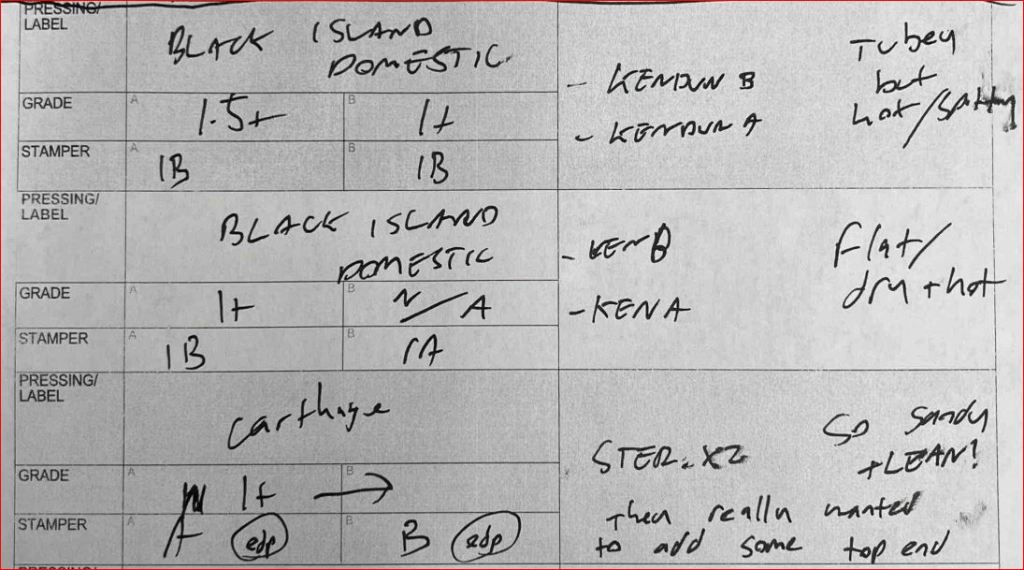
The domestic breakdown follows:

Black Island Domestic #1

  • Tubey but hot and spitty.

Black Island Domestic #2

  • Flat, dry and hot (glary or bright)

Carthage Domestic recut from 1983, Sterling on both sides

  • So sandy and lean! They really wanted to add some top end (!)

Defending the Indefensible

(more…)

Mona Bone Jakon – Live and Learn

Hot Stamper Pressings of the Music of Cat Stevens Available Now

Scroll down to check out our two updates, one from 2024 and one from 2025.

Live and learn? It never ends!


When we said Mona Bone Jakon was not the sonic equal of Teaser and the Firecat or Tea for the Tillerman, boy, we was wrong and then some. Read all about it in this White Hot Stamper copy review from many years ago.

It’s been about a year since we last found Hot Stampers of this album, and having made a number of improvements to the stereo over that time, I’m here to report that this album got a WHOLE LOT BETTER, better than I ever imagined it could get. Mona Bone Jakon now ranks as a DEMO DISC of the highest order, every bit the equal of Teaser and Tea.

To think that all three of these records came out in one fifteen-month period is astonishing. The only other artists to have produced music of this caliber in so short a time would have to be The Beatles, and it took four of them to do it.

Which is not what we used to think, as evidenced by this paragraph from a previous Hot Stamper listing.

This album is one of Cat’s top four titles both musically and sonically. Tea and Teaser are obviously in a league of their own, but this album and Catch Bull At Four are close behind. The music is WONDERFUL — the best tracks (including I Wish I Wish and I Think I See The Light) rank right up there with anything from his catalog. Sonically it’s not an epic recording on the scale of Tea or Teaser, but with Paul Samwell-Smith at the helm, you can be sure it’s an excellent sounding album — on the right pressing.

That last line is dead wrong. It IS an epic recording on the scale of Tea and Teaser. This copy proves it! Now that we know just how good this record can sound, I hope you will allow me to borrow some commentary from another classic Cat Stevens album listing, to wit:

(more…)

Cat Stevens Part 2 – Is This the Truest Tillerman of Them All?

If you haven’t read Part 1 of this story, please click here.

Back to our real story. I listened to my good original pressing. I call it White Hot at least!

Then I put the new pressing on the table, set the SDS for 45 RPM, and got the volume just right. I proceeded to carefully adjust the VTA by ear, going up and down with the arm until the sound was right, which is simply standard operating procedure for every record we audition.

These are my actual notes for But I Might Die Tonight.

This is what I heard as the song worked its way through the various sections, in real time.  The first thing I heard at the start was Zero Tubey Magic for the first verse. One of the last things I heard at the end was No Real Space. Space is what you hear at the end for the big piano and drums finish.

Let’s take it line by line. First up:

Zero Tubey Magic

I didn’t hear much Tubey Magic on the new pressing. The best early pressings — domestic A&M Browns, Pink or Sunray UK Islands — often have simply phenomenal amounts of the stuff. It’s a hallmark of the recording.

If a new pressing comes along without it, that’s a problem. I guess that George Marino‘s cutting system at Sterling could probably do some things well, but it sure doesn’t seem to be able get the sound of tubes right. His 33 RPM cutting had no Tubey Magic, and this one has no Tubey Magic. If I had hired him to cut a record for me and it came out sounding like this, I would find somebody else to cut records for me.

He’s dead now, rest in peace. I would doubt that anyone at Sterling has a better cutting system, and therefore no one should expect any records that have been mastered there to sound very good.

Vocal Is Clear, Clean and Dry

This is the sound you sometimes get with modern, super-clean transistor cutting equipment. It’s low distortion, like a CD is low distortion. We don’t think we should have to put up with dry vocals on records when the good pressings we have been playing all our lives have noticeably richer vocals.

Not rich like Dream With Dean, nothing is that rich, but rich and full-bodied the way the good pressings of this album always make them sound.

(more…)

Listening in Depth to Emerson, Lake & Palmer

Hot Stamper Pressings of the Music of Emerson, Lake and Palmer Available Now

If you’ve got the system to play this one loud enough, with the low end weight and energy it requires, you are in for a treat with Emerson, Lake and Palmer’s debut.

The organ that opens side two will rattle the foundation of your house if you’re not careful. This music really needs that kind of megawatt reproduction to make sense. This is bombastic prog that wants desperately to rock your world. At moderate levels it just sounds overblown and silly. At loud levels, it actually will rock your world.

To play this record right, you should have, at a minimum:

  • Big dynamic speakers, and they should be pulled out well into the room to create a three-dimensional presentation, in this case of a live rock concert. If the speakers are too big for the room, or stuck in the corners, you haven’t got a chance with a recording as powerful as this one.
  • A large room. (Our new studio has a 12 foot ceiling, a big help with a blockbuster recording such as this one.)
  • Strong walls with no windows, and, if possible, a concrete floor to keep the bass from leaving the room.
  • Seating for a single listener far from any boundary, especially the back wall (a common problem with small-ish rooms).
  • Extensive room treatments to deal with the loud levels this music requires.
  • Enough amplifier power driving speakers with big enough woofers to move all the air in the listening room with authority.
  • And, finally, high quality electricity, a heavily tweaked front end and all the rest of the audio stuff we discuss endlessly on this blog.

Without all of these things, it’s hard for us to imagine anyone could hear this record sound the way the artists and engineers wanted it to. Playing a record like this in a small room at moderate levels practically guarantees that the listener will not be able to hear what makes the best copies of this album so special.

Our system evolved over the decades to play these kinds of records, primarily for two reasons:

  1. We love music and want to hear our favorite recordings sound their best, and
  2. With this much money on the line, we have to be right about the superior sound of the vintage Hot Stamper pressings we offer if we want to stay in business.

Side One

The Barbarian
Take a Pebble

Superb sound! Big, spacious and effortlessly alive. So dynamic too.

(more…)

Fittingly, Teaser and the Firecat Was the First Hot Stamper We Ever Officially Offered for Sale

Hot Stamper Pressings of the Music of Cat Stevens Available Now

UPDATE: 2015

The listing you see below describes the first Hot Stamper pressing we ever offered to our customers. It was written in 2004, the year we officially made any Hot Stamper pressing available through our website.

It’s a fairly accurate reflection of our understanding of the album at the time. In the ensuing years we would learn a great deal more about Teaser and the Firecat and overturn some of our mistaken beliefs from 2004.

Although the fundamentals of the playback system we use are much the same, it too has undergone a great many changes since those days, described in detail here.

Record cleaning has changed even more dramatically.

As you will see, we felt the need to address a controversial issue: the very high price of the record. (More on pricing here.)


Our 2004 Listing

Before we start discussing this record, let’s talk about the price for a moment.

I have never put a vintage used non-audiophile rock record on the site at a price this high.

I’ve sold other records directly to my best customers for this kind of money, but this is the first $500 rock record of its kind to go on this website. This is the result of three factors.

First, it’s the best sounding copy of this record I have ever heard (on side two anyway).

Second, this is Teaser and the Firecat, one of the most important recordings in the history of popular music.

Third, it’s amazingly quiet. The confluence of these three factors makes this copy practically unique.

For years I have been telling people that one day I would put up on the website some Hot Stamper copies of Cat Stevens greatest albums. Today is that day.

Before I get further into the sound of this record, let me preface my remarks by saying this is a work of GENIUS. Cat Stevens made two records which belong in the Pantheon of greatest popular recordings of all time. In the world of folky pop, Teaser and the Firecat and Tea for the Tillerman have few peers. There may be other recordings that are as good but there are no other recordings that are better.

The above comments were written for the last Hot Stamper which went up early in 2005, and of course, my sentiments have not changed. Not only do I think this record can’t be bettered, I have now found copies that are superior to even the best pressing I had heard back then.

Of course, I own a much better stereo than I did in 2005. I’m now using the Dynavector 17D3 cartridge, which is more correct than the 20X I had before. Also, I’ve improved phono stages quite a bit, incorporating the EAR 834P (and a very special vintage tube complement which makes ALL the difference in the world) into the system, balancing tubey magic with the speed and dynamics of the best transistor systems.

I’ve been acquiring and evaluating copies of this album for a couple of years now, waiting for just the right time and the right stereo to shoot them out with.

The changes I mention above gave me the confidence to tackle this project.

I can tell you in all honesty that I have NEVER heard better sound than I heard last night while doing these comparisons. It is my contention that there is no audiophile pressing on the face of the Earth that can compete with the best sounding original Teaser and the Firecats. Of ANY music. This is a sound I simply don’t experience when playing modern mastered records. There is a magic in these grooves that seems to be impossible to recapture. Perhaps one day I’ll be proven wrong, but that day is not upon us yet. Until then, this is the king.

Last night I listened to at least fifteen of the best pressings of this album that I had available to me — we’re talking some heavy hitters here, all top quality British and American original pressings — and this pressing took top honors. In my opinion, it’s one of a handful of the best records we have EVER put up on the site. It is without a doubt the best sounding record I have ever played. (more…)

Thinking About the Tubey Magical Acoustic Guitars of Bread and Cat Stevens

UPDATE 2025

This commentary was written years ago in an effort to promote the mostly forgotten and certainly overlooked qualities of Bread‘s superb recordings.

We are rarely able to do shootouts for their albums these days, due to a lack of interest on our customers’ parts, at least at the prices we tend to charge for great sounding pressings of their classic releases. More’s the pity.

Although we were able to do Manna in 2024, and The Best of Bread in 2025, our last shootout for On the Waters was way back in 2012.

Instead, we recommend you pick up some early pressings of Bread’s albums at your local record store and see if the wondeful analog sound Armin Steiner achieved in the studio makes you a fan of the band the way it did me.

More on Armin Steiner and Bread here.


In many ways On the Waters is a Demo Disc recording.

Listening to the Tubey Magical acoustic guitars on the best copies brings back memories of my first encounter with an original Pink Label Tea for the Tillerman. Rich, sweet, full-bodied, effortlessly dynamic — that sound knocked me out thirty-odd years ago, and here, on an album by the largely-forgotten band Bread, is that sound again.

Looking back, 1970 turned out to be a great year for rock and pop, arguably the greatest.

I’ve always been a sucker for this kind of well-crafted pop. If you are too, then a Hot Stamper copy of any of their releases will no doubt become a treasured Demo Disc in your home as well. 

Audiophiles with high quality turntables literally have an endless supply of good recordings to discover and enjoy.

No matter how many records you own, you can’t possibly have even scratched the surface of the vast recorded legacy of the last sixty years. 

(more…)

“KEV” Didn’t Have a Clue How to Master Teaser and the Firecat

Hot Stamper Pressings of the Music of Cat Stevens Available Now

In 2025, in preparation for a new shootout, we ordered a copy of Teaser from overseas that supposedly had the right stampers — we know what they are and we are only interested in copies with the right ones — and were sent this “KEV” pressing by accident.

Accident is right — whoever KEV is, he sure has no business mastering records if the one we played is anything to go by.

Discogs has an entry for it, current price around $10. (Apparently the word got out about the sound of this miserable pressing.)

  • This release is the pink ring Island Label. No Sterling etchings. (KEV) in matrix.
  • Side 1 has 9514 hashed out and 9154 etched above
  • Matrix / Runout (A-side runout. etched): ILPS 9154A-1K 1 KEV B
  • Matrix / Runout (B-side runout. etched): ILPS 9154B-1K 1 KEV B

Our notes read:

  • Loud, congested and hot.
  • Big, wonky bass.
  • Opaque and so compressed that it pumps.

And the best line of all:

  • Not too different sounding from the 2021 remaster that’s on Spotify. (!)

I looked up that 2021 release, mastered at Abbey Road Studios, and it appears they remixed it for some reason, as those who work at Abbey Road are wont to do, the result of which seems to be one disaster after another.

(more…)

Emerson, Lake & Palmer – Islands Vs Cotillions

Hot Stamper Pressings of the Music of Emerson, Lake and Palmer Available Now

UPDATE 2020

This commentary was written many years ago, around 2010 I would guess.

It was updated in 2020 when we realized we were wrong about the domestic pressings being superior on side two. At one time we thought they were, and now, with many more shootouts under our belts, we are pretty sure they are not. But you never know!

The findings from the latest shootouts have shown us the error of our ways, yet another example of live and learn.


This is what we used to think:

The Brit copies may take top honors for side one (“sweetness, openness, tubey magic, correct tonality, presence without aggressiveness, well-defined note-like bass, extended airy highs”) but the Hot Stamper Cotillion copies KILL on side two. They really ROCK, with greater dynamic contrasts and seriously prodigious bass, some of the best ever committed to vinyl.

The Brits tend to be a bit too “pretty” sounding. They’re too polite for this bombastic music. This music needs the whomp down below and lots of jump factor to work its magic.

The Brits are super-low distortion, with a more open, sweeter sound, especially up top, but the power of the music is just not as powerful as it can be on these very special Cotillions.

We prefer the British pressings on both sides now. After years of improvement to our playback, they have shown themselves to be a step up over even the best domestic pressings. The Cotillions don’t win shootouts now and would be very unlikely to win one in the future. At best they tend to earn Super Hot Stamper grades.

A top copy might be described this way:

  • This UK Island Pink Rim pressing makes the case that ELP’s debut is clearly one of the most powerful rock records ever made, here with incredible Nearly Triple Plus (A++ to A+++) grades from top to bottom – just shy of our Shootout Winner
  • Spacious, rich and dynamic, with big bass and tremendous energy – these are just some of the things we love about Eddie Offord‘s engineering work on this band’s albums
  • Analog at its Tubey Magical finest – you’ll never play a CD (or any other digitally sourced material) that sounds as good as this record as long as you live
  • “Lucky Man” and “Take A Pebble” on this copy have Demo Disc quality sound like you won’t believe
  • Our White Hot pressing had a one half plus better grade on one side and sold for $849, making this copy a “relative bargain,” if there could ever be such a thing on this site – but what an amazing sounding record!

Without a doubt this record belongs in our Top 100 Rock and Pop section.

I’d even say it belongs in the Top Ten (which of course is where you can find it, where it belongs).

The organ on this album is wall to wall and floor to ceiling. The quiet interlude during “Take A Pebble” is about as quiet as any popular recording can ever be — the guitar is right at the noise floor. It’s amazing! (Which explains why so many domestic copies have groove damage. The record is just too hard to play for the average turntable. Hell, it’s hard to play with an audiophile turntable.)

Credit engineer Eddie Offord, who would later go on to enormous and entirely justifiable fame with Yes.

(more…)

Siren on Import Vinyl? Not So Fast

Hot Stamper Pressings of the Music of Roxy Music Available Now

Siren is one of our favorite Roxy albums, right up there with the first album and well ahead of the commercially appealing Avalon.

After reading a rave review in Rolling Stone of the album back in 1975, I took the plunge, bought a copy at my local Tower Records and instantly fell in love with it.

As is my wont, I then proceeded to work my way through their earlier catalog, which was quite an adventure. It takes scores of plays to understand where the band is coming from on the early albums and what it is they’re trying to do. Now I listen to each of the first five releases on a regular basis.

Somehow they never seem to get old, even after more than forty years.

Of all the Roxy albums (with the exception of Avalon) this is probably the best way “in” to the band’s music. The earlier albums are more raucous, the later ones more rhythmically driven — Siren catches them at their peak, with, as other reviewers have noted, all good songs and no bad ones.

Imports? Not So Fast

The British and German copies of Siren are clearly made from dub tapes and sound smeary, small and lifeless.

To be fair, Siren has never impressed us as an exceptionally good sounding recording. Like other middle period Roxy, records such as Country Life and Manifesto (the albums just before and after), it simply does not have Demo Disc analog sound the way Avalon, Stranded or the Self-Titled albums do (the latter two clearly being the best sounding in their catalog).

One would be tempted to assume that the import pressings of Siren would be better sounding, the way the imports of the first four Roxy albums are clearly better sounding. (There has never been a domestic Hot Stamper pressing of any of those titles and, since we never buy them or play them, there probably never will be.)

But in the case of Siren it’s the imports that are made from dubs. It may be a British band, recorded in British studios with a British producer, but the British pressed LPs are clearly made from sub-generation tapes, whereas the domestic copies sound like they’re made from the real masters.

Go Figure. And another thing: when it comes to records, never assume anything.

The typical domestic pressing is flat, bass-shy and opaque, sounding more like compressed cardboard than analog vinyl.

Unsurprisingly, the CD, whether imported or produced domestically, is clean and clear and tonally correct but lacks the warmth and richness of the better vinyl pressings.

(more…)