More of the Music of Beethoven

- This early Plum Label Victrola pressing of these lively and masterful performances earned solid Double Plus (A++) grades or close to them from first note to last
- It’s also fairly quiet at Mint Minus Minus, a grade that even our most well-cared-for vintage classical titles have trouble playing at
- Boatloads of energy, loads of detail and texture, superb transparency and excellent clarity (particularly on side one) – all qualities the best vintage vinyl classical pressings have in abundance
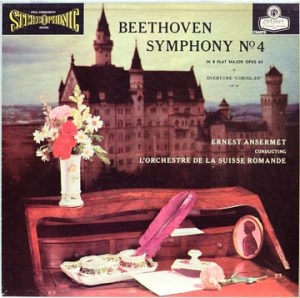
- A top performance of the 4th by Monteux and the LSO, with strings that are tonally correct, rich, and sweet (also particularly on side one)
- The horns on the Wagner piece are reproduced quite well here too – how could a Wagner record be any good without good horns?
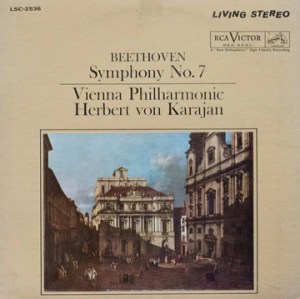
Both sides of this early Plum Label Victrola pressing are superb, with the kind of string tone only found on the best of the Living Stereo releases and other top quality Golden Age recordings.
Here is the kind of sound that Classic Records could not ignore, even though the original was only ever made available as part of RCA’s budget reissue series, Victrola.
Don’t let its budget status fool you — this pressing puts to shame most of what came out on the full price Living Stereo label. (And handily beats any Classic Records reissue ever made.)
And Monteux is once again superb.
We played a large group of Beethoven’s symphonies this week and this was clearly one of the best, if not THE best. Well recorded Beethoven is hard to come by. The box sets we played were mediocre at best, and that left us with only a handful of clean early pressings. These records just aren’t out there like they used to be.




 And if you just happen to be the proud owner of a big record collection, how can you possibly find the time to play more than a small fraction of it in any given year. Or even over the course of a decade for that matter.