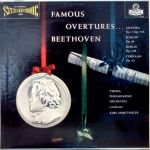
_Composers – Beethoven

Beethoven – Symphony No. 3 (“Eroica”) / Solti

More of the Music of Ludwig van Beethoven

  • Both sides of this vintage copy were giving us the rich and Tubey Magical Decca / London sound we were looking for, earning solid Double Plus (A++) grades or BETTER – fairly quiet vinyl too
  • It’s simply bigger, more transparent, less distorted, more three-dimensional and more real than most of what we played
  • A top performance from Solti and the Vienna Phil – it’s classic Solti: fast-paced, exciting and powerful
  • Solti’s Beethoven recordings from 1959 are superb, with the 5th and 7th being every bit as good – it’s his later recordings, the ones from the early 1970s, that we find fault with
  • There are about 150 orchestral recordings we think offer the best performances with the highest quality sound. This record is certainly deserving of a place on that list.
  • And if you have an original Decca or London of this title, be prepared to be knocked out by how much better this later pressing sounds — knocked out like we were, truth be told

(more…)

Beethoven – Symphony No. 4 / Ansermet

More of the Music of Ludwig van Beethoven

  • A vintage London pressing of Ansermet and the Suisse Romande’s wonderful performance, here with big, rich, Tubey Magical Nearly Triple Plus (A++ to A+++) sound throughout – just shy of our Shootout Winner
  • Both of these sides have an abundance of energy, loads of detail and texture, remarkable transparency and excellent clarity – all qualities the best classical pressings have in abundance
  • The texture on the strings is captured perfectly – this is an area in which modern pressings fail utterly, and without good string reproduction, especially in the lower registers, a Beethoven symphony is simply not a pleasurable experience when reproduced on highly resolving equipment

(more…)

Beethoven – Symphony No. 7 / Karajan

More of the Music of Beethoven

  • This Decca-recorded, Shaded Dog pressing of Beethoven’s Symphony No. 7 debuts on the site with big, spacious, and lively Double Plus (A++) Living Stereo sound or close to it from first note to last
  • Side one is doing just about everything right – it’s rich, clear, undistorted, open, and has depth and transparency to rival the best recordings you may have heard, and side two is not far behind in all those areas
  • The texture on the strings is captured perfectly (particularly on side one) – this is an area in which modern pressings fail utterly, and without good string reproduction, especially in the lower registers, a Beethoven symphony is simply not a pleasurable experience on highly resolving equipment

(more…)

Frames of Reference, Carefully Conducted Shootouts and Critical Listening

Hot Stamper Pressings of Decca Recordings Available Now

The sound we were hearing on this pressing of the Beethoven Septet (CS 6132) during a recent shootout was both rich and sweet, with easily recognized, unerringly correct timbres for all seven of the instruments heard in the work.

The legendary 1959 Decca tree microphone setup had worked its magic once again.

And, as good as it was, we were surprised to discover that side two was actually even better!

The sound was more spacious and more transparent. We asked ourselves, how is this even possible?

Hard to believe, but side two had the sound that was TRULY hard to fault.

This is precisely what careful shootouts and critical listening are all about.

Shootouts are the only way to answer the most important question in all of audio: “compared to what?

Without shootouts, how can you begin to know what are the strengths and weaknesses of the copies you own?

The vast majority of our Shootout Winning pressings fall short in one way or another on one side, something we have lately been making more of an effort to highlight on the blog.

Now, if you are a fan in general of modern Heavy Vinyl pressings, what exactly is your frame of reference? How many good early pressings of those same titles could you possibly own, and how were they cleaned?

Without the best pressings around to compare, Heavy Vinyl might sound fine.

It’s only when you have something better to play that its faults come into clearer focus.

And if you have any of these titles and they sound fine to you, this is a situation that requires your immediate attention!

(more…)

Beethoven Symphony No. 7 – This London with Solti Didn’t Make the Grade

Hot Stamper Classical and Orchestral Imports on Decca & London
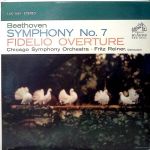
In our survey for the work, we played a number of the better known recordings from the top conductors and orchestras around the world.

Here is what we heard when we dropped the needle on an early pressing of CS 6093, released in 1959.

Our notes read:

  • Awful,
  • so dry,
  • steely,
  • crude,
  • bad

In other words, it just sounded like an old record. The world is full of records that don’t sound very good. As a matter of fact they undoubtedly make up the bulk of large record collections.

And if you just happen to be the proud owner of a big record collection, how can you possibly find the time to play more than a small fraction of it in any given year. Or even over the course of a decade for that matter.

The fact is that you can’t. Which, on the upside, means that, as far as you know, all your records sound great!

No need to buy another copy of whatever title you care to name. What for? You haven’t played it in twenty years and probably won’t get around to pulling it off the shelf for a spin for at least another twenty.

Here’s hoping your kids like old records because they are going to end up with an awful lot of them.

Back to the Beethoven 7th. What a beautiful cover!

But what good is a beautiful cover when the record sounds as bad as this one does?

(more…)

Beethoven – Piano Concerto No. 2 / Moonlight Sonata / Backhaus

More of the Music of Beethoven

  • The Hot Stamper debut of Backhaus and the Vienna Phil’s masterful performance of these two sublime classical works, here with solid Double Plus (A++) grades or BETTER throughout this vintage London pressing
  • It’s also remarkably quiet at the high end of Mint Minus Minus, a grade that even our most well-cared-for vintage classical titles have trouble playing at
  • Piano Concerto No. 2 takes up all of this incredible Nearly Triple Plus (A++ to A+++) side one and is practically as good as we have ever heard, right up there with our Shootout Winner
  • Both of these sides are big, full-bodied, clean and clear, with a wonderfully present and solid piano, and plenty of 3D space around it
  • Dynamic, huge, lively, transparent and natural – with a record this good, your ability to suspend disbelief will require practically no effort at all
  • After surveying various recordings of the work, it was clear to us that CS 6188 on the early London pressing offers the discerning audiophile the best performance of the piece with the highest quality sound available

(more…)

Putting Your System to the (Violin and Piano) Test

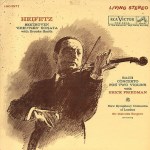
Hot Stamper Pressings with Jascha Heifetz Performing

Do you want a recording that is going to put your system to the test? Well this is that record! The violin is REAL. As you compare equipment or tweak your system, you will hear the sound of that violin change and it should be obvious when it gets better and when it gets worse. 

The piano is also very well recorded.

If you lose some body to the piano you’re probably going in the wrong direction.

But since that direction would make the violin almost unbearable sounding, I’m going to guess that would be easily recognized as a mistake.

The balance between those two instruments on this recording is perfection, so if you get this record right, you’re making progress of the most important kind: toward musical naturalness.

Otherwise this violin, at least on the Kreutzer Sonata, is going to tear your head off.

Our previous Hot Stamper review follows.

The Beethoven, which takes up side one, is recorded in a fairly dry acoustic. The sound of the violin is very immediate. It’s quite a showpiece for Heifetz.

I much prefer the Bach on side two, however, which is recorded within a more natural hall acoustic. Sir Malcom Sargent conducts and Eric Freidman plays the second violin in this concerto, which is also his debut for RCA, according to the liner notes.

This piece was recorded in England and to me it has the rich, sweet, glorious sound of Living Stereo at its best.

(more…)

This Beethoven Ninth Started Out with Two Strikes Against It

Hot Stamper Pressings of the Music of Beethoven Available Now

MoFi took the shortcomings of a mediocre-at-best Decca recording from 1972 and made them even worse by means of their ridiculously misguided mastering decisions and wacky cutting system.

They should not have chosen this performance of the Ninth Symphony in the first place, and they certainly should not have added the treble they chose to add, which they did to this title and to every classical recording they remastered without regard to whether or not the recording needed brightening. None that I know of did. Try telling that to the brain trust running MoFi.

(They hired this guy to do their one-step digitally remastered pressings and from the get-go he’s been giving audiophiles the most ridiculously phony sounding records that collectors with way too much money can buy.)

The Decca recording of the Ninth from 1972 is opaque, lacks size and space, and comes off as a bit flat and dry.

Like practically every later Decca pressing we play, it’s passable at best.

Londons and Deccas from this era (1972 in this case) rarely sound very good to us.

Here is what we specifically don’t like about their sound.

If you want to know what’s wrong with the Mobile Fidelity pressing, take the above faults and add some others to them.

Start with an overall brighter EQ, add a 10k boost for extra sparkly strings, the kind that MoFi has always been smitten with, and finish with the tubby bass caused by the half-speed mastering process itself.

Voila! You are now in the presence of the kind of mid-fi trash that may have fooled some audiophiles way back when but now sounds as wrong as the records this ridiculous label is still making today.

Here are some other pressings with bright string tone that are best avoided by audiophiles looking for top quality sound.

1981 Was a Long Time Ago

Old school audio systems are notorious for being dark, dull and lacking in transparency. They might need bright records in order to sound good, but high quality modern systems do not.

If these two MoFi pressings sounds right to you, you are very likely living with one of those old school systems and it is long past time to get rid of it.

(more…)

The Greatest Beethoven Ninth on Vinyl – Ansermet in 1960

Hot Stamper Pressings of the Music of Beethoven Available Now

The legendary Ansermet recording from 1960 you see to the left is the best sounding Beethoven 9th we have ever had the pleasure to play here at Better Records.

Ansermet’s performance is clearly definitive to my ear as well. The gorgeous hall the Suisse Romande recorded in was possibly the best recording venue of its day, possibly of all time. More amazing sounding recordings were made there than in any other hall we know of.

Both sides are big, rich and clear, and both were showing us pretty much everything that’s good about a vintage symphonic recording.

There is a solidity and richness to the sound beyond all others, yet clarity and transparency are not sacrificed in the least.

It’s as wide, deep and three-dimensional as any, which is of course all to the good, but what makes the sound of these recordings so special is the weight and power of the brass, combined with unerring timbral accuracy of the instruments in every section of the orchestra.

The Chorus — Always a Tough Test

To get the chorus to play cleanly right to the very end is difficult for any pressing and this one is no exception. The chorus should play mostly without distortion or congestion even in the loudest parts, but we can’t say there won’t be a trace of one or both.

A good test of your turntable setup!

Production and Engineering

James Walker was the producer, Roy Wallace the engineer for these sessions from April of 1959 in Geneva’s glorious Victoria Hall.

The album came out in 1960, along with a great many other exceptional titles from the Golden Age of vacuum tube recording.

(more…)

Don’t Waste Your Money on this RCA from 1961

Hot Stamper Pressings of Living Stereo Recordings Available Now

These Beethoven “Appassionata” And “Funeral March” sonata recordings have never impressed us sonically.

On the Shaded Dog pressings of LSC 2545 that we’ve auditioned, the piano is too thin.

Who likes a thin sounding piano?

If you have big speakers that can move air with authority, the kind needed to reproduce the size and power of a concert piano, then check out some of the titles we’ve found to have especially weighty piano reproduction.

The sound is not awful — you could certainly do worse — but we do not see the value in this title considering it will be neither cheap nor quiet.

We say pass.

Lewis Layton is clearly one of our favorite engineers, but this album does not seem to be up to his usual standards, or ours.


There are quite a number of other vintage classical releases that we’ve run into over the years with noticeable shortcomings.

For fans of vintage Living Stereo pressings, here are some to avoid.

Some audiophiles may be impressed by the average Shaded Dog pressing, but I can assure you that we here at Better Records are decidedly not of that persuasion.

Something in the range of five to ten per cent of the major label Golden Age recordings we play will eventually make it to the site. The vast majority just don’t sound all that good to us. (Many have second- and third-rate performances and those get tossed without ever making it to a shootout.)

(more…)