*Making Progress

It’s not easy to make audio progress — nothing is in fact harder. However, if your approach to audio is clear-headed and evidence-based — in other words, scientific — progress is not only possible, it is virtually guaranteed.

If you play huge numbers of records, and listen to them critically, some of them will teach you things about audio that you cannot learn any other way.

Practically all of our audio philosophy derives from the simple act of trying to get our system to play the greatest recordings of all time with the highest fidelity possible. Every record is a challenge, and every defeat an opportunity to learn something — to see where we may have gone wrong — in order to know more than we did before.

The Reward Comes After

Richard Feynman Is Another Guy with Good Advice on Making [Audio] Progress

But first let’s check in with Shane Parrish, who writes:

You have to train before the race, not after. You have to build the skill before you get the job that requires it. You have to be trustworthy for years before anyone trusts you with something important. The bill comes first. The reward comes later.

The universe does not offer financing.

This is hard to accept because modern life trains us to expect the opposite. We are addicted to “Buy Now, Pay Later.” You live in the house before you pay off the mortgage. You get the degree before you pay off the loan. You eat the meal before you ask for the check.

We are conditioned to enjoy the benefit today and pay the cost tomorrow.

Achievement reverses the transaction. It requires full payment in advance (and regular payments forever). If you want a fit body, a calm mind, a healthy relationship, or financial independence, the cost is non-negotiable. You must do the work before you get the result.

This is why most people quit. They pay a little, see nothing, and stop. They never make it far enough to see the first return arrive.


Some of this comports well with my audio experience over the last fifty years or so, but some of it does not. I feel the need to add some context to Shane’s advice when it comes to the hobby I have devoted most of my life to.

(more…)

Port’s Rule and The Song of the Volga Boatman

More Records that Helped Me Make Progress in Audio

The track that started us down the road to our first Sauter-Finegan shootout is, to this very day, our Number One Test Track of All Time, a little ditty known as the Song of the Volga Boatman.

We first heard it back in the 90s on Bob and Ray Throw a Stereo Spectacular, which is still the version we test with, but this album of forward-looking big band contains that track  as well as 10 others, all with truly amazing sound.

Why is the Song of the Volga Boatman our ultimate test track?

The simplest way to understand it is that all the instruments are being played live in the studio, and all of them in the huge soundfield are real and acoustic — string bass, drums, horns of every size and type, woodwinds, percussion, tubular bells, etc.

In addition, the arrangements given to this roomful of players is so complex and lively that if anything sounds “funny,” to use the precise audiophile nomenclature, it really calls attention to itself.

Port’s Rule states: If it isn’t easy for your Test Discs to sound wrong, they are not very good Test Discs.

Wrong is the natural order of things.

Getting it right is where the work comes in to play.

And it should seem more like play than work or you are unlikely to get very far with it. (That’s another one of Port’s Rules, sometimes referred to as music does the driving.)

When the stereo is right from top to bottom, this song is right from top to bottom, and every other record we know the sound of will have the sound it’s supposed to have.

It seems simple and in some ways it is.

We’ve been getting the Song of the Volga Boatman to sound bigger and better now for years, through scores and scores of changes. At our current stage of audio evolution, at the very loud levels we play it at, it’s shocking how big, powerful and real it seems. It has more of the “live music” qualities we prize than almost any other studio recording I can think of.

(more…)

Robert Brook Knows a Better Way to Do Analog – Part Two

Robert Brook runs a blog called The Broken Record, with a subtitle explaining that his blog is:

A GUIDE FOR THE DEDICATED ANALOG AUDIOPHILE

We know of none better, outside of our own humble attempt to enlighten that portion of the audiophile community who love hearing music reproduced with the highest fidelity and are willing to go the extra mile to make that happen.

There’s a BETTER WAY to do ANALOG – Part 2


(more…)

Letter of the Week – “My stereo upgrades have widened the sonic chasm between good, old-fashioned records and their nouveau imposters.”

Record Collecting for Audiophiles – These Are the Fundamentals

One of our good customers, Dan, found much to agree with in our recent Better Record’s record collecting commentary and offered up his own two cents worth in the letter below. (Emphasis added.)

Tom,

Just wanted to affirm the new Better Records axiom of “the better your stereo gets, the fewer modern reissues you will own.” My collection has dozens of these Heavy Vinyl reissues, and none of them are holding up after a year and half’s worth of significant improvements to my stereo.

It was only at the beginning of last year that I found myself pleased with roughly 50% of my heavy vinyl purchases. Now, that number has plummeted to less than 10%. Almost everything that’s being put out today is an utter disappointment.

Of course, part of the explanation may be that my listening skills have improved. But it’s hard to imagine that I would have liked dull, dreary, lifeless vinyl a year or two ago. I like to think not.

More probable is that my stereo upgrades have widened the sonic chasm between good, old-fashioned records and their nouveau imposters.

I’d also like to second the avoidance of new vinyl purchases until major stereo improvements are made. I’m trudging through the laborious task of replacing these records with older, better sounding copies. It’s excellent advice to those new to the game or young (or both).

Amazingly, hearing the difference doesn’t even require a Hot Stamper, almost any original or early reissue will beat the Sundazed, Classic, etc. That’s how inferior they are. To borrow from The Who, the sound must change.

Dan,

I agree with this bit at the end of your letter, with one caveat:

Amazingly, hearing the difference doesn’t even require a Hot Stamper, almost any original or early reissue will beat the Sundazed, Classic, etc. That’s how inferior they are.

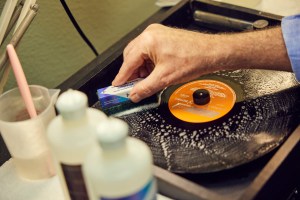
The caveat would be if you know how to clean your records right, right in this case being the way we recommend you clean them, using Prelude fluids and a machine.

Old uncleaned records can sound pretty bad. An audiophile pressing may beat your old original — until you clean it.

It’s one of the revolutionary changes in audio we spend so much time talking about, and it can make all the difference in the world on some records, especially old ones.

Thanks for your letter. You are not alone in swearing off these modern mediocrities. Many of our customers went through the same process you have, and it seems they are as pleased with the results as you.

Best, TP

(more…)

Breaking Through Barriers and Crossing Bridges

More on Developing Your Critical Listening Skills
The Invisible Barrier Theory

Your ability to recognize that one side of a record more often than not will have sonic qualities that are different from the other side of the same disc is limited by an invisible barrier that exists between you, in your role as listener, and you, in your role as judge of the sound.

This barrier goes by another name: “the stereo.“ There really can be no other explanation for it, assuming you have something in the range of normal hearing.

What the stereo is incapable of showing you limits what you can hear, regardless of how much money, time and effort you may have dedicated to your system, or how good a job you think it is doing.

The solution is to get better sound. Then the differences between any two sides of the same record will become as obvious to you as they are to us.

Shootouts are the best way to highlight these often subtle differences, and, as an added benefit, they are also the best way to train your ears to identify them. Once you cross that bridge, there is no going back. ALL your records will start to reveal their true selves, one side at a time.

(more…)

Our Advice Has Been Followed and the Results Are In

Proper Record Cleaning Can Help You Find Your Own Hot Stamper Pressings

One of our customers wrote to us about cleaning his collection not long ago, and we advised him how he should go about it. He seems to have taken much our advice to heart and has quieter, better sounding records as a result. He did not spring for the pricey Keith Monks style machine we use, but felt that his efforts produced excellent results regardless. Best to hear it from him:

Hey Tom,

Just did three records, in all different conditions, and this one Eddie Palmieri, the Latin Salsa pioneer. And I had been meaning to get some famous albums in that genre, and I looked through Discogs.com and this guy wanted $40 for an album called Mozambique. Even though it looked great, it had so much noise from years of build up.

It played beautifully after all the steps. There was a huge jump in fidelity, just the tiniest, tiniest surface noise between songs. You wouldn’t notice if you weren’t listening for it.

From the other two records which had different issues, I don’t think it’s very hard to understand what else a Keith Monk type machine might add to other more difficult records, in combination with the Prelude stuff and a VPI. But for this one, and I think a lot of other records I own, the Prelude and VPI are all I needed.

I know there’s going to be a huge learning curve and I don’t expect things to be so simple. But it was just cool and kind of a treat, my first time out, to know that it’s possible.

Anyway, I just wanted to share that for what it’s worth. Thanks,

Andrew

Dear Andrew,

Glad to hear you were able to get your records cleaner and make them better sounding to boot. What could be better?

Well, there actually is an answer to that rhetorical question, and we supplied it right here on the blog in a listing with step by step instructions using the Prelude Record Cleaning System and two record cleaning machines. You asked me to write it all out so that’s what I did.

It does not surprise me in the least that you got great results with your VPI. That is the very machine we had been using since the early-90s to clean all our records. Sometime later in the decade we discovered the Disc Doctor fluids and switched to them. I wrote a long piece in my paper catalog (this was in our pre-internet days) discussing how much quieter and better sounding all of our vintage classical records sounded when cleaned with DD fluids, and that I was therefore going to reclean them all and reevaluate every last one for sound and surfaces. It was that big a difference.

In 2007, when I first heard a record cleaned with the Prelude System, everything changed radically, a story I tell using the record I was testing at the time, Meddle. It was one of the biggest breakthroughs we had experienced up to that time.

This is the kind of difference you have now heard with Prelude and your 16.5. You are operating at a different level now.

But there was more to come for us when an audio friend invited me to bring a record over that he would clean with Prelude on his Keith Monks machine. I brought over a killer copy of Meddle as I recall. Imagine my shock when it sounded even better than it had when first cleaned with Prelude. I immediately ordered up a industrial-strength threaded-pickup machine, the Odyssey, made in Germany, and started offering Hot Stamper pressings that were quieter and had better sound than I had ever heard before. (We are currently on our third unit. We clean a lot of records.)

This is leap you have yet to take. It might not make as much difference as your cleaning has to date, but, once you do it, you will find that there is a clearly audible “before and after” quality to the sound of your records. No doubt you will want to reclean all your personal favorites using Prelude and whatever Keith Monks type machine you end up with.

(more…)

Compounding Distortion in Analog Audio

Robert Brook runs a blog called The Broken Record, with a subtitle explaining that his blog is:

A GUIDE FOR THE DEDICATED ANALOG AUDIOPHILE

Compounding DISTORTION in ANALOG AUDIO

Some excerpts:

Your Hot Stampers will sound WAY better when you get your turntable set up right, isolate it properly and get the equipment you need to make the speed of your platter accurate and stable. And that’s because all of these system improvements are highly effective ways of reducing distortion and its effects on your system.

Aside from our records, our analog front end, our amp and our speakers, our electricity and its effects on our equipment represents yet one more source of distortion in our system. I’ve posted more than one article touching on this issue, and I have shared the ways in which I’ve learned to manage the electricity powering my gear.

When I posted my last article on electricity, I was convinced that improving the electricity going to my system by limiting the effects of other electrical devices in my home was absolutely essential for getting my system to sound its best. The reason being that improving my electricity seemed to greatly reduce the level of distortion in my system.

I still feel this way, but my views on why improving electricity helps have evolved. What I’ve come to understand, or at least understand better, is that back when I wrote that article and for a long time after, I had a lot more front-end distortion than I realized. That distortion was compounded in different ways, one of which was by way of the electricity.

Throwing breakers and unplugging appliances was and is an effective way of reducing compound distortion in my system and improving the way my records sound. But since revamping my turntable setup and learning to better control the platter speed, the improvements I hear by ameliorating the negative effects of my electricity are significantly less than they once were. In other words, with less front-end distortion there’s a lot less distortion to be compounded by bad electricity.

(more…)

These Records Helped Us Dramatically Improve Our Playback

Some of the Most Important Albums We Employed to Tune, Tweak and Improve the Stereo, Room, Table Setup, Electrical Quality and More

The records on this list (limited to rock and pop for the most part at this time) all have one thing in common: I made practical use of them to improve my equipment, room treatments, table setup, electrical quality and anything else that I could think of that might result in higher quality playback.

Were it not for my desire (obsession may be the better word) to get the wonderful music on these albums to improve with each passing year, Hot Stamper pressings would be at most a niche part of my collection. Worse, and a thought some may find too unpleasant to contemplate, Hot Stampers might have then accounted for only a small part of Better Records’ business.

By the mid-2000s when we started down this road for real, the stereo needed to evolve dramatically. It needed to become much more revealing and truthful than any system I had ever heard if we were going to carry out Hot Stamper shootouts all day.

The best of the best Hot Stamper pressings are often like needles in haystacks. No one in his right mind would go to all that trouble for music that was not emotionally powerful enough to be, for all intents and purposes, practically irresistible.

If you have records you can’t wait to play every time you make a change to your equipment, room, setup, etc., you know what I am talking about.

I favor large scale dynamic speakers because they are the only ones that seem capable of reproducing the demanding recordings you see listed below.

There is no question that the artists that made these albums, in concert with remarkably talented producers and engineers, sweated every detail of these exceptional recordings. For the last five decades I (now we) have been doing all we could to get these wonderful records to sound their best.

We know how good they can sound on systems that have what it takes to play them, because these are the records we used to test, tune and tweak the new studio we built.

The more of that kind of work you do — on your system, room and electricity — the more progress you will make in this hobby. With each improvement, these are the very recordings that will sound bigger and bolder than you ever imagined.

They are the most difficult-to-reproduce albums we know of. Difficult records are the ones that will help you make more real, demonstrable progress in this hobby than any others.

Again and again it was meeting the challenge of reproducing recordings such as these that allowed us to get to the next level, and the next one, and the one after that, and they can do the same for you.

The Top Two

By far the two most helpful records for testing over the last two decades were Tea for the Tillerman (going all the way back to 1984) and Bob and Ray Throw a Stereo Spectacular. We wrote about their uniquely valuable contributions to our audio progress in this commentary.

Led Zeppelin II is probably the main record our current listening panel uses to dial-in the 17dx replacement cartridges we mount three or four times a year.

The records below in bold have been especially important for our work. There should be quite a number of commentaries on the blog for each of them.

Also, at the bottom you will notice that some jazz and classical records are being added to the list as time permits.

Rock, Pop, etc.

  • 10cc / The Original Soundtrack
  • 10cc / Deceptive Bends
  • 801 / Live
  • Ambrosia / Self-titled
  • America / Self-titled
  • The Beatles / Please Please Me
  • The Beatles / Rubber Soul
  • The Beatles / Revolver
  • The Beatles / Sgt. Pepper’s
  • The Beatles / Magical Mystery Tour
  • The Beatles / Abbey Road

(more…)

The Insufficiently Dedicated Will Struggle Mightily with the Music of Bernard Herrmann

A spectacular orchestral dreadnought such as this requires mastering and pressing of the highest quality.

Herrmann’s music taxes the limits of LP playback itself, with deep organ notes (listen for the famous Decca rumble accompanying the organ if you have the deep bass reproduction to hear it); incredible dynamics from every area of the stage; masses of strings playing at the top of their registers with abandon; huge drums; powerful brass effects everywhere — every sound an orchestra can produce is found on this record, and then some.

You will hear plenty of sounds that defy description, that’s for sure. Some of the time I can’t even imagine what instrument could possibly make such a sound!

Your Hard Work Pays Off

A recording of this size and scope will bring virtually any stereo system to its knees. This is the real Power Of The Orchestra! You had better have a top quality front end if you want to play this record properly, not to mention plenty of power and big speakers.

This is not the record for the weekend budget audiophile. If you haven’t put in the years of effort and invested the tens of thousands of dollars in equipment and room treatments it takes to play records of great difficulty such as this one, your system is probably not up to the challenge this album represents.

If, on the other hand, you’ve done the work and spent the money, this is the album that will show you what you have achieved.

Side One

Journey to the Center of the Earth

All those lovely harps! You can practically feel the cool air of the cave as you descend into the blackness.

The Seventh Voyage of Sinbad

Side one boasts some wonderful material from Jason and the Argonauts, including the fight with the skeletons that we all remember from our Saturday matinee movie days. Who else could have orchestrated such a film?

Side Two

The Day the Earth Stood Still

Astonishingly powerful deep bass and drum sounds!

Fahrenheit 451

One of our key tests for side two is the string tone on the Fire Engine sequence.

(more…)

If You’re Just Getting Started, Beware of LPs that Will Inhibit Your Progress

Hot Stamper Pressings of Blue Note Albums Available Now

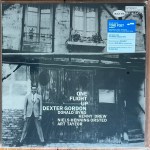
Robert Brook wrote a scathing review of the Tone Poets pressing of One Flight Up in 2023, much to the dissatisfaction of some of his readers. I was the first to leave a comment as I thought he hit the nail on the head when he said:

Overall, the Tone Poet is closed, distant and frankly boring to listen to. Where is the energy of the music? Where is the presence of these musicians? Where is the studio space?

The snare sounds muted. the piano weak, the horns, especially Gordon’s saxophone, resolves poorly and becomes increasingly tiresome to listen to. On my first listen I lasted about 3 minutes into side 1, mostly because I couldn’t stand the way the sax was sounding.

I posted the comments below on Robert’s review. (I have taken the liberty to rewrite some of my comments for the purposes of clarity, along with some additional thoughts.)

Robert,

Another great post. I have many comments to make, so here goes.

When audiophiles prefer records which are clearly second-rate, more often than not I chalk it up to their lack of a better record to play. In order to hear what they are missing, they have to have a record that somehow makes clear to them precisely which aspects of the sound are failing, or at the very least, not up to par.

You could give out the stamper numbers for your Blue Note reissue — I would be surprised if it does not have VAN GELDER STEREO in the dead wax — and those who like the Tone Poets release of One Flight Up could easily find one on Discogs or Ebay and do the comparison for themselves.

But you know what? I would bet you dollars to donuts they will never do that. They simply won’t bother.

To some audiophiles who collect records, collecting is simply not about sound quality.

It’s about collecting the right audiophile pressings.

These folks don’t want some old Blue Note reissue from the 70s. They want a fancily-packaged remastered record on high quality vinyl that’s made by a label that really cares. If it’s a numbered limited edition, even better!

If these people wanted to find out what is wrong with the sound of the Tone Poets pressing you played — thanks for laying it all out in detail so no one can doubt that you listened carefully and heard what’s really in those grooves — they could easily find a vintage copy of the record that would make a mockery of the one they own.

Twenty years ago I wrote something about this very subject:

(more…)