Month: October 2025

Mussorgsky / Danse Infernale – Our Favorite Night On Bald Mountain

More of the Music of Modest Mussorgsky (1839-1881)

  • The best pressings of this 70s DG are some of the best sounding orchestral showpieces we know of
  • After a three year hiatus, our favorite performance of Night on Bald Mountain is back, and it’s guaranteed to blow your mind (and maybe a woofer or two), thanks at least in part to the conducting skills of Arthur Fiedler
  • Side one also boasts an excellent Danse Macabre, with a powerful finish that may remind you of the thrill of live orchestral music
  • Clear and transparent, with huge hall space extending wall to wall and floor to ceiling, this is a sound that the modern Heavy Vinyl reissue fails to reproduce utterly
  • There are about 150 orchestral recordings we think offer the best performances with the highest quality sound. This record is certainly deserving of a place on that list.
  • Watch your levels – this pressing is dramatically more dynamic than most Golden Age recordings
  • Click on the link to see more classical “sleeper” recordings we’ve discovered with demo disc sound

This pressing clearly has Demo Disc quality sound — not in every way, but in some important ways. The energy of both the sound and the performances of these barnburning showpieces is truly awesome. Fiedler brings this music to life like no other conductor we have heard.

This pressing boasts relatively rich, sweet strings, especially for a Deutsche Grammophon LP. Both sides really get quiet in places, a sure sign that all the dynamics of the master tape were protected in the mastering of this copy (and the reason it is so hard to find a copy that plays better than Mint Minus Minus.)

(more…)

Letter of the Week – “My stereo upgrades have widened the sonic chasm between good, old-fashioned records and their nouveau imposters.”

Record Collecting for Audiophiles – These Are the Fundamentals

One of our good customers, Dan, found much to agree with in our recent Better Record’s record collecting commentary and offered up his own two cents worth in the letter below. (Emphasis added.)

Tom,

Just wanted to affirm the new Better Records axiom of “the better your stereo gets, the fewer modern reissues you will own.” My collection has dozens of these Heavy Vinyl reissues, and none of them are holding up after a year and half’s worth of significant improvements to my stereo.

It was only at the beginning of last year that I found myself pleased with roughly 50% of my heavy vinyl purchases. Now, that number has plummeted to less than 10%. Almost everything that’s being put out today is an utter disappointment.

Of course, part of the explanation may be that my listening skills have improved. But it’s hard to imagine that I would have liked dull, dreary, lifeless vinyl a year or two ago. I like to think not.

More probable is that my stereo upgrades have widened the sonic chasm between good, old-fashioned records and their nouveau imposters.

I’d also like to second the avoidance of new vinyl purchases until major stereo improvements are made. I’m trudging through the laborious task of replacing these records with older, better sounding copies. It’s excellent advice to those new to the game or young (or both).

Amazingly, hearing the difference doesn’t even require a Hot Stamper, almost any original or early reissue will beat the Sundazed, Classic, etc. That’s how inferior they are. To borrow from The Who, the sound must change.

Dan,

I agree with this bit at the end of your letter, with one caveat:

Amazingly, hearing the difference doesn’t even require a Hot Stamper, almost any original or early reissue will beat the Sundazed, Classic, etc. That’s how inferior they are.

The caveat would be if you know how to clean your records right, right in this case being the way we recommend you clean them, using Prelude fluids and a machine.

Old uncleaned records can sound pretty bad. An audiophile pressing may beat your old original — until you clean it.

It’s one of the revolutionary changes in audio we spend so much time talking about, and it can make all the difference in the world on some records, especially old ones.

Thanks for your letter. You are not alone in swearing off these modern mediocrities. Many of our customers went through the same process you have, and it seems they are as pleased with the results as you.

Best, TP

(more…)

Finlandia – The Music of Sibelius and Grieg / Mackerras

More of the Music of Jean Sibelius

More of the Music of Edvard Grieg

  • An outstanding copy with solid Double Plus (A++) grades from first note to last
  • Both sides are big, rich, transparent, spacious and dynamic – no Heavy Vinyl pressing can begin to do what this record is doing
  • Yet another wonderful example of just how much energy and power the deservedly-lauded Decca recording engineers were able to capture on analog tape in the earliest days of stereo
  • These spectacular works are played with deep feeling – we know of no better performance, or any recording of these pieces with better sound
  •  When you hear how good this record sounds, you may have a hard time believing that it’s a budget reissue from the 70s, but that’s precisely what it is. Even more extraordinary, the right copies are the ones that win shootouts
  • There are about 150 orchestral recordings we think offer the best performance coupled with the highest quality soundThis record has earned a place on that list.

The 1959 master has been transferred brilliantly using “modern” cutting equipment (from the early-’70s, not the low-rez junk they’re forced to make do with these days), giving you, the listener, sound that only the best of both worlds can offer.

The brass is HUGE and POWERFUL. Not many recordings capture the brass this well. (Ansermet on London comes to mind of course but many of his performances leave much to be desired. Here Mackerras is on top of his game with performances that are definitive.)

(more…)

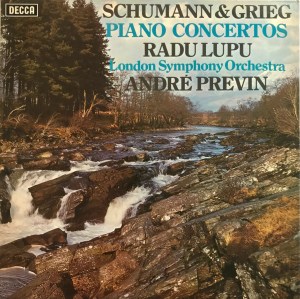
Schumann and Grieg Piano Concertos / Lupu / Previn

More of the Music of Edvard Grieg

  • A superb UK Decca pressing of this wonderful classical masterpiece with Double Plus (A++) sound from start to finish
  • Both sides boast full brass and an especially clear, solid, present piano, one with practically no trace of vintage analog tube smear
  • Dynamic, huge, lively, transparent and natural – with a record this good, your ability to suspend disbelief will require practically no effort at all
  • Back in the days when the TAS Super Disc List meant something, this record was on it and deservedly so
  • The London pressings of the same album can be very good in their own right, but they don’t win shootouts – only the best of these Decca pressings do, a subject we discuss in some of these listings
  • Our two favorite recordings of the Grieg Piano Concerto are this one and Rubinstein’s for RCA in 1962
  • There are about 150 orchestral recordings we think offer the best performances with the highest quality sound. This record is certainly deserving of a place on that list.

(more…)

Herrmann – Citizen Kane (The Classic Film Scores of Bernard Herrmann)

More of the Music of Bernard Herrman 

  • An original RCA Red Seal pressing with solid Double Plus (A++) grades or BETTER on both of these TAS-approved sides
  • On this outstanding copy you will hear deep bass notes; incredible dynamics from every area of the stage; masses of strings playing at the top of their registers with abandon; huge drums; powerful brass effects, and more
  • Every sound an orchestra can produce is found on this record, and then some – it’s the very definition of Demo Disc sound
  • These wonderful works, undoubtedly some of the greatest Bernard Herrmann composed, should be part of any serious orchestral collection
  • 5 stars: “… the best of the entire series by conductor Charles Gerhardt and the National Philharmonic Orchestra… every track is worthwhile and memorably played.”
  • If you’re a Bernard Herrmann fan, and what audiophile wouldn’t be?, this title from 1974 is clearly one of his best

The ‘Citizen Kane’ Suite on this album is to die for — big, bold, dynamic sound like few records you own. It’s a real Desert Island Disc for me. (The CD, by the way, is actually quite good. I have it in the car and play it often.)

The Concerto Macabre for Piano and Orchestra (from “Hangover Square”) is superbly well-recorded and a brilliant piece of music as well.

(more…)

Breaking Through Barriers and Crossing Bridges

More on Developing Your Critical Listening Skills

The Invisible Barrier Theory

Your ability to recognize that one side of a record more often than not will have sonic qualities that are different from the other side of the same disc is limited by an invisible barrier that exists between you, in your role as listener, and you, in your role as judge of the sound.

This barrier goes by another name: “the stereo.“ There really can be no other explanation for it, assuming you have something in the range of normal hearing.

What the stereo is incapable of showing you limits what you can hear, regardless of how much money, time and effort you may have dedicated to your system, or how good a job you think it is doing.

The solution is to get better sound. Then the differences between any two sides of the same record will become as obvious to you as they are to us.

Shootouts are the best way to highlight these often subtle differences, and, as an added benefit, they are also the best way to train your ears to identify them. Once you cross that bridge, there is no going back. ALL your records will start to reveal their true selves, one side at a time.

(more…)

These Two Recordings of Michel LeGrand Didn’t Make the Grade

Hot Stamper Pressings of Top Quality Jazz Albums Available Now

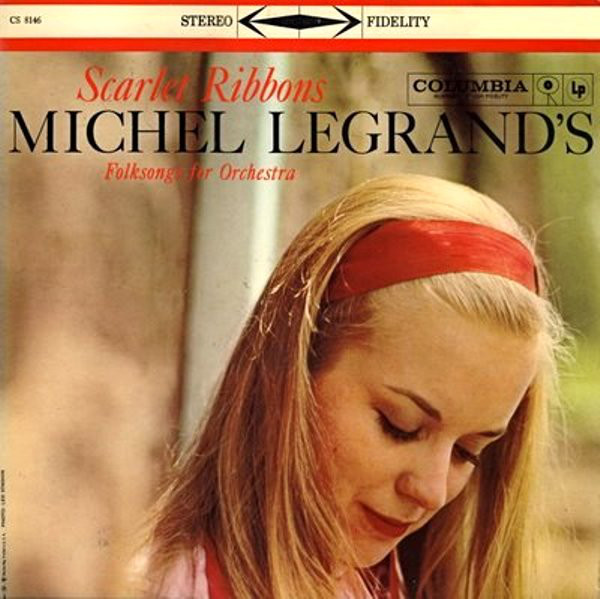
Pictured are two Michel Legrand albums we auditioned at some point in the past and found less than impressive.

Without going into specifics — our notes are long gone at this point — we’ll just say these two albums suffer from weak music, weak sound, or both, and therefore do not deserve a place in most audiophile collections — unless that audiophile happens to be a huge fan of the artist.

My guess is that if these two records are sitting in a record collection, they have not been played in many years, if ever.

Here’s an idea: If you own either of these two albums, pull them out and play them.

You may find that making more room on your shelves for records you may actually enjoy playing is easier than you think.

Our Pledge of Service to You, the Discriminating Audiophile 

We play mediocre-to-bad sounding pressings so that you don’t have to, a free service from your record-loving friends at Better Records.

(more…)

Oh, So That’s Who Butchered Neil Young’s Greatest Hits

Hot Stamper Pressings of the Music of Neil Young Available Now

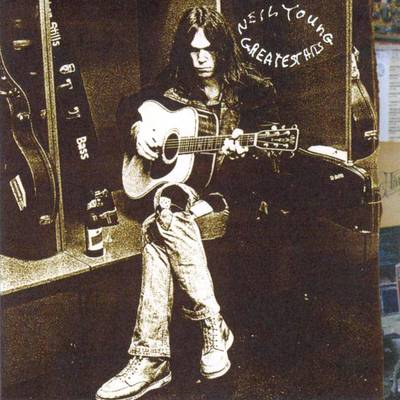
When I reviewed the Classic Records pressing of Neil Young’s Greatest Hits in 2005, I had never heard of Chris Bellman. As it turns out, he’s the guy who cut this piece of crap. I had no idea. And why would I care anyway?


UPDATE 2025

The median price the album sells for on Discogs as of 10/2025 is $142.92, and it has sold for as much as $288 and change in the past. There are bigger wastes of money in the world of records — this guy can be counted on to produce more than his share, some at prices that even make us blush — but it is hard to imagine how anyone could get less for his $142 than by buying this 2 disc set.


The most shocking thing about the fact that he cut the album is not how awful it sounds.

No, there are plenty of awful sounding Heavy Vinyl pressings in the world, enough to fill up the glossy-paged catalogs of every mail order audiophile record dealer from here to Timbuktu.

What is shocking is that there are audiophiles — self-identified lovers of sound, who are supposedly capable of telling a good sounding record from a hole in the ground — that defend this man’s work.

How does anyone take this guy’s records seriously?

To be fair, it should be said that I actually like one of the records Mr Bellman has cut, the 45 of Brothers in Arms, discussed here. An excerpt:

[In this video] I’m asked if I like any modern mastering engineers, and the only one I can think of is Chris Bellman, because he mastered one of the few Heavy Vinyl pressings I know of that sounds any good, Brothers in Arms, released in 2021. I played it when Edgers [Geoff Edgers from WAPO] brought it by the studio when he first visited me in preparation for his article.

My best copy was clearly better in some important ways, but Bellman’s mostly sounds right, and that surprised me because most of these modern records sound funny and weird and almost never sound right.

(Geoff brought over three records that day: Brothers in Arms, the remastered Zep II, and a ridiculously bad sounding Craft pressing of Lush Life, which was mastered by Kevin Gray, and one which I have not had time to review yet. It was my introduction to the Craft series, and let’s just say we got off on the wrong foot. I told Geoff it sounded like a bad CD, and that’s pretty much all I remember of it. The average price for that pressing on Discogs is roughly $69 these days. The CD is cheaper and there is very little doubt in my mind that it would be better sounding to boot.)

I stand by my admiration for Brothers in Arms, a very good reissue, something that might give one of our lowest level Hot Stamper pressings a run for its money.

But he has a lot of explaining to do when it comes to the other records of his we (and Robert Brook) have played. Reviews are coming, late as always, but for now here is what we’ve written about the records he’s credited with remastering.

(more…)

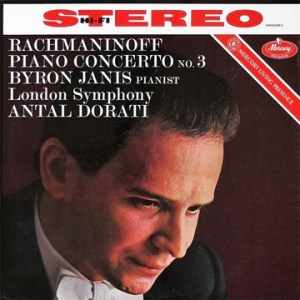
Rachmaninoff – Piano Concerto No. 3 / Janis / Dorati

More of the Music of Sergei Rachmaninoff

  • Outstanding sound for this classic Byron Janis Mercury album, with both TAS-approved sides earning solid Double Plus (A++) grades or BETTER
  • The piano is huge and weighty, the strings rich and highly resolving, and the overall presentation is powerful, balanced, dynamic and exciting like few other piano concerto recordings we have ever had the pleasure to audition
  • Not only is this the consistently best sounding copy we have had to offer in years, but we are happy to report that the vinyl is reasonably quiet for a Mercury stereo pressing of this vintage
  • If you have the system to play a record as big and powerful as this Mercury from 1961, we cannot recommend it any more highly
  • There are about 175 orchestral recordings we’ve awarded the honor of offering the best performances with the highest quality sound, and this record certainly deserve a place on that list.
  • This is one of the two Must Own Mercury piano concerto recordings, the other being SR 90300, which often suffers from inner groove distortion — not to worry, as a matter of grading policy, we check the inner grooves of every record we offer on the site

Not only is the sound amazing — yes, it’s on the TAS Super Disc list, and for good reason: a copy as good as this one really is a Super Disc — but this copy has another vitally important characteristic that most copies of the record do not: no Inner Groove Distortion.

We can’t begin to count the times we have had to return (or toss) a copy of one of these famous Byron Janis records because the piano breakup for the last inch or so of the record was just unbearable. That’s a sound no serious listener could possibly tolerate, yet I would venture to guess that a great many Mercury piano concerto recordings suffer from this kind of groove damage.

Enough about those typically bad copies, let’s talk about how good this one is.

This is an early Mercury Plum label stereo pressing of one of Byron Janis’s most famous performances (along with the Rachmaninoff 1st; it’s also a longtime member of the TAS super disc list).

The sound is rich and natural, with lovely transparency and virtually no smear to the strings, horns or piano. What an amazing recording! What an amazing piece of music.

The recording is explosively dynamic and on this copy, the sound was positively jumping out of the speakers. In addition, the brass and strings are full-bodied, with practically no stridency, an unusual feat the Mercury engineers seem to have accomplished while in Russia.

Big, rich sound can sometimes present problems for piano recordings. You want to hear the percussive qualities of the instrument, but few copies pull off that trick without sounding thin. This one showed us a piano that was both clear and full-bodied.

With huge amounts of hall space, weight and energy, this is Demo Disco quality sound by any standard. Once the needle has dropped you will quickly forget about the sound (and all the money you paid to get it) and simply find yourself in the presence of some of the greatest musicians of their generation, captured on the greatest analog recordings of all time.

(more…)

Records Like This Make Audiophiles the Laughing Stocks of the Music World

More Reviews and Commentaries for Heavily Processed Recordings

This album has some of the worst sound I have ever heard in my life, worse than The Hunter even, and that’s saying something.

If this kind of crap is what audiophiles choose to play, then they deserve all the derision heaped upon them.

We’re glad we no longer offer embarrassments such as The Well, although we used to, many years ago. In our defense we would simply offer up this old maxim: de gustibus non est disputandum.

Our old slogan was Records for Audiophiles, Not Audiophile Records, but we also followed this business rule: Give the Customer What He Wants.

Now we give the customer what he wants, as long as he wants one of the best sounding pressings of the album ever made. (In this case obviously there is no good sounding pressing.)

How Bad Is It?

If this isn’t the perfect example of a pass/not-yet record, I don’t know what would be.

Some records are so wrong, or are so lacking in qualities that are critically important to their sound — qualities typically found in abundance on the right vintage pressings (although there is no acceptable pressing of this record, vintage or otherwise) — that the defenders of these records are fundamentally failing to judge them properly. We call these records pass/not-yet, implying that the admirers of these kinds of phony-sounding records are not where they need to be in audio yet, but that there is still hope, and if they devote enough time and money to the effort, they can get where they need to be, the same way we did.

(more…)