hoffman

A Cosmo’s Factory Shootout from Way Back When

Hot Stamper Pressings of the Music of Creedence Clearwater Revival Available Now

UPDATE 2020

This is a very old commentary describing a shootout we had done more than a decade ago. Some of what you see below would probably still be true. The cutting system used to make the AP pressing no doubt lacked Tubey Magic. It’s also true that many of the records mastered on it were as lifeless and boring as we describe.

The only way to be clear about what is going on with the audiophile pressings in this group is to do another shootout with them, and we just can’t see taking the time to do that when there are so many good vintage pressings we don’t have time to play as it is.

There are only so many hours in the day, why waste them playing this crap?

We do occasionally throw the modern remastered pressings we manage to get hold of into our shootouts when time permits. You can read all about the half-speeds we’ve reviewed here and some of the Heavy Vinyl pressings we’ve played here.

Our latest thinking about this Analogue Productions repress can be found here.


Now, on to our old shootout.

Years ago a customer sent me his copy of the Analogue Productions LP (mastered by Hoffman and Gray) in order to carry out a little shootout I had planned among the five copies I could pull together: two MoFi’s, the Fantasy ORC reissue, a blue label original, the AP, and another reissue. 

Let’s just say there were no real winners, but there sure were some losers.

My take on the Hoffman version is simply this: it has virtually no trace of Tubey Analog Magic. None that I can find anyway.

It sounds like a clean, tonally correct but fairly bass-shy CD.

No pressing I played managed to be so tonally correct and so boring at the same time.

The MoFi has plenty of weird EQ colorations, the kind that bug the hell out of me on 98% of their crappy catalog, but at least it sounds like analog. It’s warm, rich and sweet.

The AP copy has none of those qualities.

More pointless 180 gram vinyl sound, to my ear anyway. I couldn’t sit through it with a gun to my head.

You would need a lot of vintage tubes in your system to get the AP record to sound right, and then every properly-mastered record in your collection would sound worse.

(more…)

Rickie Lee Jones on Rhino Records – Not Our Idea of Good Sound, and We Hope Not Yours

Hot Stamper Pressings of the Music of Rickie Lee Jones Available Now

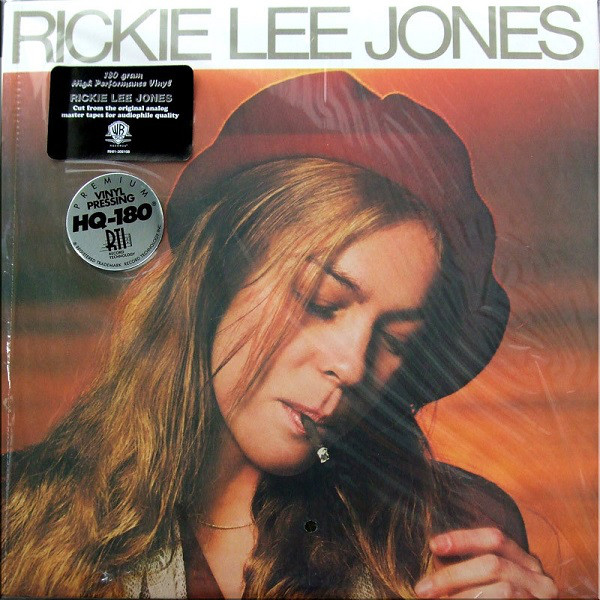
We were fairly unimpressed with the Rickie Lee Jones on Warners that came out a few years back [2008 in fact, time flies!].

It has that same phony modern mastering we find so unappealing on the Heavy Vinyl reissue of Blue. (We seem to be pretty much alone in not liking that one, and we’re proud to say we still don’t like it. We encourage you to play The Blue Game and maybe you’ll see why we feel the way we do.)

We liked the new Sweet Baby James Hoffman and Gray cut. We note in our review that:

Hoffman and Gray can take pride in this Sweet Baby James. It’s some of the best work I’ve heard from them to date. If more DCC and Heavy Vinyl reissues sounded like this, we wouldn’t be so critical of them. Unfortunately they don’t, and there are scores of pages of commentary on the site to back up that statement for those of you interested in the subject.

We went on to say

The amazing transparency and dynamic energy of the best originals will probably never be equaled by an audiophile pressing like this. (It hasn’t happened yet and we remain skeptical of the possibility.) Considering that this pressing is sure to beat most reissues, imports and other such like, we have no problem heartily recommending it to our customers, especially at the price.

So, What’s Wrong With Rickie Lee?

Simple. They took a somewhat artificial, hi-fi-ish, close-miked, heavy-on-the-reverb recording and made it sound even more artificial, phony and hi-fi-ish (but less-heavy-on-the-reverb; there is always a noticeable loss of resolution in these modern mastering jobs).

What were they thinking?

The best copies have warmth, richness and sweetness to balance out the more unnatural elements in the recording. Copies with these qualities are not that common, but we’ve run across plenty of them in our shootouts and proudly offered them for sale, where of course they sold quickly for lots of money. Major league audiophile appeal, this one. In its day it was heavily demo’ed in every stereo store in town, and for good reason — the sound positively jumps out of the speakers.

It’s a Trap

The average copy of this album is a sonic disaster, akin to the average copy of Famous Blue Raincoat or — gulp, even worse — Graceland. If you’re a detail freak, this Rhino pressing may be just what you are looking for. It’s got detail all right.

But all that phony detail obscures what is wrong with the sound. Overly detailed sound is a trap that is all too easy to fall into.

Plenty of recordings designed to appeal to audiophiles strike us as being phony in this way. Stan Ricker cut a lot of overly-detailed records for Mobile Fidelity in the 70s and 80s, records that may have sounded fine on the lo-rez stereos of that era (like the one I owned), but are positively painful to play on the top quality equipment that is available (but rare) today. [1]

I would hope that the audiophile community would have developed their listening skills to a level sufficient to recognize what this pressing doesn’t have — warmth, richness and sweetness — but I get the feeling I will be proved wrong yet again in that regard.

This Performance Is High?

Rhino Records has really made a mockery of the analog medium. Rhino bills their releases as pressed on “180 gram High Performance Vinyl.” However, if they are using performance to refer to sound quality, we have found the performance of their vinyl to be quite low, lower than the average copy one might stumble upon in the used record bins.

The CD versions of most of the LP titles they released early on are far better sounding than the lifeless, flat, pinched, so-called audiophile pressings they released starting around 2000. The mastering engineer for this garbage actually has the nerve to feature his name in the ads for the records. He should be run out of town, not promoted as a keeper of the faith and defender of the virtues of “vinyl.”

If this is what vinyl sounds like I would switch to CD fast enough to make your head spin.

And the amazing thing is, as bad as these records are, there are people who like them. I’ve read postings on the internet from people who say the sound on these records is just fine.

Their Grateful Dead titles sound worse than the cheapest Super Saver reissue copies I have ever heard.

The Yes Album sounds like a cassette, a mere ghost of the real thing.

(more…)
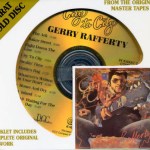
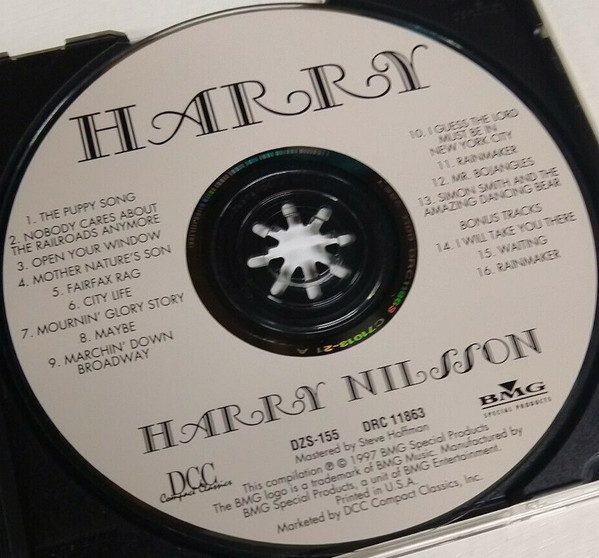
Try the DCC of Harry, It’s Excellent

Hot Stamper Pressings of the Music of Harry Nilsson Available Now

Until recently we had not done a shootout for this album in many years, and the good copies we are offering on the site are far from cheap.

You may not want to pay our prices.

However, the music is so good we think everyone deserves a chance to hear it, so pick up the Hoffman-mastered CD and enjoy the hell out of it in the meantime.

Hoffmann did a great job, as he did on so many of the DCC discs. (The Heavy Vinyl LPs are another matter entirely of course.)

The CD sound is excellent and it will probably cost you a very small fraction of what we would charge for the vinyl.

Harry is a forgotten gem that sank like a stone in 1969, but time has treated the album well, and it still holds up.

The production is superb throughout. Judging by this early Nilsson’s album, it appears he was already a pro in the studio, as well as an accomplished songwriter, and, more importantly, the owner of one of the sweetest tenors in popular music, then or now.

(more…)

Cannonball Adderley with Bill Evans – How Does the 80s OJC Sound?

More of the Music of Cannonball Adderley

This is a very old commentary about a favorite record of ours here at Better Records, one I have been selling since the late 80s, first as a sealed, in-print title for ten bucks or thereabouts, and later as a Hot Stamper pressing.

After hearing nothing that could compete with the right OJC pressing for more than a decade, we recently discovered an even better sounding pressing of the same music.

Live and learn, we say. It’s what makes record collecting fun. The future is not yet written.

George Horn was doing brilliant work for Fantasy all through the ’80s. This album is proof that his sound is the right sound for this music.

The DCC Gold CD of the album is also excellent. As with many of the better DCC CDs, it’s proof that Steve Hoffman’s sound is also the right sound for this music. I recommended that Steve consider doing the title on Gold CD — you can see my credit below — and I am glad he found it to his liking. In general, I much prefer the sound of the DCC Gold CDs to the sound of the records they released.

(more…)

Jethro Tull – One of the Worst Releases on DCC (and That’s Saying Something!)

Sonic Grade: F

The DCC pressing is a complete disaster, one of the worst sounding versions of the album ever made.

As bad as the MoFi is, the DCC is even worse. Murky and bloated, to my ear it does almost nothing right, not on vinyl anyway. The DCC Gold CD is better, and it’s certainly nothing to write home about. 

Our Hot Stamper commentary below sorts out the DCC, the Classic Records Heavy Vinyl pressing and the MoFi Half-Speed Mastered LP, as well as British and domestic originals.

We love this album and we’ve played every kind of pressing we could get our hands on. The winner? Read on!

Over the course of the last 25 years we was wrong three ways from Sunday about our down-and-out friend Aqualung here. We originally liked the MoFi.

When the DCC 180g came along we liked that one better, and a few years back I was somewhat enamored with some original British imports.

Our first big shootout disabused us of any notion that the British originals were properly mastered. As we noted in our Hot Stamper commentary, “The original Brits we played were pretty hopeless too: Tubey Magical but midrangy, bass-shy and compressed.”

Another myth bites the dust.

The same is true for Thick As A Brick; the best domestic copies are much more energetic and tonally correct.

Heavy Vinyl Quality Control? We Put That Proposition to the Test

bellcurve500

Important Lessons We Learned from Record Experiments

Part one of this commentary concerns the random results of all record making processes. It can be found here.

A Heavy Vinyl Shootout

A number of years ago (2011?) we had the opportunity to crack open two brand new sealed copies of a recently remastered Heavy Vinyl pressing came our way. I already had one which I was waiting to audition, so that meant there were actually three copies to play.

At the time, we were told that with this pressing every effort was made to produce the highest quality product and to maintain the utmost in quality control throughout the production process. They fellow representing the company distributing the title was adamant that every copy produced, from first to last, would be indistiguishable from any other — not just in terms of surfaces, but sound quality too.

To accomplish this feat, the producer used the real master tapes (we were told, no reason to doubt him), had a well known mastering engineer do the mastering at a highly-regarded studio, then had a well-known audiophile pressing plant in Germany make the record, using the finest vinyl compounds available, in presses that meet the highest standards in the industry, operated by skilled individuals of the utmost professionalism.

Any stamper would be replaced long before it could possibly be showing any wear.

All the metal mothers and stampers would be made in a way designed to eliminate all variation.

One and only one complete run would be made. If another was needed at some later date the whole process would have to be started over from scratch using the same strict quality controls.

(more…)

Why Would Anyone Want to Take All the Fun Out of CCR’s Music? Part Two

More of the Music of Creedence Clearwater Revival

This commentary is at least ten years old. Still holds up though!

The last time I played one of Chad’s CCR pressings, which I confess was close to a decade ago, it had all the bad qualities of the Bonnie Raitt disc on DCC, a sound that I’ve grown to dislike more with each passing year.

But what the new AP version really gets wrong is the guitar sound.

Creedence’s music lives or dies by its grungy guitars, and the AP pressing is as wrong as they come.


Latest Findings as of 2022

This commentary used to end this way:

The fat, smeary, overly-smooth guitars you hear on the record, lacking any semblance of the grungy energy that are the true hallmarks of this band’s recordings, probably means that some audiophile mastering engineer got hold of the tapes and tried to “fix” what he didn’t like about the sound.

You know, the sound that is all over the radio to this very day. Something was apparently wrong with it. So now that it’s been fixed, everything that’s good about CCR’s recordings is missing, and everything that has replaced those sonic elements has made the sound worse.

Nice job! Keep up the good work. Chad is proud of ya, no doubt about it.

It has now become clear that the various mastering engineers Chad hires are not the ones trying to fix what they don’t like about the sound. Chad is El Jefe, the one telling them what to fix and rejecting their work until these remastered albums sound the way he wants them to sound.

There is no use complaining about the awful work Doug Sax, Steve Hoffman, Kevin Gray, George Marino or anyone else did when hired to master for Analogue Productions. Their task was to please Chad. He is the customer, he is the one paying their fees, and he is the one getting the sound he wants.

He apparently thinks he is saving the world from bad sound, but we sure don’t see it that way. Just the opposite in fact.

If Chad wanted better sounding records — records that are more lively, more tonally accurate, less bloated down low and less smoothed-over up top — veteran engineers such as the gentlemen named above would surely have been able to master these titles more correctly than the evidence provided by the records would lead you to believe.

But Chad, like many other audiophiles, is a My-Fi guy, not a Hi-Fi guy, and he likes the sound he likes, regardless of what is on the master tapes or what other pressings — mastered by a number of different engineers, often over the course of many decades — might sound like.

He wants the sound he wants, and their job is to give it to him.

Bernie Grundman, the man in charge of remastering Aja, is finding out that his way is not going to work for Chad. If it takes seven test pressings before Aja has the sound Chad likes, then he will just have to keep working it until Chad hears “his Aja” sounding the way it should.

When it finally comes out, I have no doubt that it will be very different from any pressing of Aja you or I have ever heard. It won’t sound much like the early pressings that Bernie Grundman mastered for ABC in 1977, which are of course the ones we sell. Unless I miss my guess, it will be very different from the master tape. (Something I freely admit I have no way of ever knowing.)

It will sound the way Chad likes music to sound. He paid a small fortune for the privilege of making Steely Dan sound the way he wants them to sound. Now that the die is cast, those of us with good stereos and basic critical listening skills can go pound sand. The mid-fi guys are being pandered to — in the audiophile world, that’s where the Heavy Vinyl money is — and expecting anything else from this atrocious label means you haven’t been listening very carefully to the records they’ve been releasing for more than 30 years.

Will I Like the New Steely Dan Remasters?

If you think this pressing of Tea for the Tillerman sounds good, it’s a near certainty you will want to be the first on your block to collect all the newly remastered Steely Dan Heavy Vinyls.

The same goes for this pressing of Stand Up. If this is the sound you are looking for, you can be sure Chad will give it to you, good and hard (apologies to H.L. Mencken).

Do these records sound fine to you? You’re happy with them, are you?

Then you have much to look forward to with the release of the complete Steely Dan LP collection!

These Analogue Productions releases will no doubt share many of the sonic characteristics of the above-mentioned titles.

How could they not? They are guaranteed to sound the way Chad wants them to sound. Chad is the customer, and the customer is always right.

If you’re Bernie Grundman, it might take you six or seven runs at it until you find that indescribable and elusive “Chad” sound, but you will have to keep at it until you do, assuming you want to get paid.

Our review for the first of the series that we’ve had the chance to play is in, and here it is.

Could it have been worse? Absolutely. Is it really very good? No, it’s not.

Considering his dismal track record, it’s probably as good sounding a record as Chad is able to make.

To paraphrase Cormac McCarthy:

It’s a mess of a record, ain’t it, Tom?

If it ain’t, it’ll do till a mess gets here.

(more…)

A Night at the Opera – A DCC Disaster

Hot Stamper Pressings of the Music of Queen Available Now

Sonic Grade: F

This DCC pressing is a disaster, one of the worst releases that Kevin Gray and Steve Hoffman ever mastered.

Murky, opaque and compressed: yes, we can agree it has never been an especially good sounding record on anything but the most difficult to find UK pressings [and we know exactly which ones those are now, which only makes this record sound even worse in comparison], but does it deserve this kind of mastering disrespect?

Isn’t the idea to try and FIX what is wrong, rather than to make it worse?

Whether made by DCC or any other label, starting at some point in the mid-90s many audiophile pressings started to have a shortcoming that we find insufferable these days — they are just too damn smooth.

At collector prices no less. Don’t waste your money.

Is it the worst version of the album ever made?

That’s hard to say. But it is the worst sounding version of the album we’ve ever played, and that should be good enough for any audiophile contemplating spending money on this kind of trash. Our advice: don’t do it.

(more…)

Live At The Village Gate on Audio Fidelity Heavy Vinyl

Hot Stamper Pressings of Jazz Albums Available Now

An Audiophile Hall of Shame pressing. It’s yet another Disastrous Heavy Vinyl release with godawful sound.

What a murky mess. Hard to imagine you couldn’t find a common domestic pressing that wouldn’t sound better.

I mention throughout this blog that, starting in the ’90s, the records put out by Cisco, DCC, S&P and finally Audio Fidelity had to fight their way through Kevin Gray’s opaque, airless, low-resolution cutting system. We discuss that subject in some depth here.

Compressedthickdullopaque, and almost completely lacking in ambience, this record has all the hallmarks of a Modern Heavy Vinyl Reissue pressed at RTI.

The average ’70s pressing on the Atlantic Red and Green label will kill this audiophile piece of junk, and it’s unlikely to cost you more than ten bucks. Whatever you do, don’t waste your money on this incompetently remastered reissue.


For 35 years we’ve been helping music loving audiophiles the world over avoid bad sounding records.

To see the records with bad sound or bad music we’ve reviewed that weren’t marketed to audiophiles, click here.

It’s yet another public service from Better Records, the home of the best sounding records ever pressed. Our records sound better than any others you’ve heard or you get your money back.

(more…)

We Review the DCC and an Original Pressing of Lush Life

Hot Stamper Pressings of the Music of John Coltrane Available Now

Sonic Grade: B or so (DCC) 

The DCC heavy vinyl pressing is a nice record. I remember liking it when it came out. Nowadays I would probably call it passable, similar in quality to those on this list.

If for some reason we could not find copies of the album that substantially beat the sound of remastered LPs such as the DCC LP, we simply would not have anything to offer.

It was only a few months ago, early in 2016 in fact, that we chanced upon the right kind of pressing — the right era, the right label, the right stampers, the right sound. Not just the right sound though. Better sound than we ever thought this album could have.

Previously we had written:

“There are great sounding originals, but they are few and far between…”

We no longer believe that to be true. In fact we believe the opposite of that statement to be true. The original we had on hand — noisy but with reasonably good sound, or so we thought — was an absolute joke next to our best Hot Stamper pressings. Half the size, half the clarity and presence, half the life and energy, half the immediacy, half the studio space. It was simply not remotely competitive with the copies we now know (or at least believe, all knowledge being provisional) to have the best sound.

Are there better originals than the ones we’ve played? No doubt. If you want to spend your day searching for them, more power to you. And if you do find one that impresses you, we are happy to send you one of our Hot Copies to play against it. We are confident that the outcome would be clearly favorable to our pressing. Ten seconds of side one should be enough to convince you that our record is in an entirely different league, a league we had no idea even existed until just this year.

By the way, the mono original we played was by far the worst sound I have ever heard for the album. By far. (more…)