hoffman-bad

The records linked below are some of the worst of Hoffman’s remasterings that we have auditioned to date. This list is by no means complete.

These are records that no audiophile should find acceptable. We certainly didn’t.

If any of these records sound fine to you, trust me, you don’t know what you’re missing.

And we are the only folks in town who can sell you the record that trounces whatever title of his you have, or your money back.

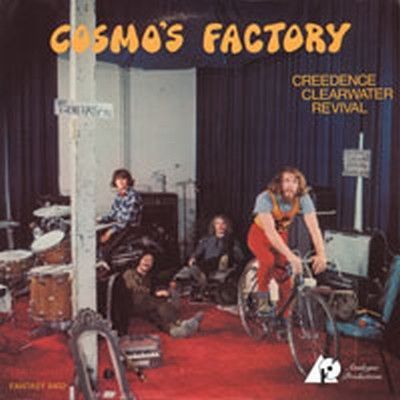
A Cosmo’s Factory Shootout from Way Back When

Hot Stamper Pressings of the Music of Creedence Clearwater Revival Available Now

UPDATE 2020

This is a very old commentary describing a shootout we had done more than a decade ago. Some of what you see below would probably still be true. The cutting system used to make the AP pressing no doubt lacked Tubey Magic. It’s also true that many of the records mastered on it were as lifeless and boring as we describe.

The only way to be clear about what is going on with the audiophile pressings in this group is to do another shootout with them, and we just can’t see taking the time to do that when there are so many good vintage pressings we don’t have time to play as it is.

There are only so many hours in the day, why waste them playing this crap?

We do occasionally throw the modern remastered pressings we manage to get hold of into our shootouts when time permits. You can read all about the half-speeds we’ve reviewed here and some of the Heavy Vinyl pressings we’ve played here.

Our latest thinking about this Analogue Productions repress can be found here.


Now, on to our old shootout.

Years ago a customer sent me his copy of the Analogue Productions LP (mastered by Hoffman and Gray) in order to carry out a little shootout I had planned among the five copies I could pull together: two MoFi’s, the Fantasy ORC reissue, a blue label original, the AP, and another reissue. 

Let’s just say there were no real winners, but there sure were some losers.

My take on the Hoffman version is simply this: it has virtually no trace of Tubey Analog Magic. None that I can find anyway.

It sounds like a clean, tonally correct but fairly bass-shy CD.

No pressing I played managed to be so tonally correct and so boring at the same time.

The MoFi has plenty of weird EQ colorations, the kind that bug the hell out of me on 98% of their crappy catalog, but at least it sounds like analog. It’s warm, rich and sweet.

The AP copy has none of those qualities.

More pointless 180 gram vinyl sound, to my ear anyway. I couldn’t sit through it with a gun to my head.

You would need a lot of vintage tubes in your system to get the AP record to sound right, and then every properly-mastered record in your collection would sound worse.
(more…)

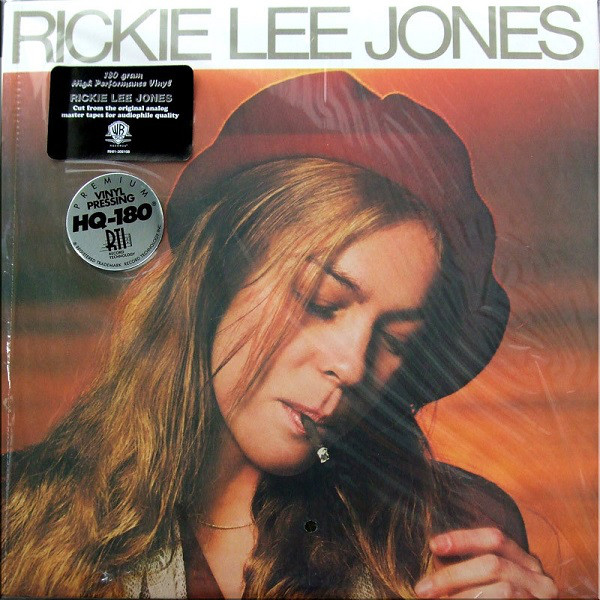
Rickie Lee Jones on Rhino Records – Not Our Idea of Good Sound, and We Hope Not Yours

Hot Stamper Pressings of the Music of Rickie Lee Jones Available Now

We were fairly unimpressed with the Rickie Lee Jones on Warners that came out a few years back [2008 in fact, time flies!].

It has that same phony modern mastering we find so unappealing on the Heavy Vinyl reissue of Blue. (We seem to be pretty much alone in not liking that one, and we’re proud to say we still don’t like it. We encourage you to play The Blue Game and maybe you’ll see why we feel the way we do.)

We liked the new Sweet Baby James Hoffman and Gray cut. We note in our review that:

Hoffman and Gray can take pride in this Sweet Baby James. It’s some of the best work I’ve heard from them to date. If more DCC and Heavy Vinyl reissues sounded like this, we wouldn’t be so critical of them. Unfortunately they don’t, and there are scores of pages of commentary on the site to back up that statement for those of you interested in the subject.

We went on to say

The amazing transparency and dynamic energy of the best originals will probably never be equaled by an audiophile pressing like this. (It hasn’t happened yet and we remain skeptical of the possibility.) Considering that this pressing is sure to beat most reissues, imports and other such like, we have no problem heartily recommending it to our customers, especially at the price.

So, What’s Wrong With Rickie Lee?

Simple. They took a somewhat artificial, hi-fi-ish, close-miked, heavy-on-the-reverb recording and made it sound even more artificial, phony and hi-fi-ish (but less-heavy-on-the-reverb; there is always a noticeable loss of resolution in these modern mastering jobs).

What were they thinking?

The best copies have warmth, richness and sweetness to balance out the more unnatural elements in the recording. Copies with these qualities are not that common, but we’ve run across plenty of them in our shootouts and proudly offered them for sale, where of course they sold quickly for lots of money. Major league audiophile appeal, this one. In its day it was heavily demo’ed in every stereo store in town, and for good reason — the sound positively jumps out of the speakers.

It’s a Trap

The average copy of this album is a sonic disaster, akin to the average copy of Famous Blue Raincoat or — gulp, even worse — Graceland. If you’re a detail freak, this Rhino pressing may be just what you are looking for. It’s got detail all right.

But all that phony detail obscures what is wrong with the sound. Overly detailed sound is a trap that is all too easy to fall into.

Plenty of recordings designed to appeal to audiophiles strike us as being phony in this way. Stan Ricker cut a lot of overly-detailed records for Mobile Fidelity in the 70s and 80s, records that may have sounded fine on the lo-rez stereos of that era (like the one I owned), but are positively painful to play on the top quality equipment that is available (but rare) today. [1]

I would hope that the audiophile community would have developed their listening skills to a level sufficient to recognize what this pressing doesn’t have — warmth, richness and sweetness — but I get the feeling I will be proved wrong yet again in that regard.

This Performance Is High?

Rhino Records has really made a mockery of the analog medium. Rhino bills their releases as pressed on “180 gram High Performance Vinyl.” However, if they are using performance to refer to sound quality, we have found the performance of their vinyl to be quite low, lower than the average copy one might stumble upon in the used record bins.

The CD versions of most of the LP titles they released early on are far better sounding than the lifeless, flat, pinched, so-called audiophile pressings they released starting around 2000. The mastering engineer for this garbage actually has the nerve to feature his name in the ads for the records. He should be run out of town, not promoted as a keeper of the faith and defender of the virtues of “vinyl.”

If this is what vinyl sounds like I would switch to CD fast enough to make your head spin.

And the amazing thing is, as bad as these records are, there are people who like them. I’ve read postings on the internet from people who say the sound on these records is just fine.

Their Grateful Dead titles sound worse than the cheapest Super Saver reissue copies I have ever heard.

The Yes Album sounds like a cassette, a mere ghost of the real thing.

(more…)

Jethro Tull – One of the Worst Releases on DCC (and That’s Saying Something!)

Sonic Grade: F

The DCC pressing is a complete disaster, one of the worst sounding versions of the album ever made.

As bad as the MoFi is, the DCC is even worse. Murky and bloated, to my ear it does almost nothing right, not on vinyl anyway. The DCC Gold CD is better, and it’s certainly nothing to write home about. 

Our Hot Stamper commentary below sorts out the DCC, the Classic Records Heavy Vinyl pressing and the MoFi Half-Speed Mastered LP, as well as British and domestic originals.

We love this album and we’ve played every kind of pressing we could get our hands on. The winner? Read on!

Over the course of the last 25 years we was wrong three ways from Sunday about our down-and-out friend Aqualung here. We originally liked the MoFi.

When the DCC 180g came along we liked that one better, and a few years back I was somewhat enamored with some original British imports.

Our first big shootout disabused us of any notion that the British originals were properly mastered. As we noted in our Hot Stamper commentary, “The original Brits we played were pretty hopeless too: Tubey Magical but midrangy, bass-shy and compressed.”

Another myth bites the dust.

The same is true for Thick As A Brick; the best domestic copies are much more energetic and tonally correct.

Why Would Anyone Want to Take All the Fun Out of CCR’s Music? Part Two

More of the Music of Creedence Clearwater Revival

UPDATE 2026

This commentary is at least ten years old. Still holds up though!


The last time I played one of Chad’s CCR pressings, which I confess was more than a decade ago, it had all the bad qualities of the Bonnie Raitt disc on DCC, a sound that I’ve grown to dislike more with each passing year.

But what the new AP version really gets wrong is the guitar sound.

Creedence’s music lives or dies by its grungy guitars, and the AP pressing presents us with guitars that sound nothing like the guitars on the original versions of the albums we all bought back in the day.


Latest Findings as of 2022

This commentary used to end this way:

The fat, smeary, overly-smooth guitars you hear on the record, lacking any semblance of the grungy energy that are the true hallmarks of this band’s recordings, probably means that some audiophile mastering engineer got hold of the tapes and tried to “fix” what he didn’t like about the sound.

You know, the sound that is all over the radio to this very day. Something was apparently wrong with it. So now that it’s been fixed, everything that’s good about CCR’s recordings is missing, and everything that has replaced those sonic elements has made the sound worse.

Nice job! Keep up the good work. Chad is proud of ya, no doubt about it.

It has now become clear that the various mastering engineers Chad hires are not the ones trying to fix what they don’t like about the sound. Chad is El Jefe, the one telling them what to fix and rejecting their work until these remastered albums sound the way he wants them to sound.

There is no use complaining about the awful work Doug Sax, Steve Hoffman, Kevin Gray, George Marino or anyone else did when hired to master for Analogue Productions. Their task was to please Chad. He is the customer, he is the one paying their fees, and he is the one getting the sound he wants.

He apparently thinks he is saving the world from bad sound, but we sure don’t see it that way. Just the opposite in fact.

If Chad wanted better sounding records — records that are more lively, more tonally accurate, less bloated down low and less smoothed-over up top — veteran engineers such as the gentlemen named above would surely have been able to master these titles more correctly than the evidence provided by the records might lead you to believe.

But Chad, like many other audiophiles, is a My-Fi guy, not a Hi-Fi guy, and he likes the sound he likes, regardless of what is on the master tapes or what other pressings — mastered by a number of different engineers, often over the course of many decades — might sound like.

(more…)

Live At The Village Gate on Audio Fidelity Heavy Vinyl

Hot Stamper Pressings of Jazz Albums Available Now

An Audiophile Hall of Shame pressing. It’s yet another Disastrous Heavy Vinyl release with godawful sound.

What a murky mess. Hard to imagine you couldn’t find a common domestic pressing that wouldn’t sound better.

I mention throughout this blog that, starting in the ’90s, the records put out by Cisco, DCC, S&P and finally Audio Fidelity had to fight their way through Kevin Gray’s opaque, airless, low-resolution cutting system. We discuss that subject in some depth here.

Compressedthickdullopaque, and almost completely lacking in ambience, this record has all the hallmarks of a Modern Heavy Vinyl Reissue pressed at RTI.

The average ’70s pressing on the Atlantic Red and Green label will kill this audiophile piece of junk, and it’s unlikely to cost you more than ten bucks. Whatever you do, don’t waste your money on this incompetently remastered reissue.


For 35 years we’ve been helping music loving audiophiles the world over avoid bad sounding records.

To see the records with bad sound or bad music we’ve reviewed that weren’t marketed to audiophiles, click here.

It’s yet another public service from Better Records, the home of the best sounding records ever pressed. Our records sound better than any others you’ve heard or you get your money back.

(more…)

Love Is the Thing – Remixed, Remastered and Ruined

More Hot Stamper Pressings of Pop and Jazz Vocal Albums

Love Is the Thing on DCC was given a “new sound” and I don’t like it.

I really liked the Nat King Cole albums on DCC when they came out back in the 90s. I thought they were a revelation as a matter of fact.  Now I find them insufferable.

Here are some of my reasons for not liking Hoffman’s remix.

Nat’s voice is much too forward and loud in the mix; consequently the orchestra is too soft. The balance is off. At least on my stereo, at the levels I play the record at, the balance seems off. You surely have a different system, in a different room, and may not feel the way I do.

But without a top pressing to compare, how do you know the mix is right or wrong? Like everything in audio, it’s relative.

The balance problem is bad enough, but what really sets my teeth on edge is the fact that the Nat King Cole record on DCC doesn’t sound remotely like any Nat King Cole record I have ever heard, outside of the ones Hoffman worked on of course.

Where is all the Capitol reverb? Nat’s records all have it, and although the reverb may be a bit excessive or unnatural in some ways, at least to some people, when you take it away you end up with a sound that never existed before, and, to my ears, it’s a sound that’s just wrong for the music.

The more I listened to the DCC the less I liked it.

The first full-length commentary I ever wrote in my record catalog in 1994 took Analogue Productions to task for remastering Way Out West and giving it a “new sound,” a sound I had never heard coming from any Contemporary pressing, from any era.

I didn’t like what Doug Sax did with Way Out West, Jazz Giant, Waltz for Debby and many, many others, and I don’t like what Steve Hoffman and Kevin Gray did to Love Is the Thing, The Very Thought of You and Just One Of Those Things.

I have tried to listen to the Gold CD in my car, but even in the car I found the sound boring and insufferable.

Is this the kind of sound you hear on your DCC Nat King Cole records? If it is, we recommend you try a Hot Stamper. If it doesn’t kill your DCC you get your money back.

At the very least it will show you some of the things your DCC is doing differently, and, we think, wrong.

(more…)

Today’s Heavy Vinyl Mediocrity Is… Fragile

Hot Stamper Pressings of the Music of Yes Available Now

The Analogue Productions 180g reissue shown here is mastered by Steve Hoffman and Kevin Gray, two guys with reputations for doing good work, but the results of their collaboration [can you believe this record came out in 2006!?] leave much to be desired.

The overall sound is too lean.

This is especially noticeable on the too-thin-sounding guitars and vocals.

Believe me, it’s no fun to play a Yes album with thin guitars and vocals.

Also, there’s a noticeable lack of ambience throughout the record. What comes to mind when I hear a record that sounds like this is the dreaded D word: dubby.

I find it hard to believe they had the actual two-track original master tape to work with. The sound is just too anemic to have come from the real tape. If they did have the real tape, then they really botched the job.
(more…)

Surrealistic Pillow – A Disaster on DCC

Hot Stamper Pressings of the Music of the Jefferson Airplane Available Now

Sonic Grade: F

Sour and opaque, a major disappointment.

You can do worse but you would really have to work at it.

No, I take that back. That’s really not fair. The average RCA reissue with any label other than the original is likely to be every bit as bad as this Heavy Vinyl disaster.

Years ago we thought we thought we had found a good one on the orange label, but I doubt that I would see things the same way today.

If you would like to avoid the worst sounding pressings put out on the DCC label, steer clear of this group. They’re awful.

Other records mastered by Steve Hoffman that badly missed the mark in our judgment can be found here.

(more…)

Fresh Cream – A DCC Disaster

Hot Stamper Pressings of British Blues Rock Albums Available Now

Is it the worst version of the album ever made?

That’s hard to say. But it is the worst sounding version of the album we’ve ever played, and that should be all any audiophile contemplating spending money on this kind of trash needs to know.

Compressed, thick, dull, opaque, and almost completely lacking in ambience, this record has all the hallmarks of the Modern Heavy Vinyl Reissue.

Whether made by DCC or any other label, starting at some point in the mid-’90s, many remastered audiophile pressings started to have a tonal shortcoming that we found insufferable from day one: they are just too damn smooth.

Almost any domestic or British original pressing of Fresh Cream will be better in almost every way. Read our Hot Stamper review below for the full story. 


UPDATE

[This is an old review. We buy very few domestic pressings of Fresh Cream. They are often noisy, and they don’t sound remotely as good as the right British imports, including some late reissues. But anything beats the DCC LP.

It is, in our experience, the worst version ever.


Our Hot Stamper Commentary from 2008

AN EXCEPTIONAL SIDE ONE BACKED WITH GREAT SIDE ONE, both on surprisingly quiet vinyl! We just finished a shootout for this hard-rockin’ debut album and were delighted to hear how good this music can sound on the right pressing. This copy has the kind of bottom end that this music absolutely demands but is sadly missing in action from most of the pressings we played. If your Cream record can’t rock, remind me, what exactly is the point again? (more…)

The Not-So-Magnificent Thad Jones – More Dreck on Heavy Vinyl

Hot Stamper Pressings of Blue Note Albums Available Now

After discovering Hot Stampers and the mind-blowing sound they deliver, a new customer generously sent me a few of his favorite Heavy Vinyl pressings to audition, records that he considered the best of the modern reissues that he owns.

He admitted that most of what he has on Heavy Vinyl is not very good, and now that he can clearly hear what he has been missing, having played some of our best Hot Stamper jazz pressings, he is going to be putting them up on Ebay and selling them to anyone foolish enough to throw their money away on this kind of junk vinyl.

We say more power to him.  That money can be used to buy records that actually are good sounding, not just the ones that are supposed to be good sounding, perhaps because they were custom manufactured with the utmost care and marketed at high prices to soi-disant audiophiles.

Audiophile records are a scam. They always have been and always will be.

The three of us who do the critical listening here at Better Records dropped the needle on the first disc in this set and, once the VTA was properly adjusted, gave it a chance to show us just what expert remastering from vintage mono tapes, at 45 RPM, on two slabs of luscious, thick vinyl, could do for the sound of Thad Jones’s trumpet, circa 1956.

The reissue we are playing is the one Music Matters released in 2010. There was a single disc version released by them in 2016, recut by Kevin Gray and Ron Rambach. At the time of this writing, there is one for sale on Discogs for $235.

None of us had ever heard the album on any media, vinyl or otherwise, but we know a good sounding jazz record when we hear one, and we knew pretty early on in the session that this was not a good sounding jazz record.

Two minutes was all it took, but we wasted another ten making sure it was as bad as we thought.

(more…)