steely-strings

Beethoven Symphony No. 7 – This London with Solti Didn’t Make the Grade

Hot Stamper Classical and Orchestral Imports on Decca & London

In our survey for the work, we played a number of the better known recordings from the top conductors and orchestras around the world.

Here is what we heard when we dropped the needle on an early pressing of CS 6093, released in 1959.

Our notes read:

  • Awful,
  • so dry,
  • steely,
  • crude,
  • bad

In other words, it just sounded like an old record. The world is full of records that don’t sound very good. As a matter of fact they undoubtedly make up the bulk of large record collections.
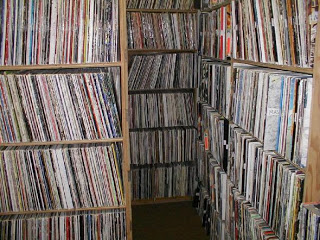
And if you just happen to be the proud owner of a big record collection, how can you possibly find the time to play more than a small fraction of it in any given year. Or even over the course of a decade for that matter.

The fact is that you can’t. Which, on the upside, means that, as far as you know, all your records sound great!

No need to buy another copy of whatever title you care to name. What for? You haven’t played it in twenty years and probably won’t get around to pulling it off the shelf for a spin for at least another twenty.

Here’s hoping your kids like old records because they are going to end up with an awful lot of them.

Back to the Beethoven 7th. What a beautiful cover!

But what good is a beautiful cover when the record sounds as bad as this one does?

(more…)

The Four Seasons Direct to Disc at 45 RPM

Hot Stamper Pressings of the Music of Antonio Vivaldi Available Now

This RCA Direct-to-Disc 45 RPM Double LP has awful sound, with exceptionally hard and shrill string tone.

This is precisely why we dislike Japanese pressings as a rule — they sound like this audiophile trash.

If you own this album, it should make a good one for testing string tone and texture. The strings on this record are awful, and they should sound awful on your stereo too.

The Big Picture from a Lifelong Audiophile

You may have seen this text in another listing, but it bears repeating.

There is nothing new under the sun, and that is especially true when it comes to bad sounding audiophile records. The world is full of them.

There has been one big change from the days when I self-identified as a freshly minted audiophile in the ’70s.

Yes, the records being marketed to audiophiles these days may have second- and third-rate sound, but at least now they have good music. That’s progress, right?

The title reviewed above is a good example of the kind of crap we newbie audiophiles used to put up with back in the old days, long before we had anything resembling a clue.

This one clearly belongs on our list of bad audiophile records.

You might be asking: What kind of audio fool was I? to buy a dumbass record like this.

It’s a fair question. Yes, I admit I was foolish enough to buy records like this and expect it to have good music, or at least good sound. Of course it had neither. Practically none of these kinds of records ever did. Sheffield and a few others made some good ones, but most Direct to Disc recordings were crap.

As clueless as I was, even back in the day I could tell that I had just thrown my money away on this lipsticked-pig in a poke.

But I was an audiophile, and like a certain Mr. Mulder, I wanted to believe. These special super-hi-fidelity records were being made for me, for special people like me, because I had expensive equipment and regular records are never going to be good enough to play on my special equipment, right?

To say I was wrong to think about audio that way is obviously an understatement. Over the course of the last forty years, I (and to be fair, my friends and my staff) have been wrong about a lots of things in the worlds of records and audio.

You can read more about many of the things we got wrong under the heading: live and learn.

The good news? Audio progress is real and anyone who goes about doing audio the right way can achieve a great deal.

(more…)

Don’t Waste Your Money on this Living Stereo from 1962

Hot Stamper Pressings of Living Stereo Titles Available Now

LSC 2612, released in 1962 on the Shaded Dog label, offers Handel’s Water Music and Royal Fireworks with Stokowski conducting, engineered by one of the greats, Robert Simpson.

The sound is terrible however.

The copies we had on hand were loud and crude, with steely strings and not much in the way of hall space. In other words, LSC 2612 seems to suffer from the “old record” sound that we’ve found on many of the hundreds of vintage pressings we’ve auditioned over the years as we were looking for top quality recordings to put in our Hot Stamper shootouts.

If you want a good Water Music, the right stamper pressings of the Philips recording with Leppard are the best we’ve ever played.

The Shaded Dog of LSC 2612 might be passable on an old school system, but it was too unpleasant to be played on the high quality modern equipment we use.

Leave this RCA to the collectors. Some audiophiles are of the opinion that vintage Living Stereo recordings on the original label can do no wrong, but we have never subscribed to that view.

There are quite a number of other records that we’ve run into over the years with similar shortcomings. Here are some of them, a very small fraction of what we’ve played, broken down by label.

  • London/Decca records with weak sound or performances
  • Mercury records with weak sound or performances
  • RCA records with weak sound or performances

1962 was a phenomenal year for audiophile quality recordings – we’ve auditioned and reviewed more than one hundred and twenty titles as of 2024, and there are undoubtedly a great many more that we’ve yet to discover.

When it comes to classical and orchestral titles, more than a dozen are so good that we would consider them Must Owns.

(more…)

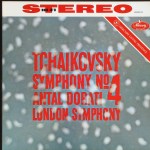
This Mercury Is Not a Good Way to Enjoy Tchaikovsky’s 4th

More of the Music of Tchaikovsky Available Now

The pressings we’ve played of SR 90279 over the years tended to have crude and shrill sound. The string tone was bright and steely.

In our most recent shootout for the work, since we happened to have one in stock, we figured we would give the Mercury one more chance, just in case we had finally stumbled on some good stampers or that other improvements to our playback would allow the hidden virtues of the recording to be revealed. (Yes, thankfully that is still happening. So is the reverse; some records don’t do as well in shootouts as they used to, a reality every audiophile has to be on the alert for, a subject we discuss here.)

It probably lasted less than five minutes on the table.

It was simply too unpleasant to be played on the revealing modern equipment we use.

It seems that many early Mercury recordings suffer from these shortcomings. My guess would be at least half, maybe even closer to two out of three.

Waking Up

If your system is dull, dull, deadly dull, the way some audiophile systems tend to be, this record has the hyped-up, bright and aggressive sound to bring it to life in no time. (If you’re a fan of MoFi pressings from the 70s and 80s, you definitely have a much smoother top end than we do. Most of the records they made in those years are way too bright and full of the kind of phony detail that some systems need to wake them up. I should know; I had one of those systems myself, but of course I didn’t know it at the time and would have gone to the mat to deny the accusation.)

There are scores of commentaries on the site detailing the huge improvements in audio available to the discerning (and well-healed) audiophile. It’s the reason Hot Stampers can and do sound dramatically better than their Heavy Vinyl or audiophile counterparts: because your stereo is now good enough to show you the difference.

With a too-forgiving system, you will most likely continue to be fooled by bad records, just as I and all my audio buds were fooled thirty and forty years ago. Audio has improved immensely in that time. If you’re still playing Heavy Vinyl and audiophile pressings, there’s a world of sound you clearly don’t know you’re missing.

My advice is to get better equipment and spend as much time as you can learning to tweak and tune it. That will allow you to be better at recognizing bad records when you play them.

The Heavy Vinyl Route

If more vintage Mercurys had sound as bad as this one, we would happily admit that going the Heavy Vinyl route might make sense.

And there certainly are a lot of bad vintage pressings — we should know, we’ve played them by the hundreds — but the number of bad modern Heavy Vinyl pressings would give them a run for their money and then some.

Beyond this Tchaicovsky title, there are plenty of others we’ve run into over the years with too many sonic shortcomings. As a public service, here are about 60 of them, broken down by label.

(more…)

Did We Get The Power of the Orchestra Wrong, or Are These Just Bad Stampers?

Hot Stamper Pressings of Living Stereo Recordings Available Now

In 2007, we wrote the following review for The Power of the Orchestra, VCS 2659:

DEMO DISC QUALITY ORCHESTRAL SOUND like you will not believe. We put two top copies together to bring you the ultimate-sounding Pictures At An Exhibition. Folks, it doesn’t get any better than this for huge orchestral dynamics and energy.

I confess I badly misjudged this record over the course of the last few years. I remember liking it in the early ’90s; at that time it was the only Golden Age recording of Pictures whose performance moved me. I never liked the famous Reiner, LSC 2201, and Ansermet’s performance on London also lacks drive and coherency in my opinion.

I then went on to extoll the many virtues of the recording, making special mention of the brass, dynamics and bass, which you can read about here.

More recently we played a copy of VCS 2659 in one of our regular Pictures at an Exhibition shootouts and were not the least bit impressed by it.

Side One:

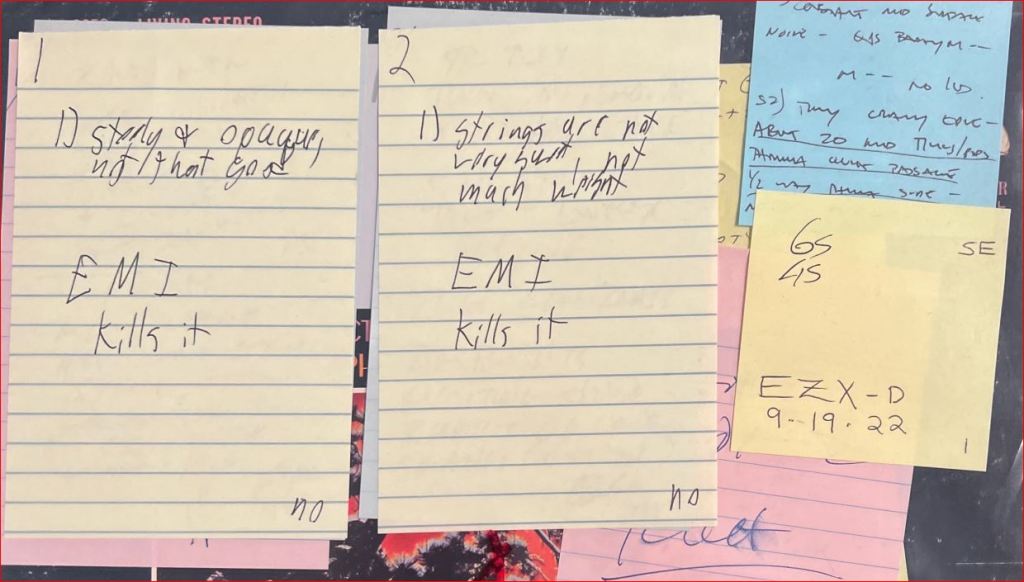
Steely and opaque, not that good.

Side Two:

Strings are not very [unintelligible, might be bright], not much weight.

In other words, it just sounded like an old record.

(more…)

And to Think I Used to Like this Strauss Record

Hot Stamper Mercury Pressings Available Now

I used to like this Strauss Family Album back in the old days. Picked them up whenever I saw them, usually for ten bucks or less. They’re fairly common. It’s not exactly HiFi a la Espanola.

Now when we play this Mercury, it doesn’t sound so good. We traded what we had in stock back to stores or gave them away as freebies to our good customers.

A lot of records that I used to like because they were cleaner and brighter — later Red Seal Living Stereos, some OJC jazz, some reissues of rock — sounded much better when my system was darker and less revealing.

Side one of this copy has steely strings, the kiss of death on this kind of music.

Side two is passable, a low grade Hot Stamper. If you see this album for five bucks, pick it up and give it a listen. More than that and you should probably pass.

Many Mercury records simply do not sound good, and this appears to be one of them. The sound is  shrill, and that is just not acceptable on today’s highly-tweaked stereos.

Some of the early Mercs seem better suited to the old school audio systems of the 60s and 70s than the modern systems of today.

Some of these records used to sound good on those older systems, and I should know. I had an Old School stereo and some of the records I used to think sounded good back in the day don’t sound too good to me anymore.

For a more complete list of those records, click here.

How Did We Figure All of This Out?

There are more than 2000 Hot Stamper reviews on this blog. Do you know how we learned so much about so many records?

Simple. We ran thousands and thousands of record experiments under carefully controlled conditions, and we continue to run scores of them week in and week out to this very day.

(more…)

Bridge Over Troubled Water – Classic Records Reviewed

More of the Music of Simon and Garfunkel

Reviews and Commentaries for Bridge Over Troubled Water

Sonic Grade: C

What’s an easy way to recognize the better pressings?

They’re the ones with textured strings in the orchestral arrangements.

The string tone on the average copy is hard and steely.

The Classic 200 gram pressing suffers from a case of steely strings. When the strings are blasting away at the end of the title song, you want to be able to hear the texture without the strings sounding shrill and edgy.

This is no mean feat, for the record or the stereo.

Here are some of the other records we’ve discovered are good for testing string tone and texture.

(more…)

So Many Columbia Classical LPs Are Bad Sounding – Why Is That?

Hot Stamper Pressings of Vintage Columbia Albums Available Now

Columbia classical recordings have a tendency to be shrill, upper-midrangy, glary and hard sounding.

The upper mids are usually nasally and pinched; the strings and brass will screech and blare at you in the worst way.

If Columbia’s goal was to drive the audiophile classical music lover screaming from the room, most of the time they succeeded brilliantly. Occasionally they fail.

When they do we call those pressings Hot Stampers.

Columbia Rock and Jazz

When I play Columbia recordings from the ’50s and ’60s of Brubeck, Ellington, Miles and other jazz giants, what strikes me most is how natural, warm and sweet the sound is. I was playing an old mono Ellington record recently and when the clarinet solo came in, it almost took my breath away. The sound of the instrument was that real. This from a mid-’50s run-of-the-mill Columbia pressing. Those guys (the engineers and the musicians) knew what they were doing.

Sometimes when I read about the extraordinary lengths modern engineers go to in order to use the highest quality audiophile equipment: custom microphones, tape recorders, wire, and the like, it makes me wonder how many of the best sounding records in the world managed to be recorded without any of that stuff. RCA didn’t need it for their Living Stereos. Decca didn’t need it. Contemporary Records managed to record the best sounding jazz records without it.

How did all those great sounding records get made with such bad equipment? I guess we’ll never know.

Columbia may not have always recorded the best “serious” jazz, but they were very serious about the sound of their jazz. Outside of Contemporary, Columbia has the consistently best sounding jazz records we’ve ever heard.


Further Reading