old-rec

The albums linked here have what we call “old record” sound. They tend to be boxy, thick, dull, opaque, smeary, closed-in, two-dimensional, lifeless and uninvolving.

Most records suffer from some of these shortcomings to one degree or another. The Hot Stamper pressings we offer are the ones without these problems.

This Blueback of Le Cid Was Just Awful

Hot Stamper Classical and Orchestral Imports on Decca & London

Don’t buy into that record collector/audiophile canard that the originals are always the best sounding pressings.

This original Blueback pressing — true, we only had the one, so take it for what it’s worth — was a complete disaster: shrill, with no top or bottom to speak of, the very definition of boxy sound.

Our current favorite for sound and performance is the one Fremaux conducted for EMI in 1971.

It had been on the TAS List for some time, but we confess we didn’t bother finding out how good it was until about five years ago when it became clear to us what a wonderful conductor Louis Fremaux could be.

Here are some other Hot Stamper pressings of TAS list titles that we like.

Back to London

The sound of the London original you see above was much too unpleasant to be played on high quality modern equipment. There are quite a number of others that we’ve run into over the years with similar shortcomings.

(more…)

Avoid the Early Pressings of the 1812 Overture with Alwyn

More of the Music of Peter Ilyich Tchaikovsky

More than ten years ago, 2010 or thereabouts I’m guessing, we felt we were ready to do a shootout for Tchaikovsky’s famous 1812 Overture, music that surely belongs in any serious audiophile record collection.

On a well-known work such as this, we started by pulling out every performance on every label we had in our backroom and playing them one after the other. Most never made it to the half-minute mark. Compressor distortion or inner groove overcutting at the huge climax of the work? Forget it. On the trade-in pile you go.

A few days went by while we were cleaning and listening to the hopefuls. We then proceeded to track down more of the pressings we had liked in our preliminary round of listening. At the end we had a good-sized pile of LPs that we thought shootout-worthy, pressings that included various RCA, Decca and London LPs.

The London you see above did not impress us. It sounded too much like an old record.

There are a number of other Deccas and Londons that we’ve played over the years that were disappointing, and they can be found here.

We much preferred the Decca budget reissue, cut from the same tapes, shown here.

(more…)

Another Dubious Recording of Tchaikovsky’s Violin Concerto

Hot Stamper Pressings of the Music of Tchaikovsky Available Now

1S/1S Shaded Dog original pressing.

Ooh, let the drooling begin. 

Here is our admittedly very old review for exactly the one copy we had on hand to play, although, to be fair, we have played more than one copy of the album over the years, and it never sounded especially good to us on any of the copies we auditioned.

The violin is very immediate sounding on this recording, maybe too much so.

Either way, the sound of the orchestra is where this record falls short.

It’s congested, thin and shrill in places. The right copy of Heifetz’s performance on LSC 1992 is a much better record overall. Some may prefer Szeryng’s way with this famous piece, which, as a matter of taste, is fine by us.

If you’re listening for just the performance and the sound of the violin, you may find this record to be more acceptable than we did.

(more…)

How Do the Butterfly and Small Red E Pressings Sound on Strange Days?

Hot Stamper Pressings of the Music of The Doors Available Now

The Butterfly and Small Red E labels are so contemptibly thin and harsh they are not worth the vinyl they were pressed on.

You would be much better off with the DCC Gold CD than any of the reissue vinyl we’ve played.

The fact of the matter is that good digital beats bad analog any day.


This a Must Own Record, a 1967 recording with unbelievable RAW POWER. Most audiophiles very likely have no idea how well recorded this album is, simply because most pressings don’t do a very good job of translating the energy and life of the master tape onto the vinyl of the day.

The second Doors album is without a doubt one of the punchiest, liveliest, most POWERFUL recordings in the entire Doors catalog, right up there with their debut.

I’m guessing this statement does not comport with your own experience, and there’s a good reason for that: not many copies of the album provide evidence of any of the above qualities. Most pressings are opaque, flat, thin, veiled, compressed and lifeless. They sound exactly the way so many old rock records sound: like any old rock record.

Botnick Knocks It Out of the Park

But this album is engineered by Bruce Botnick. The right pressings give you the kind of low-end punch and midrange presence you hear on Love’s first album (when you play the right gold label originals). Botnick engineered them both, and what’s even more amazing is that The Doors second is in many ways an even better recording than Love’s!

Very tubey from start to finish, the energy captured on these Hot Stampers has to be heard to be believed. Not to mention the fact that the live-in-the-studio musicians are swimming in natural ambience, with instruments leaking from one mic to another, and most of them bouncing back and forth off the studio walls to boot.

But the thing that caught us most by surprise is how much LIFE there is in the performances on the better Hot Stamper copies. Morrison pulled out all the stops on songs like Love Me Two Times and the last track on the album, When the Music’s Over. Unless you have a very special pressing there is almost no chance you will ever hear him with this kind of raw power.

Top 100? If we could find more than a sporadic few clean, good sounding copies each year it would surely make the list, joining the other two of the band’s first four albums on there now.

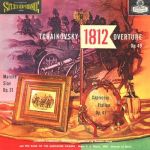
Every Label Made Bad Sounding Records – Capitol Made This One in 1958

Hot Stamper Pressings with Billy May’s Arrangements

Drowning in reverb and squawky as hell, a major misfire from Billy and the brass (ahem) at Capitol.

For 33 years we’ve been helping music loving audiophiles the world over avoid bad sounding records.

To see the records with bad sound or bad music we’ve reviewed, click here.

It’s yet another public service from Better Records, the home of the best sounding records ever pressed. Our records sound better than any others you’ve ever heard or you get your money back.

Neither the Sound Nor the Performance Here Make the Grade

Hot Stamper Pressings of the Music of Rimsky-Korsakov Available Now

In our experience this is not the recording of the work to buy, on either Decca or London. Of the two recordings by Ansermet, we much prefer the one made with the Suisse Romande in 1961 to that of the one he recorded with the Paris Conservatoire in 1954 (which was his second recording of the work with them).

We did a monster shootout for this music in 2014, one we had been planning for more than two years. On hand were quite a few copies of the Reiner on RCA; the Ansermet on London (CS 6212, his second stereo recording, from 1961, not the earlier and noticeably poorer sounding recording from in 1959); the Ormandy on Columbia, and a few others we felt had shown potential.

The only recordings that held up all the way through — the fourth movement being THE Ball Breaker of all time, for both the engineers and musicians — were those by Reiner and Ansermet.

This was disappointing considering how much time and money we spent finding, cleaning and playing those ten or so other pressings.

Here it is a year later and we’re capitalizing on what we learned from the first big go around, which is simply this: the Ansermet recording on Decca/London can not only hold its own with the Reiner on RCA, but beat it in virtually any area. The presentation and the sound itself are both more relaxed and natural, even when compared to the best RCA pressings.

The emotional content of the first three movements (all of side one) under Ansermet’s direction are clearly superior. The roller coaster excitement Reiner and the CSO bring to the fourth movement cannot be faulted, or equaled. In every other way Ansermet’s performance is the one for me.

There are other Deccas and Londons that we’ve cleaned and played recently that were disappointing, and they can be found here.

Our Pledge of Service to You, the Discriminating Audiophile 

(more…)

Mahler / Symphony No. 2 / Walter – Didn’t Make the Grade

More of the Music of Gustav Mahler

This is a Minty looking Columbia 6 Eye stereo LP.

The sound is not very good, however. It just sounds like an old record.

Most of the Columbia orchestral pressings we play seem better suited to the old school audio systems of the 60s and 70s, rather than the modern systems of today.

Some of these records used to sound good on those older systems, and I should know. I had an Old School stereo back in the day and some of the records I used to think sounded good don’t sound so good to me anymore.

For a more complete list of those records, click here.

How Did We Figure All of This Out?

There are more than 2000 Hot Stamper reviews on this blog. Do you know how we learned so much about so many records?

We ran thousands and thousands of record experiments under carefully controlled conditions, and we continue to run scores of them week in and week out to this very day.


We play mediocre-to-bad sounding pressings so that you don’t have to, a public service from your record-loving friends at Better Records.

You can find this one in our Hall of Shame, along with others that — in our opinion — are best avoided by audiophiles looking for hi-fidelity sound. Some of these records may have passable sonics, but we found the music less than compelling.  These are also records you can safely avoid.

We also have an Audiophile Record Hall of Shame for records that were marketed to audiophiles for their putatively superior sound. If you’ve spent much time on this blog, you know that these records are some of the worst sounding pressings we have ever had the misfortune to play.

We routinely put them in our Hot Stamper shootouts, pitted against the vintage pressings that we offer, and are often surprised at just how bad an “audiophile record” can sound and still be considered an “audiophile record.”

Gaite Parisienne – Great Cover, Bad Sound

More of the Music of Jacques Offenbach (1819-1880)

Great cover, awful sound. It’s blary and gritty.

The sound is much too unpleasant to be played on high quality modern equipment.

A stereo that looks like the console below — or one that sounds like an old console even though it has new components, there are plenty of those out there in audiophile land — is perfect for all your bad sounding Golden Age recordings.

(more…)

Love the Cover, But the Music Is Awful

Hot Stamper Pressings of Exotica Recordings Available Now

Hot Stamper Pressings of Living Stereo Recordings Available Now

This Bob Thompson record never even made it to the hall of shame. Like hundreds of other albums we’ve played and found wanting, we never bothered to make a listing for it.

I don’t recall its specific shortcomings, but I vaguely remember that it basically just sounded too much like an old record. Some stereo systems of a more forgiving nature can mask the faults of records like these and even make them somewhat enjoyable.

Such is decidedly not the case with our system. Just the opposite in fact. Our stereo is designed to ruthlessly expose the shortcomings of every record we play, precisely the job we need it to do.

We are in the fault-finding business. A stereo such as ours allows us to recognize and describe the manifold problems of hundreds of records that others with — we assume — less revealing equipment do not seem bothered by.

We learned about the strengths and weaknesses of records the old fashioned way. We auditioned them by the thousands over the course of the 37 years we’ve been in business.

Unlike other record dealers catering to audiophile clientele, physically playing old records all day is how we make our money. In the case of this Bob Thompson Living Stereo from 1960, engineered by none other than the often-brilliant Al Schmitt, we were hoping to find top quality sound and music with acceptably broad appeal.

If we found those two things, we could then get hold of a bunch of copies — probably for cheap, let’s be honest — clean them up, shoot them out and sell the best sounding, quietest copies to our customers for prices that would more than cover the time and money it typically takes for our crack staff to carry out each of those operations.

It didn’t work out that way for On the Rocks. Most of the time it doesn’t with albums sporting cool covers from artists that we know practically nothing about. But we do it anyway. It’s how we discover records that few people know have the potential for audiophile sound quality. We know of no other way to do it, and we especially like knowing things that other people don’t know.

(more…)