multi-miked

Recordings that are multi-miked and sound like it.

Phase IV and the TAS List – Three-Dimensional Depth, Transparency and Space

Hot Stamper Pressings of Phase 4 Recordings Available Now

The best Hot Stamper pressings of this TAS List album, one of the greatest and most famous orchestral blockbuster soundtracks ever recorded, more than live up to our expectations for Decca Phase 4. This is Phase 4 done right.

As with all the best Herrmann releases, the huge size and scope you hear is the sound of orchestral music recorded in glorious analog.

The sound is so clear, spacious and three-dimensional that you will feel as if your speakers have disappeared before your very eyes.

The layering of depth is really something to hear on the best copies, with choirs of brass instruments located precisely in space, some further back, some off to the side of the soundstage. And what a soundstage it is, so wide and deep.

Transparency is what allows this all to sound real.

Opacity Vs. Transparency

Note that we have been especially anti-Heavy Vinyl in our recent commentaries for their consistently opaque character, the opposite of what makes it possible to hear into the music, deep into the soundstage, to see and hear all the instruments, even the ones placed far back.

Try that with any Classic Records or Speakers Corner pressing. It’s records like this that show you precisely what you have been missing all these years if you have been collecting and playing releases from those two labels and the others like them.

Tubey Magic with Clarity

Yes, Decca in 1977 managed to keep its lovely Tubey Magical analog sound without getting mired in the muck of tube smear and thickness, the kind that bedevils so many pressings from the 50s.

Couple that with real bite to the brass and texture to the strings and you have the best of both worlds on one record.

(more…)

This Beethoven Ninth Started Out with Two Strikes Against It

Hot Stamper Pressings of the Music of Beethoven Available Now

MoFi took the shortcomings of a mediocre-at-best Decca recording from 1972 and made them even worse by means of their ridiculously misguided mastering decisions and wacky cutting system.

They should not have chosen this performance of the Ninth Symphony in the first place, and they certainly should not have added the treble they chose to add, which they did to this title and to every classical recording they remastered without regard to whether or not the recording needed brightening. None that I know of did. Try telling that to the brain trust running MoFi.

(They hired this guy to do their one-step digitally remastered pressings and from the get-go he’s been giving audiophiles the most ridiculously phony sounding records that collectors with way too much money can buy.)

The Decca recording of the Ninth from 1972 is opaque, lacks size and space, and comes off as a bit flat and dry.

Like practically every later Decca pressing we play, it’s passable at best.

Londons and Deccas from this era (1972 in this case) rarely sound very good to us.

Here is what we specifically don’t like about their sound.

If you want to know what’s wrong with the Mobile Fidelity pressing, take the above faults and add some others to them.

Start with an overall brighter EQ, add a 10k boost for extra sparkly strings, the kind that MoFi has always been smitten with, and finish with the tubby bass caused by the half-speed mastering process itself.

Voila! You are now in the presence of the kind of mid-fi trash that may have fooled some audiophiles way back when but now sounds as wrong as the records this ridiculous label is still making today.

Here are some other pressings with bright string tone that are best avoided by audiophiles looking for top quality sound.

1981 Was a Long Time Ago

Old school audio systems are notorious for being dark, dull and lacking in transparency. They might need bright records in order to sound good, but high quality modern systems do not.

If these two MoFi pressings sounds right to you, you are very likely living with one of those old school systems and it is long past time to get rid of it.

(more…)

Maazel’s Pines of Rome Is Another Title Not Fit for a Super Disc List

Hot Stamper Pressings of The Pines of Rome Available Now

Sonic Grade: C (at best)

I found a bit of commentary in a listing for Scheherazade, and right away it was clear to me that the shootout we did for that title showed us a recording that had much in common with the one we had done more recently for The Pines of Rome.

Here it is, with the necessary changes having been made.

We did a monster shootout for this music in 2021, one we had been planning for more than twenty years. On hand were quite a few copies of the Reiner on RCA; the Ansermet on London; the Maazel on Decca and London (the Decca being on the TAS List), the Kempe on Readers Digest, and quite a few others we felt had potential.

The only recordings that held up all the way through — the last movement being a real Ball Breaker, for both the engineers and musicians — were those by Reiner and Kempe. This was disappointing considering how much time and money we spent finding, cleaning and playing about twenty or so other pressings.

We learned from that first big go around something that we think will remain true for the foreseeable future: the 1960 Reiner recording with the Chicago Symphony on RCA just can’t be beat.

Could other pressings be better sounding? Of course they could.

Would we ever buy another copy? Not a chance.

The notes for the Decca pressing I played, mastered by G, Ted Burkett, can be seen above.

Hey, here’s an idea.

Why don’t you buy a bunch of them and see if any of them do not have the problems described on my notes.

If you find a good one, please let me know the stampers so I can go out and find one myself.

The above is of course all in good fun. We both know that there is not a snowball’s chance in hell that anyone reading this commentary is going to go out and buy some Decca pressings of The Pines of Rome, clean them up, play them one by one and then critique their strengths and weaknesses.

The most likely thing is that, if you have any Decca pressing of Maazel’s Pines, it’s sitting on a shelf collecting dust. Odds are it has not been played in a very long time.

Which should tell you something. Good records get played and bad ones sit on shelves.

(more…)

The Pines of Rome with Maazel – Not the Pressing You Want

Hot Stamper Pressings of Orchestral Music Available Now

I played a lot of different pressings of this music a while back, trying to find recordings worthy of a shootout.

My notes for this one read:

  • Very multi-miked.
  • No depth, but the stage is wide.
  • Not warm but dynamic.

There are a lot of DG recordings that have this kind of sound. We’ve played them by the score. Most went directly into the trade bin.

We simply do not sell classical records with this kind of second-rate sound regardless of how good the performances may be.

We learned from our first big shootout for these works something that we think will remain true for the foreseeable future: the 1960 Reiner recording with the Chicago Symphony on RCA just can’t be beat.

Our Job

Our job is to find you good sounding pressings.

That’s the reason we carry:

(more…)

This Recording of The Planets Has “Blockbuster Sound,” For Better and For Worse

Hot Stamper Pressings of the Music of Gustav Holst Available Now

This recording has what we here at Better Records like to call blockbuster sound.

Even on the best copies, the recording does not sound very much like a live orchestra, nor is it actually even trying to sound like a live orchestra in concert.

It’s trying to be huge and powerful in your home.

Which is more in line with a rock Demo Disc such as Crime of the Century or Dark Side of the Moon.

Everything has been carefully and artificially placed in the soundfield. Each instrument or group of intstruments is given its own space and (sometimes ridiculous) location.

It’s clearly not the recreation of a live orchestral event.

No live concert I have ever attended sounds anything like this record.

Instead it’s the actual creation of a unique orchestral sound, with unique staging of its own design.  Lots of microphones were used, which cause instruments and sometimes whole sections of the orchestra to appear in places and take up spaces they could not possibly occupy in reality.

If you have a good-sized listening room and your stereo images well, with realistic three-dimensional staging and depth, you will have no trouble hearing what we are talking about with any pressing of the album.

This is the sound that Bernard Herrmann made such wonderful use of with his series of Phase IV recordings for Decca, rather different than the four mics and two stereo channels of the Fiedler Gaite Parisienne from RCA in 1954.

Which is ironic. HP talked about The Absolute Sound of live unamplified music as being the standard, yet somehow this recording ended up in his Top Twelve all time greats. Makes no sense to me, but neither do many of the records on the TAS Super Disc list.

That said, our current favorite Planets is the other Planets on the TAS List, Previn’s reading on EMI from 1974.

(more…)

London Orchestral Records from the 70s and the Problem of Opacity

Decca and London Hot Stamper Pressings Available Now

The average copy of this 1976 recording has that dry, multi-miked modern sound that the 70s ushered in for many of the major labels, notably London and RCA.

How many Solti records are not ridiculously thick and opaque? One out of ten? If that. We’re extremely wary of records produced in the 70s; we’ve been burned too many times.

And to tell you the truth, we are not all that thrilled with most of what passes for good sound on Mehta‘s London output either, especially those recorded in Royce Hall. If you have a high-resolution system, these recordings, like those on Classic Records Heavy Vinyl that we constantly criticize, leave a lot to be desired.

Opacity is a real dealbreaker for us. Most of the classical records we play from later eras simply do not have the transparency essential to transporting us from our listening room into the concert hall.

One thing you can say about live classical music, it is never opaque. (It can be dry though. Some concert halls have that sound.)

No recording in our experience — our experience having been informed by playing thousands upon thousand of them — can ever be remotely as transparent as live music.

If you have any doubts, next time you come home from the concert hall, take a moment to put on a favorite recording of the same music. You may be in for quite a shock.

Other Deccas and Londons that we’d cleaned and played and found to be disappointing can be seen here.

For more on the subject of opacity on record, click here.

Here are some of the other records we’ve discovered that are good for testing string tone and texture.

(more…)

Saint-Saens / Symphony No. 3 – The Mehta Would Not Make the Grade Today

More of the music of Camille Saint-Saens (1835-1921)
Our favorite performance of this magnificent work is the Fremaux on EMI from 1973

This is an old review from 2011. I doubt we would have anything nice to say about this recording these days. Our system has come a long way since then, and these Mehta Londons have revealed themselves to be much more artificial sounding than we thought they were, or, more accurately, could tell they were back in 2011.

Unlike many audiophiles and the reviewers who write for them, we have never been enamored with the recordings Zubin Mehta made with the LA Philharmonic.

They almost always suffer from exactly the same problems that we heard on this album.

We had about five copies on hand in preparation for a shootout, some of which I had noted seemed to sound fine, but once we started listening more critically we heard the problems that eventually caused us to abandon the shootout and give away the stock to our good customers for free.

(more…)

Star Wars, Close Encounters and Other Multi-Miked Messes

Decca and London Hot Stamper Pressings Available Now

This Mobile Fidelity LP contains the music of Star Wars and Close Encounters, conducted by Zubin Mehta. The MoFi pressing is far more transparent than the London pressings we have auditioned of the album, even the ones half-speed mastered by Stan Ricker himself.

Yes, he cut the original Londons! At Half Speed! (We’ve also played some later pressings not mastered by Stan, of course. Who can predict which version would sound the best?)

It’s still one of the better MoFi remasters, all things considered. The music, to these ears, has always been hi-fi-ish schlock, and the recording itself is too multi-miked to be taken seriously. It sounds far too much like a bad Phase IV recording, and we know whereof we speak when it comes to Phase IV, good or bad. We’ve played them by the score.

This famous record from the Top Seven of the TAS Super Disc List has the same problem, but I never hear anybody mention it. Why that is I cannot imagine, other than our favorite explanation for just about everything that seems to fly under the audiophile radar, or perhaps a better description would be flying over the heads of the self-appointed audiophile cognoscenti, our old standby, reviewer malpractice.

Bottom line, a loser, but the original Londons in our experience are even worse!

For more on the subject of opacity on record, click here and here.

(more…)

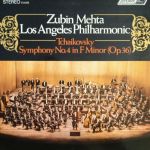
This Tchaikovsky 4th Turned Out to Be Not as Good as We’d Hoped

Hot Stamper Pressings of the Music of Tchaikovsky Available Now

About ten years ago we dropped the needle on this Mehta recording and thought it had potential, so we went about acquiring more copies for an eventual shootout.

A few years back we gave them another listen and found the sound not to our liking.

We have not done a shootout for any of the major Tchaikovsky symphonies (4, 5 and 6) in a very long time, but we hope to do them in the future, although that future could be many years from now. Nothing we have dropped the needle on has knocked us out, and that’s usually what it takes to get the ball rolling.


UPDATE 2024

Actually we quite like this RCA reissue with Monteux, and there are some other recordings we know to be good, but they are turning out to be very hard to find.


These Mehta Londons have revealed themselves to be much more artificial sounding than we thought they were, or, more accurately, could tell they were back in 2011.

Like every Royce Hall recording we’ve ever played, including the one everybody knows, there is too much multi-miking and spotlighting going on for us to suspend our disbelief and feel like we are in the living presence of the musicians, to borrow a phrase. The orchestra in this recording is not presented with anything resembling the experience one would have in the concert hall.

James Lock is a brilliant recording engineer, but his work here in the states leaves a lot to be desired.

(more…)

Rozsa / Ben Hur

Hot Stamper Pressings on Decca & London Available Now

This TAS List Super Hot Stamper pressing of one of the greatest and most famous Orchestral Blockbuster Soundtracks ever recorded more than lives up to our expectations for Decca Phase 4. This is Phase 4 done RIGHT.

As with all the best Herrmann releases, the huge size and scope you hear is the sound of orchestral music recorded in glorious ANALOG!

The sound is so clear, spacious and three-dimensional that you will feel as if your speakers have disappeared before your very eyes.

The layering of depth is really something to hear on this copy, with choirs of brass instruments located precisely in space, some further back, some off to the side of the soundstage. And what a soundstage it is, so wide and deep. Transparency – a quality you find on both sides of this copy — is what makes this all sound so REAL.

Side One

So big and rich! This is why audiophiles love these records! A little more extension up top and you would have yourself a nearly flawless record. (The harps and bells aren’t quite as clear as they should be.)

Side Two

Again, a little more extension up top would have helped. Listen to how the trumpets just JUMP out of the soundfield! What a record!

Opacity Vs. Transparency

Note that we have been especially anti-heavy vinyl in our recent commentaries for their consistently opaque character, the opposite of what is necessary in order to hear into the music, deep into the soundstage, to see and hear ALL the instruments, even the ones at the back.

Try that with any Classic Record or Speakers Corner pressing. It’s records like this that show you precisely what you have been missing all these years if you have been collecting and playing releases from those labels and the others like them. (more…)