compressor-distortion

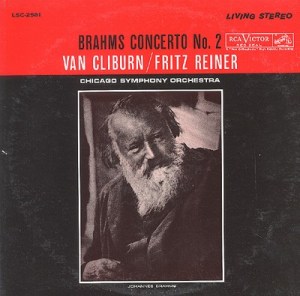
Brahms / Piano Concerto No. 2 / Cliburn / Reiner

More of the Music of Johannes Brahms

  • Van Cliburn’s exceptional performance of Brahm’s Piano Concerto No. 2, here with solid Double Plus (A++) Living Stereo sound or close to it throughout this early Shaded Dog pressing
  • It’s also fairly quiet at Mint Minus Minus, a grade that even our most well-cared-for vintage classical titles have trouble playing at
  • This side one is big, full-bodied, clean and clear, with a wonderfully present and solid piano, and plenty of 3D space around it, and side two is not far behind in all those areas
  • One of the best of the Cliburn recordings – most are not very good, the worst of them being LSC 2252 and the best of them being, probably, LSC 2507 with this one right up there with it
  • We’ve liked LSC 2296 with Rubinstein and Krips in the past, but after doing this shootout we have to say that Cliburn and Reiner set a higher standard for a recording of the work
  • On the right shaded dog pressing, LSC 2581 is yet another Must Own orchestral recording from 1962

Our main listening guy made some notes about the sound of the best pressings he heard. Here is what he wrote:

This LP might be tough for some customers to reproduce. The big peak at the end of track one on side one can have some tube/compressor distortion. Only the fullest, richest copies can properly reproduce this section without the piano and low end getting lost.

(more…)

French Overtures with Ansermet Had One Awfully Good Sounding Side in 2009

Hot Stamper Pressings of the Music of Jacques Offenbach Available Now

Reviewed back in 2009 in our pre-shootout days.

This Minty London Blueback LP has a WONDERFUL Tubey Magical Super Hot Stamper side one.

I have never heard this music sound better. Of course Ansermet is exactly the right conductor for these light and colorful orchestral pieces; the performances are uniformly superb.

But as audiophiles we want to make sure the sound is what it should be, and here side one does not disappoint. The string tone is perfection. I defy anyone to find a Heavy Vinyl reissue with string tone even remotely as good. In my experience there is simply no such record.

With vintage classical records there are always trade-offs of course. Here the loudest passages suffer from some mild compressor distortion, so common on these early pressings. A small price to pay for sound this lovely I say.

The Zampa overture by Herold is probably the best sound on the album — it’s gorgeous!

Side two is not quite as good. We rated it A Plus, with real weight and energy but a bit too much compression and distorton in the loud passages to be completely satisfying.


UPDATE 2025

Nowadays we would never list a record for sale as a Hot Stamper pressing with a grade of 1+ on either side.

And, more importantly, the grades we awarded these two sides were just estimates.

We did not put this copy in a shootout with a batch of similar pressings.

We played the record, liked what we heard on side one, liked what we heard on side two a bit less, and offered it to our customers with the description of the strengths and weaknesses you read about.

We could not have begun to conduct a shootout for this early London. Back in those days we simply could not find enough copies of such a rare title to make such a thing happen.

As for the compressor distortion on side one that we heard, it’s entirely possible that with better cleaning and better playback that the distortion we thought we heard would disappear. Blaming the record is rarely the ideal approach for making progress in audio.

(more…)

An Extraordinary Recording of the Carmen Fantasie – This Is Why You Must Do Shootouts

It has been years since a Whiteback pressing on the later label won a shootout. Some reissue copies of CS 6165 have earned Nearly White Hot Stamper grades, but we would be very surprised if one of the Blueback originals we play in the next shootout does not come out on top. They are just too good.


This London Whiteback LP has DEMO DISC sound like you will not believe, especially on side two, which earned our coveted A Triple Plus rating. The sound is warm, sweet and transparent; in short, absolutely GORGEOUS. We call it AGAIG — As Good As It Gets!

As this is one of the Greatest Violin Showpiece Albums of All Time, it is certainly a record that belongs in every right-thinking audiophle’s collection. (If you’re on our site and taking the time to read this, that probably means you.) Ruggiero Ricci is superb throughout.

And side one was just a step below the second side in terms of sound quality, with very solid A++ sound. To find two sides of this caliber, on quiet vinyl no less, is no mean feat. You could easily go through ten copies without finding one as consistently good sounding as this one.

A True Demo Disc, Or Was It?

Ricci’s playing of the Bizet-Sarasate Carmen Fantasie is OUT OF THIS WORLD. There is no greater perforrmance on record in my opinion, and few works that have as much Audiophile Appeal.

Which is why I’ve had a copy of this record in my own collection for about fifteen years marked “My Demo Disc.” But this copy KILLED it. How could that be?

It just goes to show: No matter how good a particular copy of a record may sound to you, when you clean and play enough of them you will almost always find one that’s better, and often surprisingly better.

Shootouts are the only way to find these kinds of records. That’s why you must do them.

Nothing else works. If you’re not doing shootouts (or buying the winners of shootouts from us) you simply don’t have top quality copies in your collection, except in the rare instances where you just got lucky. In the world of records luck can only take you so far. The rest of the journey requires effort.

(more…)

Mercury Unfortunately Did Not Produce a Good Rossini Overtures

Hot Stamper Pressings of Mercury Living Presence Records Available Now

1960 just happens to be one of the truly great years for quality analog recordings, as can be seen from this amazing group of albums, each of which was recorded or released that year.

However, the sound of this Mercury recording, SR 90139, released that very year, was far from acceptable.

The loud passages are simply full of compressor distortion.

To be fair, we haven’t played this album by the dozens the way we have many of the records we review (more than a hundred in the case of most Beatles album).

Let’s just say I remember being disappointed by a copy or two back in the day — whenever that was — and the latest copy we auditioned was no better, so, as a practical matter, this is not a vein rich enough for us to be mining, not when there are literally hundreds of other recordings we are still pursuing. As always, if you believe you have a killer pressing, please let us know what it is so we can get one in ourselves.

It seems that many early Mercury recordings suffer from this shortcoming, and when they do, we put them in the trade-in pile and move on.

By the way, for those who are interested in these works, our favorite performance of Rossini’s Overtures on record is the one with Maag conducting the Paris Conservatoire.


This Mercury might be passable on an old school system, but it was too unpleasant to be played on the high quality modern equipment we use.

There are quite a number of others that we’ve run into over the years with similar shortcomings. Here they are, broken down by label.

  • London/Decca records with weak sound or performances
  • Mercury records with weak sound or performances
  • RCA records with weak sound or performances

Have You Noticed…

If you’re a fan of Mercury Living Presence records — and what right-thinking audiophile wouldn’t be? — have you noticed that many of them, this one for example, don’t sound very good?

If you’re an audiophile with good equipment, you should have.

But did you? Or did you buy into the hype surrounding these rare pressings and just ignore the problems with the sound?

There is plenty of hype surrounding the hundreds of Heavy Vinyl pressings currently in print. I read a lot about how wonderful their sound is, but when I actually play them, I rarely find them to be any better than mediocre, and most of them are downright awful.

It seems as if the audiophile public has bought completely into the hype for these modern Heavy Vinyl pressings. Audiophiles have too often made the mistake of approaching these records without the slightest trace of skepticism. How could so many be fooled so badly? Surely some of these people have good enough equipment to allow them to hear how bad these records sound.

I would say Mercury’s track record during the ’50s and ’60s is a pretty good one, offering (potentially) excellent sound for roughly one out of every three titles or so.

But that means that odds are there would be a lot of dogs in their catalog. This is definitely one of them.

To see the 50+ Living Presence classical titles we’ve reviewed to date, click here.

(more…)
We Was Wrong about Billy the Kid in 2011

Living Stereo Titles Available Now

The rave review you see below was written in 2011. Recently we played a stack of copies of the album and realized that we was wrong about it.

As you may have noticed, this is a regular feature of The Skeptical Audiophile.

Live and Learn is our motto, and progress in audio is a feature, not a bug, of record collecting at the most advanced levels.

(“Advanced” is a code word for having little to no interest in practically any remastered pressing marketed to the audiophile community. If you want to avoid the worst of them, we will gladly help you do that.)


Our Review from 2011

Super Hot Stamper sound on BOTH sides, with side one so energetic and exciting it would easily qualify as a Demo Disc. This title is almost impossible to find in anything but beat up condition. Records like these got played over and over and few survived the ten grams of stylus pressure and mis-aligned cartridges of the day.  

The Big Sound

Side one is a bit recessed sounding at the beginning but it soon comes to life.

The drums and snares are HUGE in this recording, way at the back of the hall where they belong.

The sound just jumps out of the speakers — believe me, not many Living Stereo pressings from 1958 can do that.

If you like your exciting music to have exciting sound, this pressing will do the trick.

A++ is our grade. The loudest massed string passages can be a bit much, but they are tolerable. Many pressings of this album that we’ve played in the past have pretty much been unlistenable.

Rodeo

So dynamic! — you better have your stereo working at the top of its game or this side is going to be hard to sit through. The close-miked xylophone will give your arm and cart a real workout. If you have precise control over your setup, this may be a good record to fine tune it with. VTA is of course ultra-critical on vintage classical albums such as this.

The quieter passages fare best, showing off the Living Stereo Tubey Magic to full advantage.

Hoe-Down sounds like it may be slightly worn; either that or its got some compressor distortion problems.

With Big Bold sound such as this, the engineers had to walk a very fine line in order to balance the dynamic power of the music without letting the quietest passages disappear. (Nowadays loud orchestral music is either dynamic and shrill or compressed to death.)

(more…)

Strauss / Don Quixote / Reiner on Soria Living Stereo

More of the music of Richard Strauss

6S/5S. RCA Soria pressing in like new condition, which means it plays about M–, maybe a little better.

This is the best sounding copy of this album I have ever heard.

Far from the best RCA Living Stereo has to offer, this copy is not nearly as dreadful as I remember the last one sounded.

The quieter passages are especially lovely.

The climaxes are strained as usual, but I’ve never heard a copy of this record that didn’t have that problem.

A classic case of compression causing sonic tradeoffs.

The record comes with a gorgeous heavyweight slipcase and the 12-page libretto complete with custom artwork.


This is an Older Classical/Orchestral Review

Most of these older reviews are for records that did not go through the shootout process, the revolutionary approach to finding the best sounding pressings we started developing in the early 2000s. We found the records you see in these listings by cleaning and playing a pressing or two of the album, which we then described in the listing and priced according to how good the sound and surfaces seemed to us at the time.

We were often wrong back in those days, something we have no reason to hide. Audio equipment and record cleaning technologies have come a long way since then.

Nowadays, 99% (or more!) of the records we sell are cleaned, then auditioned under rigorously controlled conditions along with a number of other pressings, awarded sonic grades, then carefully condition checked for surface noise.

As you may imagine, this approach requires a great deal of time, effort and skill, which is why we currently have a highly trained staff of about ten. No individual or business without such a committed group could possibly dig as deep into the sound of records as we have, and it is unlikely that anyone, besides us, would ever be able to do the kind of work we do.

Every record we offer is unique, and 100% guaranteed to satisfy or your money back.

Tchaikovsky / Piano Concerto No. 1 – Our First Shootout Winner – 2008

Hot Stamper Pressings of the Music of Tchaikovsky Available Now

This fairly quiet Large Tulips early DG pressing in the heavy cardboard outer sleeve has THE BEST SOUND we have ever heard for this recording! Believe me, they don’t all sound like this! This copy is airy and sweet; just listen to the flutes — you can really hear the air moving through them. There is still some congestion in the loudest passages, but that’s unfortunately not something we can do anything about. Since it’s on every copy we’ve ever played we just have to assume it’s part of the recording.

Of the twenty or so clean copies we’ve auditioned over the last year or two, this one is clearly in a league of its own, with a price to match.

THE Tchaikovsky First

Since this is the best performance of the Tchaikovsky First Piano Concerto of all time, the minor shortcomings in the sound are easy to overlook. The piano sounds solid and full bodied. I don’t know of another performance of this work that gets the sound of the piano better. You can really hear the percussive quality of the instrument. It’s amazing how many piano recordings have poorly mic’ed pianos. They’re either too distant, lack proper reproduction of the lower registers, or somehow smear the pounding of the keys into a blurry mess. The piano sound is what first impressed me when a friend of mine brought the record over for me to hear. Of course I bought it on the spot.

And the texture of the strings is out of this world — you won’t find a DG that gets with better string tone, and 99% of them are worse. This record does not sound like your typical DG: hard, shrill, and sour. DG made good records in the ’50s and ’60s and then proceeded to fall apart, like most labels did. This is one of their finest recordings. It proves that at one time they knew what they were doing.

This recording really only has one shortcoming, which is that in some sections, when it gets loud, it tends to be a bit congested. Other places are very dynamic. I’m guessing somebody dialed in too much compression in those spots, but who’s to say?

[Not sure we would agree with that in 2024. The best copies are not congested when cleaned and played back properly.]

(more…)

Brahms / Concerto for Violin and Cello – Reversed Polarity on LDS 2513

Hot Stamper Pressings Featuring the Violin

This is one of the pressings we’ve discovered with reversed polarity.

The orchestra is its typical shrill self. The cello and violin sound wonderful most of the time. When they really get going the sound can be a bit much. At moderate volumes the record is very enjoyable.

If I’m not mistaken, reversing your polarity will help the sound some.

This is a famous recording for having distortion and congestion in the louder orchestral passages. There is no such thing as a copy of this record that doesn’t have those problems as far as I know.

You listen to this record for the wonderful interplay between Heifetz and Piatigorsky and not much else.

(more…)

Ballet Music From The Opera / Fistoulari – Our Favorite Pressing

Better than Super Hot Stamper sound on side one of this lovely Victrola reissue from 1960, one of the best in the entire series.

Pay attention to the brass — yes, it may have some tubey smear, but listen to how HUGE and POWERFUL it is! Drop the needle on the first side and watch (or listen) as the sound comes jumping out of your speakers.

Modern records can’t do that.

These Decca-derived recordings are highly sought after, and with good reason. It’s hard to imagine a more wonderful audiophile disc, both in terms of the program and the quality of the sound.

This is the precisely the kind of big, bold, lifelike sound Decca engineers were able to capture on tape, and RCA mastering engineers were able to master from that analog tape, fifty or so years ago. (more…)

What to Listen For on Ancient Dances and Airs

More of the music of Ottorino Respighi (1879-1936)

Hot Stamper Mercury Pressings Available Now

Both sides of this TAS List early Colorback RFR copy have SUPER Hot Stamper sound, so much richer and sweeter and less strident than the typical copy you might find.

I must admit the Mercury approach to sound has not worn as well as I might have hoped. When it comes to the Big Three from the Golden Age, these days we prefer London, followed by RCA, then Mercury.

[UPDATE: In 2024 I would not agree with the above statement. Many Mercury pressings are amazing now that we can reproduce them with greater fidelity.]

Of course the music is wonderful, with Respighi looking back and paying homage to the music and the musical structures of the past. This is no Pines of Rome. 

Side One

A++ Superb Living Presence sound. Listen especially to how textured and natural the cellos sound, as well as the strings in general.

Mercury rarely recorded strings properly but here they sound tonally correct, neither nasally nor strident.

Side Two

A++, superb again. Watch out for the opening though — it’s full of compressor distortion. Once it passes, the sound is lovely: rich and sweet, two words we do not often associate with Mercury. But we do here.

The Absolute Sound Super Disc List

Inclusion on The TAS List doesn’t guarantee great sound, but Better Records does. If you don’t think a Hot Stamper pressing sounds as good as we’ve described, we’ll always happily take it back and refund your money. Good luck getting ol’ Harry to send you a check when the TAS-approved pressings you pick up don’t deliver. Ours are guaranteed to.

Side One

Suite No. 1
Suite No. 2

Side Two

Suite No. 2 (cont.)
Suite No. 3

Ancient Airs and Dances

Hungary, October 1956. Russian tanks roll into Budapest and brutally crush a 10-day-old uprising. Thousands of Hungarians flee their homeland to refugee camps in Austria. Amongst them are 200 musicians, most without their instruments, but determined to form an orchestra. With the help of refugee charities, private benefactors and the leadership of Antal Dorati, the Philharmonia Hungarica was born.

Within a year they are making world-class recordings, and performing all over the world. The Respighi Ancient Airs and Dances for Lute was recorded in 1958, and is still regarded as one of their finest works.

Ottorino RespighiThis is music of the modern era, but owes much to the past. Ottorino Respighi was not only a composer but also a musicologist and antiquarian. These 3 suites, written between 1917 and 1932, are arrangements of music from the Renaissance. The original composers flourished between 1575 and 1625. Their names Molinaro, Galilei, Caroso, Besard, Gianoncelli and Roncalli roll off the tongue beautifully, but are by no means household names today. Respighi’s task was to capture the elegance, subtlety and brilliance of this very old music in a form pleasing to the modern palate. He was so successful that they are some of the most popular works of the 20th Century.

Suites 1 and 2 are for full orchestra, and suite 3 is for strings only. Listening to them there is the curious juxtaposition of ancient ideas and themes with modern orchestration. To bring this off successfully, they must be performed with understated poise, elegance and the occassional flash of fire. The Philharmonia do this to perfection. From the well-known boisterous Bergemasca , to the soothing and elegant Campanae Parisienses (and incidentally a wonderful piece, a true discovery), the performances are polished and convincing. Nothing less could be expected under Dorati.

You may think that a recording over 40 years old may be left by the wayside by modern recording techniques. Not so. In fact, this is a CD that proves that a good analogue recording can be as good as any modern digital.

The common practice at the time was to use multiple microphones placed throughout the orchestra, then re-mix and balance them before final recording. Mercury’s sound engineer Bob Fine developed a new recording technique that used one ultra-sensitive microphone placed strategically in front of the orchestra. There was no limiting, balancing, mixing or boosting of the sound before it reached the final tape.

The result was a recording that was “like being in the living presence of the orchestra” according to Howard Taubman, chief music critic of the New York Times. This became known as Mercury’s Living Presence series of recordings. It was revolutionary in its time, and has proved itself so to this day.

Wonderful rediscovered music, a definative performance with a rich history, as good a recording as you will find anywhere, and for a bargain price. Worthy of its 5 stars.

good-music-guide.com review