Brian Humphries, Engineer – Reviews and Commentaries

Letter of the Week – “Where should everything be on the ‘stage?'”

Hot Stamper Pressings of the Music of Pink Floyd Available Now

One of our good customers had some questions about the Hot Stamper pressing he had purchased:

Hey Tom, 

Hope you are fine! Please let me ask for a bit of help/advice. It may seem to be a stupid question, but it is essential to me to get clarity about my room and treatments.

It is about Wish you were here, the song on side two of the album. Got the white hot and it is sounding phenomenal.

Now my questions: It is about 1) the „huuhh“ followed by the 2) harrumph and the following 3) two tunings of the guitar.

1) Until yesterday the „huuhh“ was coming out between the loudspeaker, with small changes in the room treatment it is now coming from right, which sounds good. The accoustik guitar intro came before and comes after the changes from between the speakers. So my question: Should the „huuhh“ come from the middle or from the right. When coming from right the sound in general sounds more dynamic to me.

Hans,

Let me tell you what I can say without having to go back into the studio to play the record. These are some things I believe are generally true about recordings that have a bearing on your situation.

I am guessing you are probably correct. The reason for that is that the guitar is close-miked but not the vocal, meaning the vocal may be displaced in the soundstage due to phase issues. It is off-axis to the mic, and therefore “out somewhere,” not where the guitar is, because only the guitar is directionally miked.

2) The harrumph comes from the right side, right?

3) The two guitar tunings: first comes from the upper middle of the stage, the second comes from the right upper side, correct? Especially those two guitar tunings are in my opinion extremely fragile to changes, really minor changes in room acoustic and speaker placement, I would say half of a cm or so are enough for changes where they come from.

Would be great, if you can give me some input here. All in all, if half a year ago somebody would have told me my stereo sounds like it does now, I would have told him, that’s impossible. Now, I want even more, and the more I do, the more I am convinced that the room with the treatments together with speaker placement are the critical point.

All of this gets at the same questions – where should everything be on the “stage?”

The danger is making these judgments with one record is that you never want to optimize one record, only to find out afterwards that it sounds good but others you own don’t. Here is an old commentary about that.

BS&T is a tough test too.

So the best thing to do is get all your hardest test records out and start playing them and making notes as you make changes to your system.

You are correct that speaker placement is very important. Room treatments too. I would add electricity to that list.

I said so in my review of the 45 RPM Tillerman:

Recently I was able to borrow a copy of the new 45 cutting from a customer who had rather liked it. I would have never spent my own money to hear a record put out on the Analogue Productions label, a label that has an unmitigated string of failures to its name. But for free? Count me in!

(more…)

Letter of the Week – “Wish You Were Here is maybe the best sounding record I’ve ever heard…”

Hot Stamper Pressings of the Music of Pink Floyd Available Now

One of our good customers had this to say about some Hot Stampers he purchased a while ago:

Hey Tom,  

I want to say a big THANK YOU for the Hot Stampers you sent to me.

Wish You Were Here is maybe the best sounding record I’ve ever heard (as you know I have a lot of Hot Stampers). I’m so amazed and lucky – I can’t describe it. The copy sounds out of this world with soooo well-defined bass, stunning clarity, warmth and richness, immediacy, astonishing transparency…

It murders my old copy.

Another Passenger and Honky Chateau are also Demo Discs of the highest order. 

Erik S.

Erik,

Glad to hear it, all great albums in my book.

Another Passenger is unfortunately one of those records that should be more popular with audiophiles and music lovers but just isn’t. It’s been years since we did a shootout for it. If any of you out there want a good Carly Simon record, pick that one up, it’s well worth a listen.

(more…)

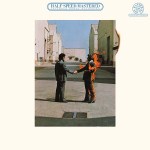
Wish You Were Here – An Overview

Hot Stamper Pressings of the Music of Pink Floyd Available Now

We have added some moderately helpful title specific advice at the bottom of the listing for those of you want to find your own Hot Stamper pressing.

This is the perfect example of everything we look for in a recording here at Better Records: it’s dynamic, present, transparent, rich, full-bodied, super low-distortion, sweet — good copies of this record have exactly what we need to make us audiophiles forget what our stereos are doing and focus instead on what the musicians are doing.

For those of you who aren’t familiar with the album, Pink Floyd managed to record one of the most amazing sounding records in the history of rock music. The song Wish You Were Here starts out with radio noise and other sound effects, then suddenly an acoustic guitar appears, floating in the middle of your living room between the speakers, clear as a bell and as real as you have ever heard. It’s obviously an “effect,” but for us audiophiles it’s pure ear candy.   

Shine on You Crazy Diamond, Pts. 1-5

Right from the dynamic intro you can tell this is going to be a wild ride. David Gilmour’s haunting guitar line that comes cutting from out of the abyss should be warm with tons of room for his phasers to do their phasing.

After the band comes in and the vocals begin (listen for the man chuckling in the left channel) you should pay attention to the balance of the mix. Most copies tend to be very midrangy which can make the guitars aggressive and harsh, often times taking emphasis away from the vocals. The good copies have lots of transparency and allow everything to sit in their respectively places. This is probably most noticeable during the saxophone solo.

The tenor that starts off this section needs to be breathy, full-bodied, and sitting delicately in the center of your speakers. It does NOT need be be honky and hard sounding without any top extension. As the solo slowly crescendos, notice the guitar line spread across the soundstage that actually bookends the saxophone. The more dynamic copies really let you hear the intricacy and delicacy of his picking that foreshadows the time signature shift about to come.

When the time does change to 6/4, the saxophone player changes to alto, totally changing the sound of the solo! You can clearly hear on the better copies that he is further away from the mic than during the previous section, but if you listen closely, it sounds as though he is moving on and off axis. Whether this is part of his mic technique or him just dancin’ and groovin’ to the music, we may never know. I certainly hope for the latter.

Other Pressings

Most copies of the CBS Half-Speed lack deep bass, and for that matter bass in general.

They’re also consistently brighter. The upper mids and highs call attention to themselves at every turn. When you switch back to a good domestic copy or import, you might not notice as much detail, but everything will sound correct and balanced: less like a recording and more like music.

Phony highs cause listener fatigue for the same reason that bright CDs get tiresome.

Just listen to the sax break on side one. If your pressing is too bright that sax will tear your head off.

The Seventies – What a Decade!

Tubey Magical acoustic guitar reproduction is superb on the better copies of this recording. Simply phenomenal amounts of Tubey Magic can be heard on every strum, along with richness, body and harmonic coherency that have all but disappeared from modern recordings (and especially from modern remasterings).

Big Production Tubey Magical British Prog Rock just doesn’t get much better than Wish You Were Here.

A Big Speaker Record

Let’s face it, this is a big speaker recording. It requires a pair of speakers that can move air with authority below 250 cycles and play at loud levels. If you don’t own speakers that can do that, this record will never really sound the way it should.

It demands to be played loud. It simply cannot come to life the way the producers, engineers and artists involved intended if you play it at moderate levels.

Obsessed? You Better Believe It

Wish You Were Here is yet another record we admit to being obsessed with.

Currently we have identified about 150 that fit that description, so if you have some spare time, check them out.

(more…)

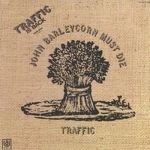
Listening in Depth to John Barleycorn Must Die

The toughest test on side two is the first track, Stranger to Himself.

Getting the voices right is practically impossible. If the voices are full, smooth, yet breathy and clear, you have that rare copy that actually gets the midrange right. Not many do.

Side One

Glad

The last portion of this track has some really interesting percussion and organ effects. Traffic were trying to break out of the standard pop song format by letting this song wander into psychedelic territory for a few minutes at the end. It’s now become my favorite part of the song.

The reason you want to pay close attention to this part is because it helps you to judge the transparency, immediacy, and top end extension for the whole side. It should be amazingly clear and open-sounding. On too many pressings, the percussion instruments are blurred and lost in the mix. On a Hot Stamper copy they’ll be right in front of you, allowing you to appreciate the interplay among the musicians as they contributed their various parts.

Freedom Rider

You’ll need lots of top end extension for this song to sound right. On many copies the double tracked flute solo in the middle of the song will be aggressive and irritating, but on a Hot Stamper pressing, the flutes will sound airy and breathy with a reasonably good sustain.

Empty Pages

The quality of the voice is what really sets the best copies apart. Winwood is much more present on the better copies. He’s recessed on most and that’s just not where he needs to be for the song to work musically. He needs to be right up front, surrounded by the air and ambience of the studio. The transparency found on the better copies will give you precisely that.

Side Two

Stranger to Himself

John Barleycorn

The acoustic guitars that open up this song are absolute perfection on the best copies — this is the sound of Tubey Magical analog at its best.

This is the real test for side two.

The acoustic guitars should sound rich and sweet. You’ll notice at the beginning of the song that they are a little dull. The last thing in the world you want to do, however, is to brighten them up, because when you do that, as some mastering engineers have in the past, the harmony vocals and the percussion and the tambourine become much too bright later on in the song.

You have to strike a balance between all the elements. That means Steve’s voice at the beginning needs to be a little reserved so that the harmony vocals later on will come in right.

(more…)

Listen to Winwood’s Left Hand on “Glad”

More of the Music of Traffic

More of the Music of Steve Winwood

Many years ago, perhaps in 2015, while playing an especially transparent copy of John Barleycorn, we learned something new about the album. Although it was a title I had been playing since it came out all the way back in 1970, apparently things had changed.

This pressing made it clear — really, for the first time — exactly what Winwood was doing with his left hand on the piano during the song Glad.

There are two musical figures that one can focus on: one involving the lower notes, which tend to be blurry, obscured and murky on most pressings, and two, the right-handed higher notes, which are typically much more clear and audible in the mix.

Only the very best copies let us “see” the bass notes of the piano so clearly and correctly. Next time you’re in the mood to compare different pressings of Barleycorn, pay special attention to the lower notes of the piano on Glad. It is our contention, backed by mountains of evidence, that no two copies of the album will get that piano to sound the same. (It will also help if you have large dynamic speakers with which to do the test.)

Lately we have been writing quite a bit about how pianos are good for testing your system, room, tweaks, electricity and all the rest, not to mention turntable setup and adjustment.

  • We like our pianos to sound natural (however one chooses to define the term).
  • We like them to be solidly weighted.
  • We like them to be free of smear, a quality that is rarely mentioned in the audiophile record reviews we read.

What to Listen For – Side Two

The toughest test on side two is the first track. Getting the voices right is practically impossible. If the voices are full, smooth, yet breathy and clear, you have that rare copy that actually gets the midrange right. Not many do.

Flutes and Saxes

The flute (a major element of the music if you know the album at all) should be wonderfully airy if your copy (and stereo) is any good at all. Chris Wood’s sax — which is all over the record, and beautifully recorded I might add — can sound amazing as well, with good body and harmonic texture.

Note how little processing there is to the sound of the horns and woodwinds, how real they sound. This is unusual to say the least in the world of pop records.

Vinyl Thoughts

It’s virtually impossible to find quiet copies of this record, let alone ones that sound anything like our best pressings. There’s always going to be some (hopefully slight) inner groove distortion and there’s always going to be some surface noise. United Artist vinyl is not known for being particularly quiet, so had you cracked open a brand new copy of the album in 1970 you would probably have heard plenty of noise back then too.

This is of course how MoFi got their start. The major labels were producing such a high percentage of defective pressings that the door was open for someone to come along with a flat, quiet pressing, especially if it sounded “good” to boot. They realized they could even charge twice the price — $20 back when a major label pressing was well under $10.

We have since come to learn, at great expense to be sure, that most MoFi’s simply don’t sound very good. The better your stereo gets, the more obvious their shortcomings become.

That’s a story you’ve no doubt already heard, since we’ve been telling it for more than twenty years. [Make that 36 as of 2023.]

(more…)

McDonald and Giles – A Sleeper Prog Album from 1970

Hot Stamper Pressings of Prog Rock Albums Available Now

More Recordings Engineered by Brian Humphries

Brian Humphries engineered the album, and although you may not be familiar with that name, if you’re an audiophile you should get to know his work better, as this guy recorded some amazing sounding albums.

Take a gander at this group:

  • Black Sabbath – Paranoid
  • Pink Floyd – Wish You Were Here
  • Traffic – John Barleycorn Must Die
  • Traffic – The Low Spark Of High Heeled Boys 

Two are of course on our Top 100 Rock and Pop List, and all four — five if you count McDonald And Giles — qualify as State of the Art Rock Recordings from the era.

Demo Disc Quality Sound

If you’re looking to demonstrate just how good the best early Island Label recordings can sound, this killer copy should do the trick.

This UK pressing is super spacious, sweet and positively dripping with ambience. Talk about Tubey Magic, the liquidity of the sound here is positively uncanny. This is vintage analog at its best, so full-bodied and relaxed you’ll wonder how it ever came to be that anyone seriously contemplated trying to improve it.

This IS the sound of Tubey Magic. No recordings will ever be made like this again, and no CD will ever capture what is in the grooves of this record. There may well be a CD of this album, but those of us in possession of a working turntable and a good collection of vintage vinyl could care less.

(more…)

Letter of the Week – “…never heard the details in the guitars and cymbals and keyboards like this.”

Pink Floyd Hot Stamper Pressings Available Now

One of our best customers, Roger, received his $150 Hot Stamper [those were the days!] ’Wish You Were Here’ and went straight to work comparing it with the various other pressings he owned: two different CBS Half Speeds. The not-so-shocking results are presented in detail below.

Hi Tom,

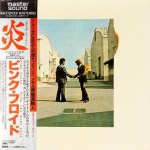
I received your Pink Floyd ‘Wish You Were Here’ Hot Stamper and compared it to my CBS Half-Speed (I found a bunch of these Half-Speeds in a bargain bin years ago and did a shootout to select the best one) and the pressing that I considered the best, the Japanese Mastersound Half-Speed, for which I paid dearly.

Drum roll, please while Vanna hands me the sealed envelope………… and the winner is: Surprise — the Hot Stamper!

And it wasn’t even close.

Once I heard the center-of-the-earth bass on the Hot Stamper ‘Shine On You Crazy Diamond’, it was all over. I was amazed at how bright the CBS was, transparent yes, but bright and no bass and no body to the saxophones and voices. The Mastersound was better-balanced in that the highs were tamed, but no real dynamics and the bass was flabby.

I have heard this record hundreds of times, but never heard the details in the guitars and cymbals and keyboards like this.

And did I mention the huge, huge soundstage with a wall of sound like that of other Pink Floyd records? Nice job as usual.

Roger,

Thanks for verifying the accuracy of our Hot Stamper claims once again. The decent sounding Half Speed Mastered records, CBS and otherwise, can be counted pretty easily on one’s fingers. We could debunk them all day long if we wanted to (and had ten times the staff). It doesn’t take long to hear how anemic the sound is compared to The Real Thing, the real thing being, of course, a vintage pressing.

The copy you bought was rated A Plus on both sides, two full sonic grades below the best, so you can imagine how good those copies sound. But since neither you nor I are made out of money, for $150 you now own a copy that will trounce anything you throw at it, especially if what you throw at it is an audiophile pressing.

Those moribund LPs belong on Ebay where all the Technics turntable owners of the world can find them in order to complete their — let’s be honest — silly and ultimately pointless audiophile collections.

Modern equipment shows half-speed foolishness for what it is. You heard it, we heard it, and slowly but surely we are spreading the word to the rest of the audiophile community.

Thanks again. It’s a big job and we need all the help we can get.

(more…)

Low Spark of High Heeled Boys – Another Disgraceful MoFi Anadisq Release

More of the Music of Steve Winwood

Sonic Grade: F

Another MoFi LP debunked.

Of course our Hot Stamper pressings are going to be better than the Anadisq LP from the mid ’90s.

How much better?

Words fail me.

The MoFi of Low Spark of High Heeled Boys was an out and out disaster. Perhaps some of the MoFi collectors didn’t notice because they had nothing to compare it to. God forbid they would ever lower themselves to buy a “common” pressing such as one of our domestic Islands.

Had they done so what they would have heard is huge amounts of musical information that is simply missing from the MoFi pressing.

The MoFi has no leading edges to any of the transients; they’re shaved off, how they achieved this I cannot begin to fathom. Bad cutting equipment using a dull needle?

Blunted and smeared, their version is positively unlistenable. Robert Pincus once left a Post-It note stuck to a MoFi jacket of a record he was playgrading for me that pointedly summed up our shared thoughts on the quality of their mastering: “Did MoFi bother to listen to this before they ruined it?”

Traffic / Three Must Owns

More of the Music of Traffic

For our current take on the sound of the various labels and stampers for Mr. Fantasy and The Best of Traffic, please click here.

Side one of this British Island Sunray pressing BLEW THE DOORS off the competition in our big shootout. It took the music to an entirely new level for us so we awarded it our very special Four Plus A++++ grade, a grade which is strictly limited to pressings (really, individual sides of pressings) that take a given recording to a level we had no idea could even exist.

We estimate that about one per cent of the Hot Stamper pressings we come across in our shootouts earn this grade. You can’t get much more rare than that.

We no longer use this grade for a number of reasons we won’t go into here. Suffice to say, if you buy a White Hot Stamper pressing from us, you are getting the best sounding pressing we know to exist.

You are not going to believe how Tubey Magical this side one is. I guarantee you have never heard this band sound this amazing on record or your money back.

Side two lacks a little extension up top, but it’s still rich, warm, sweet, and above all, NATURAL. It’s open and transparent with three-dimensionality to the soundfield.

Music and Sound — Some Kind of Connection There

We think better sound creates in the mind of the listener a stronger and deeper appreciation of the music itself. This will not come as news to anyone on this site; that’s what it means to be an audiophile. True to form, the amazing sound of the best pressings helped us to really get into this album during our shootout.

Clearly, this is a Classic Traffic album that belongs in any serious collection. (Along with John Barleycorn Must Die, to our minds inarguably their masterpiece. Throw in The Best Of and you have most of the best music with the best sound on record by Traffic.)

For music this important and powerful, you do not want to waste your time listening to a run-of-the-mill pressing or some second-rate Heavy Vinyl reissue. You want a killer Hot Stamper, the kind of record that can really transport you to the world of The Low Spark of High Heeled Boys.

Size and Space

One of the qualities that we don’t talk about nearly enough is the SIZE of the record’s presentation. Some copies of the album just sound small — they don’t extend all the way to the outside edges of the speakers, and they don’t seem to take up all the space from the floor to the ceiling. In addition, the sound can often be recessed, lacking presence and immediacy in the center of the soundfield.

Other copies — my notes for these copies often read “BIG and BOLD” — create a huge soundscape, with the music positively jumping out of the speakers. They’re not brighter, they’re not more aggressive, they’re not hyped-up in any way, they’re just bigger and clearer.

We often have to go back and downgrade the copies that we were initially impressed with in light of such a standout pressing. Who knew the recording could be that huge, spacious and three dimensional? We sure didn’t, not until we played the copy that had those qualities, and that copy might have been number 8 or 9 in the rotation.

Think about it: if you had only seven copies, you might not have ever gotten to hear a copy that sounded as open and clear as that eighth or ninth one. And how many even dedicated audiophiles would have more than one of two clean original (or otherwise) copies with which to do a shootout?

One further point needs to be made: most of the time these very special pressings just plain rock harder. When you hear a copy do what this copy can, it’s an entirely different – and dare I say unforgettable — listening experience.

Traffic – The Low Spark of High Heeled Boys (Domestic)

More Prog Rock

  • This is an outstanding Island Sunray domestic pressing offering spacious Tubey Magical Double Plus (A++) sound throughout – exceptionally quiet vinyl too
  • Low Spark is clearly one of the best sounding Proggy/Arty Rock records ever made – the space it recreates in your listening room is HUGE 
  • A Better Records Top 100 album and a real Demo Disc on a pressing that sounds as good as this one does
  • 4 1/2 stars: “The commercial and artistic apex of the second coming of Traffic… The standout was the 12-minute title track, with its distinctive piano riff and its lyrics of weary disillusionment with the music business. “

UPDATE 2025

The shootout described here was carried out in 2019. The domestic pressings do not do as well now as they did then. Our best domestic pressing earned a grade of 1.5+ on both sides, which would put it in our section for good, not great sounding LPs. It’s possible a domestic pressing could earn a grade of 2+ in the next shootout, but my feeling is that it would not be very likely.

The best early imports are a huge step-up in sound quality and they have won and will win all the shootouts we do in the future.

Note that it was six years between shootouts for this title. They are hard to find in audiophile playing condition and only getting harder, and dramatically more expensive when you do find them.


After doing the shootout for John Barleycorn recently, a record we love in spite of its problematic sound, this album was truly a breath of fresh air. I can honestly and enthusiastically say that the sound we heard on the best pressings was OUT OF THIS WORLD. This album is a permanent member of our Rock And Jazz Top 100, that’s how good it is.

Who knew? We had no idea this recording could sound so incredibly spacious and open. The distortion level is so close to zero that we don’t even want to assign a positive number to it. Let’s just say it’s below the threshold of hearing; does that work for you?

(more…)