 Hot Stamper Pressings of the Music of Supertramp Available Now
For me, Crime of the Century worked like a gateway drug to get me addicted to the amazing soundscapes found on so many 70s Prog Rock and Art Rock recordings, although I didn’t know what the term Art Rock meant or whether it even existed yet. I surely never heard anyone use the term.
I just knew I loved Supertramp’s music. Both Crime and Crisis? What Crisis? were in heavy rotation in the cheap apartment I rented three blocks from the beach in San Diego where I was living in the mid-70s.
(It shared no common walls with any other units, which was an absolute necessity for someone who liked to play his music good and loud and often late into the evening. The police came knocking on my door once at two in the morning after I got a bit too carried away with the “running around the airport” song on Dark Side of the Moon. Apparently the next door neighbors were not enjoying it as much as I was.)
MoFi Rocks
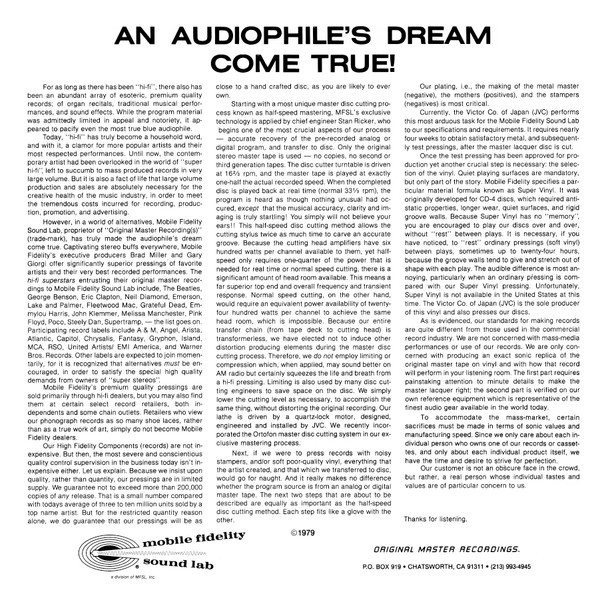
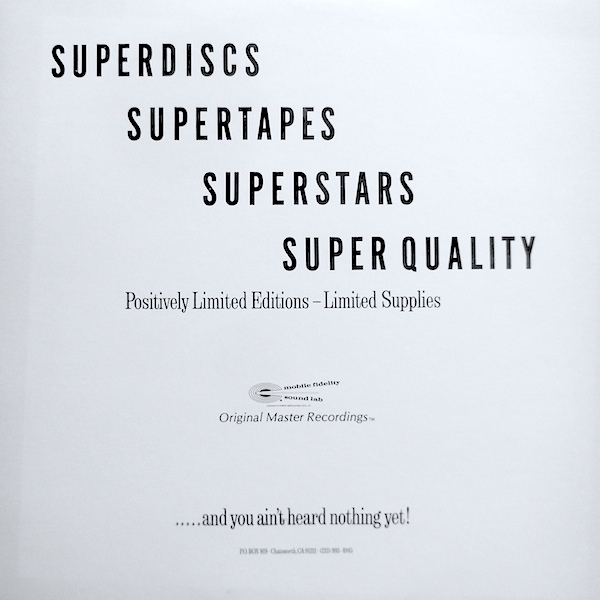
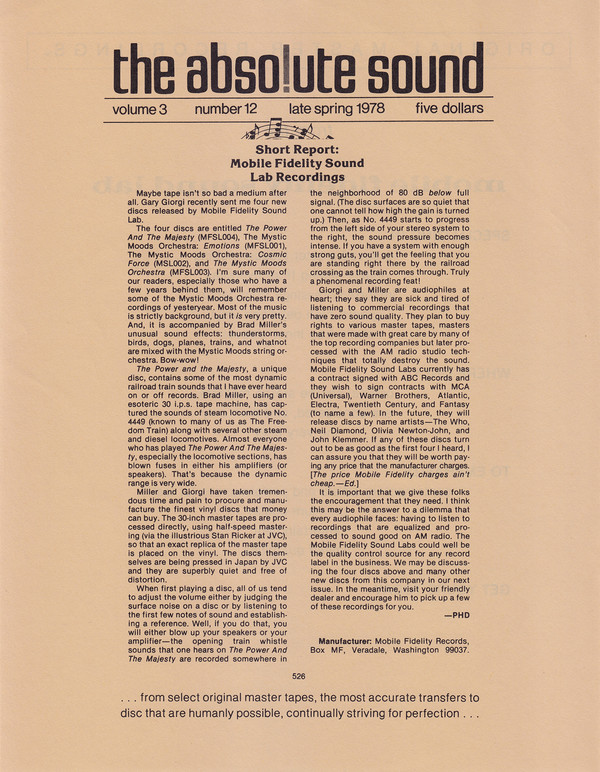
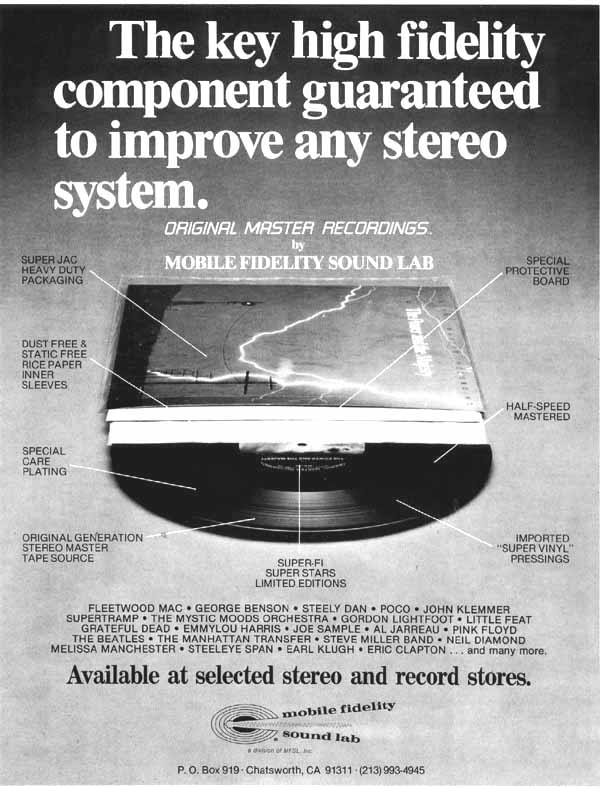
The first Supertramp album I bought on audiophile vinyl would have had to have been Crime of the Century released by Mobile Fidelity in 1978.
It was that label’s first rock release and it showed me the kind of Big Rock Sound I didn’t think was possible for two speakers to produce no matter how big they were, and mine were very big indeed.
In my mind it sounded to me like live music at a concert. I had simply never heard sound like that in my livingroom.
Partly that was because a few years earlier I had upgraded to some very big speakers and some awesomely expensive tube gear in 1976.
When I threw that super Hi-Fi Audiophile pressing on the turntable and turned the volume up good and loud, I thought there could be no question that finally, after all these years and after so many different stereo systems, I had reached the pinnacle of home audio. How could the sound possibly get any better? (Of course, although I didn’t know it at the time, I would devote the next 40-plus years to exploring that question.)
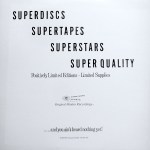 By 1978, Crisis? What Crisis and Even in the Quietest Moments had already come out, and though you couldn’t buy either of those albums on a super-duper disc from Mofi, there was a Half-Speed of Crisis which, I have to admit, sounded great to me at the time and well after it should have. (I don’t know what I thought of the Sweet Thunder pressing of EITQM, but I know what I think of it now: it sucks.)
I became an even bigger fan of Crisis than I had been of COTC, if you can believe such a thing. (None of my friends could.)
Since Crime… is one of those albums that I still listen to regularly, I can say with confidence that it is the better album by a small margin, and one that would come with me to my desert island even if I were limited to as few as ten titles — that’s how good it is.
And I owe a debt of gratitude to a label that comes in for a lot of criticism on this blog, the one that took Supertramp’s best album and made it a Demo Disc the likes of which I had never heard before, Mobile Fidelity.
The Evolution Part
In encouraging my growth both as a music lover and audiophile, Supertramp joined the ranks of Roxy Music, 10cc, Steely Dan, Yes, James Taylor, Peter Gabriel, David Bowie, America, Fleetwood Mac, Ambrosia, Supertramp, Eno, Talking Heads, The Doors, Jethro Tull, Elton John, The Beatles, Santana, Crosby, Stills and Nash, Little Feat, Traffic, Harry Nilsson, Elvis Costello, Sergio Mendes, Neil Young, The Eagles, Frank Zappa, Pink Floyd, Joni Mitchell, The Cars, Peter Frampton, Led Zeppelin, Cat Stevens and countless others.
These musicians, along with their producers and engineers, were clearly dedicated to making high quality recordings, recordings that could only come to life in the homes of those with the most advanced audio equipment.
My system was forced to evolve in order to reproduce the scores of challenging recordings issued by these groups in the 60s, 70s and all through the 80s.
The love you have for your favorite music has to be the fundamental force driving your progress in audio if you want to achieve world class sound.
These are the records, the ones that I played over and over again, decade after decade right up until today, that helped me a system and room that could reproduce them with compromising either their beauty or their power.
These albums are everything to me. They’ve brought me as much joy as any music ever could.
Further Reading
- More on the subject of Half-Speed mastering
- More Hot Stamper pressings of Art Rock albums available now
- Even In The Quietest Moments and your 1977 ears – there’s no going back


These last pictures were taken circa 1978 in the Ocean Beach apartment I mention at the top of the post. I worked in the frozen food department of an Alpha Beta grocery store back then. They did a multi-page story on my ridiculously expensive stereo for their company newsletter.
A $2000 amp and preamp with speaker wire costing $200?! Components valued at over $7,000?! Speakers weighing 300 pounds each?! Utter madness!
(They probably weighed closer to 200 pounds each but who’s counting?)
Note the Steely Dan t-shirt and speakers placed much too close to the back wall. They couldn’t be pulled out any further into the room or the front door (unseen to the right) would have been blocked!
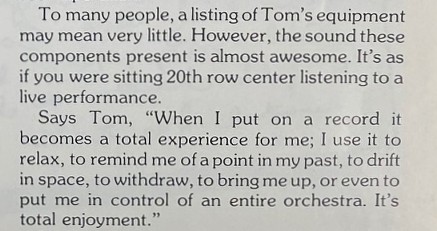
I beg your pardon. Almost awesome?