Bill Halverson, Engineer -rev/com

Letter of the Week – “It has been a long time since I’ve connected with whatever it was that I connected with on this LP.”

Hot Stamper Pressings of the Music of Stephen Stills Available Now

One of our good customers wrote us a letter recently about his Stephen Stills Hot Stamper pressing.

You can read his first letter here.

About a week later he followed up with this one. It seems he fell in love with it. That can happen when you play a good sounding copy after nearing nothing but junk your whole life.

Hi Tom,
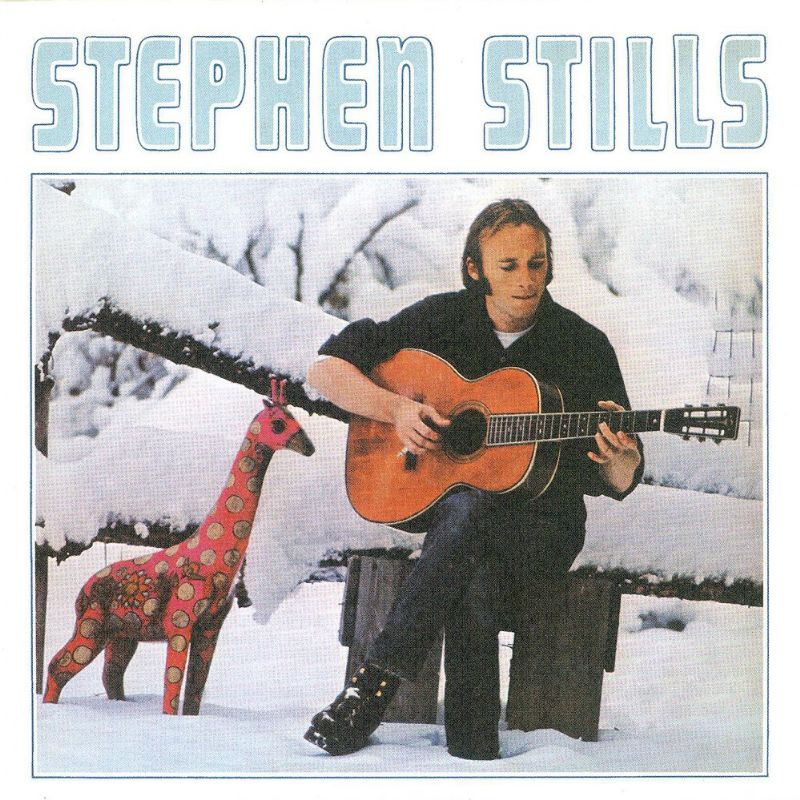
That NWHS [more here] of Stills’ first is EPIC! It is now in my top ten desert island discs.

I no longer have words… it’s just f**king epic. Obviously, I had no idea… not a clue.

After closed eyes listening to the last song on side 1, I was like WTF, that was really really intense… vocals… guitars.

So when it was done I looked at the back of the cover to see what was what… aha… Clapton!

It has been a long time since I’ve connected with whatever it was that I connected with on this LP.

What a gift. Simply outrageous sound.

Michel

Michel,

You and I both know that the connection you speak of is the only one that matters when listening to music.

That Stills record is definitely going to my desert island too. I bought mine in 1970 and I listen to it to this very day.

I’ve written a fair amount about the album. Used to use it as a test disc, something I have not discussed on this blog because there are not enough hours in the day to talk about all the records I have used as test discs. But this album make a great test disc if you’ve got big speakers and like to play them good and loud.

Here is an excerpt from an older commentary discussing Bill Halverson‘s superb engineering.

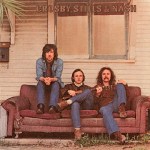
Some of the most sought-after records in the world, as well as the most difficult to find with high quality sound, are those involving the various groupings of Crosby, Stills, Nash and Young.

This album is no exception. It’s Stills’ masterpiece, a record I’ve been playing since I was in high school. The sound on the LPs I bought over the years has been pretty consistently disappointing. It’s refreshing to actually find a copy like this that lets you hear the album the way you remember it.

There’s a very good chance — bordering on a certainty — that the copy you played back then was no doubt just as poor sounding, but you remember it sounding good.

That, more than anything else, is why we audiophiles keep chasing after so many classic albums from our younger days. We’re trying to find the record that can give us the musical satisfaction in the present that we achieved so easily in the past, before we knew anything about audio and record pressings.

(more…)

Letter of the Week – “I had no idea that vinyl could produce this sound.”

Hot Stamper Pressings of the Music of Crosby, Stills, Nash and (Sometimes) Young

One of our good customers had this to say about some Hot Stampers he purchased recently:

Hey Tom, 

Tom, I just listened to the White Hot Stamper (A+++) CSNY album.

Amazing. I had no idea that vinyl could produce this sound. Worth every penny.

The sound at low volume is amazing. The sound at high volume is spectacular.

The clarity, the depth, the soundstage are very rich and alive with color and presence.

Thank you! I am now going to investigate your piece on the cleaning process.

Rocco

Rocco,

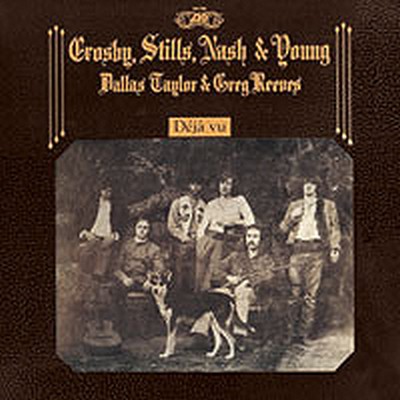
Glad you liked this copy as much as we did! Deja Vu is indeed a very special album, one I have been obsessed with since I first became an audiophile.

I was a big Crosby, Stills and Nash fan already — the first album being life-changing to a 15 year old music lover such as myself, on 8-track tape in the car no less — so it was only natural that I would fall in love with Deja Vu when it came out in 1970.

Years went by and then, oddly enough, my love for the music was reignited by a pressing that came out 13 years after the album’s first release, on a label you may have heard of, Mobile Fidelity.

I realized instantly that Mobile Fidelity had indeed improved upon the average original’s sound. (Not a high bar considering how awful sounding most originals are.)

It would take me and my staff many years, at least another 13 or so, to come across the domestic reissues that trounced the MoFi and showed me how colored, compressed, thick, blurry and limited it was.

(more…)

Listening in Depth to Deja Vu

Hot Stamper Pressings of the Music of Crosby, Stills, Nash and (Sometimes) Young

DEJA VU is an album we admit to being obsessed with — just look at the number of commentaries we’ve written about it. It’s yet another in the long list of rock and pop records that really come alive on big speakers at loud levels .

One obvious reason that our turn up your volume is such a good test is that the louder the problem, the harder it is to ignore.

Presenting another entry in our extensive listening in depth series with advice on what to listen for as you critically evaluate your copy of Deja Vu. Here are some albums on our site you can buy with similar track by track breakdowns.

Side One

Carry On

This song is a great test for the quality of the vocals. If you can get through the first part of the song with little to no strain in the voices, you’re on the right track.

The bass on this track always lacks a measure of definition, but you’ll know by track three if your bass is solid enough to set the foundation this music requires to really get going. Carry On has a huge number of overdubs, so it will never have very high resolution, but on a Hot Stamper copy like this one it can sound wonderful.

Teach Your Children 
Almost Cut My Hair

One of the key test tracks we use for side one, this is the only time Crosby, Stills, Nash & Young actually sounds like a rock and roll band. According to Stephen Barncard this was recorded live in the studio. It sure sounds like it. The amount of energy the band generates on this track exceeds all the energy of the first album put together.

The reason this track presents such a tough test is that it has to be mastered perfectly in order to make you want to turn it up as loud as your stereo will play. This song is not for sipping wine and smoking cigars. It positively cries out to be played at serious volume levels on monstrously large speakers. Nothing else will do justice to the power of the band’s one and only live performance.

(more…)

The Turn Up Your Volume Test – Almost Cut My Hair

Hot Stamper Pressings of the Music of Crosby, Stills, Nash and (Sometimes) Young

The only time Crosby, Stills, Nash & Young actually sound like a real rock and roll band is on the track Almost Cut My Hair.

According to Stephen Barncard, one of the engineers on Deja Vu, the track was actually recorded live in the studio.

Boy, it sure sounds like it. The amount of energy the band generates on this one song exceeds the energy of the entire first album put together. 

The reason this song presents such a tough test is that it has to be mastered properly in order to make you want to turn it up, not just louder, but as loud as your stereo will play.

This song is not to be used as background music whilst sipping wine and smoking cigars.

It positively cries out to be played at serious volume levels on monstrously large speakers. Nothing else will do justice to the power of the band’s one and only live performance captured on the album.

Listen to Neil in the left channel wailing away like a man possessed. Imagine what his grunged-out guitar would sound like blasting out of a stack of Marshall amps the size of a house.

Now hold that sound in your head as you turn up the volume on your preamp.

When your system starts to distort, back it off a notch and take your seat.

Deja Vu Letters

Some of our customers have written to tell us about the amazing sound they heard on our Hot Stamper pressings of Deja Vu.

“I know in one sense you’re only doing your job but who the hell else does what you do?”
“I almost fell off my listening chair.”
“I think It’s a bargain at $800. It absolutely trashes my Mofi version…”
“I had no idea that vinyl could produce this sound.”

(more…)

Letter of the Week – “I was truly beside myself. I felt like I was in the studio.”

Hot Stamper Pressings of the Music of Stephen Stills Available Now

One of our good customers had this to say about Hot Stampers he purchased recently:

Hi Tom,

I need to write you about the Stephen Stills LP I just listened to. I picked up a copy one day long ago in the past, and it never wowed me.

So later, following the crowd, I purchased the Classic. I remember cranking Black Queen. It sounded audiophile-ish. But I was not taken aback by the sound, filed it, and then virtually never listened to it.

Down deep I knew that it was no good, but I figured it was the music, not so much the pressing.

Now for BR. So once again my mind is totally blown with no wiggle room.

For me this album is really about the last 3 songs on both sides. I have never heard this music how it was intended to sound, ever!

But now I have.

Church was better than phenomenal. Old Times Good Times — the organ on this one is through the roof good and Go Back Home — the guitars and the vocal had such beautiful tones… simply amazing.

Black Queen — Holy Cow… I am just speechless… the guitar tones, the grit in it along with the grit in the vocal… so raw and powerful I found myself making faces… I was truly beside myself. I felt like I was in the studio. Truly an amazing experience for me as I have loved this song for a very long time but never liked how it sounded on my LPs.

But wait there’s more.

Cherokee… Massive instant major warm bass filled the air and the room expanded from the super boomy tubey horns etc… I was screaming (yelping) with joy! What an unbelievable experience for me…. truly amazing. Words just don’t do the experience justice.

You can take that Classic Records copy and chuck it! Some ‘audiophile’ dude will be very happy to buy it when I start selling LPs again which I need to do since they are piling up.

Once again…. so many thanks to all at BR as these sounds are some of best joys in my life.

(more…)

Crosby Stills & Nash – Critical Listening Exercise

Hot Stamper Pressings of the Music of Crosby, Stills and Nash Available Now

This very old commentary from an early Hot Stamper listing (2005?) for CSN’s debut makes note of some specific qualities in the recording that are a good test for midrange transparency and naturalness.

Here are some other albums with specific advice on what you should be listening for.

What’s magical about Crosby, Stills, Nash (& Young)? 

Their voices of course. It’s not a trick question. They revolutionized rock music with their genius for harmony. Any good pressing must sound correct on their voices or it has no value whatsoever. A CSN record with bad midrange — like most of them — is a worthless record.

Suite: Judy Blue Eyes

Listen to the section of the song that starts with Stills’ line “Can I tell it like it is,” with Nash and Crosby behind him — it’s clearly a generation of tape down from what came before and what comes after. The voices and the acoustic guitars just seem to lose their immediacy and transient impact for no apparent reason. Wha’ happen?

It’s the mix, folks, and no mastering engineer can fix it. This album is full of parts and pieces of various songs that are occasionally problematical in that way. Recognize them for what they are, little bumps in the road, a road that led ultimately to one of the greatest pop albums ever made.

On the hot copies the best sounding material will sound amazing, and the lesser sounding material (i.e., the more poorly recorded or mixed bits and pieces) will sound as good as they can sound.

That’s the nature of the beast. It is what it is. The more intensely you listen to a record like this — a true Rock Classic from the 60s, and one we listen to very intensely when doing these shootouts — the more you will notice these kinds of recording artifacts. It’s what gives them “character.”

It’s also what allows you to play a record like this on a regular basis and still find something new in it after all these years.

We’ve made some recent improvements to the stereo and room here at Better Records and I can tell you I heard things in this recording I never knew were there.

What could be more fun than that? The music never gets old, and neither does the sound.

This Nautilus LP Has the Most Bloated, Ill-Defined, Overblown Bass in the Sad, Sordid History of Half-Speed Mastering

Hot Stamper Pressings of the Music of Crosby, Stills and Nash Available Now

An audiophile hall of shame pressing and a Half-Speed mastered disaster if there ever was one.

An audiophile record dealer (of course; who else?) once raved to me about Crosby Stills and Nash on Nautilus. I said “What are you talking about? That version sucks!” He replied “No, it’s great. Helplessly Hoping sounds amazing.” 

Now one thing I know about the Nautilus is this: although it is wonderfully transparent in the midrange, it may very well take the cake for the most bloated, out of control bass in the history of Half-Speed mastering.

What song on that album has almost no bass, just lovely voices in the midrange? You guessed it. Helplessly Hoping.

The Nautilus got one track right, and ruined the rest.

Using that track for comparison will fool you, and when it comes time to play a side of the album, you will quickly hear what a disaster it is.

(more…)

Song for Beginners Was Remixed and Ruined on Classic Records

I’ve listened to Nash’s first solo outing countless times over the last thirty years, even more than Crosby, Stills and Nash’s first album. As I was listening to the Classic pressing, I recall thinking “Wow, I don’t remember that sound being there; this version is so much better I can hear things I never heard before!”

Well, owners of this album (all five of you) will certainly hear things you never heard before, because some of the tracks on this album have been remixed and some of the instruments re-recorded. How about them apples.

Both the snare and the kick drum on some songs are clearly too “modern” sounding for anything recorded in 1971. For Pete’s sake, they’d be right at home on Nevermind.

Sometimes the vocal tracks are different—probably alternate takes I would think, as Graham obviously can’t sing like he did thirty years ago to even attempt a re-recording.

As you can imagine, remastering a well-known title and creating a new sound for it is a huge bête noire for us here at Better Records. This Classic Records release is like nails on a blackboard to me now.

No doubt the idea was Graham’s but it was a very bad one indeed. (If you can get hold of the original unadulterated CD, I highly recommend it. The sound is excellent.)

(more…)

Accurate VTA Using Helplessly Hoping on the Classic LP

Hot Stamper Pressings of the Music of Crosby, Stills and Nash Available Now

This commentary from way back when (2005!) describes how to go about adjusting your VTA for 180 or 200 gram vinyl, using the track Helplessly Hoping from the first album.

Helplessly Hoping is a wonderful song with plenty of energy in the midrange and upper midrange which is difficult to get reproduce. Just today (4/25/05) I was playing around with VTA, having recently installed a new Dynavector DV-20x [a cartridge replaced by the 17d3 soon afterwards and again by the 17dx] on my table, and this song showed me EXACTLY how to get the VTA right.

VTA is all about balance. The reason this song is so good for adjusting VTA is that the guitar at the opening is a little smooth and the harmony vocals that come in after the intro can be a little bright.

Finding the balance between these two elements is key to getting the VTA adjusted properly.

When the arm is too far down in the back, the guitar at the opening will lose its transparency and become dull and thick. Too high in the back and the vocals sound thin and shrill, especially when the boys all really push their harmony. The slightest change in VTA will noticeably affect that balance and allow you to tune it in just right.

To be successful, however, there are also other conditions that need to be met. The system has to be sounding right, which in my world means good electricity, so make sure you do this in the evening or on a weekend when the electricity is better.

(more…)

Listening in Depth to Graham Nash / David Crosby

More of the Music of David Crosby and Graham Nash

Presenting another entry in our extensive listening in depth series with advice on what to listen for as you critically evaluate your copy of Graham Nash / David Crosby.

Here are some albums currently on our site with similar Track by Track breakdowns.

This album has some of the BEST SOUND Crosby and Nash ever recorded, but you’d never know that listening to the average pressing. You need plenty of deliciously rich Tubey Magic if this music is going to work, and on that count this copy certainly delivers.

Bill Halverson was the engineer for this album, the man behind the first CSN album and many others.

We asked ourselves: Where in the world did all the midrange magic we were hearing on Graham Nash / David Crosby come from?

On a song like Where Will I Be the sound is so unbelievably transparent, open and intimate, it sounds like an outtake from David Crosby’s first album, one of the ten best sounding rock records ever made. How did Bill Halverson learn how to record as well as Stephen Barncard all of a sudden?

[We were very wrong to disparage Bill Halverson’s engineering skills and will be addressing our error soon.]

(more…)