Top Artists – Miles Davis

Robert Brook’s Guide to Legrand Jazz on Impex

Robert Brook has a blog which he calls

A GUIDE FOR THE DEDICATED ANALOG AUDIOPHILE

Robert tries to remain positive when choosing the words that would best describe the award winning Impex release of Legrand Jazz. In the end he goes with the spoken word over the written one.

Years ago I wrote about how important the Legrand Jazz album was for me in my growth as a critical listener. It’s yet another example of an album that helped make me a better audiophile by showing me the errors of my tweaking and tuning ways.

Let’s watch the video and see what Robert has learned about Impex’s recent release.

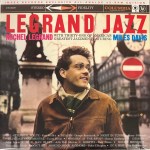
Legrand Jazz (featuring Miles Davis) – the 2019 IMPEX Double 45 rpm

Michael Fremer gives the Impex pressings an 11 for sound. He writes (emphasis added):

“This IMPEX reissue is sourced from an “analog mix-down transfer of the original 1958 work tape by Mark Wilder at Battery Studios” and cut by Chris Bellman and Bob Donnelly at Bernie Grundman Mastering on Grundman’s all-tube mastering system. I have a clean, original 6-Eye pressing that this superbly pressed reissue betters in every way. This will make both your stereo and your heart sing. Some of the greatest jazz musicians of that or any era wailing and clearly having a Legrand time. Limited to 3000 copies. Don’t miss it!”

Who are you going to believe, the Self-Appointed Vinyl Experts of the World and Bestowers of Prestigious Audio Awards (awards which you may have never heard of; I sure hadn’t), or some guy who’s just dedicated to being an Analog Audiophile and knows a good record when he hears one? (Or doesn’t hear one, as the case may be.)

Like Robert, I tried being kinder and gentler, but it didn’t take. I may resolve to try harder in 2024 2026. Then again, I may not. If we’re nicer to the people currently making Heavy Vinyl records, aren’t we running the risk, to cop a line from the late, great P.J. O’Rourke, of encouraging them?

(more…)

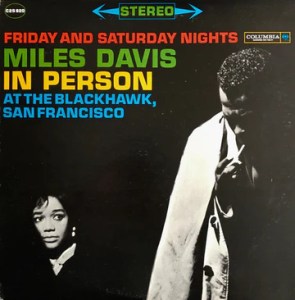
Miles Davis In Person and the Sound of Tubes in 1961

Hot Stamper Pressings of the Music of Miles Davis Available Now

UPDATE 2025

We have two new lists for those who would like to know which Columbia label pressings win shootouts — one for 6-Eye winners and one for 360 Label winners.

The pressing we review below was one of the 6-Eye winners. Most of what we have to say about it revolves around the idea that in 1961 the tube mastering was key to the sound of the best copies.


Below you will find some of the notes I made while playing a killer copy we auditioned a while back.

Normally our notes for the sound of the records we are shooting out against each other fall into two categories: what the record is doing right and what the record is doing wrong.

You’ll see that in the case of this pressing there was nothing wrong with the sound to write about.

I could have found fault somewhere, but when a specific pressing is so clearly superior to its competition, what’s the point?

  • The right sound — big, rich, tubey and real.
  • Transparent.
  • Rich, smooth, balanced.
  • Horn gets huge and loud the right way.
  • Piano is full.
  • Solid bass.
  • No need to pick nits.

The bottom line: both sides are killing it.

Reissues

There are some very good sounding reissues from the 70s that will eventually make it to the site. Again and again my notes made it clear that on those reissue pressings, the sound could have used some tubes in the chain.

On this record, more than any other, the tubes potentially make all the difference.

Now keep in mind that we are only talking about 1961 tubes, not the stuff that engineers are using today to make “tube-mastered” records. Those modern records barely hint at the Tubey Magical sound of a record like this, if our experience with hundreds of them is any guide.

(more…)

Letter of the Week – “Oh my gosh, so much money wasted on magic buttons, secret sauce and dilithium crystals…”

Hot Stamper Pressings of Miles’s Albums Available Now

One of our good customers had this to say about some Hot Stampers he purchased a long time ago (emphasis added):

Hey Tom,

I imagine you get a little bored with audiophile negativity around the concept of Hot Stampers. I have to admit, they are expensive and I sometimes just can’t push myself to buy (even though I want to). As an alternative I have purchased some of the “new” remastered all analogue classics like Kind of Blue hoping to get great sound.

I listen for enjoyment, but like many folks I get caught up in the hype of technology hoping for better sound. Oh my gosh, so much money wasted on magic buttons, secret sauce and dilithium crystals for a different but really not better sound.

So, to the point, I purchased a copy of Kind of Blue from you about 2 years ago. It was graded by you as A++ – A+++ on both sides. I tell myself this story when I need an incentive and want to buy another Hot Stamper.

I played the newly remastered UHQR KOB. It was quiet, wonderful, excellent.

And so just for fun I decided to listen to the copy of KOB I bought from you.

My Hot Stamper is a re-press from Columbia probably from the ’70’s. The difference between both copies was startling.

My Hot Stamper copy of KOB had bigger dynamics, air, tonal awareness, spatial sense.

Bass, sax, piano and Miles – alive and vibrant. It sounded better. The only negative difference was the vinyl was not as quiet.

My experience with the albums I buy from you has always been satisfying because they sound so good. So thanks and screw all the naysayers .

Anyways, just felt like saying thanks and trying to push myself forward on my next purchase.

Best, Art

Art,

Thanks for your letter. You are our letter of the week!

This caught my eye:

“…so much money wasted on magic buttons, secrete sauce and dilithium crystals for a different but really not better sound.”

Ain’t it the truth. Lots of smoke and mirrors and fancy packaging, but when the record in question is at best mediocre, as you discovered for yourself, we describe such a record as putting lipstick on a pig.

Michael Fremer says it’s the best KOB ever, and will be for all time.

Why can’t you hear what he can?

Seriously, could there be a more absurd and ridiculous statement? When discusssing pressings, this kind of certainty is the unmistakable mark of shallow and misguided thinking.  Audiophiles as a group evince far too much credulity and not nearly enough skepticism about both records and audio, which is why they are always looking for easy answers and quick fixes.

They don’t want to do the work. They want someone to tell them they don’t have to do the work.

(more…)

Miles Davis – Agharta

More of the Music of Miles Davis

  • The Hot Stamper debut of Agharta, here with solid Double Plus (A++) sound or BETTER on all FOUR sides of these vintage Columbia pressings – exceptionally quiet vinyl too
  • Remarkably spacious and three-dimensional, as well as relaxed and full-bodied – this pressing was a noticeable step up over most other copies we played
  • Rich, solid bass; you-are-there immediacy; energy and drive; instruments that are positively jumping out of the speakers – add it all up and you can see that this copy had the sound we were looking for
  • Our Shootout Winner was too noisy to sell, which makes this the best pressing to come out of the shootout
  • “The music here is almost totally devoid of melody and harmony, and is steeped into a steamy amalgam of riffs shot through and through with crossing polyrhythms, creating a deep voodoo funk groove for the soloists to inhabit for long periods of time as they solo and interact with one another”
  • 4 1/2 stars: “This is the greatest electric funk-rock jazz record ever made – period.”

(more…)

Miles Davis – Miles Davis (Cookin’ and Relaxin’)

More of the Music of Miles Davis

  • With incredible Nearly Triple Plus (A++ to A+++) MONO sound or close to it on all FOUR sides, these 70s reissue pressings are practically as good as we have ever heard, right up there with our Shootout Winner – exceptionally quiet vinyl too
  • Full-bodied, warm and natural with plenty of space around all of the players, this is the sound of vintage analog – accept no substitutes
  • This Prestige Two-Fer combines two complete Miles Davis titles recorded by the great Rudy Van Gelder in 1956 – ‘Cookin” and ‘Relaxin”
  • Marks in the vinyl are sometimes the nature of the beast with these vintage LPs – there simply is no way around them if the superior sound of vintage analog is important to you
  • 4 1/2 stars: “…there is an undeniable telepathic cohesion that allows this band — consisting of Miles Davis (trumpet), John Coltrane (tenor sax), Red Garland (piano), Paul Chambers (bass), and Philly Joe Jones (drums) — to work so efficiently both on the stage and the studio. This same unifying force is also undoubtedly responsible for the extrasensory dimensions scattered throughout these recordings. The immediate yet somewhat understated ability of each musician to react with ingenuity and precision is expressed in the consistency and singularity of each solo as it is maintained from one musician to the next without the slightest deviation.”

Way off the charts Demo Disc quality sound of the highest order on the best tracks. The extension high and low sets these sides apart. The presence of the instruments and the space around them just cannot be beaten.

It also sounds like it’s recorded completely live in the studio, direct to one track you might say. As good a recording as Kind of Blue is, I think the best parts of this album are more immediate and more real than anything on KOB.

Talk About Timbre

Man, when you play a Hot Stamper copy of an amazing recording such as this, the timbre of the instruments is so spot-on it makes all the hard work and money you’ve put into your stereo more than pay off. To paraphrase The Hollies, you get paid back with interest. If you hear anything funny in the mids and highs of this record, don’t blame the record.

This is the kind of record that shows up audiophile BS equipment for what it is: audiophile BS. If you are checking for richness, Tubey Magic and freedom from artificiality, I can’t think of a better test disc. It has loads of the first two and none of the last.

(more…)

Michel Legrand – Legrand Jazz

More Large Group Jazz Recordings

  • This original 6-Eye Stereo pressing was doing just about everything right, earning solid Double Plus (A++) grades from start to finish
  • Both of these sides are open and spacious with real depth to the soundfield and lots of separation between the various instruments, a very important quality for a recording of a large ensemble recording such as this
  • Rich, solid bass; you-are-there immediacy; energy and drive; instruments that are positively jumping out of the speakers – add it all up and you can see that this copy had the sound we were looking for
  • Legrand rounded up 31 of the greatest jazz players of the 50s, divided them up into three groups, and the result was a landmark 30th Street Studio recording with audiophile sound to die for
  • We’re talking jazz giants: John Coltrane, Miles Davis, Bill Evans, Ben Webster, Herbie Mann, Art Farmer, Donald Byrd, Phil Woods — everybody who was anybody is on this record
  • 4 1/2 stars: “Throughout this superlative album, the arrangements are colorful and unusual, making one wish that Legrand had recorded more jazz albums through the years.”
  • Robert Brook recently played the “award winning” Impex 45 RPM pressing from 2019 (as did we) and wants to know what you think of the sound

This album is more common in mono than stereo, but we found the sound of the mono pressing we played seriously wanting. It’s dramatically smaller and more squawky and crude than even the worst of the stereo pressings we played.

We had a copy we liked years ago, but that was years ago. We don’t have that copy anymore and we don’t have a stereo that sounds the way our old one did either.

The unique voices of each of the jazz giants featured on this landmark recording contributes memorable solos then receeds into the group to provide the structure for the rest of the music. Which is an awkward way of saying everybody does his thing in service to the song and then gets out of the way. “The Jitterbug Waltz,” which opens up side one, is a perfect example: the arrangement is completely original, and within its structure, Miles DavisPhil WoodsJohn Coltrane and others solo beautifully, each taking a turn at the melody. If three minutes into this song you don’t like what you’re hearing, jazz is just not for you.

(more…)

The Original Jazz Classics Series Put Out a Passable Relaxin’ in ’85

Hot Stamper Pressings of the Music of Miles Davis Available Now

We much prefer the 70s Two-Fer reissue (PR 24001) to the OJCs of both Cookin’ and Relaxin’. Previously we had written:

These 70s reissue pressings are practically as good as any we have ever heard. Full-bodied, warm and natural, with plenty of space around all of the players, this is the sound of vintage analog.

It had been a while since we last played the OJC pressing of either album, so we picked up a copy of Relaxin’ and threw it into the shootout, where it did about as badly as expected.

The first side earned our 1+ grade, which means that, like a lot of reissues it’s passable, but really not good enough for a serious audiophile (hopefully meaning you) to bother with, which is why we didn’t even play side two (the N/A you see noted where the grade should be).

The OJC is clearly better suited to the old school audio systems of the 60s and 70s rather than the modern systems in use today. These kinds of reissues used to sound good on those older systems, and I should know, I used to have an old school stereo, and some of the records I used to think sounded good back in the day don’t sound too good to me anymore (although this one never did).

(more…)

Miles Davis – Miles Smiles

More of the Music of Miles Davis

  • Solid Double Plus (A++) grades or BETTER bring Davis’s 1967 release to life on this original Stereo 360 pressing
  • Both of these sides are full-bodied, high-rez and spacious, with Miles’s horn uncannily present, a sound you just cannot find on Heavy Vinyl no matter who makes it
  • Miles here is backed by his classic 60s All Star crew – Herbie Hancock, Wayne Shorter, Ron Carter & Tony Williams
  • 5 stars: “This is music that demands attention, never taking predictable paths or easy choices. Its greatest triumph is that it masks this adventurousness within music that is warm and accessible – it just never acts that way… Arguably, this quintet was never better than they are here, when all their strengths are in full bloom.”

(more…)

Miles Davis – Miles In The Sky

More of the Music of Miles Davis

  • Boasting two solid Double Plus (A++) sides, this original Stereo 360 pressing is guaranteed to blow the doors off any other Miles In The Sky you’ve heard
  • Superb sound courtesy of Arthur Kendy’s and Frank Laico’s engineering at the famed Columbia Studio B in NYC
  • Miles here is backed by his classic 60s All Star crew – Herbie Hancock, Wayne Shorter, Ron Carter & Tony Williams
  • “…Miles Davis explicitly pushed his second great quintet away from conventional jazz, pushing them toward the jazz-rock hybrid that would later become known as fusion… intriguing music…”

We just finished a big shootout for this superb Miles Davis album and this copy was dramatically better sounding than most others we played. Both sides have excellent bass, correct sounding brass, wonderful transparency and loads of Tubey Magic.

Many copies didn’t have the kind of transparency or openness that we heard here, which made it harder to appreciate the contributions of the different players. This one puts plenty of separation between the various instruments, so you can make sense of what each of these heavy-hitters adds to the mix. You will have a very hard time finding a copy out in the bins that sounds as good as this one!

(more…)

Miles Davis – Quiet Nights

  • This oh-so-spacious Miles Davis / Gil Evans classic boasts STUNNING Shootout Winning Triple Plus (A+++) sound or close to it throughout this original black print Stereo 360 pressing
  • Rich, warm, smooth and clear throughout, this 30th Street Studios recording is another engineering triumph from the legendary Fred Plaut
  • Produced by Teo Macero, the album is the fourth and final collaboration between Davis and Evans
  • This is a lot of money for a somewhat noisy copy with some audible marks, but the sound is so awesome and quiet pressings of the album so hard to come by that we hope someone will take a chance on it and get the thrill we did from hearing it sound right for once
  • In the Saturday Review, Quiet Nights received praise for Davis’s “wonderful

(more…)