TAS List Commentaries

Commentaries about records on the TAS Super Disc list.

Wild Things Run Fast – A Personal Favorite

Hot Stamper Pressing of the Music of Joni Mitchell Available Now

One of our favorite Joni Mitchell albums.

A Desert Island disc for me and one of the few good reasons to listen to new music in the 80s. 

My personal Must Own Joni Mitchell list includes:

  1. 1968 Song to a Seagull
  2. 1971 Blue
  3. 1974 Court and Spark
  4. 1982 Wild Things Run Fast

WTRF is a TAS list Super Disc with many good qualities, but you’d never know it from the typically lean, bass-shy pressing you might find on your turntable.

Also, since this record can be a little cold sounding — it’s a modern recording after all, and 1982 is sadly nothing like 1972  — filling it out and warming it up is just what the doctor ordered.

John Golden (JG) mastered the originals. The best of them prove that he did a great job at least some of the time. (To find “the best of them,” aka Hot Stampers, read on.)

You can count on the fact that our Hot Stamper pressings will be unusually rich and full-bodied, with lovely warmth and presence.

(more…)

We Get Letters – “…the parallax on Autobahn that lets you feel like you are physically moving through space necessitates a full 3D soundstage.”

Hot Stamper Pressings of Art Rock Albums Available Now

Our good customer Aaron thought his Hot Stamper pressing of Autobahn was pretty special. He writes:

Good morning Tom,

I’m catching up on some work and sipping my coffee this Sunday morning, way too cold to go outside.

I’ve got my NWHS of Autobahn playing. The room is absolutely filling up with sweet sound. I had always thought of Kraftwerk’s music as cold and distant, intentionally, but this copy is bringing out a whole different character to the music. It is organic and warm and really humane.

Isn’t it funny to think that of all the bands, it is Kraftwerk who is done a particular disservice by digital formatting? On the surface, their music seems like it would be so amenable to digital, but it’s all the play and joy that’s less on the surface that really makes it music, and digital strips that right out.

I bought this one as part of pushing my envelope during the 12 days sale.

My other copy is the 1985 Parlophone repress. It’s not bad, but I’ve only played it a couple times before, which says everything you need to know.

Whereas the hot stamper is currently one of my go-to records to put on. The hot stamper fills my room with sound.

It’s more somatic than auditory, you can feel it. That’s always true for white hot stampers, but it makes all the difference for this album – the parallax on Autobahn that lets you feel like you are physically moving through space necessitates a full 3D soundstage.

That effect of actually moving just does not happen when you’re playing the 1985 pressing.

So, I would say Autobahn is another one of those albums where it’s essential to have a hot stamper pressing to actually appreciate the music.

Digital won’t do it, and even a different good pressing doesn’t convey the magic – the organic nature and the three dimensional experience – that the hot stamper gives you.

(more…)

Cat Stevens Part 2 – Is This the Truest Tillerman of Them All?

If you haven’t read Part 1 of this story, please click here.

Back to our real story. I listened to my good original pressing. I call it White Hot at least!

Then I put the new pressing on the table, set the SDS for 45 RPM, and got the volume just right. I proceeded to carefully adjust the VTA by ear, going up and down with the arm until the sound was right, which is simply standard operating procedure for every record we audition.

These are my actual notes for But I Might Die Tonight.

This is what I heard as the song worked its way through the various sections, in real time.  The first thing I heard at the start was Zero Tubey Magic for the first verse. One of the last things I heard at the end was No Real Space. Space is what you hear at the end for the big piano and drums finish.

Let’s take it line by line. First up:

Zero Tubey Magic

I didn’t hear much Tubey Magic on the new pressing. The best early pressings — domestic A&M Browns, Pink or Sunray UK Islands — often have simply phenomenal amounts of the stuff. It’s a hallmark of the recording.

If a new pressing comes along without it, that’s a problem. I guess that George Marino‘s cutting system at Sterling could probably do some things well, but it sure doesn’t seem to be able get the sound of tubes right. His 33 RPM cutting had no Tubey Magic, and this one has no Tubey Magic. If I had hired him to cut a record for me and it came out sounding like this, I would find somebody else to cut records for me.

He’s dead now, rest in peace. I would doubt that anyone at Sterling has a better cutting system, and therefore no one should expect any records that have been mastered there to sound very good.

Vocal Is Clear, Clean and Dry

This is the sound you sometimes get with modern, super-clean transistor cutting equipment. It’s low distortion, like a CD is low distortion. We don’t think we should have to put up with dry vocals on records when the good pressings we have been playing all our lives have noticeably richer vocals.

Not rich like Dream With Dean, nothing is that rich, but rich and full-bodied the way the good pressings of this album always make them sound.

(more…)

Holst and Previn – A Planets for the Ages

Hot Stamper Pressings of the Music of Holst Available Now

Fortunately for audiophiles who love The Planets but are disappointed by most performances, a group that includes us to be sure, the amazing sound found on this copy is coupled with a superb performance.

As you might imagine, on a big system this would make for a powerful listening experience, which is exactly the experience we ourselves had during our recent shootout. This copy actually deserves its place on the TAS List.

The brass is so BIG and POWERFUL on EMI’s recording that other orchestras and recordings frankly pale in comparison. Until I heard one of our top EMI pressings show me brass with this kind of weight and energy, I simply had no idea it was even possible to play the work this powerfully. The lower brass comes in, builds, gaining volume and weight, then calms down, but soon returns and builds relentlessly, ever and ever louder. Eventually the trumpets break out, blasting their way forward and above the melee the heavier brass has created below.

Quite honestly I have never heard anything like it, and I heard this work in concert in late 2012! In live performance, the members of the brass section, being at the back of the stage, were at least 100 feet away from me, perhaps more. When playing the best EMI pressings, the brass were right there in front of me, eight to ten feet away. In a way this is of course unnatural, but that fact takes nothing away from the subjective power of the experience.

Only the conductor can stand at the podium, but the EMI producers and engineers (the two Christophers in this case) have managed to put the listener, at least in this movement, right there with him.

(more…)

This Is What We Refer to as “Blockbuster Sound”

Hot Stamper Pressings of the Music of Bernard Herrmann Available Now

The Mysterious Film World of Bernard Herrmann is an outstanding recording, with a huge three-dimensional stage. It’s open and clear, with an extended top and plenty going on down low. The sound on the best pressings is nothing short of amazing.

This is Demo Disc quality sound by any measure, especially on big speakers at loud levels.

Side one boasts some wonderful material from Mysterious Island and Jason and the Argonauts. Who else but Herrmann could have orchestrated such phantasmagorical goings on?

The Three Worlds Of Gulliver Suite takes up all of side two. The complete score from which the suite is taken can be found on the original Herrmann album The Three Worlds of Gulliver, a long-time and extremely rare member of the TAS Super Disc List.

Borrowing from the Best

One reason this music is so wonderful is because it’s been more or less lifted from, and orchestrated exactly like, Rimsky-Korsakov’s The Tale of Tsar Saltan.

Herrmann was no doubt familiar with Rimsky-Korsakov’s work, and knew that his “sound” was exactly the one that would work for the film. He overlayed his own compositional style onto Rimsky-Korsakov’s, and the result is a soundtrack of breathtaking beauty, full of exotic instrumental colors and delicious audiophile-candy percussion.

(more…)

If It’s Made from the Real Master Tape, Shouldn’t Blue Sound Better than This?

Hot Stamper Pressings of the Music of Joni Mitchell Available Now

UPDATE 2026

I wrote the commentary you see below way back in 2006. I wanted to give our customers an incentive to critically listen to the new Rhino pressing of Blue, a Heavy Vinyl reissue we actually gave out for free with every Hot Stamper of the album we sold.

We wanted our customers to try and answer the question I had posed in my review as to what aspect of the sound was improved in the new pressing, relative to the vintage copy they would have just purchased from us.

For those of you who have been reading our commentaries about modern remasterings, you know that rarely do we find any area of their sound that could be considered in any way “improved.”

As you will see from our commentary below, no less a personage than Michael Fremer had said at the time that the Rhino pressing “has far greater presence and physicality and is more immediate, dynamic, detailed and especially transparent.”

As hard as it may be to believe, I actually agreed with him about one of those qualities.

I’ve broken down his list below. If you have one of our Hot Stampers and the Rhino reissue, play them back to back and try to hear what is better about the reissue. Which of the following does it have more of compared to even the best vintage pressings?

  • More presence,
  • More physicality (whatever that is),
  • More immediacy,
  • More dynamics.
  • More detail,
  • More transparency

I had posed this question on the blog over the course of many years and never got anything approaching a serious answer.

I was going to reveal what quality I thought it was at some point, but I have since decided that it is better left for the reader to figure out for himself rather than have me tell him. What do you learn from being given an answer? Nothing, or next to nothing, so why do it?

Similarly, the Heavy Vinyl Led Zeppelin II and Brothers in Arms reissues are very good sounding records, with obvious shortcomings which I had hoped my readers would be able to spot and write to me about. None have to date, or at least none have told me what they are, which works out to be more or less the same thing.

I will have a great deal more to say on this subject down the road, one that is critically important for audiophiles regardless of their experience. For now let me leave you with what Steve Hoffman had to say about the work he did on Blue. (You can find the quote on Joni Mitchell’s website.)

This is a really wonderful album; Joni just laid it all out there for the world to hear. Brave, especially back in the day & I feel that this new version is the true giant killer.

Unlike the original 1970’s pressings, this new version was mastered without ANY added compression whatsoever, making it a true problem child in cutting (of our own making) but I wouldn’t have it any other way. After many spoiled lacquer masters and one too many Altoids, it was finished to everybody’s satisfaction.

The effort was worth it. The ebb and flow of the music is totally intact. Parts were cut, plated and pressed at Record Tech (RTI) and the actual 1971 Reprise master tape (as recorded and mixed at A&M Recording Studios) was used in disk cutting, bypassing the usual/”EQ’d and Compressed Cutting Master” completely.

Unlike the DCC, most of the songs on this vinyl version were cut without ANY equalization at all so this will be the closest you will ever be able to get to the sound of the true master tape of Blue. It was exciting to work on and I’m sure it will please y’all.

Steve Hoffman, mastering engineer

(more…)

Living Stereo Sound Like This Is Hard to Beat

Hot Stamper Pressings of Soundtrack Recordings Available Now

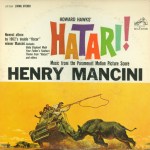
Here is the kind of Living Stereo sound we just can’t get enough of.

We certainly never suspected that this old TAS list warhorse from 1962 could sound the way this early pressing did when it landed on our turntable recently. We’ve been auditioning copies of Hatari for close to forty years. Now it sound like this? Amazing.

Until we played this Shootout Winning copy, we’d never heard the phenomenal amounts of ambience that surrounds the big room full of musicians assembled here, ambience which is clearly audible on the drums which play such an important part in Mancini’s arrangements.

If you’re a fan of big drums in a big room, this is the record for you.

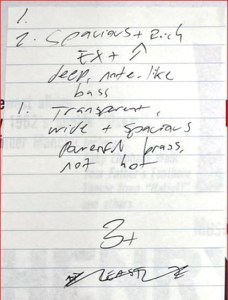
Hearing this album sound the way this copy did was a real thrill, as our notes should make clear:

The notes for side one read:

Track Two

Spacious and Rich

Extended top end

Deep, note-like bass

Track One

Transparent, wide and spacious

Powerful brass, not hot

The notes for track three on side two read:

Lively, jumping out

Present and spacious

(more…)

Another Amazing Mercury Dropped from the TAS Super Disc List?

Hot Stamper Pressings of TAS List Records Available Now

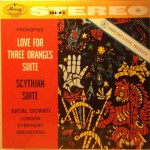
We have a preference for Dorati’s work with the London Symphony Orchestra over those he recorded elesewhere. A record like this will show you exactly why.

The Love of Three Oranges (SR 90006) is a killer recording — the kind of orchestral spectacular that is guaranteed to put your stereo through its paces and then some.

If you’re a fan of 20th century orchestral showpieces such as these, Robert Fine and Wilma Cozart have here produced a very special record containing two of the best.

We hope you like your sound big and bold, because that is the sound they were obviously going for, based on the sound we were hearing from the best early pressings.

I have to admit I was not a fan of this album until recently when I finally got my hands on a clean copy with the right stampers and heard the powerful sound of the London Symphony come blasting out of my speakers – what a thrill!

(more…)

Speakers Corner Has a “Winner” in Espana

Hot Stamper Pressings of the Music of Chabrier Available Now

Sonic Grade: B

One of the better Speakers Corner Deccas.

We haven’t played a copy of this record in years, but back in the day we liked it, so let’s call it a “B” with the caveat that the older the review, the more likely we are to have changed our minds. Not sure if we would still agree with what we wrote back in the 90s when this record came out, but here it is anyway.

This is a Speakers Corner Decca 180 gram LP reissue of the famous Argenta performance, a recording which can sound positively amazing on the right original London, but only about 2 out of 10 copies actually do sound amazing.

And where in the world are you going to find 10 clean copies of a record that’s almost 40 years old?

This pressing gets you most of the way there, on reasonably quiet vinyl, for a lot less money.


UPDATE 2025

This Speakers Corner title may be good, but our Hot Stamper classical and orchestral pressings will be dramatically more transparent, open, clear and just plain REAL sounding, because these are all the areas in which Heavy Vinyl pressings tend to fall short in our experience.  For more on that subject, see here and here.

(more…)

What Can You Learn from a Mercury Shootout Like This One?

Hot Stamper Pressings of Mercury Classical Recordings Available Now

The short answer is that you can’t learn much from this shootout, because we’re not telling you which title the stampers you see below belong to.

Be that as it may, in the case of this mystery title the conventional wisdom turns out to be correct — the earlier numbered pressings did better than the later numbered pressings, and the early labels did better than the later labels.

That happens a lot, and we are happy to admit that it does. Why? Because the experimental evidence — the datasay that is what happened.

As usual for posts in which the stamper sheet from a shootout is reproduced in its entirety, the stamper numbers shown below will belong to a different album than the one you see pictured.

These can be found under the heading of Mystery Stampers. Most of these posts will illustrate something to be learned from a Hot Stamper shootout, but because the information reveals the shootout winning stampers, the actual title of the record is rarely revealed.

Much more useful stamper information can be found using this link, which includes plenty of stamper numbers for specific titles that are best avoided by audiophiles looking for top quality sound. In addition, we post the winning and losing stampers for some titles that are an unreliable guide to good sound. Unreliable stampers are also quite common.

The right stampers are only one of the many reasons some copies win our shootouts and others don’t, but in the case of this rare Mercury, a record that we only had four copies of, the RFR-2/2 stampers were clearly the best, with no other set of stampers coming close. The best of the others earned grades no better than 2+/2+.

One lesson that was clear was that the best stampers were, to quote our reviewer, “a step up!”

(more…)