Focus-R/P/S

Here you will find rock, pop, soul, etc. albums we think we know well, having cleaned and played them by the score over the course of many decades.

There are currently 160 or so entries, but the number could easily exceed 1000 considering how many records we play every week in our shootouts.

What to Listen For and More on Ruben and the Jets

More of the Music of Frank Zappa

Is the thought bubble on the cover the real story behind the album?

Is this the Mothers of Invention recording under a different name in a last ditch attempt to get their cruddy music on the radio?

Amazing sound for this record of greasy love songs and cretin simplicity to offer to audiophiles and music lovers alike from all corners of the world. We absolutely LOVE this album here at Better Records, or at least that portion of Better Records that remembers it from high school still loves it (which would narrow it down to a subset of just me I guess, but who’s counting?). Anyway, it’s a classic of twisted Doo-Wop that belongs in your collection. At least we think you should give it a chance anyway; hearing it sound this good might just make a believer out of you.

Tubey Magic Is Key

Many copies are just too thin and edgy to be as fun and enjoyable as we have every right to expect from this kind of purposely un-hip, un-cool, goofy retro-pop. We were gratified to find that the top finishers had a healthy dose of the Tubey Magical richness found on the best analog recordings from the latter half of the 60s (1968 in this case).

This is a very good recording indeed, judged, as is only fair, solely by the best of the pressings we’ve heard. In other words, the bad pressings sound like crap, but that’s no reflection on the quality of the master tape.

As with most Zappa records, an extended top end is devilishly hard to come by. (In that respect, it is good for testing.)

That said, on a primarily vocal album such as this one, the midrange is where the music lives or dies.

The copies that were rich and full-bodied, with natural vocal reproduction, tended to score the highest grades in our shootout.

Copies that failed to convey the energy and exuberance of the singers and musicians — their love of this music that time had forgotten even by 1968 — as you may well imagine scored relatively poorly. This music is supposed to be fun, and really not a whole lot else, so the copies that aren’t fun scored sub-Hot Stamper grades. (Lifelessness is of course our main beef with Heavy Vinyl these days. When we play one of these new thick LPs the sound is often so blase that I feel that the longer it plays, the more the air is being sucked out of the room.)

An Overview of The Soft Parade

Our vintage Doors pressings — either on the Elektra Gold or Big Red E Label, nothing else will do — have the kind of Tubey Magical midrange that modern records are almost never able to reproduce.

Folks, that sound is gone and it sure isn’t showing any sign of coming back.

One of The Records That Did It For Me

Perhaps hearing Dark Side was what made you realize how good a record could sound. Looking back over the last forty years, it’s clear to me now that this album, along with scores of others, is one of the surest reasons I became an audiophile in the first place, and stuck with it for so long. What could be better than hearing music you love sound so good?

It’s clearly an album we are obsessed with. We have written extensively about quite a number of them to date. It is our contention that to be any good at this hobby, you have to become obsessed with well-recorded albums and work out the consequences of those obsessions for yourself.

The Soft Parade was one of those albums that blew my fifteen-year-old mind. Songs for Beginners was another one.

We also wrote about the subject of being obsessed with music here. An excerpt:

(more…)

Tubey Magic Like You Won’t Believe

More of The Most Tubey Magical Rock Recordings of All Time

Here is how we described our recent White Hot Stamper shootout winner:

Manna returns to the site after a twenty-eight month hiatus and, man, was it worth with the wait, with KILLER Shootout Winning Triple Plus (A+++) grades on both sides of this original Elektra pressing

Here are just a few of the things we had to say about this amazing copy in our notes: “tubey and spacious”…”huge and rich and 3D”…”really jumping [out of the speakers]”…”vox so silky and rich”

Tubier, more transparent, more dynamic, with that “jumpin’ out of the speakers” quality that only the real thing (an old record) can have

To back up everything we say, here are the notes for that cannot-be-beat pressing. The exclamation marks are typically reserved for the hottest of the hot copies, and here we would have to say they are more than deserved — the sound of this copy was amazing.

I fell in love with the sound of Bread’s recordings 25 years ago. My system has gone through dozens and dozens of changes and — hopefully — improvements since then, and never have Bread’s album failed to reflect the positive effects of whatever had been done.

Other reviews with post-its can be found here. More note taking advice here.

This original Elektra pressing has amazingly sweet and rich 1971 ANALOG sound on both sides. That big bottom end and the volume of space that surrounds all the instruments and singers are the purest and most delightful form of Audiophile Candy we know.

The acoustic guitars? To die for. Talk about Tubey Magical Analog, this copy will show you just what’s missing from modern remastered records (and modern music generally). Whatever became of that sound?

This record put Bread’s heavily Beatles-inflected Pure Pop back on the charts after their the single from their previous album, On The Waters, made it to Number One, that song of course being Make It With You. “If”, the big hit off this album, went to number five, but we like it every bit as much as that earlier chart topper. Both represent the perfect melding of consummate songcraft and pure emotion.

We used to think that only the Best of Bread album could get those two songs to sound as luscious and Tubey Magical as they do when they’re playing in our heads, but it seems we were wrong — they’re positively amazing on the best copies of Manna, and this is a VERY good copy indeed.

Analog Heaven

In many ways this recording is state-of-the-art. Listening to the Tubey Magical acoustic guitars on the best copies brings back memories of my first encounter with an original Pink Label Tea for the Tillerman. Rich, sweet, full-bodied, effortlessly dynamic — that sound knocked me out twenty-odd years ago, and here it is again.

Of course I’m a sucker for this kind of well-crafted pop. If you are too then this will no doubt become a treasured demo disc in your home as well.

Pay close attention to the sound of the drums. We really like the way famous session player Mike Botts’ kit is recorded, not to mention his Hal-Blaine-like — which means god-like — drumming skills.

(more…)

Can Houses of the Holy Get Any Better? Apparently It Can

Hot Stamper Pressings of the Music of Led Zeppelin Available Now

Wall-to-wall, floor-to-ceiling Led Zeppelin power – our most recent Shootout Winning copies of Houses of the Holy knocked us out with their Demo Disc sound.

The Tubey Magical acoustic guitars here should be a wake up call to everyone that any attempt to remaster this album — to outdo Robert Ludwig and his awesome tube compressors and hi-rez transistor cutting equipment — is bound to fail.

This kind of sound is gone and it is never coming back.

Here are our notes for the top two copies from our recent shootout, each of which had one Shootout Winning side and one that came close but did not quite earn the top grade.

Side One

Track Three (Over the Hills and Far Away)

  • Upfront and detailed and breathy
  • Spacious
  • Big and wide when it kicks in

Track One (The Song Remains the Same)

  • Huge and rich and weighty
  • Vocals are less veiled
  • Richest, with the most extension high and low

Note that we played both a rocker as well as a quieter, more acoustic track. This is standard operating procedure. Both of these very different sounding songs have to sound their best.

Side two had a few problems which kept it from doing as well as side one.

Side Two 

Track One (Dancing Days)

  • Clear and lively
  • Has some weight but a little flat and veiled

Track Two (D’Yer Mak’er)

  • Solid but not quite as huge
  • Pretty tubey and weighty

If you had never heard a side one that sounded as amazing as this side one, how would you know the sound on side two was a little flat and veiled and not quite as huge?

You wouldn’t. That is precisely what shootouts are for, so that you can learn how good the sound can get in order to judge how good each side is relative to the others, on a curve, which is the only meaningful way it can be done.

Anyone hearing side two of this copy would be very likely be knocked out by it. But we know that side two can be even better sounding, because the copy below showed us sound that we simply could not find fault with.

(more…)

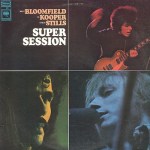
On Super Session, Tonally Correct Vocals Are Key

More Music Produced or Performed by Al Kooper

Most copies have bright, gritty, spitty, edgy, harsh, upper-midrangy vocals.

The Red Labels tend to have more problems of this kind, but plenty of original 360 pressings are gritty and bright too. Let’s face it, if the vocals are wrong, this album pretty much falls apart.

Most copies are far too bright and phony sounding to turn up loud. At higher volumes the distortion and grit are just too much.

On the better copies, the one with more correct tonality and an overall freedom from distortion, you can turn the volume up and let Super Session rock.

Man’s Temptation, track 3 on side one, has got some seriously bright EQ happening (reminiscent of the first BS&T album), so if that song even sounds tolerable in the midrange, you are doing better than expected.

We’re Big Fans

Super Session is an album we think we know well, one that checks off a number of boxes for us here at Better Records:

(more…)

Are Your Cellists Digging In on I Am the Walrus?

This commentary was written many years ago.

Over the last decade I Am The Walrus has evolved into a good test for side one, a fact that came as a complete surprise to me. As I was listening to the various copies in a shootout years ago I noted that the opening cellos and basses in the right channel were often tonally identical from copy to copy, but sounded quite a bit more lively and energetic on some pressings relative to others. Was it EQ? Level? Compression?  

Why so much more passion from the players on some copies and not others?

As I tried to puzzle it out, playing first one copy and then another, it became clear to me what was happening. The cellists and the bassists were just plain digging HARDER into the strings on the best copies. When you see live classical music, the cellists at the front of the orchestra are usually sawing away with abandon when the music is really going. They dig their bows hard into the strings to make them vibrate as loud as possible. To make their instruments heard in the back row it becomes a matter of muscle, of pure physical exertion.

So armed with the copies where the string players are working the hardest, I checked the other tracks. Sure enough, the opening cut, MMT, jumped out of the speakers with the most energy I had heard on any copy. As I went through the tracks one by one, they had the most life of any of the copies I had been listening to. To use a word that was popular at the time, the music was HAPPENING.

This was the final piece to the puzzle. Tonality always comes first. Frequency extension; lack of distortion; rich, powerful bass — these are important qualities as well. But the life of the music is in the micro and macro dynamics, and that is what I had not been paying sufficient attention to during the shootout.

That was until I listened to Walrus and heard the players working up a good healthy sweat. Then I knew I had a Hot Stamper. And when I played the not-so-Hot Stampers, the string guys sounded like session musicians picking up a paycheck.

Where was their passion? Didn’t they realize they were making a classic?

If you get the right pressing they sure were!

(more…)

Advances in Playback Technology Are More Than Blind Faith

More of the Music of Eric Clapton

In a 2007 commentary for a Hot Stamper pressing of Blind Faith we noted that:

When it finally all comes together for such a famously compromised recording, it’s nothing less than a THRILL. More than anything else, the sound is RIGHT. Like Layla or Surrealistic Pillow, this is no Demo Disc by any stretch of the imagination, but that should hardly keep us from enjoying the music. And now we have the record that lets us do it.

The Playback Technology Umbrella

Why did it take so long? Why does it sound good now, after decades of problems? For the same reason that so many great records are only now revealing their true potential: advances in playback technology.

Audio has finally reached the point where the magic in Blind Faith’s grooves is ready to be set free.

What exactly are we referring to? Why, all the stuff we talk about endlessly around here. These are the things that really do make a difference. They change the fundamentals. They break down the barriers.

You know the drill. Things like better cleaning techniques, top quality front end equipment, Aurios, better electricity, Hallographs and other room treatments, amazing phono stages like the EAR 324p, power cables; the list goes on and on.

If you want records like Blind Faith to sound good, we don’t think it can be done without bringing to bear all of these advanced technologies to the problem at hand, the problem at hand being a recording with its full share of problems and then some.

Without these improvements, why wouldn’t Blind Faith sound as dull and distorted as it always has? The best pressings were made more than thirty years ago [thirty? make that fifty] — they’re no different.

(more…)

Rockin’ the Mandolin with Loggins and Messina

Hot Stamper Pressings of the Music of Loggins and Messina Available Now

A recent White Hot Stamper pressing of L&M’s fourth release demonstrated pretty convincingly just what an amazing Demo Disc this album can be.

When Jim Messina rips into his mandolin solo halfway through Be Free, your jaw is likely to hit the ground. On the best copies it positively leaps out of the left speaker.

I can’t recall another pop or rock recording that captures either the plucked energy or the harmonic nuances of the instrument better. To hear such a well-recorded mandolin on a copy of this quality is nothing less than a thrill.

This copy showed us:

  • A full-bodied piano
  • Rich, lively vocals, present between the speakers and brimming with enthusiasm
  • Harmonically-rich guitars, mandolins, dobros and the like, as well as a
  • Three-dimensional soundstage that revealed the space around them all

What to Listen For

What typically separates the killer copies from the merely good ones are three qualities that we often look for in the records we play: transparency, speed, and lack of smear.

Transparency allows you to hear into the recording, reproducing the ambience and subtle musical cues and details that high-resolution analog is known for.

Note that most Heavy Vinyl pressings being produced these days seem to be transparency challenged. Lots of important musical information — the kind we hear on even second-rate regular pressings — is simply nowhere to be found.

Lack of smear is also important, especially on a recording with so many plucked instruments. The speed and clarity of the transients, the sense that fingers are pulling on strings, strings that are ringing with tonally correct harmonics, is what makes these L&M records so much fun to play.

The best copies really get that sound right, in the same way that the best copies of Cat Stevens’ records get the sound of stringed instruments right.

No two pieces of electronics will get this record to sound the same, and some will fail miserably. If vintage tube gear is your idea of good sound, this record may help you to better understand where its shortcomings lie.

(more…)

Listening to Aja (with Free Cisco Debunking Tool)

Hot Stamper Pressings of the Music of Steely Dan Available Now

This commentary references a shootout we did in 2007 or thereabouts, shortly after the release of Cisco’s misbegotten remaster.

Another in our series of Home Audio Exercises with specific advice on What to Listen For (WTLF) as you critically evaluate your copy of Aja.

Our track commentary for the song Home at Last makes it easy to spot an obvious problem with Cisco’s remastered Aja: This is the toughest song to get right on side two.

Nine out of ten copies have grainy, irritating vocals; the deep bass is often missing too. Home at Last can sometimes be just plain unpleasant, which is why it’s such a great test track.

Get this one right and it’s pretty much smooth sailing from there on out.

If you own the Cisco pressing, focus on Victor Feldman’s piano at the beginning of the song. It lacks body, weight and ambience on the new pressing, but any of our better Hot Stamper copies will show you a piano with those qualities in spades on every track. It’s some of my favorite work by the Steely Dan vibesman.

The thin piano on the Cisco release must be recognized for what it is: a major error on the part of the mastering engineers.

Bonus Listening Test for Side Two

The truly amazing side twos — and they are pretty darn rare — have an extended top end and breathy vocals on the first track, Peg, a track that is dull on nine out of ten copies. (The ridiculously bright MoFi actually kind of works on Peg because of the fact that the mix is somewhat lacking in top end. This is faint praise though: MoFi managed to fix that problem and ruin practically everything else on the album.)

If you play Peg against the tracks that follow it on side two, most of the time the highs come back. On the best of the best the highs are there all the way through.

Listening Tests for Side One

Generally what you try to get on side one is a copy with ambience. Most copies are flat, lifeless and dry as a bone. You also want a copy with good punchy bass — many are lean, and the first two tracks simply don’t work at all without good bass. And then you want a copy that has a natural top end, where the cymbals ring sweetly and Wayne Shorter’s saxophone isn’t hard or honky or dull, which it often is on the bad domestic copies.

Also listen for GRAIN and HONK in the vocals on Black Cow. The better your copy is, the less grainy and honky the vocals will be.

(more…)

801 Live – None Rocks Harder

Hot Stamper Pressings of the Music of Brian Eno Available Now

I listened to this album from start to finish just yesterday (5/31/2024), so I thought it only fitting that I share my enthusiasm for this absolutely amazing record with those who read this blog.

The best Island copies of this album rock harder than practically any record we’ve ever played. If you have the system for it, this amazing Rhett Davies recording will bring a live art rock concert right into your living room.

This is a big speaker record. It requires a pair of speakers that can move air with authority below 250 cycles and play at fairly loud levels. If you don’t own speakers that can do that, this record will never really sound the way it should.

It’s right at the top of the list of my favorite rock albums — a desert island disc if ever there was one. I stumbled across it more forty years ago and I’ve loved it ever since. It all started when a college buddy played me the wildly original Tomorrow Never Knows from the album and asked me to name the tune before the vocals kicked in. Eno’s take is so different from The Beatles version that I confess it took me an embarrassingly long while to catch on.

Demo Disc Quality Sound

This is a true Demo Disc in the areas of sound reproduction listed below. Other records with these important qualities can be seen by clicking on any of these links.

Adventures in Music and Sound

Phil Manzanera and Brian Eno were founding members of Roxy Music. AMG calls Roxy Music the “most adventurous rock band of the early ’70s” and I’m inclined to agree with them.

Those who played in Roxy Music are certainly some of the most influential and important artists in my growth as a music lover and audiophile, joining the ranks of 10cc, Steely Dan, Yes, James Taylor, Peter Gabriel, David Bowie, America, Fleetwood Mac, Supertramp, Eno, Talking Heads, The Doors, Jethro Tull, Elton John, The Beatles, Santana, Crosby, Stills and Nash, Little Feat, Traffic, Nilsson, Elvis Costello, Sergio Mendes, Neil Young, The Eagles, Frank Zappa, Pink Floyd, Joni Mitchell, The Cars, Peter Frampton, Led Zeppelin, Cat Stevens and countless others.

These musicians and bands were clearly dedicated to making high quality recordings, recordings that could only come to life in the homes of those with the most advanced audio equipment.

My system was forced to evolve in order to reproduce the scores of challenging recordings issued by these groups in the 60s and 70s.

The love you have for your favorite music has to be the strongest driving force if you actually want to be successful in this hobby.

Some of the records that did the most to help me advance in audio can be found here.


Want to find your own top quality copy?

Consider taking our moderately helpful advice concerning the pressings that tend to win our shootouts.

(more…)