Focus-R/P/S

Here you will find rock, pop, soul, etc. albums we think we know well, having cleaned and played them by the score over the course of many decades.

There are currently 160 or so entries, but the number could easily exceed 1000 considering how many records we play every week in our shootouts.

Two Tracks on Teaser and the Firecat Are Key

Hot Stamper Pressings of the Music of Cat Stevens Available Now

Just ran across the following in an old listing. We’re nothing if not consistent here at Better Records!

“And if you are ever tempted to pick up one of those recently remastered versions on heavy vinyl, don’t do it. There is simply no one alive today making records that sound like these good originals. Not to these ears anyway. We may choose to indulge ourselves in the audacity of hope, but reality has to set in sooner or later. After thirty years of trying, the modern mastering engineers of the world have nothing to show for their efforts but a ever-growing pile of failures. The time to call it quits has come and gone. Let’s face facts: when it comes to Teaser and the Firecat, it’s the Real Thing or nothing.”

If you’re looking for an amazing Demo Quality rock recording, you’ve come to the right place.

If you want a timeless classic rock record, it’s here too.

They just don’t know how to make them like this anymore. Those of you waiting for audiophile vinyl reissues with the kind of magic found on these originals will be in your graves long before it ever comes to pass.

Analogue Productions tried and failed — more than once — to produce a good sounding Heavy Vinyl pressing of Tea for the Tillerman.

You can be sure of one thing: there is little chance they would have better luck with Teaser and the Firecat.

Changes IV 

On this song there is a tremendous amount of energy in the grooves. On a copy I had a while back it sounded good to start with, but an intense cleaning regimen made it sound so alive I could hardly believe my ears. Listen to it VERY LOUD (as it was meant to be played) and then notice how quiet the next solo guitar intro is, with lots of space between the notes. Never heard it like that before. That’s when audio is FUN.

It’s always a roller coaster ride around here, as one day the system is cooking, and the next it ain’t, and nobody knows why. But the night that Teaser sounded great is one I will remember for a long time. Those big bass drum thwacks and that high hat being slapped to the point of abuse way out in front of the mix just blew my mind.

Tuesday’s Dead

There is a good-sized group of singers behind Cat Stevens that back him up when he says “whoa” right before the line “Where do you go?”. What often separates the best copies from the also-rans is how clearly those singers can be heard, assuming the tonal balance is correct and there’s plenty of energy in the performances.

The most transparent copies make it easy to appreciate the enthusiasm of the individual singers; they’re practically shouting.

For twenty years Tuesday’s Dead has been one of my favorite tracks for demonstrating what The Big Speaker Sound is all about. Now I think I better understand why. Big speakers are the only way to reproduce the physical size and tremendous energy of the congas (and other drums of course) that play such a big part in driving the rhythmic energy of the song.

In my experience no six inch woofer — or seven, or eight, or ten even — gets the sound of the conga right, from bottom to top, drum to skin. No screen can do it either. It’s simply a sound that large dynamic drivers reproduce well and other speaker designs do not reproduce so well.

Since this is one of my favorite records of all time, a true Desert Island Disc, I would never want to be without a pair of big speakers to play it, because those are the kinds of speakers that play it well.


(more…)

Two Minutes that Shook My World – “But I Might Die Tonight”

After building our new studio a few years ago, we soon found out we had a whole host of problems.

We needed to work on electrical issues. We needed to work on our room treatments. We needed to work on speaker placement.

We initially thought the room was doing everything right, because our Go To setup disc, Bob and Ray, sounded super spacious and clear, bigger and more lively than we’d ever heard it. That’s what a 12 foot high ceiling can do for a large group of musicians playing live in a huge studio, in 1959, on an All Tube Chain Living Stereo recording. The sound just soared.

But Cat Stevens wasn’t sounding right, and if Cat Stevens isn’t sounding right, we knew we had a huge problem.

Some stereos play some kinds of records well and others not so well. Our stereo has to play every kind of record well because we sell every kind of record there is. You name the kind of music, we probably sell it.

And if we offer it for sale, we had to have played it and liked the sound, because no record makes it to our site without being auditioned and found to have excellent sound.

But I Might Die Tonight

The one song we played over and over again, easily a hundred times or more, was But I Might Die Tonight, the leadoff track for side two. It’s short, less than two minutes long, but a lot happens in those two minutes. More importantly, getting everything that happens in those two minutes to sound not just right, but as good as you have ever heard it, turned out to be a tall order indeed.

I could write for days about what to listen for in the song, but for now let me just point the reader to one of the most difficult parts to reproduce.

At about 50 seconds into the track, Cat repeats the first verse:

I don’t want to work away
Doing just what they all say
Work hard boy and you’ll find
One day you’ll have a job like mine, job like mine, a job like mine

Only this time he now has a multi-tracked harmony vocal singing along with him, his own of course, and he himself is also singing the lead part louder and more passionately. Getting the regular vocal, call it the “lower part,” to be in balance with the multi-tracked backing vocal, call it the “higher part,” turned out to be the key to getting the bottom, middle and top of the midrange right.

When doing this kind of critical listening we play our records very loud. Live Performance level loud. As loud as Cat could sing, that’s how loud it should be when he is singing his loudest toward the end of the song for the final “But I might die tonight!” If he is going to sing loudly, I want my stereo to be able to reproduce him singing as loud as he is actually singing on the record.

No compression.

No distortion.

All the energy.

Yes, that’s the way I want to hear it!

The last fifteen seconds or so of the song has the pianist (Cat himself) banging out some heavy chords on the piano. If you have your levels right it should sound like there is a real piano at the back of the room and that someone is really banging on it, a powerful coda perfectly fitting for such an emotionally stirring song.

(more…)

The Dark Side of the Moon – An Overview

Hot Stamper Pressings of the Music of Pink Floyd Available Now

I admit to some bias when it comes to DSOTM. I must have played more than a hundred copies over the last forty-odd years. Whenever I was sure I understood exactly which copies had the best sound, again and again I would be proved wrong.

We only found out what the best sounding versions were about five ten years ago. We did that by doing shootout after shootout with every version we could lay our hands on, starting around 2005. We even did a shootout for two different Mobile Fidelity pressings many years ago, which we think still makes for some good reading twenty years later.

It’s especially good reading for those who don’t appreciate how dramatic pressing variations can be for even quality-controlled limited editions. The comparison of the two MoFi’s centers around the idea that midrange tonality is by far the most important quality on Dark Side, and that, surprisingly to some audiophiles, but obviously not to us, there are MoFi pressings with a correct midrange and there are those without.

Our Take on DSOTM Pressings

The domestic pressings we have auditioned over the years have never made it into a real shootout. They have always sounded far too flat and veiled to be taken seriously. There are some very good sounding Pink Floyd pressings on domestic vinyl — Wish You Were Here and The Wall can both sound amazing on domestic vinyl — but Dark Side is not one of them in our experience.

The Doug Sax-mastered Heavy Vinyl version from 2003 we played when it came out was way too bright and phony to these ears. We hated it and made that clear to our readers at the time.

We came across a very early British pressing about fifteen years ago, the one with the solid blue triangle label, but it was not as good as other pressings we were playing back then and we never bought another one.

We’ve liked a lot of later UK pressings over the years, but we don’t go out of our way to buy those anymore now that we have heard the really amazing pressings we like now.

As I said, we discovered the killer stampers about five ten years ago, and that showed us an out of this world Dark Side we had no idea could even exist.

We have a name for records like those. We call them breakthrough pressings, and we used to award them a sonic grade of more than Three Pluses in some cases.

(more…)

Our 2016 Unplugged Shootout Winner Just Sounded More Like Live Music

Hot Stamper Pressings of the Music of Paul McCartney Available Now

Back in 2016 we had this to say about a copy of the album we had just played:

This copy will put you front and center for the single greatest Paul McCartney recorded concert of all time.

In the final round of shootouts on both sides, this copy showed itself as clearly superior in terms of transparency and three-dimensionality, as well as having the most rock solid bottom end. To sum it up, my notes read “so real,” which is exactly what makes this copy THE one to have. This is Paul and his mates LIVE in your listening room like you have never heard them before.

This copy gave us the feeling that we were right there in the audience for the taping of this amazing performance. It made other copies sound like records — good records, but records nonetheless. This one has the IMMEDIACY of a live show, one which just happened to be fronted by one of the greatest performers in the history of popular music, Sir Paul McCartney.

We shootout this album about once a year, which means that many changes will have occurred to the stereo in the meantime. One of the qualities that we noticed this time around was how much like live music this album can be when the pressings have one specific quality — tons of bass.

Live music, especially live music heard in a club, tends to have plenty of bass. It’s the sonic quality that’s by far the most difficult to recreate in the home.

When a record manages to capture that kind of “live” low end energy, it really helps make the connection between the sound of live music and the sound coming out of your speakers.

(more…)

Deceptive Bends – An Overview

Hot Stamper Pressings of the Music of 10cc Available Now

We’ve long been huge fans of this album both musically and sonically. It’s the kind of recording where the sound JUMPS out of the speakers. In that way it most reminds me of Crime Of The Century, one of the most amazing recordings in the history of popular music. Both are real blockbusters, and we wouldn’t have it any other way.

Deceptive Bends is also one of the most DYNAMIC popular recordings I know of.

If this album doesn’t wake up your system, it’s time to scrap it and start over.

Played on big speakers at loud levels, this is Demo Disc quality sound of the highest order.

Musically it’s one of my all time favorite albums as well, a real Desert Island Disc for yours truly.

Incredible Stereo Separation

One of the many elements that combine to push this album well beyond the bounds of most popular recordings is the thought and care that went into the soundstaging. Listen to the stereo separation on any track — the sound of each instrument has been carefully considered within the context of the arrangement and placed in a specific location within the soundfield for a reason — usually that reason is for MAXIMUM EFFECT.

That’s why we LOVE 10cc. Their recordings from this era are an audiophile dream come true. Compare that to some of the stereo mixes for the Beatles albums, where an instrument or vocal seems to panned to one channel or another not because it SHOULD be, but because it COULD be. With 10cc those hard-left, hard-right effects make the songs JUMP. They call attention to themselves precisely because the band is having a blast in the studio, showing off all the tricks they have up their sleeves. They want you to get as big a kick out of hearing them as they did conjuring them up.


Here are some other records with Demo Disc sound in these same areas:

(more…)

An Experiment Apparently Not Worth the Trouble

Hot Stamper Pressings of the Music of Steely Dan Available Now

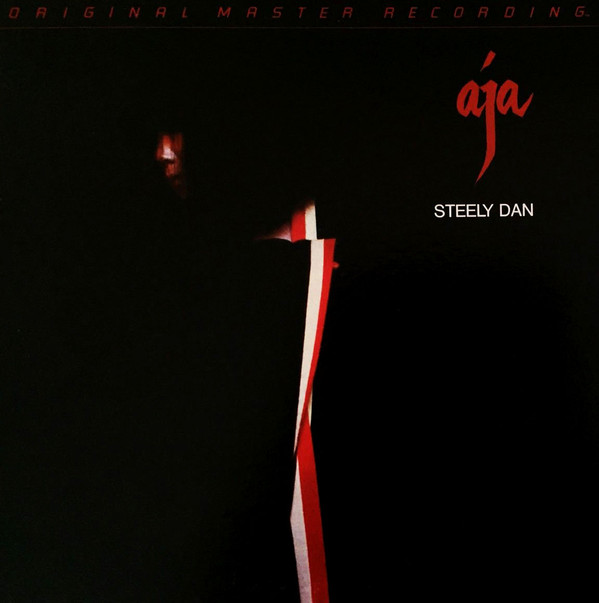
A couple of years ago, an interested party inquired about a Hot Stamper pressing of Aja he had seen on our site, specifically whether we were selling the AB first pressing or the AA reissue. You can find the discussion that ensued here.

As a kind of a postscript, we added:

By the way, [Joe] ended up not buying our Hot Stamper pressing. When you have to have an original, you have to have an original and that’s all there is to it.

If Joe was of a more scientific or skeptical bent — in other words, if he were more like me — he would have acquired an original, and then ordered our Hot Stamper in order to compare the two.

This is the subject I want to talk about today.

Audiophiles tend to subscribe to widely-held, conventional theories about what kinds of records are most likely to have the best sound. Outside of those of us who write for this blog, you will find very few audiophiles who believe that a substantial percentage of vintage reissues — not the modern ones, we’re talking about the ones from the 60s, 70s and even the 80s — are superior to their more original brethren.

Assuming Joe wanted the best sound — nobody who pays our prices could possibly be interested in anything else, right? — then he was simply making the point that since he wanted the best, and an original pressing absolutely had to be the best, nothing else would do, and that was that.

Joe could have done the experiment for himself easily enough. Had he asked us to send him our best AA pressing, we could have done that, and he could have compared that pressing to the original he no doubt owns, or, in the case that he had no original, acquiring one or more could have easily been arranged. They made them by the millions.

And that experiment might have resulted in an interesting learning experience, or not — who can say what the best pressing would have been on Joe’s stereo, with Joe’s ears doing the listening? It could have gone any which way, but something would have been gained in the act of sitting down to find out, for a fact, what pressing sounded better.

With all this in the back of my mind. just recently we did a shootout for Aja, and I checked the stampers for the two top copies.

Sure enough, the stampers found on the AB pressings won.

But those same stampers are found on the AA pressings for one of the titles, and one of the sides for the other title.

I could not even tell you for sure which pressings — AB or AA — actually won, because we rarely keep track of that information.

We only buy early pressings on the original labels because those are the only ones that sound good to us.

We don’t pay attention to the catalog number on the label because that doesn’t tell us anything of value. Playing the records is how we know what they sound like, and unless all the AB pressings beat all the AA pressings, or vice-versa, then that information is none of our concern.

Even if all the AB copies beat all the AA copies, we still have to buy, clean and play the AA copies in our shootouts because some of them are going to do well and can be offered to the customers who don’t want to spend the big bucks the top copies command.

We are generally opposed to having one-size-fits-all theories about the messy world of records, and you can find some of the commentaries we written about that subject here.

(more…)

What the Best Copies of Boston Really Get Right

Hot Stamper Pressings of Albums with Huge Choruses Available Now

The multi-tracked layers of guitars really come to life on the better copies. The not-so-great pressings tend to be congested and compressed, thickening the sound and diffusing the layers of multi-tracked harmonies. Tom Scholz’s uniquely overdriven, distorted leads have near-perfect timbre. On the top copies you can really hear how much power that sound adds to the music.

As is the case for the better pressings of Aqualung,just to take one example, when the guitar sounds this good, it really makes you sit up and take notice of the guy’s playing. When the sound works the music works, our seven word definition of a Hot Stamper.

Our killer copies have sweetness and tubey warmth we didn’t expect to hear. Better yet, the best copies have jump-out-of-the-speakers presence without being aggressive, no mean feat.

The good ones make you want to turn up the volume; the louder they get the better they sound. Try that with the average copy. When playing mass-market pop-rock music like this, more level usually means only one thing: bloody eardrums.

The typical Boston EQ is radio-friendly, not audiophile-friendly. But some were cut right, with the kind of richness, sweetness and smoothness that we fondly refer to here at Better Records as the sound of analog.

(more…)

Elvis Costello Arrayed His Armed Forces and Produced His Single Best Sounding Album

Hot Stamper Pressings of Elvis’s Albums Available Now

We consider Armed Forces to be one of the best sounding rock records ever made, and a copy like this White Hot Shootout Winner is proof enough to back up our claim. The best copies are extremely transparent and silky sounding, but with unbelievably punchy, rock-solid bass and drums.

The sound of the rhythm section ranks with the best we’ve ever heard. Beyond that, the musical chops of this band at this time rank with the best in the history of rock. Steve, Bruce and Pete rarely get the credit they deserve for being one of the tightest, liveliest backing bands ever to walk into a studio or on to a stage.

The song Oliver’s Army on the first side is a perfect example of what we’re talking about. Rock music doesn’t get much livelier than that.

Skip on down to Green Shirt for another track that’s as punchy as they come.

(more…)

One Of These Nights – We Broke Through in 2016

This 2-pack contains the best side one we’ve ever heard! The sound is bigger, richer, tubier and livelier than we even thought possible. Side one was so amazing, such an obvious step up over every side of every other copy, we felt it deserved to be awarded our “Four Plus” (A++++) grade. One of These Nights, Too Many Hands and Hollywood Waltz will blow your mind on this side one. 

  • Our lengthy commentary entitled Outliers & Out-of-This-World Sound talks about how rare these kinds of pressings are and how to go about finding them.
  • We no longer give Four Pluses out as a matter of policy, but that doesn’t mean we don’t come across records that deserve them from time to time.
  • Nowadays we most often place them under the general heading of Breakthrough Pressings. These are records that, out of the blue, revealed to us sound of such high quality that it dramatically changed our appreciation of the recording itself.
  • We found ourselves asking “Who knew?” Perhaps a better question would have been “How high is up?”

A Side One Like No Other

My notes read: ‘hi-rez, super tubey, breathy vocals with much less honk.”

Here is the one comment which really gets to the point of the better pressings: “guitar solos rise above.” The big solo on the title track just soars on this copy like we’d never heard before.

This is the guitar sound that Bill Szymczyk achieved with the band that Glyn Johns had not. Of course, it’s only fair to point out that Johns had never tried. He saw them as a Country Rock band. The Eagles saw themselves as a Rock band, it’s as simple as that.

  • Reviews and commentaries for albums with soaring guitars can be found here.

Also note on side one that the loud choruses and huge guitars on the second track, Too Many Hands, hold up on this side one amazingly well. It’s a great test track as well as the first, providing positive confirmation that what you will hear for the song One of These Nights — the size and the power — will carry all the way through this side one.

When you play side two of the first disc, the disc with the Four Plus side one, you may be rather shocked at how small and opaque it is, especially in comparison to the incredible sound of side one.

Side two in general tends to have worse sound than side one on this album by one half to one full grade, if our experience is any guide.

(more…)

Lincoln Mayorga Volume 3 – Listen for Strained and Blary Brass

Hot Stamper Pressings of Direct-to-Disc Recordings Available Now

Most copies of this album are slightly thin and slightly bright.

They give the impression of being clear and clean, but some of the louder brass passages start to get strained and blary, or glary if you like.

The good copies are rich and full.  The sound is balanced from top to bottom.

The sound is smooth, which allows you to play the album all the way through at good loud levels without fatigue.

On the best pressings, the trumpets, trombones, tubas, tambourines, and drums all have the true tonality and the vibrancy of the real thing. The reason this record was such a big hit in its day is because the recording engineers were able to capture that sound better than anybody else around [not really, but that’s what it seemed like at the time].

That’s also the reason this is a Must Own record today — the sound and the music hold up.

Just listen to that amazing brass choir on Oh Lord, I’m On My Way. It just doesn’t get any better than that. If ever there was a Demo Disc for Brass, this is one!

I used to think the Tower label copies were not as good — that the later pressings were pressed better. Now I know that it doesn’t matter what era the pressing is from: the tonal balance is the key to the best sound.

(more…)