*Arcana – Mastering Info

Helpful title-specific information on mastering houses and engineers to help you find better pressings and avoid the worst ones.

On Security, Robert Ludwig Let Us Down, Big Time

Hot Stamper Pressings of the Music of Peter Gabriel Available Now

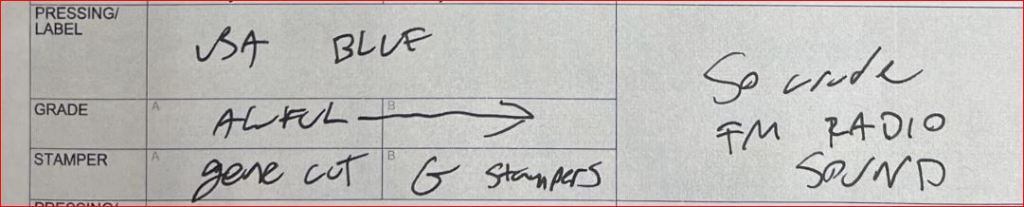
All the copies we had in our shootout were pressed domestically, and none of them were mastered by the legendary Robert Ludwig except for the one whose stampers you see below.

We awarded both sides of RL’s cutting a sub-Hot Stamper grade of 1+, which means the sound is passable at best, even after a good cleaning. (Without a good cleaning it would probably not even earn that single plus.)

We do not sell records with 1+ grades. We figure you can find those on your own. The world is full of them, as are most audiophile record collections.

1+ is actually a fairly good grade for many of the Heavy Vinyl pressings being made today. Some of the ones we’ve reviewed can be found in our Heavy Vinyl mediocrities section.

Any version of the album we sell will be noticeably — and probably dramatically — better sounding.

If you own any of those titles and didn’t pay much for them, you didn’t get ripped off too badly. You got something for your money. Not much, but something, and it would surprise us no end if any of them have been played much. Mediocre records tend to spend most of their lives sitting on record shelves. They’re not good enough sounding to bother with.

If you have any of these specific Heavy Vinyl pressings, something is wrong somewhere and it would be a good idea for you to figure out what before you flush any more money down the drain.

General Advice

On this title, forget the Brits. Every British pressing we played was badly smeared and veiled.

This took us somewhat by surprise because we happen to like the British PG pressings. However, So on British vinyl is awful too, so it’s clear (to us anyway) that the later PG records are bad on British vinyl and the early ones are better.

We are limiting our comments here to albums up through So. Anything after that is more or less terra incognita for us simply because we don’t care for any of the music he was making after 1986.

(more…)

Oh, So That’s Who Butchered Neil Young’s Greatest Hits

Hot Stamper Pressings of the Music of Neil Young Available Now

When I reviewed the Classic Records pressing of Neil Young’s Greatest Hits in 2005, I had never heard of Chris Bellman. As it turns out, he’s the guy who cut this piece of crap. I had no idea. And why would I care anyway?


UPDATE 2025

The median price the album sells for on Discogs as of 10/2025 is $142.92, and it has sold for as much as $288 and change in the past. There are bigger wastes of money in the world of records — this guy can be counted on to produce more than his share, some at prices that even make us blush — but it is hard to imagine how anyone could get less for his $142 than by buying this 2 disc set.


The most shocking thing about the fact that he cut the album is not how awful it sounds.

No, there are plenty of awful sounding Heavy Vinyl pressings in the world, enough to fill up the glossy-paged catalogs of every mail order audiophile record dealer from here to Timbuktu.
What is shocking is that there are audiophiles — self-identified lovers of sound, who are supposedly capable of telling a good sounding record from a hole in the ground — that defend this man’s work.

How does anyone take this guy’s records seriously?

To be fair, it should be said that I actually like one of the records Mr Bellman has cut, the 45 of Brothers in Arms, discussed here. An excerpt:

[In this video] I’m asked if I like any modern mastering engineers, and the only one I can think of is Chris Bellman, because he mastered one of the few Heavy Vinyl pressings I know of that sounds any good, Brothers in Arms, released in 2021. I played it when Edgers [Geoff Edgers from WAPO] brought it by the studio when he first visited me in preparation for his article.

My best copy was clearly better in some important ways, but Bellman’s mostly sounds right, and that surprised me because most of these modern records sound funny and weird and almost never sound right.

(Geoff brought over three records that day: Brothers in Arms, the remastered Zep II, and a ridiculously bad sounding Craft pressing of Lush Life, which was mastered by Kevin Gray, and one which I have not had time to review yet. It was my introduction to the Craft series, and let’s just say we got off on the wrong foot. I told Geoff it sounded like a bad CD, and that’s pretty much all I remember of it. The average price for that pressing on Discogs is roughly $69 these days. The CD is cheaper and there is very little doubt in my mind that it would be better sounding to boot.)

I stand by my admiration for Brothers in Arms, a very good reissue, something that might give one of our lowest level Hot Stamper pressings a run for its money.

But he has a lot of explaining to do when it comes to the other records of his we (and Robert Brook) have played. Reviews are coming, late as always, but for now here is what we’ve written about the records he’s credited with remastering.

(more…)

Artisan Let Us Down on Some of the Early Green Label Pressings

Hot Stamper Pressings of the Music of James Taylor Available Now

Our most recent Shootout Winner was a very special copy indeed:

A wonderful copy of JT’s classic followup to Sweet Baby James with KILLER Shootout Winning Triple Plus (A+++) grades or close to them on both sides.

This early Green Label pressing demonstrates the Tubey Magical midrange that modern records almost never reproduce. The sound of most of the tracks on the better pressings is raw, real and exceptionally unprocessed.

The only pressings we put in shootouts these days are cut at Artisan, on transistor equipment we should note, but the kind of transistor gear that, to the best of our knowledge, no longer exists — the kind that transforms the Tubey Magic found on the tape into Tubey Magical grooves on the record.

Bernie Grundman used to have equipment like that back in 1971. The evidence is there for all to hear on records like this one. Oddly enough the two titles have remarkably similiar qualities.

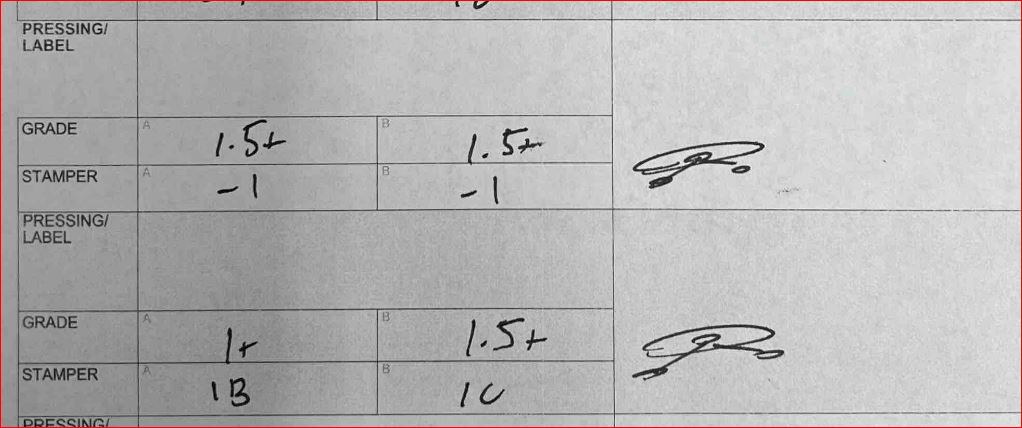
But not all Artisan cuttings are equal, as our stamper sheet from the shootout makes clear.

-1/-1 earned 1.5+ Hot Stamper grades, which means the sound is good, not great.

1.5+ is four grades down from the top copy. That’s a steep dropoff as far as we’re concerned. 1.5+ only hints at how good a recording Mudslide Slim can be on the best vintage Green Label Artisan-cut pressings. (For those who might be interested, there’s more on our grading scale here.)

1B/1C, the worst pressing from our shootout, is what we would consider passable. It’s not a bad sounding record, but it’s not good enough to qualify as a Hot Stamper.

The world is full of records that sound like the 1B/1C cutting of Mud Slide.

(more…)

How Good Is the Bilbo (Dennis Blackham) Cutting of Avalon?

Hot Stamper Pressings of the Music of Roxy Music Available Now

An erstwhile customer wrote this on Reddit (I think that’s where I found it) a few years ago:

…the 7 Hot Stampers records i have bought from Better Records in the past, (albums I know well all my life, and that I have already had many versions, incl. OG’s 1st, and “audiophile” versions) are some of the best sounding records in my collection.

They have helped improve my listening skills enormously; not just “listening”, but 100% enjoy and appreciate the music. Seeking out for my “own” hot stampers now, is what really makes this hobby so interesting! (for example: Roxy Music Avalon, after buying and comparing 5 copies, incl. UK 1st Arun cut, I now have “my” best sounding one, and indeed it is a reissue (vintage, not modern “audiophile”)¨! Denis Blackham (BilBo) did a very good job on this one…

I replied:

Yes, the Bilbo cutting of Avalon can be very good, something we know from having played them by the dozens.

It has been many years, more than a decade I should think, since a Bilbo cutting won a shootout. Still, they can be very good, probably falling somewhere in the 1.5+ to 2+ range, but if you want to, you can certainly do a lot better, which is the kind of thing you learn when you have piles and piles of clean British pressings to play.

We stopped buying the Bilbo pressings many years ago, and they no longer show up in our stamper sheets these days. Why spend the money for them when something better is just as easy to find?

Nevertheless, Bilbo is a great mastering engineer and his work is worth seeking out, even though he did not knock Avalon out of the park.

On another note:

If modern engineers are so good at their jobs, as so many on this thread keep implying, where are the records they’ve made that can compete with Bilbo’s cuttings from the old days?

Please name them. I know of none, and I am hoping someone will take pity on a poor fool such as myself and help enlighten me.

Based on the vitriol I am reading, the consensus is that my benighted ravings are shameful and outlandish.

If anyone needs a clue, it’s pretty obvious I do.

Please help me understand what I have been missing for the last few decades, decades in which I was playing tens of thousands of records, listening to them critically and posting my thoughts about them in the 5000 6000 listings found on my blog. (If indeed I am wrong about all this, I’m sure wrong a lot!)

Of course I did not get an answer to that question, and doubt I ever will.

All that would be needed is the name of one specific pressing, mastered by one specific person or company, and released on one specific label with a specific catalog number.

How is it possible that the fans of these Heavy Vinyl records cannot name one good one?

I know how it is possible. The reason no one can name any of the great records being made these days is that no such records are being made these days.

It is our strongly held belief, backed up by mountains of evidence, that there is simply no one alive today making records as good as the ones Bilbo and other mastering engineers have ben making starting all the way back in the 50s and continuing through the 80s and beyond.

This blog is a testament to that fact, as are the Hot Stamper pressings we offer at Better Records.

(more…)

When Fisher Took Over from Goodall, He Really Let the Side Down

Hot Stamper Pressings of Recordings by Decca Available Now

Please keep in mind that, as per our usual, the record you see pictured is not the record we are discussing in this posting.

The stamper numbers you see below belong to a different album.

The quick takeaway: Stan Goodall (“E”) cut the Shootout Winning early pressings.

Then, for reasons known only to the folks at Decca, Harry Fisher (“W”) took the reins and managed to cut some side twos that were very good. Not as good, but still very good: 2+ most of the time, some slightly worse. They were not as weighty or rich, and we take a lot of points off for records that are not as weighty or rich as they should be.

By the time Decca had changed its label to the Decca in a Box design, Mr. Fisher was cutting all the pressings, and, in our experience, not doing an especially good job. We do not even offer records with grades that low.

The sound might be passable, and would probably still be better than whatever Heavy Vinyl pressings might have been made from the tapes in the last twenty years, but that’s not good enough for us here at Better Records, not at the prices we charge anyway.

We described Fisher’s sound as dry and hot on side one, and thin and very small on side two of the 5W-stamped pressing we played. We only had the one, and the reason we had even one after having heard other Boxed Decca pressings do poorly, is that it’s a good way to stay honest and to have a better baseline to work with.

If we played nothing but 3E/1E originals, most of those 1E side twos would have earned a 2+ grade, but they would have sounded much better than the 2W-graded copies, and that seriously screws up the grading scale, especially when clean originals cost us a hundred bucks or more these days.

(more…)

Turned Up Good and Loud, Carnavalito Is Glorious

Records that Must Be Turned Up Good and Loud to Sound Their Best

UPDATE 2024

The commentary about Carnavalito you see below was written in 2016. With the 12 foot high ceiling in our new, bigger and quite a bit more spacious studio, I’ll bet this album sounds even more mind-blowing than it did back then.

Ken Perry mastered all the best early pressings — accept no substitutes.

Here in 2024 we’ve just done the shootout again, our first since 2016.

Sky Islands is not an easy record to find as it didn’t sell particularly well, but those of you who treasure the music of Weather Report or Return to Forever or The Mahavishnu Orchestra the way we do here at Better Record (or, to be clear, some of us do) will find much to like here.

Finding customers for music most audiophiles have never heard of, let alone heard, has always been the trick with well recorded, mostly unknown releases such as Sky Islands.

Which means that this is a woefully underrated album that should be more popular with audiophiles.

It’s also one of those difficult-to-reproduce records that I credit with helping me make real progress in audio (along with a great many others.).


Carnavalito is a track that really comes alive when you crank up the volume. I played it full blast on two different occasions for audiophile friends of mine just to show them what happens when a big speaker system meets a recording with absolutely amazing audiophile quality sound — big and bold, wall to wall and then some!

It’s my favorite track not only for the album as a whole but for the band’s entire recorded output. It just doesn’t get any better than this if you have the system for it.

Hearing the megawatt energy in the section when the soprano saxophonist jumps in, right into an ongoing orgy of wild percussion, who then proceeds to blow his brains out — now that is a thrill beyond belief. Played REALLY LOUD it’s about the closest to The Real Thing, the Live Event, that you will ever hear in your living room. (Unless you have a very large living room and lots of latin jazz musician friends.)

Even a year ago there was no way I could get that music to play that LOUD, that CLEANLY, and that CORRECTLY in terms of tonality, from the deepest bass to the highest highs, with the wild swings in dynamics that the recording captures so well.

The audio revolution is alive and well. It’s never too late to join in the fun.

(more…)

What the Hell Happened to Bernie Grundman and Doug Sax?

Hot Stamper Pressings of Contemporary Jazz Albums Available Now

The best Contemporary pressings of George Cables’s 1980 release, Cables’ Vision, have truly wonderful sound. (Our complete review can be found here.)

This should not be too surprising as it was recorded by one of our favorite engineers, Allen Sides, working out of his Oceanway studios. (Supposedly he is a big fan of vintage mics and the like, with many superb and valuable examples.)

In addition, the album was mastered by Bernie Grundman, who was at the time still cutting very good sounding records, this being 1980. Since then he has gone precipitously downhill, as we have noted on the site to the dismay of his many supporters.

Bernie is the man who cut some of the best sounding records I have ever played, including many of the best Contemporary recordings, but his work in recent decades has left much to be desired.

And he sure has fooled a lot of audiophile record reviewers.

Not us, of course. We never jumped on the Classic Records bandwagon, and to this day we cannot understand how any critical listener could be fooled by the countless Heavy Vinyl mediocrities and failures that awful label put out.

You can say the same thing for Doug Sax, a man whose work took a turn for the worse long ago. The sad reality is that the dull, thick, lifeless, recessed, veiled, ambience-free records he cut for Acoustic Sounds and Klavier in the 90s were no worse than the dreck being made today.

The more things change…

(more…)

How Does the Capitol Club Cutting of Master of Reality Sound?

Hot Stamper Pressings of the Music of Black Sabbath Available Now

Somebody at Capitol did not do a very good job when cutting this album for members of the Capitol Record Club. The sound is papery, gritty, and, not to put too fine a point on it, just awful.

Did he try real hard and fail? Was he incompetent? Was he lazy? I doubt we’ll never know!

Discogs gives out the following info for the release:

Mastering at Artisan Sound Recorders and pressing by Columbia Records Pressing Plant, Scranton are uncredited on release. 

    • Matrix / Runout (Side A ): SW-1-93896 W2#1 (IAM Scranton Identifier)
    • Matrix / Runout (Side B): SW2-93896-R4 (IAM Scranton Identifier)

Hard to believe Artisan and IAM would do such a bad job, but if Discogs is to be believed, apparently it’s possible.

Not all record club pressings are bad though; that’s painting with too broad a brush.

Here’s one we are big fans of.

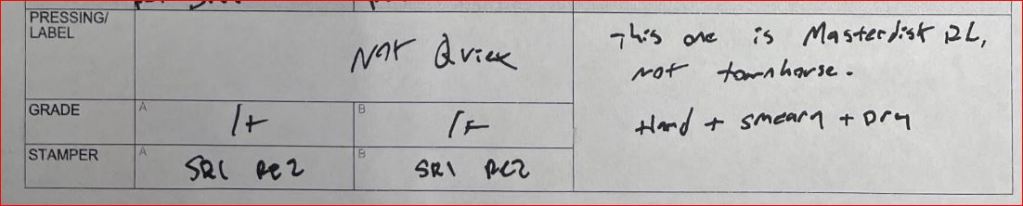
Of course, it helps if your record club pressings are mastered by Bill Kipper at Masterdisk.

He was one of the greats, and there is simply no one like him alive today, at least as far as we know. We had this to say about that subject many years ago:

Think what a different audio world it would be if we still had Bill Kipper with us today, along with the amazingly accurate and resolving cutting system he used at Masterdisk.

As far as we can tell, there are no records being produced today that sound remotely as good as this budget subscription disc.

Furthermore, to my knowledge no record this good has been cut for more than thirty years. The world is awash in mediocre remastered records and we want nothing to do with any of them, not when there are so many good vintage pressings still to be discovered and enjoyed.

The likes of Bill Kipper are no longer with us, but we can be thankful that we still have the records he and so many talented others mastered all those years ago, to enjoy now and for countless years to come.

(more…)

The Riddle of the Vastly Different Sides Has Been Solved

Hot Stamper Pressings of Recordings Featuring the Violin

About ten or fifteen years ago we came across a puzzling Shaded Dog pressing of the Bruch / Vieuxtemps recording from 1962 with Heifetz, LSC 2603.

We were surprised at the time how much worse one side sounded than the other. That had rarely if ever happened back in those early Living Stereo shootout days.

We sold the record as a one-sided disc with one complete performance in top quality sound, The Scottish Fantasy. Obviously the Vieuxtemps / Concerto No. 5 wasn’t worth playing; the sound was sub-par, a pale shadow of the sound of the other side of the record. You can read all about it here.

Well, we ran into those stampers again, or at the very least we ran into a copy with the same bad stampers for side one, 5s. Something sure went wrong somewhere, as you can see from our notes below.

At the time we described this curious pressing this way:

The violin is captured beautifully on side two. More importantly there is a lovely lyricism in Heifetz’s playing which suits Bruch’s Romantic work perfectly. I know of no better performance.

The performance of the Vieuxtemps Concerto No. 5 is also wonderful, but the sound is not. Want proof that two sides of the same record can have vastly different sound? Here it is. Note how oversized the violin on side one is, how smeary the orchestra, how little texture there is to anything in the soundfield. This side one is no Hot Stamper.

All true, and now that we know that 5s etched stampers are responsible for the bad sound and not just some pressing anomaly, we can all sleep peacefully once again.

(more…)

Are All the Masterdisk Pressings of 2112 Good Sounding?

Hot Stamper Pressings of the Music of Rush Available Now

Even though many of the original pressings are mastered at Masterdisk (by HW, BK and GK), some of the reissues from 1979 on the “skyscraper” label are too.

But none of the later pressings we played sounded very good. Audiophiles looking for top quality sound should stick to the domestic originals.

What We’re Listening For On 2112

  • Energy for starters. What could be more important than the life of the music?
  • Then: presence and immediacy. The vocals aren’t “back there” somewhere, lost in the mix. They’re front and center where any recording engineer worth his salt would put them.
  • The Big Sound comes next — wall to wall, lots of depth, huge space, three-dimensionality, all that sort of thing.
  • Then transient information — fast, clear, sharp attacks, not the smear and thickness so common to these LPs.
  • Tight punchy bass — which ties in with good transient information, also the issue of frequency extension further down.
  • Next: transparency — the quality that allows you to hear deep into the soundfield, showing you the space and air around all the instruments.
  • Extend the top and bottom and voila, you have The Real Thing — an honest to goodness Hot Stamper.

(more…)