Record Labels with Shortcomings

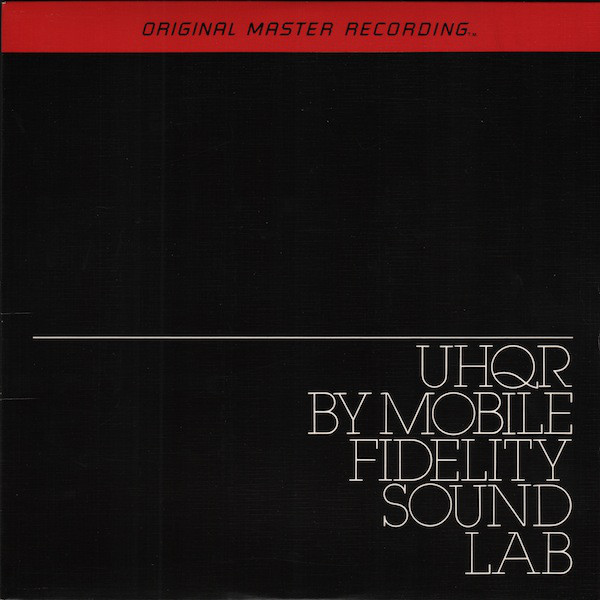
Sgt. Pepper’s and Mistaken Audiophile Thinking (Hint: the UHQR Is Wrong)

Hot Stamper Pressings of Sgt. Peppers Available Now

This commentary was probably written between 2005 when we did our first shootout for the album and 2008, by which time it would have been a regular feature on the site. 

We charge hundreds of dollars for a Hot Stamper Sgt. Pepper, which is a lot to pay for a record. But consider this: the UHQR typically sells for a great deal more than the price we charge and doesn’t sound remotely as good. 

Of course the people that buy UHQRs would never find themselves in a position to recognize how much better one of our Hot Stampers sounds in a head to head shootout with their precious and oh-so-collectible UHQR.

They assume that they’ve already purchased the Ultimate Pressing and see no reason to try another.

I was guilty of the same mistaken audiophile thinking myself in 1982. I remember buying the UHQR of Sgt. Pepper and thinking how amazing it sounded and how lucky I was to have the world’s best version of Sgt. Pepper.

If I were to play that record now it most likely would be positively painful. All I would hear would be the famous MoFi 10K Boost on the top end (the one that MoFi lovers never seem to notice), and the flabby Half-Speed mastered bass (ditto).

Having heard really good copies of Sgt. Pepper, like the wonderful Hot Stampers we put on the site from time to time, now the MoFi UHQR sounds so phony to me that I wouldn’t be able to sit through it with a gun to my head.


UPDATE 2025

If you are still buying these remastered pressings, making the same mistakes that I was making before I knew better, take the advice of some of our customers and stop throwing your money away on Heavy Vinyl and Half-Speed mastered LPs.

At the very least let us send you a Hot Stamper pressing — of any album you choose — that can show you what is lacking on your copy of the album.

And if for some reason you disagree with us that our record sounds better than yours, we will happily give you all your money back and wish you the very best.

To learn more about records that sound dramatically better than any Half-Speed mastered title ever made (with one exception, John Klemmer’s Touch), please go to our Half-Speed mastering main page .
(more…)

If You’re Just Getting Started, Beware of LPs that Will Inhibit Your Progress

Hot Stamper Pressings of Blue Note Albums Available Now

Robert Brook wrote a scathing review of the Tone Poets pressing of One Flight Up in 2023, much to the dissatisfaction of some of his readers. I was the first to leave a comment as I thought he hit the nail on the head when he said:

Overall, the Tone Poet is closed, distant and frankly boring to listen to. Where is the energy of the music? Where is the presence of these musicians? Where is the studio space?

The snare sounds muted. the piano weak, the horns, especially Gordon’s saxophone, resolves poorly and becomes increasingly tiresome to listen to. On my first listen I lasted about 3 minutes into side 1, mostly because I couldn’t stand the way the sax was sounding.

I posted the comments below on Robert’s review. (I have taken the liberty to rewrite some of my comments for the purposes of clarity, along with some additional thoughts.)

Robert,

Another great post. I have many comments to make, so here goes.

When audiophiles prefer records which are clearly second-rate, more often than not I chalk it up to their lack of a better record to play. In order to hear what they are missing, they have to have a record that somehow makes clear to them precisely which aspects of the sound are failing, or at the very least, not up to par.

You could give out the stamper numbers for your Blue Note reissue — I would be surprised if it does not have VAN GELDER STEREO in the dead wax — and those who like the Tone Poets release of One Flight Up could easily find one on Discogs or Ebay and do the comparison for themselves.

But you know what? I would bet you dollars to donuts they will never do that. They simply won’t bother.

To some audiophiles who collect records, collecting is simply not about sound quality.

It’s about collecting the right audiophile pressings.

These folks don’t want some old Blue Note reissue from the 70s. They want a fancily-packaged remastered record on high quality vinyl that’s made by a label that really cares. If it’s a numbered limited edition, even better!

If these people wanted to find out what is wrong with the sound of the Tone Poets pressing you played — thanks for laying it all out in detail so no one can doubt that you listened carefully and heard what’s really in those grooves — they could easily find a vintage copy of the record that would make a mockery of the one they own.

Twenty years ago I wrote something about this very subject:

(more…)

A Trick Of The Tail – A MoFi Disaster to Beat Them All

This review is fairly old, probably from 2005-2010.

Not long ago I played the MoFi pressing of Trick of the Tail and could not believe how ridiculously compressed it was.  Rarely have I heard sound as squashed as that which is heard on this LP.

On top of that, the midrange is badly sucked out (as is the case with most Mobile Fidelity pressings) making the sound as dead, dull and distant as can be.

Is it the worst version of the album ever made? Hard to imagine it would have much competition. I have the CD and it’s fine. It sounds like a digital version of the British pressings we favor (the domestic pressings having been made from dubs of course).  The MoFi is bad enough to have earned a place in our Mobile Fidelity hall of shame.

You think Modern Heavy Vinyl pressings are lifeless? Play this piece of crap and see just how bad an audiophile record can sound.

And to think I used to like this version! I hope I had a better copy back in the 80s than the one I played a few years ago. I’ll never know of course. If you have one in your collection give it a spin. See if it sounds as bad as we say. If you haven’t played it in a while (can’t imagine why, maybe because it’s just plain awful), you may be in for quite a shock.

If you are still buying these audiophile pressings, take the advice of some of our customers and stop throwing your money away on Heavy Vinyl and Half-Speed mastered records.

(more…)

Elvis Costello Likes Mobile Fidelity Records About as Much as I Do

Hot Stamper Pressings of the Music of Elvis Costello Available Now

And he doesn’t even know how bad they sound!


Excerpted from an interview in Variety.

People do seem to have caught on to “Painted” as a classic, though, even well outside the realm of your hardcore fans. I saw it on web forums where there were so many people thirsting over the two different editions of the album that Mobile Fidelity put out prior to this, calling it one of the great albums of the ’90s and clamoring to get the best available vinyl versions.

Well, I don’t have any opinion about that. I don’t hold with that company putting their name above the artist. I don’t like the way their records look. I’ve never listened to any of ’em because of that. I think there’s a huge arrogance. Because I’ve worked with the greatest, Bob Ludwig, who mastered the original record, remastered this (new Universal edition), mastered everything else. He’s the end of the story about that. So Mobile Fidelity can fuck themselves. If you put your name above the artist and above the title, what gives you the temerity to do that? You didn’t make the record.

But you must be proud of the fact that this body of work is so well-regarded…

Yeah. Apart from those copies. I’m kidding. They can do what they want with it. I mean, people are listening to it on a memory stick or whatever, you know? I guess it’s better that it exists than it doesn’t exist. It’s like when people say, are you worried about your birthday coming up? I go, you know what’s worse than having a birthday? Not having a birthday. (more…)

Keith Jarrett – The Köln Concert

More Jazz Recordings of Interest

  • You’ll find solid Double Plus (A++) grades or close to them on all FOUR sides of these vintage EMC pressings
  • A surprisingly tough record to find with vinyl that plays as quiet as this copy does – you will have a very hard time finding this kind of top quality sound (particularly on side one, two, and three) and quieter vinyl, that’s for sure
  • The overall sound on sides one, two, and three is rich and full-bodied yet still clean, clear and dynamic with plenty of bottom end weight, and side four is not far behind in all those areas
  • 5 stars: “With this album, Jarrett put himself in his own league, and you can feel the inspiration coming off him in waves. This is a true and lasting masterpiece of melodic, spontaneous composition and improvisation that set the standard.”
  • If you’re a Keith Jarrett fan, or perhaps a fan of mid-’70s Jazz Piano, this title from 1975 is surely a Must Own.
  • The complete list of titles from 1975 that we’ve reviewed to date can be found here

(more…)

Judging the Sound of Heavy Vinyl We’ve Never Played

Hot Stamper Pressings of Pablo Recordings Available Now

We freely admit that we have never played the Heavy Vinyl pressing of The Alternate Blues on the Analogue Productions label. It started life in 1996 as APR 3010, part of the Analog Revival Series on 150 gram vinyl (average price on Discogs these days: $99), and now it seems to be in print on 180 gram vinyl, made from the same metalwork by the looks of it.

The mastering of the Analog Revival Series pressing may have been credited to Bruce Leek and Stan Ricker, but the stamper information is TML, The Mastering Lab all the way.

In case you, unlike us, are tempted to try one or both of the AP pressings, or perhaps already own one or both, here is our advice on how to recognize the fairly predictable shortcomings of Chad’s pressing, or any pressing mastered by Doug Sax in the 90s for that matter. Every one we’ve ever played has suffered from the same suite of sins.

The Best Part

And we expect that the AP pressing’s failures in some areas will be so obvious that you really don’t need any other copy of the album to be able to hear them.

Just focus on the two qualities that Analogue Productions’ records have always failed to deliver: transparency and freedom from smear.

In our 2011 shootout notes we drew the reader’s attention to both:

(more…)

This Beethoven Ninth Started Out with Two Strikes Against It

Hot Stamper Pressings of the Music of Beethoven Available Now

MoFi took the shortcomings of a mediocre-at-best Decca recording from 1972 and made them even worse by means of their ridiculously misguided mastering decisions and wacky cutting system.

They should not have chosen this performance of the Ninth Symphony in the first place, and they certainly should not have added the treble they chose to add, which they did to this title and to every classical recording they remastered without regard to whether or not the recording needed brightening. None that I know of did. Try telling that to the brain trust running MoFi.

(They hired this guy to do their one-step digitally remastered pressings and from the get-go he’s been giving audiophiles the most ridiculously phony sounding records that collectors with way too much money can buy.)

The Decca recording of the Ninth from 1972 is opaque, lacks size and space, and comes off as a bit flat and dry.

Like practically every later Decca pressing we play, it’s passable at best.

Londons and Deccas from this era (1972 in this case) rarely sound very good to us.

Here is what we specifically don’t like about their sound.

If you want to know what’s wrong with the Mobile Fidelity pressing, take the above faults and add some others to them.

Start with an overall brighter EQ, add a 10k boost for extra sparkly strings, the kind that MoFi has always been smitten with, and finish with the tubby bass caused by the half-speed mastering process itself.

Voila! You are now in the presence of the kind of mid-fi trash that may have fooled some audiophiles way back when but now sounds as wrong as the records this ridiculous label is still making today.

Here are some other pressings with bright string tone that are best avoided by audiophiles looking for top quality sound.

1981 Was a Long Time Ago

Old school audio systems are notorious for being dark, dull and lacking in transparency. They might need bright records in order to sound good, but high quality modern systems do not.

If these two MoFi pressings sounds right to you, you are very likely living with one of those old school systems and it is long past time to get rid of it.

(more…)

Here Are Just a Few of the Signs You May Be a Crackpot

Skeptical Thinking Is the Foundation of Audio Advancement

Pete Hutchinson of The Electric Recording Company came up with a new idea that he believes can solve all the problems of the record world.

He wants people to understand that records don’t need to be mastered.

In order to make the best sounding pressings, you just buy the right old tube equipment, get it working, get hold of the master tapes, and then patiently and carefully transfer them as flatly as possible, with the least amount of meddling.

You see, in his world the meddling is the problem.

And, like all crackpots, he has a simple but wrong solution for a complicated problem.

If you think cooked food is the cause of human ailments, and raw food is the solution to the health problems of the modern world, you are a crackpot.

If you think the world is flat and not more or less spherical, you are a crackpot.

If you think you have an aura of energy surrounding you which no one can see but which is part of your true being, a sign of your true, spiritual self, you are a crackpot.

If you think that three-wheeled cars are the solution to transportation problems in the modern world, and you’ve built one in your garage, and now all you need are investors to get the word out, you are a crackpot.

And Your Point Is?

Pete Hutchinson is someone who fits nicely into this group, because he is also a crackpot. He is an audiophile crackpot.

His “solution“ to the problems of the sound of records may be novel in the sense that no one has ever tried it at scale, but there’s a reason no one would be foolish enough to transfer master tapes to vinyl without the benefit of equalization, level adjustment, compression and a host of the other interventions mastering engineers make use of.

Records some of those things — maybe not all of them, but certainly some of them — in order to sound their best.

The fact that he is unable to hear how bad his “unmastered” records sound — and we can lump him in with all his customers who appear to be equally hard of hearing — is both comical and pathetic in equal measure.

We heard how bad his pressings sound, and we wrote about their many faults here.

(more…)

Venerable or Execrable? If It’s Athena the Chances Are Good It’s the Latter

Hot Stamper Pressings of the Music of Rachmaninoff Available Now

I spied an interesting quote on the Acoustic Sounds site many years ago:

“…Analogue Productions’ 45rpm remastering improves upon the venerable Athena LP release from the late 80s, with better dynamics and a fuller ‘middle’ to the orchestral sonority.” – Andrew Quint, The Absolute Sound, October 2010

For some reason Andrew uses the word “venerable” when a better, certainly more accurate term would have been “execrable.” Having played the record in question this strikes us as the kind of mistake that would not be easy to make.

Athena was a godawful audiophile label that managed to put out all of five records before going under, only one of which was any good, and it’s definitely not this one.

It was in fact the Debussy piano recording with Moravec, mastered by the venerable Robert Ludwig himself, a man who knows his classical music, having cut scores if not hundreds of records for Nonesuch and other labels in the 60s and 70s.

From the jacket:

Analogue Master Recording™

Unlike other remastering companies, Athena Records always uses the ORIGINAL ANALOG MASTER SESSION TAPES. In this case, The Master Lacquers were cut directly by Doug Sax at The Mastering Lab so you know it will sound superb.

Our Hot Stamper listing for the Vox pressing:

This famously good sounding Vox pressing os Symphonic Dances has been remastered a number of times, but you can be sure that the Hot Stamper we are offering here will beat any of those modern pressings by a wide margin in any area that has to do with sound (surfaces being another matter and one we won’t go into here).

The sound of this recording on the best pressings is dynamic, lively and BIG. The music just jumps out of the speakers, bringing the power and vibrant colors of a symphony orchestra right into your listening room. Guaranteed to put to shame 95% or more of all the classical records you own, even if you own lots of our Hot Stampers. [Can’t say I would agree with that in 2023.]

The bass is phenomenal on this recording, assuming you have a copy that has the bass cut and pressed right. This one sure does! Few Golden Age classical recordings from the 50s will have the kind of bass that’s found on this record.

(more…)

Are All MoFis Created Equal? A Pair of Pink Floyd LPs Proved They Aren’t

Hot Stamper Pressings of the Music of Pink Floyd Available Now

[This commentary was written about twenty years ago.]

Many audiophiles are operating under the misapprehension that Mobile Fidelity managed to eliminate pressing variations of the kind we discuss endlessly on the site.

That is simply not the case, and it’s child’s play to demonstrate how misguided this way of thinking is, assuming you have the following four things: good cleaning fluids and a machine, multiple copies of the same record, a reasonably revealing stereo, and two working ears.

With all four the reality of pressing variations for ALL pressings is both obvious and incontrovertible.

The discussion below of a Hot Stamper pair of Dark Sides from long ago may shed light on some of the issues involved.

Remember Classic Records Comparison Packages?

This is our first Hot Stamper Comparison Package.

For those who remember the 45 RPM/ 33 RPM Classic Records comparison packages, this is somewhat in the same vein. Of course, we don’t know that they kept the EQ the same for the 45 versions compared to the 33s of the albums included in the package, so the comparison is suspect at best.

You’re not really comparing apples to apples unless you keep the EQ exactly the same. I rather doubt they did, because on Simon and Garfunkel the sound was noticeably worse at 45 than it was at 33. This is the main reason we don’t carry the 45 versions of Classic’s records: they are a lot more money, and who knows if they’re even any better?

[This one sure wasn’t better. This guy liked it, but he is rarely right about any of this record and equipment stuff, as I hope everyone knows by now.]

(more…)