Record Labels with Shortcomings

The Alan Parsons Project – A MoFi Disaster

Hot Stamper Pressings of Albums Engineered by Alan Parsons Available Now

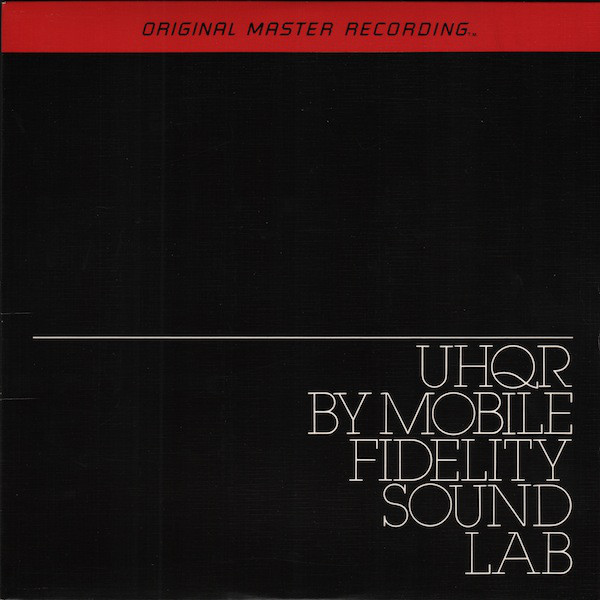
MoFi Regular LP: F / UHQR:

Two — count ’em, two — hall of shame pressings and two more MoFi Half-Speed Mastered Audiophile LPs reviewed and found wanting.

The MoFi is a textbook example of their ridiculous affinity for boosting the top end, not to mention the extra kick they like to put in the kick drum, great for mid-fi (sometimes known around these parts as stone age audio systems) but a serious distraction on a high end stereo with good low end reproduction.

If you like the album –and that’s a big if, I myself have never been able to take it seriously — try the Simply Vinyl or the Classic LP.

Even the UHQR sucks. Don’t kid yourself. They’re still mastered by Stan Ricker, and he likes plenty of top end.

Like the old saying goes, if it’s worth doing it’s worth overdoing.

(more…)

Letter of the Week – “I think It’s a bargain at $800. It absolutely trashes my Mofi version…”

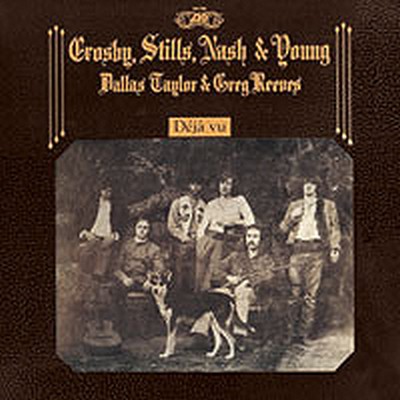
Hot Stamper Pressings of the Music of Crosby, Stills, Nash and (Sometimes) Young

One of our good customers had this to say about a Hot Stamper pressing he purchased recently:

Hey Tom,   

I couldn’t believe what I was hearing on the Crosby Still, Nash & Young Deja Vu White Hot stamper A+++ on both sides and absolutely dead quiet. I think It’s a bargain at $800.00. It absolutely trashes my Mofi version into bits and pieces. I don’t even want to mention the Classic records version because it’s painful to listen to. I’m writing up this record today and the Frank Sinatra and Count Basie Live at the Sands tomorrow.

Thanks,

Naz

Naz,

The Heavy Vinyl and Half-Speed Mastered pressings of Deja Vu are, as you say, practically unlistenable once you know what that record should really sound like, and now that you have a Hot Stamper pressing, you definitely know just how good the record can sound.

Demo Disc barely begins to do it justice.

Hey, I was fooled back in the mid-’80s – I used to demonstrate my system with the MoFi Deja Vu! How screwed up is that?

Let’s just say we have made a lot of progress in audio since then. We’ve learned a great deal about record collecting too, practically all of it derived from the thousands of shootouts we’ve conducted over the last twenty years, using tens of thousands of different pressings.

Houses of the Holy on Classic Records Heavy Vinyl

We can describe the sound of this miserable Bernie Grundman remaster in two words: ridiculously bright.

Honestly, what more do you need to know? It’s almost as bad as the Zep II he cut, and that record is an abomination.

Is it the worst version of the album ever made? Hard to imagine it would have much competition.

(Oh but it does – this misbegotten series out of Japan will do nicely to illustrate how brighter is not necessarily better, it’s just brighter.)

Over the years we have done many Led Zeppelin shootouts, often including the Classic Heavy Vinyl pressings for comparison purposes. After all, these Classic LPs are what many — perhaps most — audiophiles consider superior to other pressings.

We sure don’t, but everybody else seems to. You will find very few critics of the Classic Zeps LPs outside of those who write for this blog, and even we used to recommend three of the Zep titles on Classic: Led Zeppelin I, IV and Presence.

Wrong on all counts.

We don’t actually like any of them now, although the first album is still by far the best of the bunch.

(more…)

Classic Records – More of the Same Old Same Old

Hot Stamper Pressings of Vintage Columbia Albums Available Now

Weaver of Dreams is yet another Classic Records LP that’s hard to get excited about.

The notes I found attached to a copy in the backroom and played should be all you need to know to avoid the Classic pressing.

Shifted up (tonally) and hard.

Who wants a classic Columbia that sounds like that, especially one that was recorded in Columbia’s legendary Columbia 30th street studio recordings.

Years ago we wrote that Bernie Grundman’s work for Classic Records could be summed up in these four wordsIt seems that this Burrell record has some of those rather obvious shortcomings.

There are certainly some incredible sounding pressings of this album out there, but who has the resources it would take to find them?

Most of the early stereo 6-Eye pressings we come across these days turn out to have constant surface noise. Many have severely damaged inner grooves. Even the mintiest looking copies often turn out to be too noisy for most audiophiles.

This is of course why the hacks at Classic Records did so well for themselves — until they went under — hawking remastered versions of classic albums pressed on new, quieter vinyl.

The problem is that most of their stuff just doesn’t sound all that good, this album included. We’ve played it; it’s decent, but any Hot Stamper will show you just how much music you are missing.

If you want to hear this album with amazing fidelity but don’t want to spend the time, money and energy collecting, cleaning, and playing mostly mediocre copies until you luck into a good one, a Hot Stamper pressing is the only way to go.

That is, if you can find one on our site. We rarely have any stock of this album, for the reasons listed above.

We do have other Kenny Burrell albums, but even the records he made in the 70s are getting hard to find these days.

And if you are going to try to dig up your own top quality pressings, advanced record cleaning technologies are a must. Records pressed in the 60s are always in need of serious scrubbing, using the right fluids on the right machinery. Without the help of both of those, you have very little chance of success.

(more…)

Workingman’s Dead is Dead as a Doornail on Rhino Records

Hot Stamper Pressings of the Music of The Grateful Dead Available Now

This review was written many years ago, shortly after the release of the album in the early-2000s.


An audiophile hall of shame pressing and a Heavy Vinyl disaster if there ever was one (and oh yes, there are plenty. Here are some of the more recent examples we’ve played).

The 2003 Rhino reissue on Heavy Vinyl of Workingman’s Dead is absolutely awful. It sounds like a bad cassette.

The CD of the album that I own is superb, which means that the tapes are not the problem, bad mastering and pressing are.

This pressing has what we call ”modern” sound, which is to say it’s clean and tonally correct for the most part, but it’s missing the Tubey Magic the originals and the good reissues both have plenty of.

Is it the worst version of the album ever made? The pressings on the last WB labels are pretty awful, but this awful? Who can say.


Rhino Records has really made a mockery of the analog medium. Rhino bills their releases as pressed on “180 gram High Performance Vinyl”. However, if they are using performance to refer to sound quality, we have found the performance of their vinyl to be quite low, lower than the average copy one might stumble upon in the used record bins.

The CD versions of most of the LP titles they released early on are far better sounding than the lifeless, flat, pinched, so-called audiophile pressings they did starting around 2000. The mastering engineer for this garbage actually has the nerve to feature his name in the ads for the records. He should be run out of town, not promoted as a keeper of the faith and defender of the virtues of “vinyl.” If this is what vinyl sounds like I’d switch to CD myself.

And the amazing thing is, as bad as these records are, there are people who like them! I’ve read postings on the internet from people who say the sound on these records is just fine, thank you very much. I find this very, very sad. More proof, as if we needed it, that the audiophile record collecting world has lost its mind.

Their Grateful Dead titles sound worse than the cheapest Super Saver reissue copies I have ever heard. The Yes Album sounds like a cheap cassette as well, a ghost of the real thing.

(more…)

Tchaikovsky’s None-Too-Impressive 6th Symphony on Classic Records

Hot Stamper Pressings of the Music of Tchaikovsky Available Now

It’s been quite a while since I played the Classic pressing, twenty years or more, but I remember it as none-too-impressive, playing into my natural prejudice against the earliest Living Stereo recordings and Classic Records themselves.


UPDATE 2025

Having heard some amazingly good sounding ones since this review was written many years ago, we are no longer prejudiced against the “earliest Living Stereo releases.” Many of them have superb sound.


The original is not good either in our experience. The only version of this wonderful performance from 1955, the best we know of, is this very late reissue that we discovered more than twenty years ago, a sleeper of a record if ever there was one.

When you hear how good it sounds, you may have a hard time believing that it’s a budget reissue from 1976, but that’s precisely what it is.

Even more extraordinary, the right copies are the ones that win shootouts.

(more…)

Mozart / Symphonies Nos. 40 & 41 on Speakers Corner

Hot Stamper Pressings of the Music of Mozart Available Now

One of the better Speakers Corner Deccas. When they released this title on Heavy Vinyl in 1998, it became one of the few Speakers Corner classical recordings we carried and recommended. 

We knew it sounded good, but up until recently [recently being 2010 or so], when we started collecting and playing the better vintage Deccas and Londons, we sure didn’t know it could sound as good as the best of those pressings do.

Below are some thoughts from a recent classical listing that we hope will shed light on our longstanding aversion to the sound of these modern remasterings. 

Transparency

What is lost in these newly remastered recordings? Lots of things, but the most obvious and bothersome is TRANSPARENCY.

Modern records are just so damn opaque. We can’t stand that sound. It drives us crazy. Important musical information — the kind we hear on even second-rate regular pressings — is simply nowhere to be found. That audiophiles as a group — including those that pass themselves off as champions of analog in the audio press — do not notice these failings does not speak well for either their equipment or their critical listening skills.

It is our contention that no one alive today is capable of making records that sound as good as the vintage ones we sell.


UPDATE 2025

The guy who cut this pressing sometime this century did a great job — it sounds like a vintage record, and better than any of the vintage pressings of the title we have ever played — but we don’t know who it is because he wasn’t credited on the jacket for his mastering!

Perhaps we should be more clear and say that it is the Big Name mastering engineers who can’t seem to cut a good record these days,


Once you hear our Hot Stamper pressings, those 180 gram records you own may never sound right to you again. They sure don’t sound right to us, but we are in the enviable position of being able to play the best properly-cleaned older pressings (reissues included) side by side with the newer ones.

This allows the faults of the current reissues to become much more recognizable, to the point of actually being quite obvious. When you can hear the different pressings that way, head to head, there really is no comparison. (more…)

Letter of the Week – “I think your blanket dislike of everything MoFi is also not credible.”

Record Collecting for Audiophiles from A to Z

Not long ago we received an email taking us to task for our bashing of Heavy Vinyl in general and Mobile Fidelity in particular.

Hey Tom,

I think your blanket ‘anything new is not as good as the best of original or vintage’ is totally illogical. Why couldn’t more care and excellence be put in to a new pressing now than the best you can find from an original vintage pressing? Take 70’s rock albums. With the oil crisis tons of vinyl was pretty rubbish and/or recycled, and sounds terrible. That having been said, most of the Jimmy Page remasters sound awful too. If you take somewhere like Craft Recordings and their one steps they are outstanding pressings. You also know RVG mastered records to deliberately avoid records jumping on relatively poor quality equipment and not to reflect the ‘true’ sound. So why can’t Kevin Gray master something now that RTI then presses that sounds ‘better’?

I think your blanket dislike of everything MoFi is also not credible. I listened to the original MoFi one step of Sgt. Pepper on a 2 million dollar plus system and it sounded better than any copy I’ve ever heard or anything else we had to compare it with that evening.

I’m not being critical. Just commenting. You clearly have a business in selling great sounding copies of ‘vintage’ pressings (at least I assume they are all vintage). That’s fine and that’s your prerogative. But it doesn’t render every single version of 60’s and 70’s releases produced in the last 10-15 years not worth listening to but it does support your business proposition. Fair enough.

I think you, your team and frequent shoppers may well be suffering from the one thing you kind of imply everyone who buys MoFi or Tone Poets records of – confirmation bias. But that’s fine. If it brings joy to your listening or that of your staff and customers I can’t argue with that. Well done. I just don’t buy the logic.  I too trust my ears! So I will at some point buy a copy that I’ve already got what I think is an amazing copy of and compare it to see for myself.

Nick H.

Nick,

Doing carefully controlled shootouts with large groups of records is the only practical way anyone can learn what to listen for. We wrote about it here in a review for Rubber Soul:

If you have five or ten copies of a record and play them over and over against each other, the process itself teaches you what’s right and what’s wrong with the sound of the album at key moments of your choosing.

Once your ears are completely tuned to what the best pressings do well that others do not do as well, using a specific passage of music — the acoustic guitar John beats the hell out of on Norwegian Wood just to take one example — it will quickly become obvious how well any given pressing reproduces that passage.

The process is simple enough. First you go deep into the sound. There you find something special, something you can’t find on most copies. Now, with the hard-won knowledge of precisely what to listen for, you are perfectly positioned to critique any and all pressings that come your way.

Admittedly, to clean and play enough copies to get to that point may take all day, but through the experience you will have gained knowledge that you cannot come by any other way.

If you do it right and do it enough it has the power to change everything you will ever do in audio.

Once you have done that work, when it comes time to play a modern record, on any label, it often becomes obvious what they “did to it” in the mastering, and how far short if falls when compared head to head to the pressings that were found to have the best sound. This is why we think the three most important words in the world of records are compared to what?

Our critiques are often quite specific about the sound of these records. Here is a good example from 2021Cat Stevens on 2 Heavy Vinyl 45 RPM discs.

I would be happy to sell you a killer Sgt. Pepper to change your mind, same deal, but I feel at this point you are very unlikely to take me up on that offer for the reasons you list.

The rest of your questions are good ones but have already been answered at length and ad infinitum on our blog. There are 5000 6000 postings. We repeat ourselves a lot.

Many of those who were skeptical before they heard their first Hot Stamper have written us letters extolling the virtues of our pressings. Here are some testimonial letters you may find of interest:

Either way, thanks for writing,

TP

PS

Before you try your first Hot Stamper, as long as you are buying vintage pressings in the meantime, not audiophile records, you are probably not wasting much money. Every vintage pressing has the potential to teach you something. Any modern record should always be considered a stop-gap, never an answer, something to beat when you finally find a real pressing in acceptable playing condition.

(more…)

Sgt. Pepper’s and Mistaken Audiophile Thinking (Hint: the UHQR Is Wrong)

Hot Stamper Pressings of Sgt. Peppers Available Now

This commentary was probably written between 2005 when we did our first shootout for the album and 2008, by which time it would have been a regular feature on the site. 

We charge hundreds of dollars for a Hot Stamper Sgt. Pepper, which is a lot to pay for a record. But consider this: the UHQR typically sells for a great deal more than the price we charge and doesn’t sound remotely as good. 

Of course the people that buy UHQRs would never find themselves in a position to recognize how much better one of our Hot Stampers sounds in a head to head shootout with their precious and oh-so-collectible UHQR.

They assume that they’ve already purchased the Ultimate Pressing and see no reason to try another.

I was guilty of the same mistaken audiophile thinking myself in 1982. I remember buying the UHQR of Sgt. Pepper and thinking how amazing it sounded and how lucky I was to have the world’s best version of Sgt. Pepper.

If I were to play that record now it most likely would be positively painful. All I would hear would be the famous MoFi 10K Boost on the top end (the one that MoFi lovers never seem to notice), and the flabby Half-Speed mastered bass (ditto).

Having heard really good copies of Sgt. Pepper, like the wonderful Hot Stampers we put on the site from time to time, now the MoFi UHQR sounds so phony to me that I wouldn’t be able to sit through it with a gun to my head.


UPDATE 2025

If you are still buying these remastered pressings, making the same mistakes that I was making before I knew better, take the advice of some of our customers and stop throwing your money away on Heavy Vinyl and Half-Speed mastered LPs.

At the very least let us send you a Hot Stamper pressing — of any album you choose — that can show you what is lacking on your copy of the album.

And if for some reason you disagree with us that our record sounds better than yours, we will happily give you all your money back and wish you the very best.

To learn more about records that sound dramatically better than any Half-Speed mastered title ever made (with one exception, John Klemmer’s Touch), please go to our Half-Speed mastering main page .

(more…)

If You’re Just Getting Started, Beware of LPs that Will Inhibit Your Progress

Hot Stamper Pressings of Blue Note Albums Available Now

Robert Brook wrote a scathing review of the Tone Poets pressing of One Flight Up in 2023, much to the dissatisfaction of some of his readers. I was the first to leave a comment as I thought he hit the nail on the head when he said:

Overall, the Tone Poet is closed, distant and frankly boring to listen to. Where is the energy of the music? Where is the presence of these musicians? Where is the studio space?

The snare sounds muted. the piano weak, the horns, especially Gordon’s saxophone, resolves poorly and becomes increasingly tiresome to listen to. On my first listen I lasted about 3 minutes into side 1, mostly because I couldn’t stand the way the sax was sounding.

I posted the comments below on Robert’s review. (I have taken the liberty to rewrite some of my comments for the purposes of clarity, along with some additional thoughts.)

Robert,

Another great post. I have many comments to make, so here goes.

When audiophiles prefer records which are clearly second-rate, more often than not I chalk it up to their lack of a better record to play. In order to hear what they are missing, they have to have a record that somehow makes clear to them precisely which aspects of the sound are failing, or at the very least, not up to par.

You could give out the stamper numbers for your Blue Note reissue — I would be surprised if it does not have VAN GELDER STEREO in the dead wax — and those who like the Tone Poets release of One Flight Up could easily find one on Discogs or Ebay and do the comparison for themselves.

But you know what? I would bet you dollars to donuts they will never do that. They simply won’t bother.

To some audiophiles who collect records, collecting is simply not about sound quality.

It’s about collecting the right audiophile pressings.

These folks don’t want some old Blue Note reissue from the 70s. They want a fancily-packaged remastered record on high quality vinyl that’s made by a label that really cares. If it’s a numbered limited edition, even better!

If these people wanted to find out what is wrong with the sound of the Tone Poets pressing you played — thanks for laying it all out in detail so no one can doubt that you listened carefully and heard what’s really in those grooves — they could easily find a vintage copy of the record that would make a mockery of the one they own.

Twenty years ago I wrote something about this very subject:

(more…)