MFSL (Newer)

Labels With Shortcomings – Mobile Fidelity (Newer)

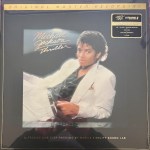
Thriller Is Proof that Mobile Fidelity Is Cutting Some Real Crap These Days

Hot Stamper Pressings of the Music of Michael Jackson Available Now

Don’t blame the digital step for the bad sound of this pressing of Thriller. If it were all analog, you can be sure Mobile Fidelity would have screwed it up every bit as badly.

If this is the sound audiophiles are interested in, lord have mercy on their souls. They must be as lost as lost can be.

Side One:

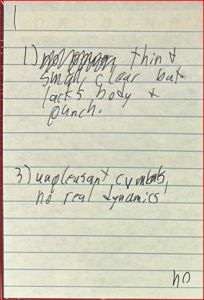
Track One: thin and small, clear but badly lacks body and punch.

Track Two: unpleasant cymbals, no real dynamics.

Side Two:

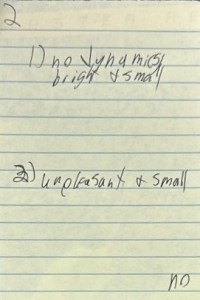
Track One: no dynamics, bright and small.

Track Three: unpleasant and small.

Two Questions

Is this the worst version of the album ever made?

Hard to imagine it would have much competition.

Are any of these Mofi One-Step pressings any good?

I seriously doubt it. Until one comes along that doesn’t sound awful, the jury is out. Those of you looking for miracles are likely to be disappointed.

Having said that, I’m sure there are audiophiles and audiophile reviewers who like the sound of this pressing and have said so online.

Based on what we heard, how on earth are these people qualified to judge the sound of records? I guess that’s three questions.

How bad does a record have to sound before they notice? Make that four, sorry.

Bernie Was The Man

Bernie Grundman cut the original pressings of Thriller. About the nicest thing we can say about him these days is that his work at one time was excellent.

Our evidence? When you hear a killer copy of Thriller — a recording with a lot going on and one that no doubt was difficult to master — the fact that nobody else has even come close to cutting the album as well as he did all those years ago stands as proof that he will always be considered one of the greats. (If he would only stop taking Chad’s calls, the record world would be in a much better place.)

Speaking of Chad (a man who thinks he is “saving the world from bad sound“), we have now auditioned the new Aja UHQR. You can read all about it here.

(more…)

Our Filmed Tapestry Shootout Was a Real Shocker

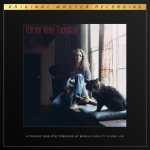
The Washington Post article that Geoff Edgers wrote includes a video of a little shootout we did for Tapestry, using, without my knowledge, the MoFi One-Step, a Hot Stamper pressing, and a current, modern, standard reissue of the album. Could I spot the Hot Stamper without knowing what record was playing?

First up (and of course unbeknownst to me), the MoFi. My impressions from the video:

That’s probably tonally correct for this record. It’s just missing everything that’s good about this record, which is a meaty, rich piano. And the vocal sounds very dry. There’s no Tubey Magic. It’s tonally correct. If you were playing me a CD right now, I wouldn’t be able to tell you weren’t. 

Next up, the cheap ($20?), current reissue:

Piano’s better.

Voice is better!

Richer and smoother.

That’s what this is supposed to sound like.

Her voice sounds mostly correct.

This might not be a particularly good record. If I played a real one for you, you might just say, oh, my God, there’s so much more.

But this is not a wrong record. It’s not awful. It’s doing something… I don’t know if I would say most things right. I’ll just say something right.

At least the person understands what she’s supposed to sound like.

Then the Hot Stamper (a Super Hot copy as it turns out):

She sounds pretty right on this copy.

I think there’s more space.

You hear more space, more three-dimensional space.

The piano: there’s more richness to the tone of the various notes that she’s playing.

I would probably pick this one.

Jeff sums it all up as follows:

So we have a winner, and I couldn’t fool the Hot Stamper king.

Without knowing what he was listening to, he chose the hot stamper of Tapestry.

If he still had it, that copy would be sold for about $400 on the Better Records website.

When we went back and played each of the pressings again, the differences were much more pronounced. The MoFi still sounded like a CD, the current Columbia reissue was still no better than passable, and the Hot Stamper became even better sounding than it had been earlier, with sound the other two could not begin to offer.

Our grades for the three pressings would have been F, C and A, in that order.

In the video, you can see that it took me a few minutes to get deep into the sound, but once I was there, it turned out to be no contest. The Hot Stamper was the only pressing capable of showing us just how good Tapestry can sound.

Colorations Are Bad Now?

The MoFi was by far the worst sounding of the three. As I said, it sounded to me like a CD.

(more…)

Did Carlos Santana want to make music or produce fireworks?

Hot Stamper Pressings of the Music of Santana Available Now

Our good customer Aaron has lately been putting a great deal of time and money into the pursuit of perfect sound. His progress in audio since he discovered Hot Stampers and the kind of high quality vintage equipment we’ve recommended he use to play them has been remarkable.

In 2022 he wrote to tell us that the Super Hot Stamper Abraxas we had sent him and the Mofi One-Step he already owned were comparable in sound quality. Knowing what an awful label Mobile Fidelity is, and what a foolish idea Half-Speed Mastering is, you can imagine that we might have been a wee bit skeptical of this estimation, and we asked him to clarify his position.

Aaron also has made many improvements to his system since then. He carefully listened to both versions of Abraxas again and reported his findings. We believe that there is much to be learned from the kind of shootout that Aaron did for the album.

Hey Tom,

Oh, it’s a fascinating comparison! Here’s some data points, with the final one being the most relevant to your question.

I did another series of shootouts yesterday with my new vintage amp and speakers, and I included Abraxas in it. The bass on the onestep is monstrous and unreal. Sometimes the cymbals and chimes leap out of the speakers. I understand why people go gaga for this record. If you listen for sound, it doesn’t get any better than this.

Then I put on the hot stamper. The bass was back under control. Driving, but not dominating. The overall character was lighter and less ponderous. It was more listenable, more musical, and overall it was a relief to be less distracted by the fireworks. The vocals are back in front where they belong, and more palpable.

But, the hot stamper simply doesn’t grab ahold of you the way the one-step does.

When you describe the sound of the MoFi One-Step of Abraxas, with bass that’s “monstrous and unreal. Sometimes the cymbals and chimes leap out of the speakers,” all I hear in my head is a classic case of smile curve equalization, the kind MoFi has been using since the day they produced their first rock record in 1978, Crime of the Century. Years ago we noted:

We get these MoFis in on a regular basis, and they usually sound as phony and wrong as can be. They’re the perfect example of a hyped-up audiophile record that appeals to people with lifeless stereos, the kind that need amped-up records to get them to come to life.

I’ve been telling people for years that the MoFi was junk, and that they should get rid of their copy and replace it with a tonally correct version, easily done since there is a very good sounding Speakers Corner 180g reissue currently in print which does not suffer from the ridiculously boosted top end and bloated bass that characterizes the typical MoFi COTC pressing. [Of course, we no longer recommend anyone buy Crime of the Century on Speakers Corner. The better our system gets, the less we like them.]

That’s the sound of MoFi all right. The Hot Stampers we offer would never have those “qualities,” if you care to call them that.

Leaping cymbals and chimes? Are they supposed to do that?

Also, the bass on our early pressing would have to be “back under control” or we wouldn’t have sold it to you as a Hot Stamper.

Unsurprisingly, without all that extra added bass, the sound is “lighter and less ponderous.” Saints be praised.

Smile Curve Redux

With the smile curve adding to the top and the bottom, what suffers the most? The midrange. There’s less of it relative to the  now-boosted frequency extremes. We described the effect here:

The Doors first album they released was yet another obvious example of MoFi’s predilection for sucked-out mids. Scooping out the middle of the midrange has the effect of creating an artificial sense of depth where none belongs. Play any original Bruce Botnick engineered album by Love or The Doors and you will notice immediately that the vocals are front and center.

The midrange suckout effect is easily reproducible in your very own listening room. Pull your speakers farther out into the room and farther apart and you can get that MoFi sound on every record you own. I’ve been hearing it in the various audiophile systems I’ve been exposed to for more than 40 years.

Nowadays I would place it under the general heading of My-Fi, not Hi-Fi. Our one goal for every tweak and upgrade we make is to increase the latter and reduce the former.

Or as Aaron might have phrased it, “The vocals are back in front where they belong, and more palpable.” You sure got that right.

Musicality

Aaron was impressed with how much more musical our pressing is, noting: “It was more listenable, more musical, and overall it was a relief to be less distracted by the fireworks.”

Then he concludes with this, sending my head into a spin: “But, the hot stamper simply doesn’t grab ahold of you the way the onestep does.”

(more…)
We Owe You a Really Big Apology

Hot Stamper Pressings of the Music of Santana Available Now

Sonic Grade: F

Santana is a record we admit to having liked when it came out back in 2007. Since then we have changed our minds. As embarrassing as it may be, and let’s be clear, this pressing is very embarrassing, We got this one wrong and there is no sense trying to deny it.

It’s just so damn compressed and lifeless.

The whomp factor on this pressing is zero. Since whomp is critical to the sound of Santana’s music, it’s Game Over for us. The review below is exactly what we wrote at the time the record came in.

We tried to like it, but it’s clear to us now that we tried to like it too hard. Please accept our apologies.

I noted in my [now discontinued] blog on the site: “But now I would have to say that the MoFi LP is far too lifeless to be acceptable to anyone, even those with the worst kinds of Audiophile BS systems.”

And I noted that the Abraxas they remastered never got past the first elimination round. It had to have been one of the worst half-speeds I have ever heard. 

We also mentioned a while back (4/29/08, time flies) on our blog how bad the latest crop of MoFi vinyl was, with the heading: “Mobile Fidelity, Ouch.” Please to enjoy:

(more…)

Bachelor No. 2 – MoFi Reviewed

More Rock and Pop Personal Favorites

An Audiophile Hall of Shame pressing and another Mobile Fidelity LP incompetently mastered for the benefit of those given to falling for easy answers and quick fixes.

I had not actually played the LP when I reviewed the MoFi CD, noting that the CD sounded great and that I expected the vinyl to be even better. In 2006 I should have known better but apparently I did not.

Mea culpa.

Boy, was I ever wrong. The vinyl has a bad case of sucked-out half-speed midsIt’s far too polite and lifeless to be taken seriously.

Is it the worst version of the album ever made? Since every CD I own sounds better, that would seem to be the case.

The comments about the music of course still apply — it’s brilliant — but I recommend the Gold or regular CD over this audiophile Heavy Vinyl pressing.

I used to consider this Mann’s One True Masterpiece. It’s actually her co-masterpiece, taking its place alongside the amazing I’m With Stupid, which is more of the rocker side of Mann. This is her Burt Bacharach side, prettier, sweeter and more melodic. Both are brilliant.

Aimee Mann is one of a handful of artists from the ’90s who actually makes music that can hold its own against the best popular recordings of the last forty years. There are few albums that I prize more highly or that have provided me with more musical satisfaction than those by Aimee Mann.

If you don’t know her music try one or both of the above-mentioned titles. Modern pop music just doesn’t get any better.   (more…)

Robert Brook Hears Something Funny on the MoFi One-Step of B,S&T

Robert Brook has a blog which he calls

A GUIDE FOR THE DEDICATED ANALOG AUDIOPHILE

Below is a link to a review Robert Brook has just written for the MoFi One-Step pressing of one of our favorite albums of all time, BS&T’s second album.

I do not doubt for a minute that it’s every bit as awful as Robert says it is. Probably worse! I made some rather extensive notes in the comments at the end of his review you may find of interest.

Blood, Sweat & Tears: How Do MoFi’s 2 Disc 45 rpm’s STACK UP?

We’ve written quite a bit about the album, played copies of it by the score as a matter of fact, and you can find plenty of our reviews and commentaries for the album on this very blog.

Based on everything I am reading these days from Robert Brook, he has a good stereo, two working ears, and knows plenty about records and what they are supposed to sound like.

(more…)

MoFi Misses The Mark by a M I L E with Kind Of Blue

Hot Stamper Pressings of Miles’s Albums Available Now

One of our good customers, Robert Brook, writes a blog which he calls

A GUIDE FOR THE DEDICATED ANALOG AUDIOPHILE

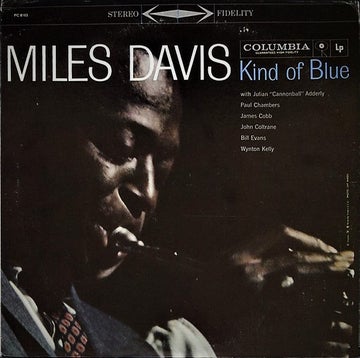
Below is a link to the review he wrote recently for one of our favorite records, Kind of Blue. (To be clear, we love the album, just not the MoFi pressing of it.)

MoFi Misses The Mark by a M I L E w/ Kind Of Blue

One of our other good customers had this to say about the Mobile Fidelity pressing:

Last night I listened to my 2015 Mobile Fidelity 45 RPM pressing.

I couldn’t get through the first cut.

Closed, muffled and flat as a pancake. No life or energy whatsoever.

I agreed and added my two cents:

My notes for their pressing read:

  • Thick, dark, flat.
  • Lacks air, space, presence.
  • Not a bad sound but it’s not right.

Later I added:

Having listened to the record more extensively, I see now I was being much too kind.

A longer review will be coming soon I hope. I think I may know why some audiophiles like the sound of this record, and will be exploring that notion in a future commentary.

The last line about the MoFi not having “a bad sound but it’s not right” reminded me of of the mistakes I made in my original review of Santana’s first album on MoFi: we owe you an apology

Kind of Blue is an album we admit to being obsessed with — just look at the number of commentaries we’ve written about it.

(more…)

Dire Straits Gets the Mobile Fidelity Treatment (Just Updated)

Reviews and Commentaries for Dire Straits’ Debut

More of the Music of Dire Straits

Geoff Edgers watched me and my lovely assistant, Sunshine, do a lengthy shootout for Dire Straits first album, but licensing problems prevented the Washington Post from using the footage. You can still see Sunshine in the video, and the yellow Phonogram label you see at one point is attached to one of the Dire Straits pressings we played that day.

Toward the end of the shootout for the first side, we put on the Mobile Fidelity pressing, and, interrupted from time to time by the sound of howling and gnashing of teeth, I pointed out for Geoff’s edification everything that was wrong with their pressing.

This took some time.

I will be writing more about their dismal effort one of these days, but for now let me leave you with this thought.

When you read the comments section for the article, it seems that quite a number of those discussing my lifelong interest in the world of audio and records go out of their way to state the obvious: that folks my age cannot hear high frequencies.

This is true, and I have never denied it. Case in point: After playing the MoFi pressing of Dire Straits, Sunshine, sitting at the turntable, asked what all that weirdly high-pitched, swirling, shusshing sound was. It wasn’t on the Phonogram pressings she had played. Only the MoFi.

I looked at her and asked “What shusshing sound?”

Sunshine had clearly heard it, Geoff may have, I don’t remember, but I had no idea there was anything untoward happening way up in that area of the frequency range. [1]

In my defense, not that I need one, I had no trouble telling how bad that Mobile Fidelity pressing was, or which of the five Dire Straits pressings sounded the best, or what each of them were doing, good, bad and otherwise.

What I was noting and explaining about the sound of these identical-looking UK pressings, their strengths and weaknesses, was clear enough for everyone in the room to hear over the course of the hour or so we spent doing it.

My goal was to walk Geoff through the steps of the shootout, and as far as I could tell he was with me all the way.

Those commenting about high frequency hearing loss are engaging in the fallacy of “begging the question,” assuming what they are trying to prove instead of proving it, which I suppose is the kind of thing you can expect to read in the comments left by those with a great deal of regard for their own opinions but little for the evidence required to support them. More here.


Robert Brook has a blog which he calls

A GUIDE FOR THE DEDICATED ANALOG AUDIOPHILE

Below you will find his review of a record I too know a fair bit about, the first Dire Straits album on Mobile Fidelity. I hope to write my review of the Mobile Fidelity pressing soon.

Ugh! Mobile Fidelity’s Remaster of DIRE STRAITS

As of 2015, this label may have entered a new and even more disgraceful era, but considering how bad their records have been from the very start — something that should be obvious to any audiophile with a high quality playback system, the kind of system that should have no difficulty exposing the manifold shortcomings of their remastered pressings — how much lower can they possibly fall?

Only time will tell.


[1.] Did Mobile Fidelity’s engineers hear this high-frequency hash? Will any audiophile come forward to expose this problem? The answers to both questions are very likely to be no.

Ride The Lightning at 45 RPM – MoFi Reviewed

Hot Stamper Pressings of Rock and Pop Albums Available Now

Sonic Grade: F

This review is for the 2008 Warner Brothers 45 RPM 180g Double LP Half-Speed Mastered by Mobile Fidelity from the original analog master tapes.

Compressed, sucked-out mids, no deep bass and muddy mid-bass, the mastering of this album is an absolute disaster on every level.

If you want to know how lost the average audiophile is, a quick Google search will bring up plenty of positive comments from listeners and reviewers alike. 

(more…)

How Does the MoFi Dixie Chicken Sound?

Little Feat Albums We’ve Reviewed

How does the MoFi pressing sound?

We have no idea; we’ve never bothered to order one, for at least one very good reason.

This is an album about rhythm.

Half-Speed mastered records have sloppy bass and, consequently, lack rhythmic drive.

Who is his right mind would want to half-speed master an album by Little Feat, one of the most rhythmically accomplished bands in rock and roll history?

The obvious answer is that it was a bad idea. But, if you’re Mobile Fidelity, and that’s the only idea you’ve ever had because you are in the half-speed mastering business, then what else can you do?

As the old saying goes, to a hammer everything looks like a nail.

OUR PREVIOUS HOT STAMPER COMMENTARY

Folks, this is no demo disc by any means, but the later pressings strip away the two qualities that really make this music work and bring it to life: Tubey Magic and Big Bass. This side two has both in SPADES.

Listen to how breathy and transparent the chorus is on the first track. Now layer that sound on top of a fat and punchy bottom end and you have the formula for Little Feat Magic at its funky best. This is the sound they heard in the control room, of that I have no doubt, and it is all over this side two. No side of any copy we played was better.

Personally

The All Music Guide (and lots of other critics) think this is Little Feat at their best. With tracks such as Two Trains, Dixie Chicken, Fat Man in the Bathtub and Roll Um Easy, who’s gonna disagree!? (I guess I am. I prefer Waiting for Columbus and The Last Record Album but cannot deny that Dixie Chicken is probably the best of the albums that came before them.)


Head to Head It’s No Contest

Visit our Hall of Shame (300+ strong) to see what, in our opinion, are some of the worst sounding records ever made.

Note that most of the entries are audiophile remasterings of one kind or another.

The reason for this is simple: we’ve gone through the all-too-often unpleasant experience of comparing them head to head with our best Hot Stamper pressings.

When you can hear them that way, up against an exceptionally good record, their flaws become that much more obvious and, frankly, that much more intolerable.