*Arcana – Country Advice

Which country produced the best sounding pressings for the albums linked below? Click on the listing to find out.

The Dutch Pressings Can Sound Good, Sure, But Great? Not a Chance

Hot Stamper Pressings of British Blues Rock Albums Available Now

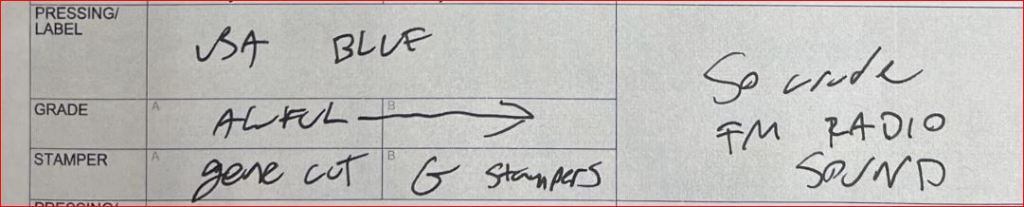
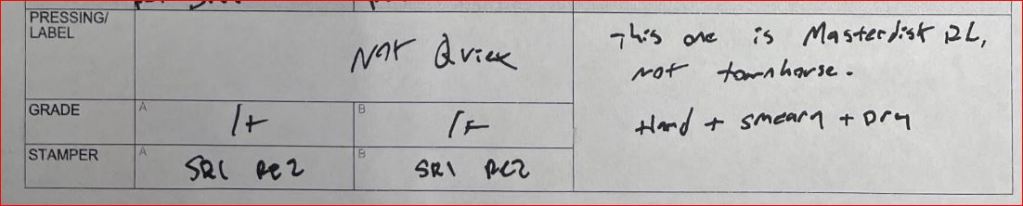
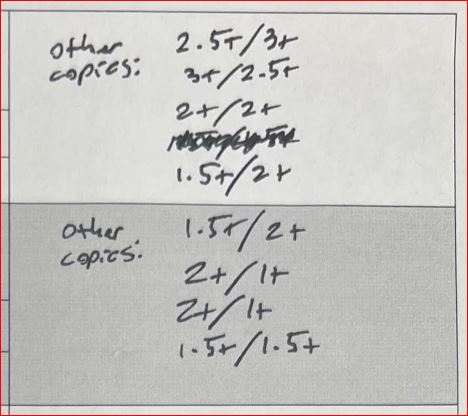
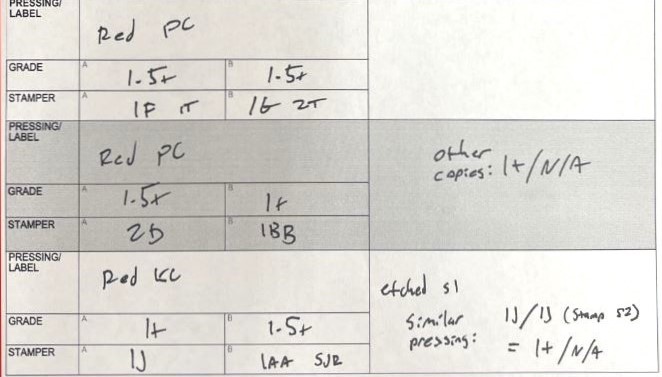
Below you will see part of a stamper sheet that was generated for a shootout we did recently.

Please note that the album you see pictured — Cream’s Goodbye — is not the one we are discussing here. What it has in common with the mystery record we are writing about is both albums were made by British rock bands, both were recorded in England, and both sound their best on the pressings that were made in the UK.

For years we would buy any and all copies of this album on the early Polydor label as long as they looked original and had TML in the dead wax. The band was British, the production was British, but for some reason all the early pressings were mastered by The Mastering Lab right here in the states. Apparently somebody involved in the production thought they could do the best job, and they were probably right.

(The Mastering Lab was one of the great mastering houses in the 70s and 80s. There is no one alive today who can make a record remotely as good sounding as the ones they produced by the thousands in those days. If you know of any, please contact me at tom@better-records.com.)

Woops

Then we noticed that some of the Red Polydor pressings said “Made in Holland” on the label. We also noticed that the Holland pressings were never the winners of our shootouts.

It’s not as if they weren’t very good sounding pressings. They could earn grades of 2+ on both sides, as two of the seven copies shown below did, but most of the time their grades were a bit lower than those, and never as good as the best Brits.

Our appreciation of these facts, facts that had been staring us in the face for a decade or more, was lacking. We didn’t connect dots that were so obvious it was hard to miss them. Why I have no idea.

Eventually, after more shootouts had shown us again and again the limitations of the Dutch pressings, the penny dropped and we finally saw the labels for what they were: a clue to what pressings could win and what pressings couldn’t. Mind you: Every record still had to go through a shootout, and the person hearing and evaluating the record had no idea which of the two countries it might have been made in. But now we knew to pay a premium for the Brit-pressed records and only buy the Dutch at the right price.

Why did we keep at it until we had if figured out? Because we get paid to.

(more…)

How Good Are the Robert Ludwig-Mastered Pressings of Alchemy?

Hot Stamper Pressings of the Music of Dire Straits Available Now

The best domestic pressings we played, the ones cut by Robert Ludwig at Masterdisk, were simply not competitive with any of the early British LPs.

The evidence is pretty clear that the master tapes stayed in England and that only the British pressings are made from them. If you’ve played as many records as we have, it’s not hard to recognize dubby sound when you hear it.

As a general rule, this domestic pressing will fall short in some or all of the following areas when played head to head against the imported pressings we offer. Much like the records linked here:

(more…)

The Planets – Can You Imagine Sound this Bad from a TAS List Super Disc?

Hot Stamper Classical and Orchestral Pressings Available Now

We can, we played it.

Or, to be more correct, we played them. Two pressings, each with one good side and one very bad side.


UPDATE 2025

Take all of this with a very large grain of salt. In the course of doing more shootouts for the Mehta Planets, we’ve played quite a number of different pressings and now believe — believe being the operative word — we know which are the best stampers.

It is very unlikely that any Dutch pressing would be competitive with the best UK-pressed copies cut by Harry Fisher.

For those of you who just want a good sounding copy of The Planets to play and enjoy, our favorite by far is Previn’s reading on EMI from 1974.

We know of no better performance, and we much prefer the dramatically more natural sound quality.

The Mehta recording, like much of what he recorded for Decca in those days, is a multi-miked mess, the kind we grew out of (for the most part) a long time ago. (More of the multi-miked records we’ve auditioned, of varying quality to be sure, can be found here.)


Our old commentary (please excuse the heavy-handed caps):

This 2-pack from many years ago (ten fifteen perhaps), described below, boasts White Hot Stamper sound on side two for the Mehta Planets. Yes, it IS possible. Side two shows you what this record is actually capable of — big WHOMP, no SMEAR, super SPACIOUS, DYNAMIC, with an EXTENDED top.

It beat every London pressing we threw at it, coming out on top for our shootout. Folks, we 100% guarantee that whatever pressing you have of this performance, this copy will trounce it.

But side one of this London original British pressing was awful.

We wrote it off as NFG after about a minute; that’s all we could take of the bright, hard-sounding brass of War.

If you collect Super Discs based on their catalog numbers and labels and preferred countries of manufacture, you are in big trouble when it comes time to play the damn things.

That approach doesn’t work for sound and never did.

If your stereo is any good, this is not news to you. The proof? The first disc in this 2-pack is Dutch. It earned a Super Hot grade in our blind test, beating every British copy we played against it save one. Side two however was recessed, dark and lifeless. Another NFG side, but the perfect complement to our White Hot British side two!

(more…)

Reposted in Honor of Ozzy’s Passing — Import or Domestic on Paranoid?

Hot Stamper Pressings of the Music of Black Sabbath Available Now

The domestic copies we’ve played over the years for all the Black Sabbath titles are clearly better sounding than any import we’ve ever auditioned. It may be counterintuitive, but these are exactly the kinds of things you find out when doing blinded shootouts.

We have little use for intuitions (UK recording, UK pressing) and rules of thumb (original = better sound). We call that way of approaching the search for better sounding pressings mistaken audiophile thinking. 

Hard data — the kind you get from actually playing the records — trumps them all.

(We recently posted a lengthy commentary about conventional wisdom, attempting to make the case that, although the most common record collecting approaches are more often right than wrong, there is simply no way to know when any given approach will work for any given title.)

Want to find your own killer copy?

Consider taking our moderately helpful advice for how to find your own shootout winners.

(more…)

Emerson, Lake & Palmer – Islands Vs Cotillions

Hot Stamper Pressings of the Music of Emerson, Lake and Palmer Available Now

UPDATE 2020

This commentary was written many years ago, around 2010 I would guess.

It was updated in 2020 when we realized we were wrong about the domestic pressings being superior on side two. At one time we thought they were, and now, with many more shootouts under our belts, we are pretty sure they are not. But you never know!

The findings from the latest shootouts have shown us the error of our ways, yet another example of live and learn.


This is what we used to think:

The Brit copies may take top honors for side one (“sweetness, openness, tubey magic, correct tonality, presence without aggressiveness, well-defined note-like bass, extended airy highs”) but the Hot Stamper Cotillion copies KILL on side two. They really ROCK, with greater dynamic contrasts and seriously prodigious bass, some of the best ever committed to vinyl.

The Brits tend to be a bit too “pretty” sounding. They’re too polite for this bombastic music. This music needs the whomp down below and lots of jump factor to work its magic.

The Brits are super-low distortion, with a more open, sweeter sound, especially up top, but the power of the music is just not as powerful as it can be on these very special Cotillions.

We prefer the British pressings on both sides now. After years of improvement to our playback, they have shown themselves to be a step up over even the best domestic pressings. The Cotillions don’t win shootouts now and would be very unlikely to win one in the future. At best they tend to earn Super Hot Stamper grades.

A top copy might be described this way:

  • This UK Island Pink Rim pressing makes the case that ELP’s debut is clearly one of the most powerful rock records ever made, here with incredible Nearly Triple Plus (A++ to A+++) grades from top to bottom – just shy of our Shootout Winner
  • Spacious, rich and dynamic, with big bass and tremendous energy – these are just some of the things we love about Eddie Offord‘s engineering work on this band’s albums
  • Analog at its Tubey Magical finest – you’ll never play a CD (or any other digitally sourced material) that sounds as good as this record as long as you live
  • “Lucky Man” and “Take A Pebble” on this copy have Demo Disc quality sound like you won’t believe
  • Our White Hot pressing had a one half plus better grade on one side and sold for $849, making this copy a “relative bargain,” if there could ever be such a thing on this site – but what an amazing sounding record!

Without a doubt this record belongs in our Top 100 Rock and Pop section.

I’d even say it belongs in the Top Ten (which of course is where you can find it, where it belongs).

The organ on this album is wall to wall and floor to ceiling. The quiet interlude during “Take A Pebble” is about as quiet as any popular recording can ever be — the guitar is right at the noise floor. It’s amazing! (Which explains why so many domestic copies have groove damage. The record is just too hard to play for the average turntable. Hell, it’s hard to play with an audiophile turntable.)

Credit engineer Eddie Offord, who would later go on to enormous and entirely justifiable fame with Yes.

(more…)

Siren on Import Vinyl? Not So Fast

Hot Stamper Pressings of the Music of Roxy Music Available Now

Siren is one of our favorite Roxy albums, right up there with the first album and well ahead of the commercially appealing Avalon.

After reading a rave review in Rolling Stone of the album back in 1975, I took the plunge, bought a copy at my local Tower Records and instantly fell in love with it.

As is my wont, I then proceeded to work my way through their earlier catalog, which was quite an adventure. It takes scores of plays to understand where the band is coming from on the early albums and what it is they’re trying to do. Now I listen to each of the first five releases on a regular basis.

Somehow they never seem to get old, even after more than forty years.

Of all the Roxy albums (with the exception of Avalon) this is probably the best way “in” to the band’s music. The earlier albums are more raucous, the later ones more rhythmically driven — Siren catches them at their peak, with, as other reviewers have noted, all good songs and no bad ones.

Imports? Not So Fast

The British and German copies of Siren are clearly made from dub tapes and sound smeary, small and lifeless.

To be fair, Siren has never impressed us as an exceptionally good sounding recording. Like other middle period Roxy, records such as Country Life and Manifesto (the albums just before and after), it simply does not have Demo Disc analog sound the way Avalon, Stranded or the Self-Titled albums do (the latter two clearly being the best sounding in their catalog).

One would be tempted to assume that the import pressings of Siren would be better sounding, the way the imports of the first four Roxy albums are clearly better sounding. (There has never been a domestic Hot Stamper pressing of any of those titles and, since we never buy them or play them, there probably never will be.)

But in the case of Siren it’s the imports that are made from dubs. It may be a British band, recorded in British studios with a British producer, but the British pressed LPs are clearly made from sub-generation tapes, whereas the domestic copies sound like they’re made from the real masters.

Go Figure. And another thing: when it comes to records, never assume anything.

The typical domestic pressing is flat, bass-shy and opaque, sounding more like compressed cardboard than analog vinyl.

Unsurprisingly, the CD, whether imported or produced domestically, is clean and clear and tonally correct but lacks the warmth and richness of the better vinyl pressings.

(more…)

Skip the Domestic Pressings of Business As Usual

In our opinion, Business As Usual is the band’s best sounding album, and probably the only Men at Work record you’ll ever need. Click on this link to see more titles we like to call one and done.

As a bit of background just in case you are not familiar with the album, the domestic pressings are horrendously bright. We have never played one that didn’t sound like the treble was jacked up to a level just this side of ear-bleed.

The only way to hear this album sound right is on Australian, Dutch, British and, more than a little surprisingly, even Japanese vinyl. Yes, we have heard them all.

We’ve liked about one out of every one hundred Japanese pressings we’ve played over the last twenty years. We were surprised to find that the Japanese copy of Business As Usual we played many years ago was pretty good, for what that’s worth.

(We can’t be sure that on our current system with our current ears we would feel the same.)

We tend to prefer the Brits but it seems that any import is worth a listen. The key, as always, is in the mastering and pressing.

(more…)

The Domestic Stampers of 10cc’s Masterpiece Had Us Fooled for Years

Hot Stamper Pressings of the Music of 10cc Available Now

I haven’t run into many audiophiles who own a copy of The Original Soundtrack, or any other 10cc album for that matter.

It’s the rare person who has the the kind of system that can play a recording with such explosive dynamics.

As I have an uncontrollable habit of saying, this is the kind of record that is guaranteed to bring any audiophile stereo to its knees. 

Since that is the case, and audiophiles who build the kind of big systems in heavily-treated custom rooms to meet the challenge such recordings present are thin on the ground — very thin it seems, as I am the only one I have ever known — it stands to reason that practically no audiophiles have ever experienced the size and power of the recording as it was meant to be heard.

I thought I was doing a very good job reproducing the sound of the album, but recent research has proved that, once again, I was mistaken. Previously I had written:

The recording itself is a tour de force, the main reason I’ve been demonstrating my stereo with it for more than thirty years. The extended suite that opens side one, One Night in Paris, has ambience, three-dimensional sound effects, and incredibly dynamic multi-tracked vocals at the climax that will leave you with your jaw on the floor.

All true. But I had been playing both domestic pressings and British pressings over the course of those thirty years, and I don’t remember clearly preferring one to the other.

With our latest shootout the British pulled away from the pack in a big way, with no British pressing being beaten by any domestic competitor.

The domestic pressings ranged from very good — 2+ on both sides — to passable at best — 1+ on both sides.

I honestly used to think they were close, that they would be hard to tell apart. Those days are gone. We are operating at a whole ‘nother level, and I am glad that we are. We want to give out only the most accurate information and sell only the best sounding records.  What I had thought was true ten years ago turns out to have been off the mark.

When reality turns out to be dramatically different from what you thought it was, and you can prove it — you actually have the physical records to back up your newer, more correct understanding — that’s audio progress.

You might try proving yourself wrong more often.

Most audiophiles I have run into like having their biases confirmed, but look where that has gotten some of them — stuck in a rut. Break out of that way of thinking and you may very well find that you have broken through to another level.

Because if you don’t go out of your way to prove yourself wrong, who will?

(more…)

This Original British Tarkus Had the Sound Most Audiophiles Can Only Dream Of

Hot Stamper Pressings of the Music of Emerson, Lake and Palmer Available Now

To be clear, audiophiles who buy a shootout winning White Hot Stamper pressing from us don’t have to dream, but practically everyone else does, because copies that sound as good as this one are few and far between.

It’s an amazing find, the kind of record we live for here at Better Records.

We described the sound of our most recent shootout winning copy this way:

This original UK Island pressing was doing everything right, earning killer Triple Plus (A+++) grades from top to bottom.

Our recent monster shootout produced this incredible sounding British pressing on Island (the only way we offer the title) and it is stone guaranteed to rock your world.

Eddie Offord‘s trademark Tubey Magic, energy, resolution, whomp factor and dynamics are all over this phenomenal recording, and this pressing captured it all.

Here are the notes that back up everything we said, and more. We can’t put all the qualities we rave about into every listing. Who would believe us?

No other copy offered this kind of sound. It’s what we used to call AGAIG — As Good As It Gets.

3+/3+ records like this one go in our Top Shelf section, which currently holds 32 titles.

Records with at least one 3+ side go in this section, and there are 143 of those as of today, almost five times as many.

Eddie Is The Man

Tarkus is clearly a Demo Disc for big speakers that can play at loud levels.

The organ captured here by Eddie Offord (of Yes engineering fame, we’re his biggest fans) and then transferred so well onto our Hot Stamper pressings will rattle the foundation of your house if you’re not careful. This music really needs that kind of megawatt reproduction to make sense. It’s Big Bombastic Prog that wants desperately to rock your world. At moderate levels it just sounds overblown and silly. At loud levels it actually will rock your world.

All but the best Brit pressings have a tendency to be a bit turgid and many of them lack the bottom end weight that music like this absolutely must have to work its magic. There are some good domestic copies — not in a league with the best Brits at all — but most of them have sub-generation sound that robs the instruments of their immediacy and texture (much the same way that Heavy Vinyl does, truth be told).

(more…)

I Robot Is a Tough Nut to Crack, Even If You Have Plenty of Early British Pressings to Play

Hot Stamper Pressings of Prog Rock Albums Available Now

Here is how we described a Hot Stamper pressing of I Robot that went up recently, our first in five years:

An early UK pressing (and the first copy to hit the site in years) with seriously good sound throughout.

Many copies tend to be overly smooth, but this one has the kind of clarity that allows the natural textures of the instruments to come through.

Transparency is key to the sound of the better copies, and that is precisely where the dubby domestic pressings fall apart.

Even many of the early British pressings fell short. Good luck finding top quality sound on this one. At the very least you are going to need a big budget — these early UK pressings are not cheap to find in audiophile playing condition.

As you can see, we weren’t kidding about those UK pressings falling short. Here’s two that did, with their stamper numbers posted for all to see.

Side two of the first copy is being held back by sound that is smeary, dry and hard.

Side one of the second copy is murky and hot (bright).

Note that these are early UK stampers, which some in-the-know audiophile collectors will tell you are clearly the best.

(more…)