_Composers – Sibelius

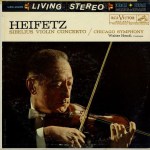
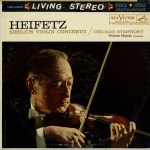
Sibelius / Violin Concerto on Classic Records Heavy Vinyl

Hot Stamper Pressings Featuring the Violin

An Audiophile Hall of Shame pressing and another Classic Records Classical LP badly mastered to the detriment of those lured by the promise of easy answers and quick fixes.

Classic remastered this title in the ’90s — of course they did, it’s clearly one of the better Heifetz recordings.

As expected, their version was awful, as bad as LSC 1903, 1992, 2129 and others too numerous to list.  

It’s both aggressive and lacking in texture at the same time, the worst of both worlds.

Bernie’s cutting system is what I would call Low Resolution — the harmonics and subtleties of the sound simply disappear.

The world is full of them.

In these four words we can describe the sound of the average Classic Records pressing. If you have the Classic, do your own shootout. We guarantee any of our Hot Stamper pressings will murder theirs.

(more…)

The Classic Records Pressing of Finlandia Is Dreadful

More of the music of Jean Sibelius (1865-1957)

More of the music of Edvard Grieg (1843-1907)

Sonic Grade: F

Classic Records ruined this album. Their version is dramatically more smeared and low-rez than our good vintage pressings, with almost none of the sweetness, richness and ambience that the best RCA pressings have in such abundance.

[This turns out not to be true, as we discovered to our chagrin in 2014.]

In fact their pressing is just plain awful, like most of the classical recordings they remastered, and should be avoided at anything other than a nominal price.

Our current favorite pressing is this one on a budget Decca reissue. Go figure.

(more…)

Sibelius / Finlandia / Mackerras

More of the music of Jean Sibelius (1865-1957)

More Classical ‘Sleeper” Recordings We’ve Discovered with Demo Disc Sound

[This review is from a good ten years ago or more. Our current favorite pressing of Finlandia with Mackerras is this one, on a budget Decca reissue. Go figure.]

A shocking Stereo Treasury sleeper with a superb Shaded-Dog-beating side one. Side one is nearly White Hot – it’s exceptionally transparent and dynamic. Real Demo Disc sound and music on side one – spectacular works played with feeling.

This is yet another wonderful example of what the much-lauded Decca recording engineers were able to capture on analog tape all those years ago. The 1960 master has been transferred brilliantly using “modern” cutting equipment (from 1970, not the low-rez junk they’re forced to make do with these days), giving you, the listener, sound that only the best of both worlds can offer.

Side One

More spacious than practically any other copy we heard thanks to an extended, correct top end.

This side was also very dynamic, and it gets loud in the right way, never harsh or screechy.

Correct from top to bottom, and there are not many records we can say that about. So natural in every way.

The brass is HUGE and POWERFUL on this side. Not many recordings capture the brass this well. (Ansermet on London comes to mind of course but many of his performances leave much to be desired. Here Mackerras is on top of his game with performances that are definitive.)

The brass is big and clear and weighty, just the way it should be, as that is precisely the sound you hear in the concert hall, especially that part about being clear: live music is more than anything else completely clear. We should all strive for that sound in our reproduction of orchestral music.

Side Two

Good clarity and top extension, with full-bodied, textured strings. Gets a little hot at its loudest but manages to stay under control and enjoyable throughout.

The opening track on side two, Wedding Day at Troldhaugen, is one of my favorite pieces of orchestral music. Mackerras and the London Proms make it magical.

The Search for Finlandia

On a well-known work such as this we started by pulling out every performance on every label we had in our backroom and playing them one after another. Most never made it to the half-minute mark. Sour or thin brass on the opening salvo of Finlandia? Forget it; onto the trade-in pile you go.

(If you have too many classical records taking up too much space and need to winnow them down to a manageable size, pick a composer and play half a dozen of his works. Most classical records display an irredeemable mediocrity right from the start; it doesn’t take a pair of golden ears to hear it. If you’re after the best sound, it’s the rare record that will have it, which makes clearing shelf space a lot easier than you might imagine. If you keep more than one out of ten you’re probably setting the bar too low if our experience is any guide.)

A few days went by while we were cleaning and listening to the hopefuls. We then proceeded to track down more of the pressings we had liked in our preliminary round of listening. At the end we had a good-sized pile of LPs that we thought shootout-worthy, pressings that included Shaded Dogs, Deccas, Londons, Stereo Treasury’s and Victrolas — representing most of our favorite labels from the Golden Age.

This Decca took the top prize. It beat every recording on every pressing we could get our hands on to throw at it. That’s our shootout in a nutshell.

(more…)

Sibelius – Violin Concerto / Ricci – Fjelstad

Hot Stamper Pressings Featuring the Violin

  • This Sibelius Violin Concerto has top sonics and a performance to match
  • It’s some of the best sound we have ever heard for the work, right up there with our longtime favorite, the Heifetz on Living Stereo (LSC 2435)
  • One of the truly great 1958 All Tube recordings from Kingsway Hall, captured faithfully in all its beauty by Alan Reeve & Gordon Parry on this very disc
  • “In the easier and looser concerto forms invented by Mendelssohn and Schumann I have not met a more original, a more masterly, and a more exhilarating work than the Sibelius violin concerto.”
  • If you’re a fan of Ricci’s (as are we), this is a Must Own from 1958 that belongs in your collection.
  • The complete list of titles from 1958 that we’ve reviewed to date can be found here.

The best Shaded Dog pressings of the Heifetz performance on RCA (LSC 2435) are the equal of this London. RCA presents the violin more immediately in the soundfield. Decca’s engineers integrated the violinist into the orchestra, which of course is the way it would be heard in the concert hall. To our ears, both approaches work exceptionally well — when you have at your disposal exceptional pressings of each. We had copies of both that were Hard to Fault, which made for a very enjoyable shootout.

Note that it has been close to ten years since our last big shootout for the work. That’s how long it takes to find enough clean London, Decca and RCA pressings for recordings such as these. Noisy, second-rate copies are everywhere. Top quality early pressings in clean condition come our way less than once a year. There are literally thousands of clean, vintage classical pressing sitting in our stockroom, waiting for a few more copies to come our way so that we can finally do a shootout.

With engineering in the legendary Kingsway Hall, there is a richness to the sound of the strings that is exceptional, yet clarity and transparency are not sacrificed in the least.

It’s practically impossible to hear that kind of string sound on any recording made in the last thirty years (and this of course includes practically everything pressed on Heavy Vinyl). It may be a lost art but as long as we have these wonderful vintage pressings to play it’s an art that is not being lost on us.

It’s also as wide, deep and three-dimensional as any, which is, of course, all to the good, but what makes the sound of these recordings so special is the timbral accuracy of the instruments in every section.

I don’t think the Decca engineers could have cut this record any better — it has all the orchestral magic one could ask for, as well as the resolving power, clarity and presence that are missing from so many other vintage Golden Age records.

This is the kind of record that will make you want to take all your heavy vinyl classical pressings and put them in storage. They cannot begin to sound the way this record sounds. (Before you put them in storage or on Ebay please play them against this pressing so that you can be confident in your decision to rid yourself of their unforgiveable mediocrity.)

(more…)

Sibelius / Symphony No. 2 – Reviewed in 2013 and Again More Recently

More of the Music of Jean Sibelius (1865-1957)

Back in 2013 we liked the performance and the sound of this recording on Living Stereo, but recently we played a couple of copies they did not impress us much.

Our system was very different in 2013, and, of course, the copies of the record we have now are not the same as the ones we played all those years ago.

We currently prefer the performance by Barbarolli on Readers Digest.

The Mackerras reissued on London or RCA Victrola may be good too. We have not played either of them in quite a while, so take this recommendation for what it is, an old memory that may be faulty.

(more…)

Sibelius – Symphony No. 2 / Barbirolli

More of the music of Jean Sibelius (1865-1957)

  • An outstanding copy of the best Sibelius Second Symphony on vinyl we know of – solid Double Plus (A++) sound or BETTER from start to finish
  • One listen to this famous Wilkinson recording and you’ll see why it’s one of the most lauded RDG titles in all of their illustrious canon
  • “The Second Symphony has retained an extraordinary popularity for its individualistic tonal language, dark wind coloring, muted string writing, simple folk-like themes, and distinctly “national” flavor that are all Sibelian to the core.”

A truly extraordinary recording mastered beautifully but pressed on vinyl that has never been known for its quiescence (if I can get by with that ten-cent word).

The strings are clear and textured, yet rich and full-bodied. The bottom is big and weighty. The horns are tubey and full-bodied and never screech through even the most difficult passages. (more…)

Sibelius / The Popular Sibelius – Reviewed in 2005

More of the music of Jean Sibelius (1865-1957)

This Minty looking EMI is a real SLEEPER!

BIG, EXCITING SOUND! With a spirited performance to match from Berglund, a man well known for his Sibelius work. This is not one of those vague, washed out EMIs

This record is ALIVE. Recorded by Stuart Eltham in 1972, you will be hard pressed to find more immediacy in an EMI. The sound may even be a bit over the top on some selections — whether it is or not will probably depend on your tastes and playback system. But one listen to the third track on side one should convince you that you’re in the presence of a superb recording.

This record includes Finlandia, Valse Triste, Karelia – Intermezzo, The Swan Of Tuonela, Lemminkaines’s Return, King Christian II – Elegy, Musette & Nocturne.

(more…)

Sibelius / Finlandia in Phase IV!

More of the music of Jean Sibelius (1865-1957)

More of the music of Edvard Grieg (1843-1907)

In 2013 we stumbled upon the London pressing of this relatively rare record — never heard of it before, and who on earth is Kazimierz Kord? — and were shocked to hear how good the random copy of this unknown-to-us recording sounded. The brass was incredibly solid and powerful; I don’t think I had ever heard Finlandia with the kind of heavy brass that this record was able to reproduce. We had to know more! 

We started by pulling out every performance on every label we had in our backroom and playing them one after another. Most never made it to the half-minute mark. Sour or thin brass on the opening salvo of Finlandia? Forget it; on to the trade-in pile you go.

If you have too many classical records taking up too much space and need to winnow them down to a manageable size, pick a composer and play half a dozen of his works. Most classical records display an irredeemable mediocrity right from the start; it doesn’t take a pair of golden ears to hear it. If you’re after the best sound, it’s the rare record that will have it, which makes clearing shelf space a lot easier than you might imagine. If you keep more than one out of ten you’re probably setting the bar too low, if our experience is any guide. (more…)

Sibelius / Symphony No. 2 – An Overview

More of the Music of Jean Sibelius

A truly extraordinary recording mastered beautifully but pressed on vinyl that has never been known for its quiescence (if I can get by with that ten cent word).

The strings are clear and textured, yet rich and full-bodied. The bottom is big and weighty. The horns are tubey and full-bodied and never screech through even the most difficult passages.

My notes mention that it’s

  • rich and tubey but clear and lively;
  • big, with great energy;
  • superbly spacious and
  • never harsh or shrill.

(It can be a bit dark in places; as you know this is much preferable to the alternative.)

About as close to live music as I think this piece can sound in my listening room.

This shootout has been many years in the making. Some time around 2014 we surveyed the recordings of the work we had on hand, close to a dozen I would think, and found them all wanting, save two: this one and the 1964 reading by Ansermet for Decca (CS 6391).

So many recordings failed to capture the size, weight and power of the orchestra. Too much multi-miking was ruinous to some; screechy strings and horns to others.

Most recordings we played were profoundly unnatural, lacking transparency and the relaxed sense of involvement that eases one’s ability to be tricked into thinking “you (really) are there.”

(more…)

Sibelius, Liszt, Dukas et al. – A Lousy London Phase 4 LP

More of the Music of Jean Sibelius (1865-1957)

Reviews and Commentaries for the Music of Jean Sibelius

Sonic Grade: F

While preparing for a Finlandia shootout recently, we happened to drop the needle on this album, a 1977 Phase 4 recording made in Kingsway Hall and engineered by Arthur Lilley. We could hardly believe how bad it sounded. The multi-miking is the worst I have ever heard!

We like lots of Phase 4 recordings — especially those of Bernard Herrmann — but this is definitely not one of them. 

Are they all bad? Who can say? We sure aren’t going to be wasting any more time and money on the album in order to find out, I can tell you that.

The Obsession soundtrack is a dog as well. Audiophiles looking for good sound are best advised to avoid them both.