*Arcana – Stamper Info

Some audiophiles complain that our reluctance to give out stamper information is selfish. We think that’s not fair.

We admit that we rarely give out the stamper numbers for the pressings that win shootouts — we paid a high price in time and effort to discover them — but we do give out a great deal of information for records that did not sound especially good to us, a free – and valuable! — service from your friends at Better Records.

A Pink Label Island LP Left Us with Egg on Our Face

Hot Stamper Pressings of the Music of Traffic Available Now

We used to think that The Best of Traffic had better sound than the early pressings of Mr. Fantasy, but in a head to head comparison with a killer copy we played not long ago, we were proved wrong, or, perhaps more accurately, we proved ourselves wrong, something we pride ourselves in being able to do by carrying out regular shootouts for records we’ve been listening to for more than twenty years.

Oddly enough, in our shootouts we often learn new things about records we thought we knew well.

Here is what we had to say about one of the tracks on Mr. Fantasy that we thought sounded dramatically better on The Best of Traffic back around 2005:

Best evidence: Heaven Is In Your Mind, the second track on side one. It is amazing sounding here and such a disappointment on every Pink Label Island original we’ve played.

Once you know how good that song can sound — by playing a Hot Stamper copy of Best of Traffic like this one — going back to the original version of the song found on the album is not just a letdown, it’s positively painful. Where’s the analog magic? The weight to the piano? The startling clarity and super-spaciousness of the soundfield? The life and energy of the performance?

They’re gone, brother. Not entirely gone, mind you, more a shadow of what they should be, but once you’ve heard the real thing it’s not a lot of fun listening to a shadow.

You can be sure that we did not know what we were talking about when we wrote all that.

What we had done is assumed that all the pink label pressings of Mr. Fantasy sounded like the one we played, something we’ve been telling audiophiles for twenty years not to do, because collecting records by label is a fool’s game.

In this case, clearly we are the fools.

It probably — probably, since all the evidence points in the same direction — had the stampers you see below, apparently known as an Orlake Pressing, something I knew nothing about until reading about it on Discogs just now.

  • Matrix / Runout (Side A, stamped): ILPS+9061+A
  • Matrix / Runout (Side B, stamped): ILPS+9061+B

These same stampers would be used to press the Pink Rim Label copy you see below. We put it into a recent shootout and described it as having “hollow, dubby” sound.

Yes, we heard the very same “dubby” sound on a copy we played about twenty years ago, and thought all the early pressings on Island, pink and pink rim alike, had these same mastering shortcomings.

Back then we didn’t know what we know now, which is that the right UK pressings on Island of Mr. Fantasy are dramatically better sounding.

In fact, they handily win our shootouts, something they have been doing for at least the last ten years or so.

We’ve run into so many sonically-flawed Pink label Island pressings by now that hearing one sound lackluster if not actually awful doesn’t phase us in the least.

Some of the other pink label Island pressings that never win shootouts can be found here.

But before that, back in the dark days of the early 2000s, we clearly were lacking a comprehensive understanding of the sound of the various UK pressings of the album.

There was a great deal of research and development left to be done. Eventually our efforts led to a breakthrough in 2006.

For more than twenty years, this is the kind of work we have undertaken. Why? Because we get paid to do it.

We may be the most knowledgeable experts on the planet when it comes to the best sounding pressings of audiophile-quality recordings — if we’re not I’d like to know who is, and how they came by that information — but that doesn’t mean we know it all.

If we come across that way, it’s the result no doubt of our enthusiastic responses to the hundreds of amazing records we’ve had the pleasure to hear. For example, here’s one, and of course there are literally hundreds and hundreds of others with similarly over-the-top notes. Allow me to apologize for any misunderstanding our commentary may have caused.

One thing we do know: all knowledge, of records or anything else you care to name, is provisional.

If somehow we did know it all, there would not be a hundred entries in our live and learn section.

We regularly learn from our mistakes — like the record reviewed here — and we hope you do too.

However, we learn things from the records we play — not by reading about them, but by playing them. Our record experiments, conducted using the shootout process we’ve painstakingly developed and refined over the course of the last twenty years, produces all the data we need: the winners, the losers, and rankings for all the records in between.

We’ve achieved our results by purposefully ignoring everything there is to know about a record — who made it, how they made it, when they made it — everything, that is, but the sound coming out of the speakers of our reference system.


(more…)

Also Sprach Zarathustra by Way of Zubin Mehta – No Great Shakes

More of the music of Richard Strauss

A very good performance, with passable sonics.

But passable sonics are not going to cut it at the prices we charge.

Unlike many audiophiles and the reviewers who write for them, we have never been taken with most of the recordings of Zubin Mehta and the LA Philharmonic.

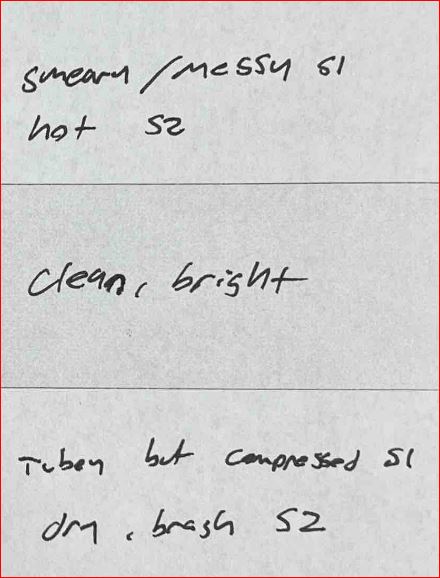
They almost always suffer from exactly the same problems that we heard on this album. We had about five copies on hand in preparation for a shootout, some of which I had noted seemed to sound fine, but once we listened more critically we started to hear the problems that eventually caused us to abandon the shootout. We ended up giving away the stock to our good customers for free.

Here is what my notes say:

By the way, if you do have some of these and want to play them, the 4G side two was the best we played, much better than any 6G side two.

This link will take you to our current favorite recording of the work.

Opacity Vs. Transparency

Note that we have been especially anti-heavy vinyl in our recent commentaries for their consistently opaque character, the opposite of what is necessary in order to hear into the music, deep into the soundstage, to see and hear ALL the instruments, even the ones at the back.

Try that with any Classic Record or Speakers Corner pressing. Our Hot Stamper pressings can show you precisely what you have been missing all these years if you have been collecting and playing releases from those labels and others like them.

(more…)

How Good Are the Later Reissues of The Bridge?

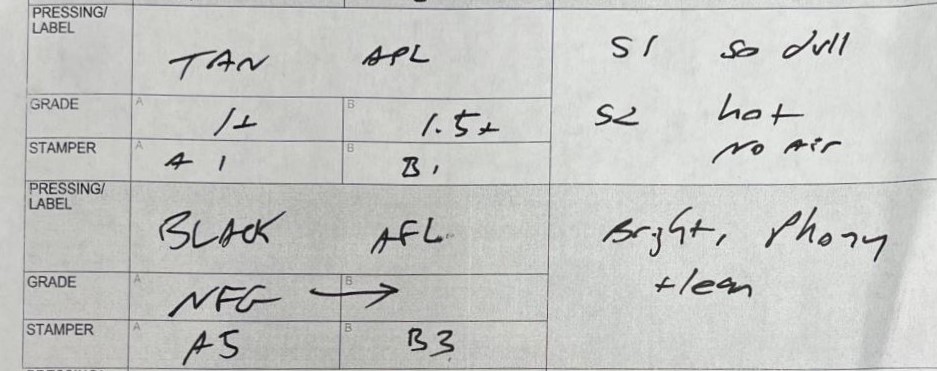
When we did this shootout ten years ago, we thought the reissues with the cover you see to the left actually sounded better than the original pressings, but we were wrong and we have to admit it, as painful as that may be.

True, we never cared much for the later reissues described below — the tan labels can be passable but fall well short of the standards we set now.

However, even the best orange label pressings from 1975 don’t sound as good to us now as we thought they did ten years ago.

They can be good, but in our experience they can never be great.

Great is the sound that can only be found on the best originals, and they win all the shootouts now.

The notes for the AFL pressing with the black label describe it as bright, phony and lean.

This is the kind of sound better suited to the stone age stereos of the past.

I should know. I had a stereo all the way up until the late-90s — not exactly stone age quality, but far from the sound we have now — that prevented me from hearing my records with the highest quality reproduction.

As a result of the shortcomings of my system, I was wrong about a lot of records. (I loved DCC back in those days. Not that many years later I would undergo a “deconversion” as my stereo and critical listening skills improved.)

Of course, I was convinced my stereo was fantastic. It sure sounded better to me than any other system I’d ever heard, and by a long shot.

I had been working with expensive stereo equipment for more than twenty years at that point. The system I had put together by then cost a lot of money, played at loud levels with great energy, was in a dedicated room, et cetera, et cetera.

Are the audiophiles of today making the same mistakes I made back then?

Probably, if not almost certainly, and the one test we can use to determine which audiophiles have made the least amount of progress in this hobby are those who play records like the ones on this list and find nothing wrong with them. Their defense? “They sound just fine to me and who are you to say otherwise?”

Well, we’re the guys who say “you don’t know what you’re missing, and we have the superior-sounding pressing to prove it.”

Which, of course, as is the way of these things, almost always falls on deaf ears, pun intended.

Bottom Line

As of 2024, it’s clear to us that the early pressings have the potential for the best sound, but that the reissues can still sound very good, certainly quite a bit better than any Heavy Vinyl reissue is likely to.

Want to find your own top quality copy?

(more…)

Avoid the Tan Labels and Non-TML Pressings for Nilsson Schmilsson

Hot Stamper Pressings of the Music of Harry Nilsson Available Now

Not that we would ever claim that TML in the dead wax guarantees good sound.

Side two of our tan label copy below was passable, but that’s sonically a very long way from the top copies we played, which of course were all TML, with lots of different stampers, none of which we are likely to reveal, now or in the future, for reasons we are sure you understand.

Anyone who buys one of our White Hot Stamper copies will definitely know, but we only find a couple of those every few years, as this is not a shootout that’s been easy to do for a very long time.

Make sure your equipment is tuned up and the electricity is good before you get anywhere near a pressing of this album.

Big production pop like this is hard to pull off. Harry did an amazing job, but the recording is not perfect judging by the dozen or so copies I played this week and the scores I’ve suffered through before.


Nilsson Schmilsson is an album we think we know well, one that checks off a number of important boxes for us here at Better Records:

(more…)

Does Your Pressing of Death and Transfiguration Have These Shortcomings?

More of the Music of Richard Strauss

Many of the later pressings of CS 6211 were not competitive with the earlier pressings, something we had no idea was true until we actually did the shootout.

This is why we do our shootouts with every kind of pressing we can find that has any hope of sounding good to us.

(This is of course something that cannot be predicted with much certainty. What we are saying is simply that we do not expect the German, Dutch, Japanese and such like pressings from other countries outside the UK to do well because they have almost never done well in the past, not for Decca recordings anyway.)

The notes on the left in the box are for the copies that did not do as well as our best copies.

If your copy of the album has any of the shortcomings we mention, and you would like a better pressing to play, rest assured we will have something for you down the road, as this is our favorite for both performance and sound.

Stamper Information

The stampers of the pressings that consistently came in last in our shootout had the mastering marking of L, which signifies the work of George Bettyes. He has done good work in the past, but odds are that any pressing of this title mastered by L is going to be inferior to those that are not.

Our advice: stick with E and G.

As is sometimes the case, there is one and only one set of stamper numbers that consistently wins our shootouts for CS 6211.  Here are some of the others we’ve discovered through the shootout process.

Our notes for an exceptionally good sounding copy from the last shootout can be seen below.

(more…)

For Top Quality Sound on Maiden Voyage, Skip the Black B

Blue Note Pressings with Hot Stampers Available Now

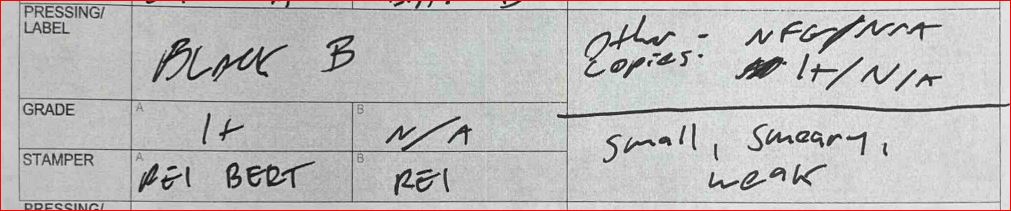
The three copies we had in our recent shootout for Maiden Voyage on the 70s Black B label did poorly.

Like a lot of the records we play when they weren’t mastered properly, they were small, smeary and weak. Considering how bad they sounded, it’s possible — accent on the word possible — that someone remastering the album for a modern audience could do a better job than Blue Note was doing in the late-70s.

This, of course, is not our standard, nor should it be anyone else’s.

Below you will find links to other records with the same problems as this Blue Note reissue.

(more…)

Skip the Later Labels of this Rodrigo Title on the TAS List

More of the music of Joaquín Rodrigo (1901-1999)

This is a TAS list title that deserves its place on a list of Super Discs, as long as you are talking about one that sounds the way the best copies do.

The best sides are exceptionally transparent and full of energy, with the lush strings of the guitars sounding much more textured and real. The orchestra is rich and sweet, especially for a Mercury, yet the guitars are clear, present and appropriately placed relative to the surrounding ensemble.

But all the later label pressings we’ve bought over the years, mostly because we could afford to buy them, hoping for a miracle, have fallen well short of the mark. The notes below tell the story of their typical and obvious shortcomings.

Side One of the most recent late label pressing we played was crude, smeary and hot (bright).

Side Two was even worse, it was very hot (bright).

If you want to avoid records with these problems, click on any of the links below to see the titles we’ve found over the years with the same issues.

(more…)

These Stampers Consistently Come in Last in Our Shootouts

Hot Stamper Pressings of the Music of The Eagles Available Now

All the original domestic pressings are cut by Ted Jensen at Sterling as far as we know.

You can find TJ and STERLING on every last one of them (with the notable exception of the SRC pressings, best avoided). What you can’t find is good sound on every last one of them.

The most common stampers can be found from pressing plants using the following label designations: MON, PRC, PRCW, AR and SP.

In our experience, two of the five labels listed above have the potential to win shootouts. Two of the others tend to end up somewhere in the middle of the grading curve. One consistently ends up at the bottom.

It’s important to keep in mind that in our shootouts, the person hearing the copy being played, the one who is carefully noting its strengths and weaknesses, has no idea what pressing plant actually produced the record, or what its specific stampers numbers might be.

That kind of  information is compiled after the grading has been done. That’s when these patterns emerge.

The domestic pressings with the stampers shown above have not done well in our shootouts for years now. If you own a copy with these stampers, or ones like them, the good news is that we can get you a much better sounding copy of The Long Run than you have ever heard. It won’t be cheap, but we guarantee that it will be very, very good.

Stamper numbers are not the be-all and end-all in the world of records, but after hearing too many copies with these stampers and less than stellar sound, from now on we are going to focus our attention on the stampers that do well and leave copies with these markings sitting in the bins.

Stampers

That the stampers are entirely responsible for the quality of any given record’s sound is a mistaken idea, and a rather convenient one when you stop to think about it. Audiophiles, like most everybody else on this planet, want answers, the simpler the better. Easier to memorize that way.

(more…)

Forget the STS Labels with Black Print on Images Pour Orchestra

More of the music of Claude Debussy (1862-1918)

None of the pressings on this later Stereo Treasury label that we played in our most recent shootouts were very good, unlike the Silver Print labels, which can sound quite respectable.

At this stage of the game, we’ve learned our lesson and will not be giving any more of the Black Label pressings a chance. This goes for practically all the records we’ve played on the later Stereo Treasury label. They rarely sound any good and just aren’t worth the trouble now that we know what the best pressings are.

Both the Ansermet on London and the Munch on RCA are better recordings, but both sell for quite a bit more money than the Stereo Treasury pressings we offer, so if you can’t see spending the kind of bread they command, there is a much more affordable alternative that is guaranteed to satisfy.

(more…)

Is Digital Really the Problem on this Cowboy Junkies Album?

Hot Stamper Pressings of Digital Recordings with Audiophile Sound 

The RCA domestic pressings cut at Sterling are not worth the vinyl they’re pressed on.

Don’t be one of those die-hard analog types who point fingers at the fact that there was digital in the recording chain when their pressing doesn’t sound good.

It’s got nothing to do with digital. It has everything to do with Sterling doing a bad job mastering the domestic vinyl.

(Keep in mind that a very large group of audiophiles, including some well-known reviewers, had no idea there was a digital step used in the process of making some of the records they had raved about. Apparently the only way to hear it is when you already know it’s there.)

Our notes for the domestic pressing below read:

  • Flat and dry vox.
  • Shifted up [tonally]
  • A bit scooped [or “sucked out” in the midrange, meaning the middle of the midrange is missing to some degree]

The midrange suckout effect is easily reproducible in your very own listening room. Pull your speakers farther out into the room and farther apart from each other and you can get that sound on every record you own. I’ve been hearing it in the various audiophile systems I’ve been exposed to for more than 40 years.

Why Defend the Indefensible?

When good mastering houses like Kendun and Sterling and Artisan make bad sounding records, we offer no excuses for their shoddy work. The same would be true for the better-known cutting engineers who’ve done work for them, as well as other cutting operations.

Individuals working for generally good companies sometimes produce substandard work product.

How is this news to anyone outside of the sycophantic thread posters, youtubers, and self-identified record experts who write for the audiophile community?

(more…)