Testing Energy

Our 2024 Shootout Winner of Mac’s Greatest Hits Was Amazing Sounding

Hot Stamper Pressings of the Music of Fleetwood Mac Available Now

With a KILLER Shootout Winning Triple Plus (A+++) side two mated to a solid Double Plus (A++) side one, this vintage British import is doing practically everything right.

Here are just a few of the things we had to say about this incredible copy in our notes: “big and tubey and weighty”…”lots of space and detail”…”sweet and breathy vox”…”jumping out of the speakers.”

Big, rich, energetic, with an abundance of analog Tubey Magic, this original Orange Label UK pressing has exactly the right sound for this music.

“Oh Well, Parts One and Two,” “Black Magic Woman,” “Man of the World,” and the surprise Number One single “Albatross” are all here and guaranteed to blow your mind.

Peter Green is hands down our favorite British Blues Guitarist of All Time – play this record and you will surely see why we feel that way.

This is a lot of money for a somewhat noisy copy, but the sound is so awesome and quiet pressings of the album so hard to come by that we hope someone will take a chance on it and get the thrill we did from hearing it sound right for once.

We’ve recently compiled a list of records we think every audiophile should get to know, along the lines of “the 1001 records you need to hear before you die,” but with less of an accent on morbidity and more on the joy these amazing audiophile-quality recordings can bring to your life.

If you’re a fan of Fleetwood Mac, this copy is guaranteed to blow your mind. Like all the best vintage British pressings, the sound is smooth, rich and full.

This is Old School ANALOG, baby. They don’t make ’em like this anymore because they don’t know how to.

(more…)

How Wide and Tall Is Your Copy of Little Queen? Compared to What?

Hot Stamper Pressings of the Music of Heart Available Now

Little Queen is yet another recording that only truly comes alive when you turn up your volume.

On the right system, this is a classic rock Demo Disc to beat practically anything you could ever throw at it.

Love Alive and Barracuda on this copy will deliver the full rock and roll power your system is capable of.

If you’ve got The Big Sound, this is the record that will show you just how big it is.

You get huge meaty guitars, big bass, a smooth top end, full-bodied vocals, powerful rock energy and dynamics, loads of richness and incredible transparency.

Wide and Tall

A key quality we look for in Hot Stamper copies of Little Queen is wide and tall presentation.

What exactly does that mean you ask? The best copies, the ones that really jump out of the speakers, tend to present some (usually high frequency) information higher and more forward than others. This is not hard to miss.

When you’re playing ten or fifteen copies of the same side of the same album and suddenly a cymbal crashes higher and more clearly than the others did in the part of the track you are testing, you can’t help but notice it. Wow! How did that get there?

Once you hear it you start to listen for it, and sure enough the next copy won’t do it, nor will the next. Maybe the one after that gets about halfway there: the cymbal crashes are higher than most, but not as high as the one that really showed you how high is up.

This is why we do shootouts, and why you must do them too, if owning the highest quality pressings is important to you.

Progress in Audio

And of course it all ties in with our revolutionary changes in audio commentary. If you’ve been making steady improvements to your system, or have better cleaning technologies, or better room treatments, or cleaner electricity, maybe ALL the Little Queen pressings do it now. They might ALL do something they never did before, and in fact they SHOULD be doing most things better now. 

Our last shootout was a while back. Since then many, many parts of the chain have undergone improvement. During this shootout we heard things in the recording we’d never heard before. This is the point of all this audio fooling around. It pays off, if you do it right. You have musical information waiting to be unlocked in your favorite recordings. It isn’t going to free itself. You have to do the work to set it free. Do it our way or do it some other way, but do it. You, more than anyone else, will be the one to get the benefit.

Problems Noted More Recently

(more…)

Lincoln Mayorga Volume 1 and Obvious Pressing Variations

Hot Stamper Pressings of Direct-to-Disc Recordings Available Now

After doing our first shootout many years ago for the record that single-handedly introduced the audiophile community to Direct to Disc recording, Lincoln Mayorga and Distinguished Colleagues, Volume One, I have to confess I was taken aback by the significant pressing variations we heard among the copies we played, 

These LPs are all over the map sonically.

Some Sheffield pressings are aggressive, many of them are dull and lack the spark of live music, some of them have wonky bass or are lacking in the lowest octave — they are prey to every fault that befalls other pressings, direct to disc and otherwise.

Which should not be too surprising. Records are records. Pressing variations exist for every album ever made. If you haven’t noticed that yet, start playing multiple copies of the same album while listening carefully and critically. If your stereo is any good at all, it should not take you long to notice how different one record sounds from another in practically every case.

Biggest problems on S9?

I would have to say smear is Number One.

When the brass loses its bite and the bells don’t have the percussive quality of metal being struck, this is not a good thing. The band also seems to lose energy when the pressing suffers from smear.

Number Two would be a lack of top end extension.

The harmonics of the sax and trumpet are muted on some copies, and the harpsichord really suffers when the top end isn’t all there. This lack of extension is most noticeable on all the lovely bells and percussion instruments that pepper the soundstage, but you can actually hear it on practically every instrument once you recognize the problem. It’s there on guitar harmonics, cymbals and snares, and on down the list.

Linked here are other records that are good for testing these same shortcomings:

(more…)

Two Key Tracks for Testing Rubber Soul

Hot Stamper Pressings of Rubber Soul Available Now

Rubber Soul is one of the most difficult Beatles records to get to sound right. The individual tracks seem to vary drastically in terms of their tonality. Some (What Goes On) sound sweet, rich and near perfect. Others (You Won’t See Me) can be thin and midrangy. What’s a mother to do?

I think what we’re dealing with here are completely different approaches to the final mix. The Beatles were experimenting with different kinds of sounds, and their experiments produced very different results from track to track on this album more than practically any other I can think of besides The White Album (which was recorded in multiple studios by multiple producers and engineers).

Is Your Rig Up To It?

One final note: this is the kind of record that really rewards a good cartridge/ arm/ table combination. You do not want to play this record with a lean or bright sounding cartridge, or a front end that does not track sibilances well. (I could name some equipment that I would not want to play this record on, but rather than insult the owners of such equipment, let’s just say they will have a tough time with this record.)

The Toughest Test on Side One

Nowhere Man.” Unless you have an especially good copy this song will sound VERY compressed, much too thick and congealed to be as enjoyable as we know it can be. The best copies manage to find the richness in the sound as well as the breathiness in the vocals that others barely hint at.

Play this track on whatever copies you own (more than one I hope) and see if it doesn’t sound as compressed, thick and congested as we describe.

The Toughest Test on Side Two

(more…)

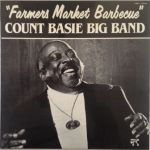
Farmers Market Barbecue – First Among Equals, or The Best Pablo Ever?

Hot Stamper Pressings of the Music of Count Basie Available Now

Musically FMB is a Top Basie Big Band title in every way. This should not be surprising: many of his recordings for Pablo in the ’70s and early ’80s display the talents of The Count and his band of veterans at their best.

Sonically it’s another story. Based on our recent shootout for this title, in comparison to the other Basie titles we’ve done lately, we would have to say that FMB is the best Basie big band title we’ve ever played. Since so many Basie big band recordings are so good, we don’t want to get ahead of ourselves; after all, we haven’t done shootouts for all of his Pablo large group recordings. To be safe we’ll just call this one First Among Equals.

The following are some general guidelines as to What to Listen For while you critically evaluate any of the Basie Big Band Pablo recordings (or any other big band recordings for that matter).

Simply put, we offer here a short list of qualities that we’ve come to appreciate on the best of the Basie Big Band pressings, qualities that we find are often in short supply on lesser LPs (and, as a rule, those that have been remastered onto Heavy Vinyl). (more…)

Listening in Depth to Romantic Warrior

Romantic Warrior is my favorite JAZZ/ROCK FUSION album of all time. As good as the music is, the sound is even better. This is the Jazz/Rock Demo Disc that stands head and shoulders above the rest. In my experience, no record of this kind is more DYNAMIC or has better BASS. Not one. Demo Disc doesn’t begin to do this kind of sound justice.

Simply put, not only is this one of the greatest musical statements of all time, it’s one of the great recording statements. Few albums in the history of the world can lay claim to this kind of POWER and ENERGY.

But the Super Sound has a purpose, a raison d’etre. This is the kind of music that requires it; better yet, DEMANDS it. In truth, the sound is not only up to the challenge of expressing the life of the music on this album, it positively ENHANCES it.

Those monster Lenny White drum rolls that run across the soundstage from wall to wall may be a recording studio trick, but they’re there to draw your attention to his amazing powers, and it works! The drums are EVERYWHERE on this album, constantly jumping out of the soundfield and taking the music into the stratosphere where it belongs.

Side One

Medieval Overture

The grandiose opening of this record serves as an important sonic checkpoint, as well as a tipoff for the pyrotechnics to come. On the better copies Corea’s multi-layered, swirling synths occupy their own space, clearly separated from each other, not blurred and inarticulate as they are on the poorer pressings.

Also notice how much attack Lenny White’s drums have, especially in the more exposed sections. The transients are breathtakingly immediate. Run-of-the-mill copies tend to flatten Mr White, making his acrobatic playing seem two-dimensional and less-than-inspired. The best copies prove that nothing could be further from the truth.

Sorceress

This groove-oriented track is a testament to RTF’s diversity, as well as the mastery of Messrs. Clarke and White as a rhythm section. This is a real test for bottom end. Even though the bass goes unbelievably deep, the best copies manage to exhibit plenty of control while still allowing you to FEEL the bass rising up through the floorboards and into your chair. There is so much deep bass at the opening of this track that at any sort of serious levels I would immediately run out of the wattage needed to sustain them. It was either back off the volume or distort like crazy. You need some serious juice to play this track, or a very efficient speaker, or both.

All the members of this All-Star cast are showcased in the improv section, highlighted by Corea’s brilliant piano solo in the middle, one of my personal favorite solos of all time. Corea is a musician’s musician. There is nothing he or his bandmates are not capable of on this recording. This is more than mere fusion. On this album the whole world of jazz can be heard.

(more…)

Letter of the Week – “Big, warm, mushy and limp”

Hot Stamper Pressing of the Music of Joni Mitchell Available Now

One of our good customers had this to say about some records he played recently:

Hey Tom, 

I just had to drop you a brief note, to say THANK YOU, for your writings regarding DCC pressings many years back.

I was just going back through them on your site, after I unearthed my DCC pressings this afternoon and gave a couple of them (i.e., Elton’s Madman; Joni’s Court and Spark) a spin – as I recall y’all being the first to speak truth in the face of overwhelming adoration regarding these (when they first were released).

OMG. They are COMPLETELY lifeless, with ZERO energy!

Big, warm, mushy and limp, yes.

Probably sound comforting (at some level) on a low-budget lean solid state system. [High-budget ones too I would venture to guess.]

But on a system with any level of transparency and truth-to-pressing, YIKES. It just made me sad.

THEN, I went online, and checked the current PRICES for these pressings (of which I own several sealed), and I got SUPER HAPPY! People are paying some serious coin for these turkeys – so I can be well rid of them, and take that cash and buy some more of YOUR awesome pressings! Win-win! 👍😊

Warmest regards,

Steve

Steve,

I should say right off the bat that I think the DCC of Court and Spark is not a bad sounding record, at least the copy I had wasn’t bad sounding last time I played it. Your mileage apparently varied.

Madman I hope to write about before too long. I found my DCC copy to be lean in the lower midrange, and missing much of the Tubey Magic that makes that recording so special (along with many others by Elton from that era).

A few more thoughts:

The sound I think you are hearing that you refer to as lifeless and lacking in energy is really the result of Kevin Gray’s lousy cutting chain. The sound you hear on your DCC albums is precisely the sound I had heard on this DCC album many years ago. Played back-to-back with the properly-mastered, properly-pressed originals, the DCC was shockingly lacking in many of the most important qualities a record should have. Eventually Paul and Judy that showed me what a fool I had been.

Low resolution cutters like the ones used to cut the DCC discs sound dead and boring, even when the mastering choices are good ones and no obvious compression is being used.

Kevin Gray famously does not have a way to put compressors into his chain, as my friend Robert Pincus at Cisco found out when he cut 52nd Street and could not get some aspects of it to sound right, unable as he was to add compression in the mastering the way Sterling had.

That’s what it needed and that’s what it didn’t get. Kevin don’t play dat.

I have been beating this long-dead horse for about fifteen twenty years now. Any time I actually do play one of the DCC records these days, it usually sounds worse than I remember it.

(more…)

Yes, We’re Getting Awfully Close To The Edge…

Hot Stamper Pressings of the Music of Yes Available Now

On the difficulty of reproduction scale, this record ranks well above most of the albums we play, in the top few percent without a doubt.

You need lots of Tubey Magic and freedom from distortion, the kind of distortion-free sound I rarely hear on any but the most heavily tweaked systems — the kind of systems that guys like me have been slaving over for more than forty years.

If you’re a weekend warrior when it comes to working on your stereo, this is not the record for you.

It took a long time to get to the point where we could clean the record properly, twenty years or so, and about the same amount of time to get the stereo to the level it needed to be, involving, you guessed it, many of the revolutionary changes in audio we tout so obsessively.

It’s also not easy to find a pressing with the low end whomp factor, midrange energy and overall dynamic power that this music needs, and it takes one helluva stereo to play one too.

If you have the kind of big system that a record like this demands, when you drop the needle on the best of our Hot Stamper pressings, you are going to hear some astonishingly good sound.

Unless your system is firing on all cylinders, even our Hottest Stamper copies can be difficult. Your electricity has got to be cooking, you’ve got to be using the right room treatments, and ideally you should be using a demagnetizer such as the Talisman on the record itself, your cables (power, interconnect and speaker) as well as the individual drivers of your speakers.

This is a record that’s going to demand a lot from the listener, and we want to make sure that you’re up to the challenge. If you don’t mind putting in the hard work, here’s a record that will reward you many times over, and probably teach you a thing or two about tweaking your gear in the process.

We’d started and abandoned this shootout multiple times before breaking through in 2008. The typical copy was just too painful to listen to, and the better pressings weren’t sounding the way we’d hoped they would.

Where was the Tubey Magical analog sound with the HUGE whomp factor that we’d been hearing on the best copies of Fragile and The Yes Album?

We just could not find that sound on Close to the Edge.

As futile as our previous attempts were, we decided in 2008 that we would take another stab at it. After all, there had been quite a few changes around here that had the stereo working really well —  the addition of the Odyssey Record Cleaning Machine and Prelude Record Cleaning System to our cleaning process, the Talisman Magnetic Optimizer, the third pair of Hallographs we added years back, tons of smaller tweaks, and a few other tricks that we’re going to leave hidden up our sleeves for now.

The Planets Align

Think about it: This is a highly COMPLEX recording, with HUGE organs, light-speed changes, lots of multi-tracking, and what amounts to an OVERLOAD of musical information. Can you imagine how irritating that would sound on a third-rate copy? We didn’t have to imagine it — we lived through it!

But that’s exactly what made the shootout so rewarding. We had finally gotten the sound we were searching for from Close To The Edge, although it was anything but easy. The toughest peaks to climb are the ones you feel the best standing at the top of, and I have no doubt that many of you will be able to get there, just as we did, as long as you’re willing to work for it. (We humbly suggest you follow our lead.)

We put a lot of time and energy into getting everything just right for our shootouts, and to hear the album sound amazing you’re going to have to do the same. If it doesn’t all come together and our Hot Stamper Close to the Edge leaves you cold, feel free to send it back for a full refund. That’s always our policy, but we wanted to stress it in regards to this album, because it is VERY difficult to reproduce. (Big speakers are pretty much a must on this one as well.)

And it should be noted that there is distortion on the tape. It’s on every LP copy and it’s on the CD too. There are cacophonous passages that have what sounds like board overload, mic preamp overload, tape saturation or some combination of all three.

(more…)

Are Your Cellists Digging In on I Am the Walrus?

This commentary was written many years ago.

Over the last decade I Am The Walrus has evolved into a good test for side one, a fact that came as a complete surprise to me. As I was listening to the various copies in a shootout years ago I noted that the opening cellos and basses in the right channel were often tonally identical from copy to copy, but sounded quite a bit more lively and energetic on some pressings relative to others. Was it EQ? Level? Compression?  

Why so much more passion from the players on some copies and not others?

As I tried to puzzle it out, playing first one copy and then another, it became clear to me what was happening. The cellists and the bassists were just plain digging HARDER into the strings on the best copies. When you see live classical music, the cellists at the front of the orchestra are usually sawing away with abandon when the music is really going. They dig their bows hard into the strings to make them vibrate as loud as possible. To make their instruments heard in the back row it becomes a matter of muscle, of pure physical exertion.

So armed with the copies where the string players are working the hardest, I checked the other tracks. Sure enough, the opening cut, MMT, jumped out of the speakers with the most energy I had heard on any copy. As I went through the tracks one by one, they had the most life of any of the copies I had been listening to. To use a word that was popular at the time, the music was HAPPENING.

This was the final piece to the puzzle. Tonality always comes first. Frequency extension; lack of distortion; rich, powerful bass — these are important qualities as well. But the life of the music is in the micro and macro dynamics, and that is what I had not been paying sufficient attention to during the shootout.

That was until I listened to Walrus and heard the players working up a good healthy sweat. Then I knew I had a Hot Stamper. And when I played the not-so-Hot Stampers, the string guys sounded like session musicians picking up a paycheck.

Where was their passion? Didn’t they realize they were making a classic?

If you get the right pressing they sure were!

(more…)

Rockin’ the Mandolin with Loggins and Messina

Hot Stamper Pressings of the Music of Loggins and Messina Available Now

A recent White Hot Stamper pressing of L&M’s fourth release demonstrated pretty convincingly just what an amazing Demo Disc this album can be.

When Jim Messina rips into his mandolin solo halfway through Be Free, your jaw is likely to hit the ground. On the best copies it positively leaps out of the left speaker.

I can’t recall another pop or rock recording that captures either the plucked energy or the harmonic nuances of the instrument better. To hear such a well-recorded mandolin on a copy of this quality is nothing less than a thrill.

This copy showed us:

  • A full-bodied piano
  • Rich, lively vocals, present between the speakers and brimming with enthusiasm
  • Harmonically-rich guitars, mandolins, dobros and the like, as well as a
  • Three-dimensional soundstage that revealed the space around them all

What to Listen For

What typically separates the killer copies from the merely good ones are three qualities that we often look for in the records we play: transparency, speed, and lack of smear.

Transparency allows you to hear into the recording, reproducing the ambience and subtle musical cues and details that high-resolution analog is known for.

Note that most Heavy Vinyl pressings being produced these days seem to be transparency challenged. Lots of important musical information — the kind we hear on even second-rate regular pressings — is simply nowhere to be found.

Lack of smear is also important, especially on a recording with so many plucked instruments. The speed and clarity of the transients, the sense that fingers are pulling on strings, strings that are ringing with tonally correct harmonics, is what makes these L&M records so much fun to play.

The best copies really get that sound right, in the same way that the best copies of Cat Stevens’ records get the sound of stringed instruments right.

No two pieces of electronics will get this record to sound the same, and some will fail miserably. If vintage tube gear is your idea of good sound, this record may help you to better understand where its shortcomings lie.

(more…)