brook-testing

Some Thoughts on Testing in Audio

Robert Brook runs a blog called The Broken Record, with a subtitle explaining that his blog is:

A GUIDE FOR THE DEDICATED ANALOG AUDIOPHILE

Some THOUGHTS on TESTING in AUDIO

My Two Cents

I made a couple of quick notes and sent them by email to Robert, as follows:

  • One record is not enough for this test, or any other for that matter, and
  • Tests need to be blinded.

Without blinding all you are doing is confirming your prejudices, which is something you correctly point out in your piece, and no matter how much you want to think you aren’t doing that because you are trying so hard to guard against it, it is almost surely what you will end up doing.

Confirmation bias is at the heart of most mistaken audio judgments, something I learned a very long time ago, and only after making every kind of mistake there is to make, over the course of decades no less. Only one thing had the power to set me on the right path, and without it I would never have learned how to make any real progress in audio, or find better sounding records for that matter.

If you don’t know how to run good experiments, how can you be sure your results are of any value?

(more…)

One Man’s Experimental Approach to Audio Reveals Some Inconvenient Truths

Here Are Some of Our Favorite Orchestral Test Discs

UPDATE 2025

The following was originally posted by Robert in 2020. We have added a link at the top to test discs that we’ve found to be good for tweaking and tuning your system, room, electricity and such like.

Robert has also reviewed a fair number of difficult to reproduce orchestral recordings, titles that are sure to challenge the playback quality of any system. They should make it easy to hear whether the changes you make are actually getting closer to sound that is more like live, unamplified music, which, from our point of view, should be the goal of any audiophile.

This is the one true test for any system.

Here’s an especially good test disc to get you started.

POWER CORDS: Is THIS the Difference You Want?


Robert Brook has a blog which he calls

A GUIDE FOR THE DEDICATED ANALOG AUDIOPHILE

Below is a link to a comparison Robert Brook carried out with a group of power cords he had on hand. I did the same thing about fifteen twenty years ago and it taught me a lot (although strangely in my case I’ve never taken the time to write about it, mostly because my notes are long gone).

The experience he went through is instructive and easily replicated by anyone for any system. The benefits are likely to be substantial, maybe even life-changing. (Robert has had many life-changing experiences with audio and music since this was written, and we couldn’t be happier that we played some small part in the evolution he underwent.)

(more…)

There’s a Better Way to Do Analog – Part One

Robert Brook runs a blog called The Broken Record, with a subtitle explaining that his blog is:

A GUIDE FOR THE DEDICATED ANALOG AUDIOPHILE

We know of none better, outside of our own humble attempt to enlighten that portion of the audiophile community who love hearing music reproduced with the highest fidelity and are willing to go the extra mile to make that happen.

There’s a BETTER WAY to do ANALOG – Part One

Robert’s Approach

Robert has methodically and carefully — one might even say scientifically — approached the various problems he’s encountered in this hobby by doing the following:

(more…)

Speaker Placement — The Room Coupling Method

Robert Brook runs a blog called The Broken Record, with a subtitle explaining that the aim of his blog is

A GUIDE FOR THE DEDICATED ANALOG AUDIOPHILE

We know of none better, outside of our own humble efforts to enlighten that portion of the audiophile community who love the sound of music reproduced with the highest fidelity and, more importantly, are serious enough to be willing to spend a great deal of their money and their time in order to make that happen.

If you aspire to great things in audio, Robert’s blog is for you, as is the one you are now on.

SPEAKER PLACEMENT: The ROOM COUPLING METHOD

An excerpt:

[A] few months ago I came across an article on a Room Coupling Method for speaker placement. Encouraged by finding some common ground with author Richard Mak’s thinking, I started trying it out, and it has helped me make some meaningful progress.

One thing I particularly appreciated in Mak’s article was his assertion that “measurements” and “analysis” are not a substitute for “listening.”

“Charts, graphs, room nodes, reflection coefficients, or even a Ph.D. in room acoustics won’t get you there. Many who are armed with an arsenal of scientific knowledge do not even know how or what to listen for on a reference test track.”

To Mak’s point, as I attempted to apply his approach to my speaker and listening chair positions, I realized in the process that even though the placement of my speakers and listening chair have been suboptimal for some time, that time was far from wasted.

Because in that time I’ve done A LOT of listening, and that listening has led to a special kind of knowledge, which for a long time was without a clear application. Mak’s methodology has since given me an outlet for this knowledge, and all that listening is now paying off.

In his article, Mak walks us through a process that begins with how to determine the distance of the speakers from the back wall. From there he describes how to determine their width, then their toe-in angle, and finally how to dial in the position of the listening chair.

For those of you who would like to tune and tweak the location of their speakers, the article seems to have some good advice for doing that, with plenty of tests to challenge both your setup and your critical listening skills. (We have some great test records you might find useful as well. The more difficult ones to get to sound right can be found here.)

This subject is so complicated that to say much more might send me down a rabbit hole I’d have a hard time climbing out of, but here’s a thought or two.

I’ve had many different big speaker systems set up in a number of good-sized rooms over the years, starting in 1975. When I moved into the house I bought in Thousand Oaks in the early 2000s there was a “great room” with a piano on the far end (where the speakers are now) and a dining table at the opposite end. It measured 15×30 with about a nine foot ceiling.

I was hoping to use my Legacy Whisper speakers in this room so that I could audition records all day (my desk can be seen there on the right). I spent about two years trying to make the speakers sound good where you see them in the picture below.

(more…)
System Neutrality — “Allowing the Music to Speak”

Robert Brook runs a blog called The Broken Record, with a subtitle explaining what the aim of his blog is:

A GUIDE FOR THE DEDICATED ANALOG AUDIOPHILE

We know of none better, outside of our own humble attempt to enlighten that portion of the audiophile community who love hearing music reproduced with the highest fidelity and are willing to go the extra mile to make that happen.

System NEUTRALITY: “ALLOWING the MUSIC to SPEAK”

An excerpt:

I am here to tell you, however, that in the few short hours that I spent with Robert and his system, I gained a tremendous amount of knowledge, both in technical tweaks and in the philosophy of how to listen. Despite owning either identical hardware or that of similar ilk (same speakers, cartridge, similar turntable, treatments, and so on). Robert’s system sounded fundamentally different from mine.”

This is surely the result of the large numbers of small changes — with potentially big effects — Robert made to his system, proof that the 80/20 rule is real.

If you click on the 80/20 link above you will find links to hundreds of test records at the bottom of the commentary, along with this paragraph:

These are the records that challenged me and helped me to achieve more progress in audio. If you want to improve your stereo, these are some of the best records we know of to help you take your system to the next level.

To that end, I recently compiled a list of seventy or so records that had been helpful in getting my system to sound better, mostly by working on the many problems I heard when attempting to hear them at their best over the course of the last forty-plus years.

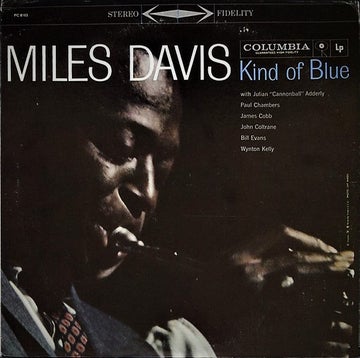
These two were by far the most helpful, but, as I say, there were scores of them, records that I played hundreds and hundreds of times while I went about tweaking and testing. (That’s how I ended up with the lovely lattice all over my soundroom that you can see in the pictures below.)

(more…)

Others May Help, But Most of the Time We Make Our Own Mischief

Robert Brook runs a blog called The Broken Record, with a subtitle explaining that the aim of his blog is to serve as:

A GUIDE FOR THE DEDICATED ANALOG AUDIOPHILE

We know of none better, outside of our own humble attempt to enlighten that portion of the audiophile community who love records and are looking to understand them and reproduce them better.

Here is Robert’s latest posting. I changed the title a bit from his, since the dictionary definition of the term mischief-making implies “deliberately creating trouble for other people,” and it is not quite right that the purveyors of these products are in any way purposely going about screwing up the sound of perfectly good stereos.

The way I see it, these products are designed to do something positive for some stereos under some conditions when playing some recordings for audiophiles who prize some qualities more than others.

Knowing what these kinds of things are doing, on what kinds of stereos, under what operating conditions, when playing what specific recordings, for what sound qualities a particular audiophile might be listening for, is more than the work of a lifetime. It is, in fact, impossible.

ISOACOUSTICS and the Un-MAKING of Audio MISCHIEF

After reading Robert’s story, I was inspired to write a long piece detailing my own lessons learned as I first embraced, then rejected, one tweak or piece of gear after another, starting in 1975 or thereabouts. (Many such stories are chronicled here. The picture of me you see was taken in the late-70s. I was in an audio cult at the time, but, of course, like today’s similarly-situated audiophiles, I had no way of knowing it.)

I am still working on the commentary mentioned above, but I expect it should be ready before long. The short version goes like this:

Dramatic limitations and massive amounts of colorations are endemic to home audio systems.

The only way to get rid of them is by doing the unimaginably difficult work it takes to learn how to identify them and then figure out ways to root them out.

This, in my experience, is a process that will rarely be accomplished, even by the truly dedicated. It unfolds slowly, over the course of decades, and only for a very small percentage of audiophiles. Most will simply give up at some point and choose to enjoy whatever sound quality they have managed to achieve up to that time. To attempt to go further feels like banging your head against a wall.

To push on in this devilishly difficult hobby we have chosen for ourselves is for the few, not the many.

(It helped that we got paid to do it. An undiagnosed but all-too-real obsessive personality disorder also played a part, as did certain records that I fell in love with a long time ago.)

The completed post can be found here.

(more…)

Testing with Good Records Is the Only Kind of Testing that Works

Robert Brook runs a blog called The Broken Record, with a subtitle explaining what the aim of this blog is:

A GUIDE FOR THE DEDICATED ANALOG AUDIOPHILE

We know of none better, outside of our own humble attempt to enlighten that portion of the audiophile community who love records and are looking to understand them better.

Here is Robert’s latest posting.

FERRITES and the Limits of SCIENCE (theory?) in AUDIO


More on Robert’s system here. You may notice that it has a lot in common with the one we use. This is clearly not an accident.

And it is also no accident that these two systems just happen to be very good at showing their owners the manifold shortcomings of the modern remastered LP, as well as the benefits to be gained by doing shootouts in order to find dramatically better sounding pressings to play.

(more…)