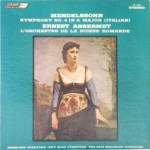
Month: September 2024

Aerosmith – Toys in the Attic

More Aerosmith

  • A killer copy of Aerosmith’s 1975 down-and-dirty blues-rock hit release with Nearly Triple Plus (A++ to A+++) sound from start to finish – just shy of our Shootout Winner
  • Our favorite Aerosmith album in every way, and a true Must Own for fans of the band
  • We guarantee there is dramatically more Tubey Magic, size and rock and roll energy on this vintage copy than others you’ve heard, and that’s especially true of whatever dead-as-a-doornail Heavy Vinyl disaster is out there now
  • This is only the second copy we’ve been able to offer in close to two years, but once you drop the needle on “Sweet Emotion” or “Walk This Way” you’ll hear it was worth the wait – they rock like they have never rocked before
  • 5 stars: “Aerosmith finally perfected their mix of Stonesy raunch and Zeppelin-esque riffing with their third album. The success of the album derives from a combination of an increased sense of songwriting skills and purpose.”

If you’re looking for great sound for this fun album, you’ve come to the right place. This is raw, down-and-dirty blues-rock in the tradition of the Stones and the Faces, and when it sounds this good it sure is a blast to listen to.

I never really cared much for this band about ten years ago when I heard “Sweet Emotion” on my local classic rock station (The Octopus!) and realized that it would probably sound pretty amazing on a Hot Stamper vinyl version. Boy, was I right! It took quite a few copies and a whole lot of work, but the best sounding tracks on this album sound amazing. “Sweet Emotion” and “Walk This Way” are going to rock like they have never rocked before.

Of course, not every copy sounds like this one. We pick these up when we find them and I’m sorry to report that most of them leave much to be desired. If your copy is dull or smeary as so many of them are, you won’t get the full effect of this raw, ballsy rock ‘n’ roll. All you have to do is drop the needle on the intro to “Sweet Emotion” and you’ll see why we decided to roll with our shootout.

That’s not to say this is an amazing, top-shelf recording, but it certainly beats most of the dreck out there that passes for Audiophile-style classic rock. (If you disagree, I’ve got a nice copy of the Sheffied Track Record to sell you.)

(more…)

Symphonie Fantastique in Living Stereo – “So Sweet and Tubey”

Hot Stamper Pressings of Living Stereo Recordings Available Now

The size and power of a large orchestra in Living Stereo sound. Maybe it’s the gorgeous Living Stereo strings and hall acoustics that let us forget about the possibility of compromises occurring in other areas.

So open and spacious, with gorgeous, richly textured strings — this is the VIVID sound we love from the Golden Age. The hall is huge, the brass solid and powerful, the top and bottom extends properly, the stage is wide and clear — what more can you ask for? 

Here are the notes from our shootout winning copy from our last go around for the RCA.

Side One

  • Big and tubey brass and bass
  • Very lively and transparent and spacious
  • So sweet and tubey

Side Two

  • Huge and tubey and lively
  • So big and 3-D
  • Deep rich bass
  • Huge peak is the least distorted

That last point is a good one. There is distortion at the climax of the work on side two. It is there on every copy. On some copies it will be worse than on other copies.

You want a pressing with the least amount of distortion on that peak but one that is also dynamic and lively.

This is the reason we do shootouts. We’re listening for how each pressing handles that problem in the recording and then using that metric, along with many others, to grade them.

The copy that had the best sound on side two was the most dynamic and the least distorted, as well as having all the other good qualities we noted.

That is what you are paying for when you buy a White Hot Stamper pressing. You’re not buying a perfect record, there’s no such thing.

Rather, it’s the one that comes closest to perfection as can be found.

(more…)

It Took Us More than Twenty Years to Figure Out What Was the Problem

Hot Stamper Pressings of the Music of Neil Young Available Now

Years ago — precisely how many we can’t really say, the old listings for those records have been deleted — we thought the original pressings in the nameless cover you see pictured had the best sound.

We thought the pressings that came in this early cover were the ones that were made from the original mix, the mix that Neil later disowned. (More on that below.)

We had played a number of copies that came in the original cover, and they sounded better to us than the others we had auditioned.

Our mistake was not understanding that pressings made with the first mix and pressings made with the second mix both came in the early cover, and both were pressed on the Reprise Two Tone label.

Here is what we wrote some years ago:

It turns out the remixed pressings we’d been selling for years were not the way to hear this album at its best. Neil wanted his voice to sound clearer and more present than the first mix, but the approach the engineers took to increase the clarity and presence was simply to boost the middle and upper midrange, a boost that seriously compromises the wonderful Tubey Magic found in the rich lower midrange of the original mix.

Neil may have liked the sound of his voice better on the new mix, played back on whatever mediocre-at-best stereo he was using at the time, but we here at Better Records are of a decidedly different opinion. On a modern, highly-resolving system Neil’s voice will not sound the least bit “buried” on the original mix, not on the better pressings anyway. Of course, the better ones are the only ones we sell.

If you want to hear this album sound right, we strongly believe that the original mix is the only way to go. And if you want to hear this album sound really right, better-than-you-ever-thought-possible right, you need a copy that was mastered, pressed and cleaned properly, and that means a Hot Stamper from Better Records.

It turns out the stampers for the pressings we like are the ones made from the remixed tapes.

Now that we know which are the stampers that conform to the pressings made from the remixed tapes, we have to agree completely with Neil about the sound.

The copies with the earliest stampers, found on the two tone label in the original no-name cover, are not very good. Sometimes but not always awful, we had two copies and the best one had a decent side one, but it was still a very far cry sonically from the best of the pressings made from the remixed tapes.

Of all people, we should have known better.

We had made some assumptions about the pressings that came in the original jacket on the early two tone label, assumptions which turned out to be wrong and led us to believe the silly things we wrote above. Now we know better.

Here are the bad stampers complete with our notes for their at best second-rate sound. (Although side one of one copy was decent, we do not sell records that do not earn a grade of at least 1.5+ on both sides. More on the 1.5+ grade here.)

(more…)

Dave Grusin – Discovered Again!

  • Grusin’s jazz masterpiece from 1976 returns to the site for only the second time in sixteen months, here with INCREDIBLE Shootout Winning Triple Plus (A+++) grades or close to them throughout this original import copy – fairly quiet vinyl too
  • Here are just a few of things we had to say about this killer copy in our notes: “weighty, deep bass and kick”…”3D, rich, and silky”…”excellent detail and size”
  • After critically listening to this record good and loud, and hearing it sound the way this copy sounds, we have to call it One of the All Time Great Direct to Disc Recordings
  • The songs, the players, the arrangements, the sound – this is a record that will reward hundreds of plays for decades to come
  • Side one of this copy is out of polarity and not a copy you should buy if you can’t switch
  • “…makes for the kind of demo material audiophiles are so fond of using to impress friends and neighbors.”

We are on record as being big fans of this album. Unlike most Direct to Disc recordings, Discovered Again actually contains real music worth listening to. During our all-day shootout, the more we played the record, the more we appreciated it. These are top quality players totally in the groove on this material. When it’s played well, and the sound is as good as it is here, there’s nothing dated about this kind of jazz. Hey, what can we say — it works.

(more…)

Mendelssohn / Symphony No. 4 – Don’t Be Fooled by the Cover

More of the Music of Felix Mendelssohn

Demo disc quality. This record has the same kind of amazing sound as the Chabrier disc on London, but it’s much more rare, perhaps because the cover does not to sell the album.

I don’t think I’ve ever heard a better Mendelssohn 4th. 

We admit we foolishly did not expect much from a mid-60s London with a cover this plain.

It’s hard to get excited about an album with such a generic cover, but hearing the recording we were forced to confront our silly prejudices and recognize the greatness of James Lock‘s work for Decca in 1965.

It even beats the famous Solti on Blueback, which has a cover to die for. However, like many of the Londons and Deccas we’ve played over the years, the sound of that pressing is awful.


This is an older classical/orchestral review

Most of the older reviews you see are for records that did not go through the shootout process, the revolutionary approach to finding better sounding pressings we started developing in the early 2000s and have since turned into a veritable science.

We found the records you see in these older listings by cleaning and playing a pressing or two of the album, which we then described and priced based on how good the sound and surfaces were. (For out Hot Stamper listings, the sonic grades and vinyl playgrades are listed separately.)

We were often wrong back in those days, something we have no reason to hide. Audio equipment and record cleaning technologies have come a long way since those darker days, a subject we discuss here.

(more…)

Neil Young – On The Beach

More Neil Young

More Country and Country Rock


  • An original Reprise pressing of this Neil Young classic with two solid Double Plus (A++) or BETTER sides
  • Side two was sonically very close to our Shootout Winner – you will be shocked at how big and powerful the sound is
  • The title track has that live-in-the-studio sound we love about Zuma, but in this case it sounds like it was recorded at three in the morning in a room full of pot smoke
  • Problems in the vinyl are sometimes the nature of the beast with these Classic Rock records – there simply is no way around them if the superior sound of vintage analog is important to you
  • 5 stars: “…where Time Fades Away was embattled and Tonight’s the Night mournful, On the Beach was savage and, ultimately, triumphant… he was saying goodbye to despair, not being overwhelmed by it.”

Folks, we don’t find too many Hot Stamper copies of this great album, so don’t assume that another one will pop right up once this one goes. This album may not be as well-known as Harvest or After The Gold Rush, but it’s every bit as worthy of a place in your collection — especially when it sounds this good!

Prime Time For Neil Young

I want to take a moment to acknowledge the string of superb studio albums Neil released from 1970 to 1976. I mean, look at these titles: After The Gold Rush, Harvest, On The Beach, Tonight’s The Night, and Zuma. Not a dog in the lot, to say the least. I can’t think of anyone else besides Led Zep (first five titles) and The Beatles (pick ’em!) who put out at least this many killer albums consecutively. We consider each of those albums a work of genius, and we can proudly claim to have found copies of each with the sonic credentials necessary to bring you these masterpieces at their absolute best — exactly the way you want to hear them.

Live In The Studio Sound

On the better copies, the title track is out of this world. It’s got that live-in-the-studio sound we recognize and love from Zuma, but in this case it sounds like it was recorded at three in the morning in a room full of pot smoke! When you play a Hot Stamper copy, the soundfield is huge — big, wide, and deep — and there’s lots of space around each of the instruments. You will not believe all the studio ambience, and you can probably catch a contact high from it! (Results may vary.)

Al Schmitt handled production for many of these songs, and he did the same kind of bang-up job that earned him Grammy awards for his production on the Hatari soundtrack (a TAS List title) and his engineering on Steely Dan’s Aja, Toto IV, and more.

(more…)

What We Think We Know about Beethoven’s Symphony No. 6

More of the Music of Ludwig van Beethoven

In our opinion this is the best sounding Beethoven 6th Symphony ever recorded. It is the most beautiful of them all, and has long been my personal favorite of the nine Beethoven composed.

Ansermet’s performance is clearly definitive to my ear as well. The gorgeous hall the Suisse Romande recorded in was possibly the best recording venue of its day, possibly of all time; more amazing sounding recordings were made there than any other hall we know of.

There is a richness to the sound that exceeds all others, yet clarity and transparency are not sacrificed in the least.

It’s as wide, deep and three-dimensional as any, which is of course all to the good, but what makes the sound of these recordings so special is the weight and power of the brass and the timbral accuracy of the instruments in every section.

We have a section of classical recordings that we nominate for the best performances with top quality sound, and this record is of course one of its founding members.

The best pressings from the Readers Digest set with Leibowitz conducting were very good but no match for Ansermet and the legendary Orchestre De La Suisse Romande.

We’ve liked Monteux on RCA for the 6th in the past. We do not believe that even the best pressings of that album are competitive with this London.

The 1960 Decca/London cycle with Schmidt-Isserstedt and the Vienna Phil has always sounded flat and modern to us, and that was on every pressing we’ve played, so we stopped buying anything from the series.

Production and Engineering

James Walker was the producer, Roy Wallace the engineer for these sessions from October of 1959 in Geneva’s glorious Victoria Hall.

Released in 1960, it’s yet another remarkable disc from the Golden Age of Vacuum Tube Recording.

(more…)

Guilty as Charged: We Used to Blame CCR’s Records for the Bad Sound We Heard Too

Hot Stamper Pressings of the Music of Creedence Clearwater Revival Available Now
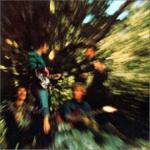
Another entry that falls under the heading of

What’s the big idea?

Before 2008 or so we had regularly been frustrated with this band’s recordings. There were plenty of  customers for their albums, but even our best Hot Stampers fell well short of the standards we set for top quality sound.

We assumed the recordings themselves were at fault.

Things started to turn around after that, judging from this bit of boilerplate at the bottom of a listing for Green River from around 2010 or so:

Many copies were gritty, some were congested in the louder sections, some never got big, some were thin and lacking the lovely analog richness of the best — we heard plenty of copies whose faults were obvious when played against two top sides such as these.

The best copies no longer to seem to have the problems we used to hear all the time.

Of course the reason I hadn’t heard the congestion and grittiness in the recording is that two things changed. (1) We found better copies of the record to play — probably, can’t say for sure, but let’s assume we did — and (2) we’ve made lots of improvements to the stereo since the last time we did the shootout.

You have to get around to doing regular shootouts for any given record in order to find out how far you’ve come, or if you’ve come any distance at all. Fortunately for us the improvements, regardless of what they might comprise or when they might have occurred, were incontrovertible. The album was now playing at a much, much higher level.

It’s yet more evidence supporting the possibility, indeed the importance, of taking full advantage of the revolutions in audio of the last ten or twenty years. [Make that thirty by now.]

Live and Learn

When Creedence’s records started to sound good, we stopped blaming those albums for being badly recorded.

It’s amazing how many records that used to sound bad — or least problematical — now sound pretty darn good. 

Every one of them is proof that comments about recordings are of limited value.

The recordings don’t change. Our ability — and yours — to find, clean and play the pressings made from them does, and that’s what Hot Stampers are all about.

(more…)

Wagner – The Sound of Stokowski and Wagner

More Richard Wagner

More Orchestral Spectaculars

  • With two stunning Nearly Triple Plus (A++ to A+++) sides, this vintage Shaded Dog pressing of this sought-after classic of the Living Stereo canon is close to the BEST we have ever heard, right up there with our Shootout Winner
  • Lewis Layton engineered this blockbuster recording, and after hearing his brilliant work for The Pines of Rome with Reiner, we can see why they gave him the job
  • The rich, textured sheen of the strings that the advent of Living Stereo brought into being in the ’50s and early ’60s is clearly evident throughout these pieces, something that the Heavy Vinyl crowd will never experience — simply because that sound just does not exist on modern records
  • These shorter pieces are ideal for those who want to listen to Wagner’s music and don’t have the two hours one of his better-known operas requires of its audience

(more…)

What to Listen For on What Were Once Vices Are Now Habits

Hot Stamper Pressings of the Music of The Doobie Brothers Available Now

This mass-produced stuff is pretty lame most of the time. Actually, that’s not really fair; the specialty audiophile limited edition pressings of most records are even worse, so the production numbers really don’t have much to do with the final product, now do they? They made millions of copies of this album, and heavy vinyl pressings are made in the thousands, but which would you rather play? I’ll take good old thin vinyl from the 70s over that heavy stuff any day of the week.

But I digress. Most copies — like most modern heavy vinyl pressings — simply lack energy. They’re flat and compressed and no matter how loud you turn them up the band never seems to be all that enthusiastic about the songs they’re playing.

Ah, but the good pressings show you a band that’s on fire, playing and singing their hearts out. Such are the vagaries of record production. Who can explain it or even understand it? All we know is what the finished product sounds like. The rest is guesswork, entertaining for idle minds and forum posters but of little value to those of us who take records seriously and want to hear the music we love with the best sound we can find. (More on guessing and speculating here.)

Watch Out For

Tipped up top end, plain and simple.

A little extra top and the guitars sparkle and Johnston’s voice gets a little hi-fi-ish. On the most ridiculously tipped-up copies, you could easily mistake such a pressing for a MoFi Half-Speed mastered LP.

That sparkle used to thrill me forty years ago. Now it makes me roll our eyes — what the hell were they thinking, boosting the hell out of the top end like that?

And why can’t so many audiophiles today, still in thrall to that sound, recognize how unnatural it is and was?

The short answer: vintage audio equipment needs that extra kick.

Most audiophiles have not taken sufficient advantage of the revolutions in audio of the last twenty or so years and so must find records that give them the boost their deficient audio systems need.

Those of us — and that includes many of you or you wouldn’t be spending all your money on Hot Stampers — have systems that find dramatically more information in the grooves of our records than we ever dreamed was there.

We then get that information to go through our electronics and come out of our speakers with far more energy and far less distortion than we could in the past.

Lee Herschberg, Engineer Extraordinaire

One of the top guys at Warners, Lee Herschberg recorded What Once Were Vices… (along with Donn Landee, who recorded their previous album and would take over the engineering duties on subsequent releases) as well as the first Doobie Brothers album.

You’ll also find his name in the credits for many of the best releases by Ry CooderRandy NewmanGordon Lightfoot, and Frank Sinatra, albums we know to have outstanding sound (potentially anyway; if you’re on this site you know very well that you have to have an outstanding pressing to hear outstanding sound).

And of course we would be remiss if we didn’t mention the album most audiophiles know all too well, Rickie Lee Jones’ debut. Herschberg’s pop and rock engineering credits run for pages. Won the Grammy for Strangers in the Night in fact.

(more…)