Month: October 2020

First Get Good Sound – Then You Can Recognize and Acquire Good Records

Advice to Help You Make More Audio Progress

You know why this guy has a wall full of records?

Because it’s easy to be a record collector — you just collect records.

To get your stereo and room to sound right, and recognize when they do sound right, or at least better than before, that is much, much harder. It literally takes a lifetime of effort.

I’ve been at it for forty-five fifty years. I still work at it and try to learn new things every day.


UPDATE 2022

Or at least I did. I retired in 2022 and left the running of the business to my dedicated, hard working and exceptionally talented staff.


Until you get your stereo, room and ears working, collecting good sounding records is all but impossible.

You will very likely waste a fortune on “collectible audiophile records.”

The kind with collector value and not much else.

These are precisely the opposite of Hot Stamper pressings.  Practically all of the value of a Hot Stamper is tied up in its wonderful music and superior sound quality, which is where we think it should be.

(more…)

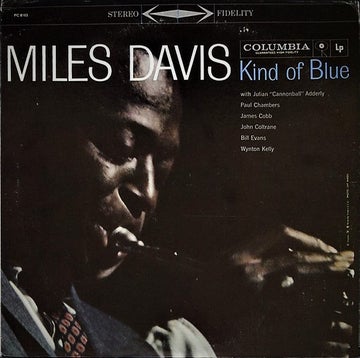
Kind of Blue – Sizing Up Two Very Different Sounding Pressings from the ’70s

Reviews and Commentaries for Kind of Blue

Robert Brook has a blog which he calls

A GUIDE FOR THE DEDICATED ANALOG AUDIOPHILE

Below is a link to a comparison Robert Brook carried out with a few pressings of Miles Davis’ masterpiece, Kind of Blue.

KIND OF BLUE: Discovering the RIGHT SOUND for Miles Davis’ MASTERPIECE

(more…)

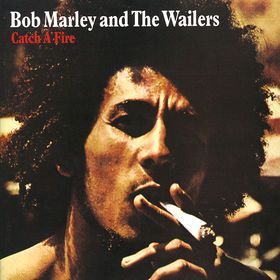
Bob Marley – Catch a Fire

AN AMAZING A++ TO A+++ SIDE ONE backed with a very good side two! This is one of the best Bob Marley and the Wailers albums, and you’re going to have a hard time finding better sound for it than what you get on this Super Hot Stamper side one. Clean and clear, open and transparent, with tight, solid bass and plenty of richness and fullness, this is just the kind of sound this music demands!

We recently undertook a big shootout for this album and were quite pleased with the sound of this copy, especially in relation to all the mediocre copies that hit our table that day.

We don’t find killer Bob Marley pressings very often, so you shouldn’t let this one get by you if you want to hear the King of Reggae sound amazing! (more…)

L.A. Woman on German Heavy Vinyl, Part Two

Part One can be found here.

I have a Super Saver budget reissue domestic pressing of LA Woman. Want to guess what it sounds like? It sounds exactly like this German version. When I described the sound of the German version to Steve, he immediately recognized what I was talking about. There is a tape — they call it “the master tape” — of L.A. Woman that has exactly the bad qualities I have described above. I’m guessing that my Super Saver copy is a flat transfer of that bad tape. (When budget reissues are mastered, it’s often the case that the transfer is flat or something very close to it, because little time and expense is justified for a cheap reissue.)

Now if the Super Saver is a flat transfer and sounds just like this German pressing, I think we can safely infer that this new 180 gram remastered record is a flat transfer. It’s a flat transfer of a bad tape. Nothing more, nothing less.

And nothing new. There are tons of badly remastered records out there. I’m sure you’ve bought some. I could spend days listing them in the Records We Don’t Sell section. Most of the records found on my competitor’s Web sites could be cut and pasted into that section if I wanted to take the time to do it.

But how is it that such a bad record seems to have met with such favor among audiophiles? I’m frankly at a loss to understand it. I’m sure some of you reading this commentary own the record. Some of you no doubt LIKE the record. So let me think of a few reasons why you might not have noticed how bad sounding a record it is.

(more…)

Tony Bennett – For Once In My Life

More Tony Bennett

  • This vintage Columbia 360 label pressing gives Tony the sound he deserves, with Double (A++) grades on both of these early stereo sides
  • Amazing vocal reproduction courtesy of the brilliant engineering of Frank Laico at his favorite studio (and ours), Columbia 30th Street studios
  • We are not big soundstage guys here at Better Records, but we can’t deny the appeal of the space to be found on a record as good as this

Everything that’s good about Vocal Recordings from the ’50s and ’60s is precisely what’s good about the sound of this record.

The huge studio the music was recorded in is captured faithfully here. The height, width and depth of the staging here are extraordinary. We are not big soundstage guys here at Better Records, but we can’t deny the appeal of the space to be found on a record as good as this.

Transparency and Tubey Magic are key to the sound of the orchestra and you will find both in abundance on these two sides.

Albums such as this live and die by the quality of their vocal reproduction. On this record Mr. Tony Bennett himself will appear to be standing right in your listening room! The space of your stereo room will seem to expand in all directions in order to accommodate them, an illusion of course, but nevertheless a remarkably convincing one.

On this record, like so many others you may have read about on the site, the right amount of Tubey Magic — and by that we mean a very healthy amount — makes all the difference. (more…)

Sometimes the Most Fundamental Questions in Audio Are Simply Overlooked

Hot Stamper Pressings that Sound Their Best on Big Speakers at Loud Levels

This post was written circa 2005.

This commentary is about two things — knowing the kind of music you like, and getting the kind of sound you want.

If you believe what you read on the various sites where audiophiles freely dispense advice about everything under the sun regarding music, recordings and equipment, you are asking for trouble and you are surely going to get it.

You will encounter an endless supply of half-truths, untruths and just plain nonsense, more often than not defended tooth and nail by those with impressive typing skills but not much enthusiasm for the tedium of tweaking and critical listening

big_speakersWhat kind of equipment are these people using?

How deep is their experience in audio?

Truth be told, I was pretty misguided myself during the first ten (or twenty, gulp) years I spent in audio, reading the magazines, (I still have my Stereophiles and Absolute Sounds from the 70s in boxes in the garage), traipsing from stereo store to stereo store, trying to figure out what constituted Good Sound so that I could manage to get my own equipment to produce something closer to the best of what I was hearing.

Questions

I sympathize with those who have trouble making sense of this hobby. It can be very confusing, especially to the neophyte. It takes a long time (with plenty of effort and money expended along the way) to be able to answer some of the most fundamental (and most often overlooked) questions in audio:

1.) What kind of music do you like?

2.) What aspects of sound quality are the most important to you?

Armed with answers to the above two, the next question to be asked is:

3.) What equipment will best be able to give you the sound you want on the music you like, within the limits of your budget, room, WFA (Wife Acceptance Factor), etc.

If you haven’t been doing this audio stuff for at least ten years, you probably don’t know the answers to those last two questions. In other words, you still have a lot to learn.

I may not have all the answers, but after being in audio for more than thirty years [now close to 50], about half of that full-time (full-time being sixty to seventy-plus hours a week), I can say without embarrassment that I have some of them.

And for the most part I got them the old-fashioned way: I earned them.

Do You Like Rock Music?

Then make sure you buy speakers that can play rock music.

Don’t buy screens, panels or little boxes. With subs or without, don’t buy them.

(more…)

Lee Michaels – 5th

  • A superb 2-pack, with Triple Plus (A+++) sound on side one and an excellent Double Plus (A++) side two
  • “Do You Know What I Mean” rocks, with prodigious amounts of surprisingly deep bass – it’s a real Bass Demo Track
  • “There are only a few originals on the album, and one, “Do You Know What I Mean” (which really sounded like a cover), was a monstrous hit and cemented Lee Michaels as one of the best white blues performers of the period, along with Joe Cocker and Steve Winwood.”

As is usually the case with our 2-packs, the killer sides are each backed with something much more typical, so you don’t have to take our word for how bad the average pressing is — you can just flip the record over and hear it for yourself. Of course, if you don’t have time to listen to mediocre sounding records you can stick with the killer sides and leave the tedium of hearing bad sound to us. (more…)