test-vocal

Some of our favorite vocal test discs.

September of My Years – Yet Another Kevin Gray Mediocrity

More of the Music of Frank Sinatra

Sonic Grade: C-

Reprise reissued this album on 180 gram vinyl in 2004.

Our advice: skip this Heavy Vinyl mediocrity.

The originals are far better and not that hard to find.

In fact, the good originals are so good that they can be found in our vocal Demo Disc section. I’m pretty sure that this run-of-the-mill reissue is nobody’s idea of a Demo Disc.

Mastered by Kevin Gray, this record has what we would call ”modern” sound, which is to say it’s clean and tonally correct, but it’s missing the Tubey Magic the originals are full of.

In other words, it sounds like a CD.

Who can be bothered to play a record that has so few of the qualities audiophiles are looking for on vinyl? Back in 2007 we put the question this way: Why Own a Turntable if You’re Going to Play Mediocrities Like These?

Also, skip the orange label reissues. We’ve never heard a good one and we stopped buying them a long time ago.

(more…)

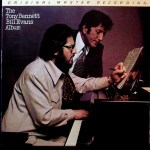
The Tony Bennett / Bill Evans Albums – More Mistaken MoFi EQ

Hot Stamper Pressings of Pop and Jazz Vocals Available Now

Sonic Grade: F

That weird boost around 10k that Stan Ricker likes to add to practically every record he masters wreaks havoc on the sound of Tony Bennett’s voice.

I would be very surprised if the current in-print Compact Disc doesn’t sound more tonally natural, and for us audiophile record lovers – not lovers of audiophile records, but guys who love records with audiophile sound – that’s simply another nail in the coffin for one of the most laughably inept remastering labels in the history of that sad enterprise.

If you love this album, and you should, the regular early Fantasy pressings are the only game in town.

Ray Charles & Betty Carter – DCC Clear Vinyl Pressing

More Soul, Blues and R&B Albums with Hot Stampers

This Dunhill Compact Classics LP pressed on CLEAR VINYL is one of DCCs earliest forays into analog production from way back in 1988.

Unfortunately it sounds like a bad CD.

Screechy, bright, shrill, thin and harsh, it’s hard to imagine worse sound for this music.

No warmth.

No sweetness.

No richness.

No Tubey Magic. In other words,

No trace of the original’s analog sound.

I have to wonder how records this awful get released.

You can be sure that Hoffman’s Gold CD murders it in every way.

(more…)

Love Is the Thing – Remixed, Remastered and Ruined

More Hot Stamper Pressings of Pop and Jazz Vocal Albums

Love Is the Thing on DCC was given a “new sound” and I don’t like it.

I really liked the Nat King Cole albums on DCC when they came out back in the 90s. I thought they were a revelation as a matter of fact.  Now I find them insufferable.

Here are some of my reasons for not liking Hoffman’s remix.

Nat’s voice is much too forward and loud in the mix; consequently the orchestra is too soft. The balance is off. At least on my stereo, at the levels I play the record at, the balance seems off. You surely have a different system, in a different room, and may not feel the way I do.

But without a top pressing to compare, how do you know the mix is right or wrong? Like everything in audio, it’s relative.

The balance problem is bad enough, but what really sets my teeth on edge is the fact that the Nat King Cole record on DCC doesn’t sound remotely like any Nat King Cole record I have ever heard, outside of the ones Hoffman worked on of course.

Where is all the Capitol reverb? Nat’s records all have it, and although the reverb may be a bit excessive or unnatural in some ways, at least to some people, when you take it away you end up with a sound that never existed before, and, to my ears, it’s a sound that’s just wrong for the music.

The more I listened to the DCC the less I liked it.

The first full-length commentary I ever wrote in my record catalog in 1994 took Analogue Productions to task for remastering Way Out West and giving it a “new sound,” a sound I had never heard coming from any Contemporary pressing, from any era.

I didn’t like what Doug Sax did with Way Out West, Jazz Giant, Waltz for Debby and many, many others, and I don’t like what Steve Hoffman and Kevin Gray did to Love Is the Thing, The Very Thought of You and Just One Of Those Things.

I have tried to listen to the Gold CD in my car, but even in the car I found the sound boring and insufferable.

Is this the kind of sound you hear on your DCC Nat King Cole records? If it is, we recommend you try a Hot Stamper. If it doesn’t kill your DCC you get your money back.

At the very least it will show you some of the things your DCC is doing differently, and, we think, wrong.

(more…)
Julie Is Her Name, Volume 2 – Notes from Our First Shootout

More of the Music of Julie London

On side one listen to how rich the bottom end is. The Tubey Magic on this side is off the charts.

Some copies — or, to be more precise, some sides of some copies — can be dry, but that is clearly not a problem on this one.

The naturalness of the presentation puts this album right at the top of best sounding female vocal albums of all time.

To take nothing away from her performance, which got better with every copy we played.

Clap Hands

If only Ella Fitzgerald on Clap Hands got this kind of sound!

As good as the best copies of that album are, this record — like the first volume, the 1955 mono recording — takes the concept of intimate female vocals to an entirely new level.

The notes I took during this shootout lay out just how impressed I was with the sound of this remarkable copy:

  • Wide stereo.
  • Big Bass.
  • Swingin’.
  • Just the right amount of reverb.
  • Tonal perfection.
  • The stereo kills the mono (on this album, on the copies we played anyway).

(more…)

Dream With Dean – Watch Out for Hard and Honky Vocals

Hot Stamper Pressings of Pop and Jazz Vocal Albums

Dream with Dean is great for finding any traces of “honk” in your midrange. Getting Deano’s baritone to sound tubey and rich, to get the sound that Bing Crosby could get just by opening his mouth, is not all that easy on some systems, mine included.

Correctly set VTA is critical in this regard, but pretty much everything must be working at its best for Dean to sound as intimate and natural as we know he can on the best pressings.

Balancing the lower mids with the upper mids is the goal, and it’s not as easy as it sounds. This album is great for testing, and guaranteed to bring practically any high-dollar system at a stereo showroom, a convention, or your very own home to its knees.

This is my favorite Dean Martin record of all time; just Dean and a jazz guitar quartet behind him (featuring Contemporary favorites Barney Kessel and Red Mitchell!) doing standards. On the best copies, the immediacy is absolutely mind-blowing. It’s a shame that there aren’t more Frank Sinatra records that sound like this.

(more…)

Testing For Sibilance on Heavenly

More Pop and Jazz Vocals

More Reviews and Commentaries for Male Vocal Albums

All copies have sibilance, some more than others. The best copies have the least amount and make the spit they do have much less gritty and objectionable.

We’ve known for decades how good a test sibilance is for tables, cartridges and arms. Sibilance is a bitch. The best pressings, with the most extension up top and the least amount of aggressive grit and grain mixed into the music, played using the highest quality, most carefully dialed-in front ends, will keep sibilance to an acceptable minimum.

VTA, tracking weight, azimuth and anti-skate adjustments are critical to reducing the amount and the quality of the spit in your records.

(more…)

John Coltrane and Johnny Hartman – What a Record!

Hot Stamper Pressings of the Music of John Coltrane Available Now

I defy you to find a Male Vocal record produced in the last forty years that can hold a candle to this one, sonically or musically.

A wonderful collaboration between a horn player and a singer, perhaps the greatest of all time.

We’ve recently compiled a list of records we think every audiophile should get to know better, along the lines of “the 1001 records you need to hear before you die,” with an accent on the joy these amazing audiophile-quality recordings can bring to your life. John Coltrane and Johnny Hartman is a good example of a record many audiophiles may not know well but would be well advised to get to know better.

This could very well be the greatest collaboration between a horn player and a singer in the history of music.

I honestly cannot think of another to rank with it. Ella and Louis has the same feel — two giants who work together so sympathetically it’s close to magic, producing definitive performances of enduring standards that have not been equaled in the fifty plus years since they were recorded. And, on the better copies, or should we say the better sides of the better copies, RVG’s sound is stunning. (His mastering, not so much.) (more…)

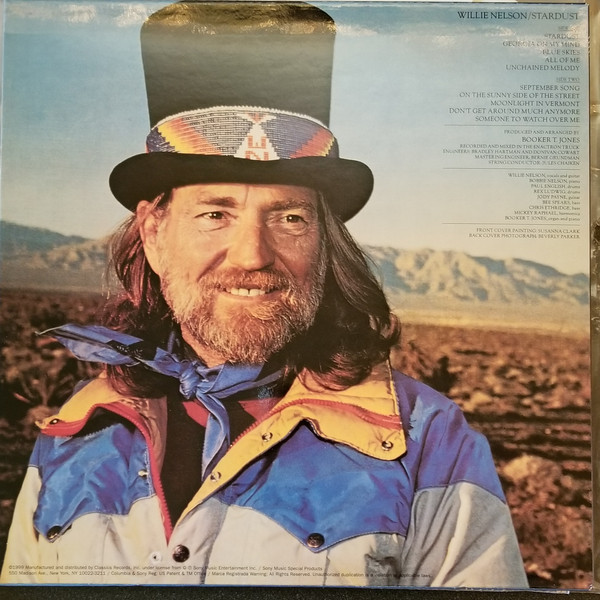
Resolution and Warmth Are Key to the Best Pressings of Stardust

Hot Stamper Pressings of the Music of Willie Nelson Available Now

This copy is hi-res without sacrificing the analog warmth that makes the recording exceptional, especially for one from 1978.

Georgia On My Mind is a DEMO QUALITY track on this album. You aren’t going to believe all the ambience. The top end is gorgeous — sweet, delicate, and silky with loads of extension. The sound is extremely hi-res without sacrificing any of the warmth that makes this music so special.

Just listen to the rimshots and the bell in Georgia On My Mind — we guarantee you have NEVER heard those instruments sound so present, clear, and immediate. 

Willie’s voice is natural and tonally correct, with all the breathy texture you could ever hope to hear. The acoustic guitars and Booker T.’s organ are perfection.

Awareness

Many copies of this album suffer from an phony hi-fi-ish quality (which is probably the reason why Stardust made the TAS List in the first place). You’ve got to play a big stack of copies to come up with a pressing that offers this kind of relaxed, natural sound. That’s our job here at Better Records — playing bad records so you don’t have to.

(more…)

The Concert Sinatra – What to Listen For

sinatconce_1011_1310577590

[Originally posted 2/2015]

There may be a touch of smear (you can most easily hear it in the strings) but the sound is so RICH and Tubey Magical that you will barely be aware of it. Your attention should be focused on the superb feel the man has for this music.

One thing to pay special attention to, especially if you have other copies of the album, is that Sinatra’s voice on both sides of this pressing always sounds natural even at its loudest. There is no strain or hardness.

That, among many other things, is what separates the best copies from the also-rans (and, of course, all the reissues, which tend to have gritty, harsh vocals which quickly get unbearably edgy in the louder parts).

For audiophiles, the amount of effort that went into the recording, effort that actually paid off, is what will impress the most about The Concert Sinatra. The 73 musicians you see stretched out across the soundstage at Samuel Goldwyn Studios behind Sinatra will give you some idea of the size and scope of the sound. With 24 mics feeding 8 tracks of 35MM recording film, this was the sonic equivalent of Gone With the Wind. No expense or effort was spared.

Fortunately for those of us who are still playing records forty-odd years on, this special project took place before the advent of the transistor, which means that all the Tubey Magic of the singer and his all-encompassing orchestra was captured on the “tape”.

Ah, but how much of that sound made it to the record itself? That’s always the rub with records isn’t it?

In this case, plenty.