test-vocal

Some of our favorite vocal test discs.

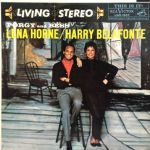
On Porgy and Bess, Stick with the Early Pressings on the Black Label

Hot Stamper Pressings of the Music of Harry Belafonte Available Now

A Living Stereo knockout! We sometimes forget to spend time with records like this when there are so many Zeppelin and Floyd records waiting to be played (and a lot more customers waiting to get hold of them to add to their collection).

We’ve always enjoyed Belafonte At Carnegie Hall, but when we’ve dug further into his catalog we’ve been left cold more often than not. However, when we finally got around to dropping the needle on a few of these many years ago we were very impressed by the music and blown away by the sound on the better pressings.

Just make sure that you avoid the orange label reissues.

They are dry, gritty and spitty. The notes below show a side one earning a single plus (1+) not-quite-Hot Stamper grade. We discuss its faults on the far right, and the other orange label pressing we played was even worse, earning a grade of NFG.

(more…)

What Willie and Nat Can Teach Us about Heavy Vinyl

Hot Stamper Pressings of the Music of Willie Nelson Available Now

This letter came to us many years ago. Updates have been added as of 2024.

One of our good customers had this to say about some Hot Stampers he had purchased:

Hello team,

I’ve been a little distracted here, I got married over the weekend! So, haven’t done as much listening over the past couple of weeks. However, I did have a chance to listen to Stardust and Love Is The Thing. They were both different than their Classic Records and Analogue Productions counterparts. Willie sounded a little smoother, more organic, and more integrated.

The strings on Love Is The Thing were very different, more pronounced and emotional, but Nat’s voice, and the sound overall, sounded a little strident, maybe “too” hot.

I’d like to send them both back to you, and if you have a chance to send back the discs I sent to you I’d very much appreciate it. All told, the two big sets of Better Records are really incredible, and only serve to make my want list grow. Here’s to you and the next set!

Doug,

We now have the update for those two titles.

I, along with the two other guys in our listening panels, sat down to play the Heavy Vinyl you sent us, and the long and short of it is that we were astonished that records that sound as bad as those two actually were approved for release.

Nat is wrong six ways from Sunday, and Willie is not so much wrong as just not very good.

Nat: “F,” one of the worst heavy vinyl disasters of all time, and Willie: “D” sound, more like a CD than a record. There are many pressings of this album that are not good, but this version is probably worse than most of them, hence the D grade.

The old Classic pressing is probably better, and it would earn about a C grade. [I honestly do not remember exactly what pressing Douglas sent us. All I remember is that it was on Heavy Vinyl.]

I suspect the CDs of both these pressings are much better sounding than this vinyl.

The DCC gold is definitely better by a long shot, and the plain old Willie CD is probably a step up as well. 


A Further Update

(more…)

Bernie Leaned Out the Vocals on Morrison Hotel, to Ruinous Effect

Hot Stamper Pressings of the Music of The Doors Available Now

Sonic Grade: D (at best)

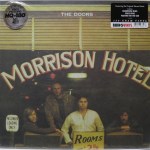
A few years back we played the 180 gram reissue of Morrison Hotel that came out in 2009. Initially we thought it pretty good, but the longer it played, the more leaned-out and unpleasant it sounded.

Just listen to the vocals — they’re all wrong.

Jim Morrison has one of the richest and most distinctive baritone voices in the history of rock. When he doesn’t sound like the guy I’ve been listening to for more than forty years, something ain’t right.

And what ain’t right — not to put too fine a point on it — is the sound of that record.

Here are a few commentaries you may care to read about Bernie Grundman‘s work as a mastering engineer in the modern era.

We much prefer the work he did back in the old days.

(more…)

More June Christy Fifties Capitol Magic in Mono

Hot Stamper Pressings of Pop and Jazz Vocals Available Now

Side two of this White Hot Stamper June Christy record on the original Capitol Turquoise label is AMAZING, both musically and sonically. It has all the TUBEY MAGIC we know these old records are famous for, but this copy gives you something you may never have heard on a vintage pressing before: real frequency EXTENSION, both high and low. Who knew an old record could have extended highs like these and such deep bass?

I can honestly say I have never heard any June Christy record sound as good as this copy does.

(We had a fantastic Something Cool a while back but that was all pre-upgrades. The sound is far better now than it was then, making comparisons all but meaningless.)

Side Two

OFF THE CHARTS A Triple Plus Sound from start to finish. Rich and sweet and present like no copy we have ever heard. No copy out of the four originals we played earned more than a grade of A++, so this side two is a big step up over everything and the best sound we have ever heard for ANY June Christy record. 

Side One

Not as tubey magical as the best we heard but earning lots of points for being present and clear. It has some of the top end you will hear on side two, which is also rare in our experience. With more richness and fullness, the kind side two has in spades, this would have been a real contender for side one. No side one earned a higher grade than A++ so this copy was actually not that far off the best we played. It’s this side two that had us gobsmacked and forced us to set a higher standard for the other copies.

Musically

Musically this album is right up there with the best female vocal records we have ever played, the creme de la creme, albums on the level of Clap Hands and Something Cool and Billie’s Music for Torching. It really doesn’t get much better than this.

What to Listen For

There is what sounds to us like a contrabassoon on the second track on side one, When the Sun Comes Out. It’s so real sounding it will give you chills!

(more…)

Balancing the Vocal, Strings and Rhythm on Lady in Satin

Hot Stamper Pressings of the Music of Billie Holiday Available Now

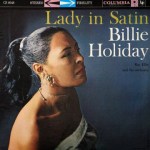
The better copies reproduce clearly the three most important elements in the recording — strings, rhythm, and vocal — and, more importantly, they are properly balanced with one another. 

The monos, as you might expect, balance the three elements well enough, but the problem with mono is that the vocals and instruments are jammed together in the center of the soundfield, layered atop one another.

Real clarity, the kind that live music has in abundance, is difficult if not impossible under those circumstances.

Only the stereo pressings provide the space that each of the players needs in order to be heard.

Naturally the vocals have to be the main focus on a Billie Holiday record. They should be rich and tubey, yet clear, breathy and transparent.

To qualify as a Hot Stamper, the pressings we offer must be highly resolving. You will hear everything, all of it surrounded by the natural space of the legendary Columbia 30th Street Studio in which the recording was made.  (more…)

I Left My Heart In San Francisco – Notes from Our First Hot Stamper Circa 2010

More Vintage Hot Stamper Pressings on Columbia

Everything that’s good about All Tube Vocal Recordings from the ’50s and ’60s is precisely what’s good about the sound of this record.

The huge studio the music was recorded in is captured faithfully here. The height, width and depth of the staging are extraordinary. We are not big soundstage guys here at Better Records, but we can’t deny the appeal of the space to be found on a record as good as this.

Transparency and Tubey Magic are key to the sound of the orchestra and you will find both in abundance on these two sides.

Some quick notes:

Side One

Highly resolving; tonally balanced; rich bottom end; breathy vocals; instruments are jumping out of the speakers; dynamic; with a touch of grain and spit on even the best copies.

Killer. Can’t be beat.

Side Two

Might be slightly better, but let’s just leave the grade at Triple Plus.

The first track is not as well recorded as those that follow.

The violin is sweeter on the second track here than on any other side we played.

The whole production is so immediate, so right, and so real it may just take your breath away.

The third track is rich, solid and tonally correct, which pretty much sums up the sound we heard on the best copies of the album.

Albums such as this live and die by the quality of their vocal reproduction. On this record Mr. Tony Bennett himself will appear to be standing right in your listening room, along with the 38 other musicians from the session (actually they’re probably sitting).

The space of your stereo room will seem to expand in all directions in order to accommodate them, an illusion of course, but nevertheless a remarkably convincing one.

Frank Sinatra & Duke Ellington – Booth? What Booth?

More of the Music of Frank Sinatra

More of the Music of Duke Ellington

Notice that, at least for most of the material, and perhaps all of it, Sinatra does not seem to be stuck in a vocal booth. He sounds like he is actually standing on the same stage as Ellington’s band.

Whether this is a recording trick — he’s in a booth but the engineer did a great job creating a sound for the booth that matched the ambience and space of the studio — or whether he is standing front and center with the band, the illusion is convincing and adds greatly to the “reality” of the performance..

Recorded one year after the remarkable Sinatra-Jobim record that we treasure here at Better Records, Sinatra takes the opportunity to work with one of the greatest bandleaders in the history of jazz, the Duke himself. We had good luck with the stereo originals on the lovely Blue and Green Reprise labels — they can be as big, rich and warm as Sinatra’s legendary Capitol recordings when you find the right pressing, and that’s really saying something.

Transparency

What typically separates the killer copies from the merely good ones are two qualities that we often look for in the records we play: transparency and lack of smear. Transparency allows you to hear into the recording, reproducing the ambience and subtle musical cues and details that high-resolution analog is known for.

(Note that most Heavy Vinyl pressings being produced these days seem to be quite Transparency Challenged. Lots of important musical information — the kind we hear on even second-rate regular pressings — is simply not to be found. That audiophiles as a whole — including those passing themselves off as the champions of analog in the audio press — fail to notice these failings does not speak well for either their equipment or their critical listening skills.)

Richness and Lack of Smear

Lack of smear is also important, especially on a recording with this many horns, where the reproduction of leading-edge transients is critical to their sound. If the sharply different characters of the various horns (trumpet, trombone, and various saxes) smear together into an amorphous blob, as if the sound were being fed through ’50s vintage tube amps (for those of you who know that sound), half the fun goes right out of the music.

Richness is important — horns need to be full-bodied if they are to sound like the real thing — but so are speed and clarity, two qualities that ensure that all the horns have the proper bite and timbre.

(more…)
Jump Up Calypso – Another Title Where the Hit Sounds Bad

Hot Stamper Pressings of Pop and Jazz Vocals Available Now

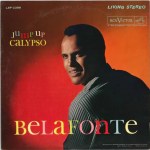
TWO EXCELLENT SIDES on this Living Stereo pressing that should easily beat your DCC version — or your money back! We played a big stack of these recently and are happy to report that the best copies deliver that old-school RCA tubey magic that brings out the best in Belafonte’s music. The sound here is big, lively, rich and full. Only the better copies like this one really brought out the FUN in the music, an essential quality for this material.

Unfortunately, the big hit “Jump In The Line” is not one of the better sounding tracks on this album.

It has a bit of radio EQ, meaning it’s a little brighter and leaner in a way that’s designed to jump out of your AM radio, but it’s not the ideal effect when playing on a high resolution audiophile system. Still, on a copy like this, the track is still fairly musical and enjoyable. On many copies we played it was absolutely painful.

Side one, at A++, with big time presence and tons of energy. Silky, smooth and sweet, this side really blows away the typical pressing.

At A+ to A++, side two is nearly as good! Much easier on the ears than the typical bright, edgy copy. If this side had just a bit more weight down low it would be right there with side one.

Play it against your DCC version and you’ll see what we’re talking about, or just drop the needle on it and enjoy very good sound for what the All Music Guide calls “one of his most energetic albums.” (more…)

Robert Brook Compares Three Very Different Pressings of Lady in Satin

Hot Stamper Pressings of the Music of Billie Holiday

Robert Brook has a blog which he calls

A GUIDE FOR THE DEDICATED ANALOG AUDIOPHILE

Below is a link to the review he has written for one of our favorite records, Lady in Satin.

In this review he compares our White Hot Stamper pressing to his two originals, a Six Eye Mono and a Six Eye Stereo. We knew where this review was headed; we’ve been down that road ourselves. For our most recent Hot Stamper reissue, we noted:

There may be amazingly good sounding original pressings, as amazingly good as this one, but we’ve never run into one and we have our doubts about the existence of such a magical LP – where could they all be hiding?

Add Robert’s two originals to the pile of pressings that sound good, but not as good as we might want them to.

Lady In Satin: CAPTIVATING on the WHITE HOT STAMPER

Another Good Demo Disc / Bad Test Disc from Willie Nelson

More of the Music of Willie Nelson

Much like Stardust, a Hot Stamper pressing of this record is a real treat for the audiophile, no matter where they may be on the audio scale.

The transparency and in-the-room presence on the best copies will be nothing less than astonishing.

It’s what we like to call a Great Demo Disc / Bad Test Disc.

Even if your system isn’t all that good, or isn’t performing at its best, a killer copy of this record will still sound both musical and musically involving.

On the other hand, if you’ve spent the time and energy to really get your stereo cooking, you’re going to be in for some seriously good Tubey Magical vocal reproduction.

If you are looking for a challenge, we have a whole section of records that are difficult to reproduce. If you can play these albums good and loud, you can probably play anything.

Without a Song is not on that list. It will sound good on practically any system, which is why it is not a good test disc.