pricing

What’s the Average Record Worth?

More Letters from Customers and Critics Alike

What follows is an excerpt from a very old letter (circa 2005) in which the writer attempted to make the case that spending lots of money on records is foolish when a dollar buys a perfectly good record at a thrift store and provides the listener with exactly the same music and decent enough sound.

We think this is silly and, with a few rough calculations, along with a heavy dose of self-promotion and not a little bullying, we set out to prove that the average record is practically worthless. Prepare to confront our exercise in sophistry.

(Yes, we are well aware that our reasoning is specious, but it’s no more specious than anybody else’s reasoning about records if I may say so.)

Jason, our letter writer, points out this fact:

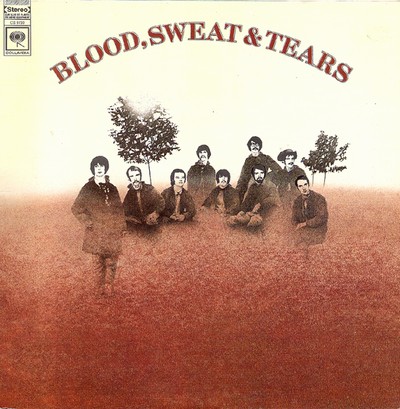
Your records are a poor value in terms of investment. Until you convince the whole LP community that your HOT-STAMPER choices are the pinnacle of sound a buyer will never be able to re-sell B S & T for $300. Even if they swear it is the best sounding copy in the world.

We replied as follows:

If records are about money, then buying them at a thrift store for a buck apiece and getting something halfway decent makes perfect sense. As the Brits say, “that’s value for money.” If we sell you a Hot Stamper for, say, $500, can it really be five hundred times better?

The Math

I would argue that here the math is actually on our side. The average pressing is so close to worthless sonically that I would say that it isn’t even worth the one dollar Jason might pay for it in a thrift store. I might value it somewhere in the vicinity of a penny or two. Really? Yes indeed.

Assuming it’s a record I know well, I probably know just how wonderful the record can really sound, and what that wonderful sound does to communicate the most important thing of all: the musical value.

A copy that doesn’t do that — allow the music to come alive — has almost no value. It’s not zero, but it’s close to zero. Let’s assign it a nominal value. We’ll call it a penny.

What Have You Got to Lose?

You see, when I play a mediocre copy, I know what I’ve lost.

Jason can’t know that. All he knows is what he hears coming from his mediocre equipment as his mediocre LP is playing. To him it sounds fine. To me it sounds like hell. (Hell is in fact the place where they make you listen to bad sounding records all day.)

(more…)

El Amor Brujo – Brilliant Decca Remastering from 1967

Hot Stamper Pressings of Orchestral Spectaculars Available Now

UPDATE 2022

In 2012 we were knocked out by this Stereo Treasury Budget Reissue pressing.

We had the temerity to charge $175 for our Hot Stamper copy, a record we’d probably picked up locally for five or ten bucks. Nowadays of course it would go for even more than that, and still be worth every penny, assuming the buyer was looking for wonderful music with top quality sound regardless of the vinyl’s trade-in value, which in this case would probably be a dollar.

It is our strongly held belief that records are for playing and enjoying, not trading-in. Some records (like this one) are perfect for collectors, but their appeal is lost on us and has been since I soured on Mobile Fidelity records back in the 80s. It would take us another twenty years before we were done with other pressings that promised so much and delivered so little.

Decca released this title on their London label as a budget reissue, but that didn’t keep them from mastering it properly and pressing it on high quality vinyl.  The same cannot be said for RCA, which kept many of their golden age recordings in print on the RCA red label as well as others, but with sound that was most of the time clearly inferior to those earlier releases.


Our 2012 Review

Our current favorite El Amor Brujo for sound and performance is this Decca recording from 1967 with De Burgos conducting the New Philharmonia.

The best sound on this album is on side two, where El Retablo de Maese Pedro can be found.

(more…)

Cognitive Dissonance, or, I Just Paid $600 for This LP – Was That Too Much?

New to the Blog? Start Here

This letter came to us when we first started selling Hot Stamper pressings on our website way back in 2004-2005. Since that time we have received many other letters like it. Apparently, charging a lot of money for used records upsets people. Who knew?

Don, who wrote us the following letter, applauds us for being able to convince our customers to pay forty times the going rate for some of the records we sell — and like it!

The subject line of Don’s letter is Music.

What a great example of free market capitalism at it’s [sic] finest. Your web site is truly a unique example of marketing. You’ve taken a medium that [sic] completely relative and you can convince someone to pay upwards of 40X the going rate because….well, you said so. That doesn’t mean that the record will sound the same to them or that their experience of music is the same as yours as a reviewer. I guess if someone decides to spend $600 on a record they damn well better find a reason why it’s worth it even if they’re not completely convinced. (I took the time to read some of the other comments on your site.)

Don’t understand why someone would be upset about that or how they could argue that the records aren’t worth the price. They’re worth whatever someone is willing to pay for them as I see it. Maybe because they didn’t think of it first or they have some misplaced sense of ethics….who knows. I know it’s not worth it to me and thankfully there are plenty of other resources available for buying music. Another great example of capitalism…..

Sincerely,

Don L.

Don, honestly, I’m positively blushing at the thought that my “say so” is what gets people to pay the ridiculously high prices we charge for what appear to be fairly common rock records, the kind that might be worth roughly, oh, I don’t know, 1/40th of what we are asking? (Truth be told, probably even less.)

Ah, but here’s the kicker: there’s actually a scientific explanation for it!

It’s called cognitive dissonance, and it works like this. Let’s say someone decides to spend $600 on a record — sound familiar? — yet for some reason they’re not completely convinced it’s worth it — ring any bells? — so they find a way to justify the purchase to themselves by rationalizing one of two things: their actions or their perceptions.

In this case, although the actual record may not sound all that good when they get it home, because it costs so much they must find a way to make it somehow seem better than it really is. Failing to do so, this person, demonstrably $600 poorer, would have to conclude that he, like an idiot, has just let himself get ripped off, in this case by us.

Twisted Logic

The logic at work here is pretty straightforward. The buyer says to himself: I am not an idiot. Only an idiot would pay $600 for a record that doesn’t sound amazingly good, especially one that can easily be had for one-fortieth the amount of money I have paid, therefore the record must sound better than my ears tell me it does.

Which — let’s be honest here — may in fact be happening. I don’t know what these records sound like in my customer’s homes. How could I? They live all over the world. I have certainly taken some of my best sounding pressings with me while visiting customers, and they sure sounded good on their systems. But I can’t vouch for systems I have never heard and people I have never met. That would be silly.

You Are Correct Sir

You are certainly correct in pointing out that musical values are relative. The famous Latin proverb “De gustibus non est disputandum,” roughly translated “There’s no accounting for taste,” is one with which I am very familiar. (When somebody pays $600 for The Hunter on vinyl, you don’t have to tell me there’s no accounting for taste.)

As a skeptic I require evidence for what I believe in order to believe it. Although it’s certainly possible that our customers are willing to pay our admittedly high prices on nothing more than our say so, I see no evidence that this is in fact the case. All things being equal I think they must really like our records. They tell us so all the time, and they keep buying them week after week, so if they really are just fooling themselves, they apparently can’t stop doing it.

Occam’s Razor

The scientist’s and skeptic’s best friend, Occam’s razor, comes into play here. It holds that “the explanation of any phenomenon should make as few assumptions as possible.” It’s often paraphrased as “All other things being equal, the simplest solution is the best.” In other words, when multiple competing theories are equal in other respects, the principle recommends selecting the theory that introduces the fewest assumptions…”

Why assume people who buy expensive records are crazy? Why assume that the records they buy aren’t every bit as good as advertised, if not better? Why assume that the “other resources available for buying music” are even remotely as good, absent any evidence?

People assumed that the CD was going to be a cheap and easy resource for their music, and look where that got them.

Assumptions? Us?

(more…)
Letter of the Week – “The most expensive record I ever bought but well worth the dough!”

More of the Music of Led Zeppelin

One of our good customers had this to say about some Hot Stampers he purchased recently:

I will share with you guys a few more observations.

You will not be surprised to learn that the Led Zep 2 WHS leads the pack. The most expensive record I ever bought but well worth the dough!

Your description says it all: Freakishly good! Firmly trounced my early UK plum and my German RL (side 1).

No disapointments regarding the sound whatsoever with all others. One has to understand though that a 3/3 is an absolute judgement but a relative one (Bruce Springssteen comes to mind) but if one follows you long enough the prices asked for give a bit of indication so that‘s fine with me.

Christian ended his letter with these thoughts.

You made my life better with your records. I keep learning a lot from you following your site everyday now, enhanced my listening skills and sometimes detect now my own HS (just listening and comparing my two early UK Track Who Tommy inspired by your listing yesterday) and am amazed by the quality but also differences from side to side).

Best.
Christian

Christian,

We are so happy to hear that we’ve made your life better with our records, who could ask for anything more?

It wasn’t hard for us to beat your UK and German pressings, the UK original is a joke next to the good RL pressings. I hope you had a chance to play our Hot Stamper against the Heavy Vinyl reissue. If you did, please let us know what you heard.

As for your copies of Tommy have side to side differences, we’ve been going on about that for three decades, but for some reason audiophiles and those who write for them never notice these things.

(more…)

Letter of the Week – “…the $900 White Album is blowing my mind…”

More of the Music of The Beatles

One of our good customers had this to say about some Hot Stampers he purchased recently:

Hey Tom, 

Loving the recent records… the $900 White Album is blowing my mind… keep thinking I’m going to have to wipe Paul McCartney’s spit off my toes…

And the K. D. Lang… words fail for the sound here (not to mention the music) – it’s MASSIVE and lush.

Also, I’ll include the new AP Kind of Blue UHQR with this return for you to hear. I have been burning in a new phonostage, and my previous impressions were a bit rough and ready given that I was having to use a temporary phonostage at that time… so now I’d say that while yes there is more air in this issue/pressing than the claustrophobic and downright weird MoFi, this doesn’t sound natural; instruments (esp. horns) have no edge to them; piano and horn fade together in a single midi-like tone… see what you think and let me know.

Dear C.,

Looking forward to hearing it. Nothing could be more wrong sounding than the new MoFi Kind of Blue, but AP could certainly give it a run for its money in the weird Audiophile Remastering Race to the Bottom that these labels are currently engaged in, owing to their production of one awful Heavy Vinyl LP after another.

What you describe are the trademark sounds of bad mastering choices, which are the only kinds of choices that Analogue Productions makes it seems.

As you may have read elsewhere on this blog:

As long as Analogue Productions is around, at least no one can say that Mobile Fidelity makes the worst sounding audiophile pressings in the history of the world. They are certainly some of the worst, but not so bad that they have never made a single good sounding record, which is the title that Chad Kassem holds (to the best of our knowledge. Obviously we have only played a small fraction of the records released by him. In our defense let me say that that small fraction was all we could take.)

Thanks for your letter. That White Album was indeed killer. For $900 it had better be!

(more…)

Boston’s First Album on MoFi Anadisq

Hot Stamper Pressings of the Music of Boston Available Now

Sonic Grade: F

The MoFi Anadisc of Boston’s first album has the same problems that seem to have plagued the whole of the Anadisq 200 series. The sound was:

  • thick,
  • opaque,
  • blurry, and
  • murky.

A real slogfest. Audiophile trash of the worst kind. If this isn’t the worst version of the album ever made, I cannot imagine what would be.

Many of the worst releases from MoFi in this era were mastered by Ken Lee. If you happen to come across a record in a store with his name in the credits, or his initials in the deadwax, you are best advised to drop it back in the bin and keep moving. Anything else is just asking for trouble.

Do people still pay good money for this kind of awful sound?

Yes they do!

Go to ebay and see the high prices these kinds of records are fetching. This is in equal parts both shocking and disgusting. 

Here is what is available for the MoFi pressing on Discogs today (2/2/2022). If you have $400 you can order one there.

Marketplace 3 For Sale from $399.99

And people complain about our prices? At least we send you a great sounding record for all the money we charge.

(more…)

How Can I Possibly Replace Every Record in My Collection with a Hot Stamper Pressing?

What Exactly Are Hot Stamper Pressings?

A customer once wrote to tell us the following:

I never thought I would spend $200 for a record, but I do hear the difference.”

Somewhat faint praise perhaps, but still, any praise is better than no praise, right?

We replied:

If that’s a favorite record of yours, you can now enjoy it for the rest of your life knowing you have a killer copy in your collection to play whenever you damn well please (assuming the kids and the wife are out of the house).

Based on what I am reading, the pressing we sent you is so good it’s practically priceless. But somebody had to put a price on it, and the price we landed on was two hundred bucks.

This is an outrageous amount of money for one record to some people. But not to someone who loves the album and will play it for the rest of his life. Once a month for 40 years comes to $4 a spin. To quote Pete Townshend, I call that a bargain.

Can You Afford It?

Can you afford to replace every record in your collection with a $200 Hot Stamper pressing? Of course not. Almost nobody can. But that’s not really what’s at the heart of our service.

We are offering exceptional copies of your favorite albums. (And of course some records that are soon to be your favorite albums.)

These are records that are guaranteed to be better than any other pressing you can find at any price.

Chasing a Dragon

Here’s an important benefit that often goes unmentioned. We eliminate the need to keep chasing after more and more copies.

If the album is remastered on Heavy Vinyl every two or three years by whatever company hasn’t licensed it yet, who cares? There is not a shred of evidence to back up the contention that any of these labels will ever be able to produce a record that sounds better than the pressing you already have.

How to Buy Hot Stampers

When it comes to Hot Stampers, buy as few or as many as you like. Pay only for records you think are reasonably priced based on how important the music is to you.

Whatever you pay for our record, know that its resale value is essentially nil. Nothing is special about the records we offer other than their superior fidelity.

When you receive a record from us, we ask only that you play it and, in this case, find two hundred dollars worth of sound and music or send it back. You have plenty of time to do that, 30 days.

If lots of customers returned our records, our business would struggle to survive. But we’re doing just fine, thank you very much.


Further Reading

(more…)

Letter of the Week – “I break out into a cold sweat whenever I think about the fact that I was willing to shell out $2000 for one record.”

More of the Music of Led Zeppelin

One of our good customers had some questions about some Hot Stampers he purchased recently. We’ve added an addendum to the bottom of his letter because it turns out he traded in his $2000 copy for a $2500 copy.

This Zeppelin 2 hot stamper is killing me, Tom. I love it. It’s not perfect, but it’s significantly better than almost any other copies I’ve heard. Enough that I’d stop my quest with this one, I really believe.

But, I break out into a cold sweat whenever I think about the fact that I was willing to shell out $2000 for one record. I never saw this coming. But then, I play it, I love it, and I can’t think of letting it go. (I rationalize the expenditure by reminding myself of all the ~$2000 audio purchases that bring me less joy than this one record does – headphones, cartridges, preamps, etc.)

It’s not like I’m a surgeon or a dentist – I’ve got a limit, and I’m past it. I’m inclined to keep it, but would you please help me conceptualize this? I have some questions maybe you won’t mind answering:

Is this the most expensive record you’ve ever sold?

I don’t recall any record selling for more than that, so yes, probably.

I actually think this thing might hold some of its value. This record in this condition might sell for $700+ on ebay or discogs, even if people can’t actually listen to it. I wonder what this record in this good shape will be selling for in ten years.

This copy might sell for $2000 today! I have seen them go for more than that. The right guy will pay it because it is unlike 90+% of the copies that come up for sale, which are groove-damaged, noisy and scratched.

Have you got “super hot stampers” or other white hots of Zep II on-hand to list?

If so, will the prices be significantly less than the $2K I just paid?

I don’t want to end up feeling even more buyer’s remorse if I felt like something nearly as good was available for significantly less…

There will probably never be a time when the price of that record comes down, unless you are talking about a copy with serious condition issues.

The prices we pay preclude any lowering of prices for good copies. If anything we are going to have to charge more, and that goes for all the big titles. Harvest? Used to be 500-600. Now? 800-1200. This is the world we live in now, and if we can’t charge those prices, we won’t do the shootouts and we won’t have copies to sell of those titles.

(more…)

Lee Hulko Cut All the Best Sounding Cat Stevens Albums, Regardless of Label

Hot Stamper Pressings of the Music of Cat Stevens Available Now

UPDATE 2020

This commentary was written many years ago, circa 2005 I would guess.

Way back then, doing Hot Stamper shootouts was much more difficult than it is now. We didn’t have the right cleaning machine, and we hadn’t discovered the Prelude Record Cleaning System.


Is the Pink Label Island original pressing THE way to go? That’s what Harry Pearson — not to mention most audiophile record dealers — would have you believe.

But it’s just not true. And that’s good news for you, Dear (Record Loving Audiophile) Reader.

Hot Stamper Commentary for John Barleycorn

Since Barleycorn is a Lee Hulko cutting just like Tea here, the same insights, if you can call them that, apply.

Here’s what we wrote:

Lee Hulko, who cut all the Sterling originals, of which this is one, cut this record many times and most of them are wrong in some way. A very similar situation occurred with the early Cat Stevens stuff that he cut, like Tea & Teaser, where most copies don’t sound right but every once in a while you get a magical one.

Lee Hulko cut all the original versions of this album, on the same cutter, from the same tape, at the same time.

(more…)

If Records Are About Money, You’re Going About It All Wrong

What Exactly Are Hot Stamper Pressings?

We get letters from time to time chiding us for charging what strikes some as rather large amounts of money for records that we happily admit do not have much in the way of Collector Value, the implication being that collectible records are of course worth the high prices they command in the marketplace. Hot Stampers, however, are somehow different. Clearly they cannot be worth the outrageously high prices we’re asking.

It is our opinion that the writers of these letters have made a rather glaringly erroneous assumption: That the records we sell are not subject to the same market forces as other records. This strikes us as just plain silly.

As anyone with a grounding in basic economics will tell you, we cannot force our customers to buy anything from us, especially old vinyl records, the kind of thing that most people have found they can easily do without, thank you very much.

We even take the time in many of our commentaries to advise you about what to listen for in order to help you find your own Hot Stamper copies.

Even better, we implore you to learn how to do it for yourself. No need to spend a penny with us, just look for the Hot Stampers hiding in your own collection.

Here’s how it’s done. It’s really not all that complicated. Tedious and time-consuming, yes. Hard as in finding-the-cure-for-cancer hard? Not even close. Fun? If you like that sort of thing, absolutely.

Bottom line: If you don’t like our prices, you have plenty of alternative sources for the recordings we sell. (Not the specific Hot Stampers we offer, mind you. Every record is unique, which of course means you can only buy the copy we are selling from us.)

Pricing Strategies

We price our records just like anyone prices anything — according to what we think it’s worth, what we think we can get for it, how many customers will want it, how long it will take to sell at any given price, how many we have on hand, how hard it is to find another one of comparable quality, how much better or worse it is than others we’ve played, how much work went into finding this particular one, how much we paid for it, and on and on and on until we just have to quit thinking about it and pick a number.

If we pick a good number, it probably sells right away (often within an hour of it going on the site). If we pick a bad number, it probably doesn’t. If we pick a number too low, we can’t meet the demand. If we pick a number too high there won’t be enough demand.

It ain’t rocket science, it’s just nuts and bolts business planning, the kind carried out every day by millions of sellers looking for buyers for their wares.

Money Is at the Root of the Problem

The impetus for this discussion of records as an investment was my stumbling upon a letter that a fellow named Jason wrote us all the way back in August of 2007 and the colloquy that followed. We called it Letter From a Thrift Store Junkie. Jason wrote me, I replied, and then he wrote back to make a few points, one of which was this:

3. Your records are a poor value in terms of investment. Until you convince the whole LP community that your HOT-STAMPER choices are the pinnacle of sound a buyer will never be able to re-sell B S & T for $300. Even if they swear it is the best sounding copy in the world.

Which Prompted My Reply as Follows:

(more…)