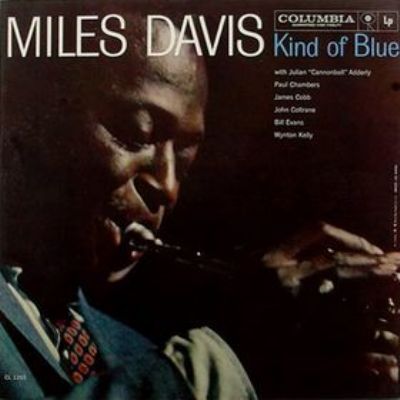
daviskindo

Letter of the Week – “Oh my gosh, so much money wasted on magic buttons, secret sauce and dilithium crystals…”

Hot Stamper Pressings of Miles’s Albums Available Now

One of our good customers had this to say about some Hot Stampers he purchased a long time ago (emphasis added):

Hey Tom,

I imagine you get a little bored with audiophile negativity around the concept of Hot Stampers. I have to admit, they are expensive and I sometimes just can’t push myself to buy (even though I want to). As an alternative I have purchased some of the “new” remastered all analogue classics like Kind of Blue hoping to get great sound.

I listen for enjoyment, but like many folks I get caught up in the hype of technology hoping for better sound. Oh my gosh, so much money wasted on magic buttons, secret sauce and dilithium crystals for a different but really not better sound.

So, to the point, I purchased a copy of Kind of Blue from you about 2 years ago. It was graded by you as A++ – A+++ on both sides. I tell myself this story when I need an incentive and want to buy another Hot Stamper.

I played the newly remastered UHQR KOB. It was quiet, wonderful, excellent.

And so just for fun I decided to listen to the copy of KOB I bought from you.

My Hot Stamper is a re-press from Columbia probably from the ’70’s. The difference between both copies was startling.

My Hot Stamper copy of KOB had bigger dynamics, air, tonal awareness, spatial sense.

Bass, sax, piano and Miles – alive and vibrant. It sounded better. The only negative difference was the vinyl was not as quiet.

My experience with the albums I buy from you has always been satisfying because they sound so good. So thanks and screw all the naysayers .

Anyways, just felt like saying thanks and trying to push myself forward on my next purchase.

Best, Art

Art,

Thanks for your letter. You are our letter of the week!

This caught my eye:

“…so much money wasted on magic buttons, secrete sauce and dilithium crystals for a different but really not better sound.”

Ain’t it the truth. Lots of smoke and mirrors and fancy packaging, but when the record in question is at best mediocre, as you discovered for yourself, we describe such a record as putting lipstick on a pig.

Michael Fremer says it’s the best KOB ever, and will be for all time.

Why can’t you hear what he can?

Seriously, could there be a more absurd and ridiculous statement? When discusssing pressings, this kind of certainty is the unmistakable mark of shallow and misguided thinking.  Audiophiles as a group evince far too much credulity and not nearly enough skepticism about both records and audio, which is why they are always looking for easy answers and quick fixes.

They don’t want to do the work. They want someone to tell them they don’t have to do the work.
(more…)

How to Avoid Making this Rookie Record Collecting Mistake

Record Shopping Day Video!

Not sure how much of this video you can stand — nothing could interest me less than watching a couple of vinyl enthusiasts spouting off on what they think about some random records sitting in a local store’s bins.

But one or two bits caught my eye. I thought I might take the opportunity to share my take on them with you.

Is there any value to the comments of these two collectors? If you care about what music they like, perhaps.  Anything about what to look for on the label or jacket that might correspond to better sound?  If it’s there I sure didn’t see it, but I admit to speeding through most of it, so I can’t say for sure.

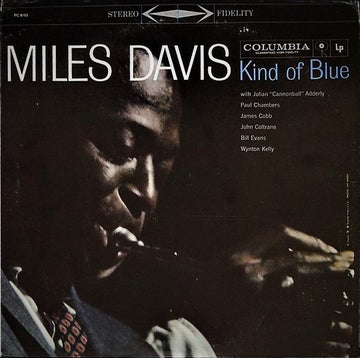
The first bit I refer to above is at 18:42.  The album in question is the legendary Kind of Blue. At this point the unseen helmet-cammed audiophile picks up the record, recognizes the cover, and proceeds to pull the record out to see what era the pressing is from.

Drat! The disappointment in this audiophile’s voice is palpable as he drops the record back in the bin with his dismissive comment that  “it’s a later pressing.”

But we here at Better Records would be falling all over ourselves to get our hands on that later pressing.

Those late pressings can and often do win shootouts. We would never look down our noses at a Red Label Columbia jazz LP, and neither should you.


UPDATE 2025

As good as the best pressings on the Red Label can sound, it has been years since one won a shootout. Here is our commentary for a recent 70s copy that went up on the site, one that earned a Super Hot grade on both sides.

They tend to sell for four or five hundred dollars these days. Why so much you ask? Because they beat the pants off of every so-called audiophile pressing of the album ever made. The testimony of one of our customers does a good job of describing the differences.

In addition, it turns out that at least nine out of ten of the copies with the red label are not remotely as good as the ones that earn Super Hot grades. The good ones are so rare that we only pick them up locally since practically none of the ones we find on the web have the right stampers. Trying to find the right red label needle in the haystack is more trouble than it’s worth, so don’t expect to see many coming to the site.


Our intrepid audiophile explorer does much the same thing about 23 minutes in. It seems pretty clear to us that he has no respect for such reissues, another example of one of the most common myths in record collecting land, the myth that the  original pressing is always, or to be fair, usually better.

This is simply not true, and those of our customers who have purchased White Hot Stamper pressings from us that turned out to be reissues know exactly what I am talking about. This is especially true for the records we sell by The Beatles. No original pressing has every won a shootout. [With one exception.]

Let’s get back to Kind of Blue.

Is the 50s original always better, is the 70s reissue always better, is the 60s 360 pressing always better?

No to one, two and three.

Why? Because no pressing is always better. All pressings are unique and should only be judged on their merits, and you do that by playing them, not by looking at their labels. For us this truth is practically axiomatic. It is in fact the premise of our entire business. Over the course of the 28 years we have been selling records we have never found any compelling evidence to invalidate it.

The day that someone can accurately predict the sound quality of a specific record by looking at the label or cover is a day I do not expect to come, ever.


UPDATE 2025

The above is somewhat misleading. With enough clean 6-Eye pressings on hand to play in a shooout, one of them will win.

That being the case, we have created two lists for those who would like to know which Columbia labels win shootouts — one for 6-Eye winners and one for 360 Label winners.


(more…)

Miles Davis – Kind of Blue on a Killer 70s Red Label Pressing

More Miles Davis

  • With two solid Double Plus (A++) sides, this Red Label pressing has Demo Disc sound – sound that’s guaranteed to make you want to take all of your remastered pressings and dump them off at the Goodwill
  • After auditioning a Hot Stamper Kind of Blue like this one – a pressing that captures the sound of this amazing group like nothing you have ever heard – you may be motivated to add a hearty, “Good riddance to bad audiophile rubbish!”
  • KOB is the embodiment of the big-as-life, spacious and timbrally accurate 30th Street Studio Sound Fred Plaut was justly famous for
  • Space, clarity, transparency, and in-the-room immediacy are some of the qualities to be found on this pressing (particularly on side one)
  • It’s guaranteed to beat any copy you’ve ever played, and if you have the new MoFi pressing, please, please, please order this copy so that you can hear just how screwy the sound of their ridiculous remaster is
  • 5 stars: “KOB isn’t merely an artistic highlight for Miles Davis, it’s an album that towers above its peers, a record generally considered as the definitive jazz album, a universally acknowledged standard of excellence.”
  • If you’re a fan of the music Davis, Adderley and Coltrane were playing circa 1959, this album clearly belongs in your collection

The Labels of Kind of Blue

The 6 Eye label domestic stereo pressings win our shootouts, in the case of Kind of Blue without exception.

The 360 label pressings, black print (1962-63) or white print (1963-70), as well as the rare 70s red label (1970-?), can sound very good, but they never win shootouts.

We’ve identified a select group of reissues with the potential to do well in shootouts, typically earning a grade of Super Hot (A++) when up against the best originals, which earn our top grade, White Hot (A+++). Kind of Blue is one of those recordings.

Scores of differently mastered versions have been cut over the years, but to find one that’s lively and dynamic yet still communicates the relaxed nature of this music is a trick that few of them can pull off. These sides did just that.

When the band really starts cutting loose on “So What,” you’re going to lose your mind! The sound is open and spacious with a wonderful three-dimensional quality that gives each musician a defined space. You can easily tune in to one player or another and follow their contribution as the band stretches out.

Quick Listening Tests

This is an easy one. Just listen to the trumpet at the start of Freddie Freeloader. Most copies do not properly reproduce the transient information of Miles’ horn, causing it to have an easily recognizable quality we talk about all the time on the site: smear. No two pressings will have precisely the same amount of smear on his trumpet, so look for the least smeary copy that does everything else right too. (Meaning simply that smear is important, but not all-important.)

On All Blues (track one, side two), the drums in the right channel are key to evaluating the sound of the better copies. The snare should sound solid and fat — like a real snare — and if there is space in the recording on your copy you will have no trouble hearing the room around the kit.

[The drums are precisely where one of the major faults of the disastrous MoFi 2 LP 45 RPM pressing can be heard. A fuller review is coming, soon I hope!}

Next check the cymbals. No two copies will get the cymbals to sound the same, so play a few and see which ones sound the most natural to you. The most natural will be the one with the best top end.

When Adderley comes in hard left, his alto should not be thin, squawky or stuck in the speaker. The best of the best copies have the instrument sounding full-bodied (for an alto) and reedy. The reedy quality tells you that your pressing is highly resolving and not smeared.

(more…)

Letter of the Week – “Who needs an equipment upgrade with records like these?”

Hot Stamper Pressing of Miles’s Albums Available Now

One of our good customers had this to say about some Hot Stampers he purchased recently:

Hey Tom, 

Listening to Kind Of Blue. Who needs an equipment upgrade with records like these?

Our reply:

So true!

It’s actually one of the common faults of audiophile thinking, present company excluded, that if you can make a record like KOB sound great, you must have a good stereo system.

The opposite is true; the real test is to get difficult to reproduce recordings to sound good, not easy to reproduce recordings.

If you want to test the limits of your system, here are some difficult to reproduce records that will allow you to do it.

And if you want to buy some records that sound great but are difficult to reproduce because you love or challenge, or for any other reason, these Hot Stamper pressings should do the trick.

Either way, KOB is killer, and the MoFi of it is a joke, but don’t tell this guy, who appears to be rather new to this whole “reviewing” thing.  Watch it here. If you can stomach more than two minutes worth, you may be reading the wrong blog.

(more…)

Six-Eye, Black Print, White Print, Red Label – Which Is the Best Sounding Kind of Blue?

Hot Stampers Pressings of the Music of Miles Davis Available Now

Is the 50s original always better, is the 70s reissue always better, is the 60s 360 pressing always better?

The answer is “no” to all three.

Why? Because no pressing is always better. All pressings are unique and should only be judged on their merits, and you do that by playing them, not by looking at their labels. For us this truth is practically axiomatic. It is in fact the premise of our entire business. Over the course of the 28 years we have been selling records we have never found any compelling evidence to invalidate it.

The day that someone can accurately predict the sound quality of a specific record by looking at the label or cover is a day I do not expect to come, ever.


UPDATE 2024

Our Latest Thinking on KOB

The 6 Eye label domestic stereo pressings win our shootouts, in the case of Kind of Blue without exception.

The 360 label pressings, black print (1962-63) or white print (1963-70), as well as the rare 70s red label (1970-?), can sound very good, but they never win shootouts.

We’ve identified a select group of reissues with the potential to do well in shootouts, typically earning a grade of Super Hot (A++) when up against the best originals which earn our top grade, White Hot (A+++). Kind of Blue is one of those recordings.


A Larger Point

But there is a larger point to be made. Let’s assume that the best original Six Eye Columbia pressings can be the best — the most Tubey Magical, the most involving, the most real. You just happen to have a clean pressing, and you absolutely love it.

But is it the best? How could you possibly know that?

Unless you have done a comparison with many copies under controlled conditions, you simply cannot know where on the sonic curve your copy should be placed.

Perhaps you have a mediocre original. Or a mediocre 360 Label copy. Since you haven’t done a massive shootout you simply have no way of knowing just how good sounding the album can be.

(more…)

Kind of Blue – Our Shootout Winner from 2013 on the 70s Label

Hot Stamper Pressings of the Music of Miles Davis Available Now

UPDATE 2024: As good as the best 70s Red Label pressings may be, it’s unlikely that any copy other than the Six-Eye original will win a shootout these days.

In other words, in 2013 we still had a lot to learn about Kind of Blue even after we had been doing shootouts for the album for the eight years starting in 2005.

Doing shootouts for the album about twice a year, over the next eleven years and roughly 22 shootouts with every Columbia label represented, the data are in, and the right originals win every time, with no exceptions to that rule in a very long time. As you may have read elsewhere on the blog:


We don’t know it all and we’ve never pretended we did. All knowledge is provisional. We may not be the smartest guys in the room, but we’re sure as hell smart enough to know that much.

We regularly learn from our mistakes and we hope you do too.

But we learn things from the records we play not by reading about them, but by playing them. Our experiments, conducted using the shootout process we’ve painstakingly developed and refined over the course of the last twenty years, produces all the data we need: the winners, the losers, and the ranking for all the records in-between.

We’ve learned to ignore everything but the sound of the records we’ve actually played on our reference system.

This approach allows us to have a unique, and, to our way of thinking, uniquely valuable service to offer the discriminating audiophile. When you’re tired of wasting your time and money on the ubiquitous mediocrities that populate the major audiophile dealers’ sites and take up far too much space in your local record store, let us show you just how much more real handpicked-for-quality recordings can do for your enjoyment of music.

Our Commentary from 2013

This is one of the very best copies we’ve ever heard, and we have literally played more than a HUNDRED copies of this album over just the last five years.

(more…)

Letter of the Week – “I feel like I’m right there … in the middle of analog heaven.”

Hot Stamper Pressings of the Music of Miles Davis Available Now

One of our good customers had this to say about a Hot Stamper pressing of Kind of Blue he purchased recently:

Hi Tom,

It’s funny how, when the music sounds so good, a little surface noise here or there doesn’t bother me.

The sound of this SHS [Super Hot Stamper] is crazy good and very very engaging.

What an astonishing difference in what one feels when listening to the BR copy versus the Classic or the 33RPM UHQR.

I guess now I’ve got more minty LPs to sell.

This SHS may only be a 2/2 but it kicks ass. It really does.

Turn it up all the way and it just shines…. I feel like I’m right there, on the mezzanine, in the middle of analog heaven.

I am so glad I took a chance on this one.

Many thanks,

Michel

Michel followed up the next day, apparently after he had spent more time listening to the album, with this missive:

I just can’t get enough of KOB.

I can’t believe it sounds so f***ing good.

It’s like a celebration here at the house… hearing this music this way is a completely different thing.

So really I’ve only just heard it.

I remember reading a letter you posted where a customer went to a friend’s house with his BR KOB and when they got to playing that one after some of his friend’s copies,the friend went “oh shit” within like a minute.

Well ditto here. Who would have known?

Michel,

Thanks for writing. The letter you are referring to is this one. It’s a short letter, the best part of which I’ve reproduced below.

I went to my dearest friend’s house yesterday, he was SO excited to play for me his deluxe UHQR version of Kind of Blue.

We listened for a while and then I brought out the Super Hot Stamper of KOB that I got from you and played it.

About 90 seconds in, he was like “uh oh.”  It was about 3 minutes into So What and his exact words were “oh…shit.”

We love it when our customers tell us that they can’t get enough of one of our records, that they can’t believe the difference in the feeling they got when they finally heard a record sound the way it’s supposed to.

An “astonishing difference” hits it right on the head.

Best, TP

P.S.

We never officially reviewed the Classic Records pressing of Kind of Blue, the one that came out in 1995 with the speed-corrected side two. We felt it was no better than decent, another Classic Records jazz mediocrity that could not begin to compete with a properly-mastered, properly-pressed Columbia, regardless of which of the first three labels it might have had. (More on Kind of Blue labels here.)

As a non-trumpet-playing audiophile, the corrected speed side sounded pretty much like the non-corrected speed side to these ears.

But neither side sounded very much like the good copies I had been enjoying starting sometime in the early 90s, which, I admit, was a case of me coming late to the game. But better late than never.


Kind of Blue is an album we admit to being obsessed with — just look at the number of commentaries we’ve written about it.

Some highlights include:

(more…)

How Does the Kind of Blue UHQR Compare to a Hot Stamper Pressing?

Hot Stamper Pressings of the Music of Miles Davis Available Now

We don’t know what the UHQR sounds like because we’ve never played one, and we certainly have no intention of spending the money to buy one and find out what the strengths and weaknesses might be, something we feel eminently qualified to do, as that is exactly what we do all here at Better Records.

However, one of our customers was at a friend’s house and he had one, one he was very impressed with and wanted him to hear. Our customer owned a Super Hot stamper pressing and thought it might be fun to compare the two.

Here is his story:

I went to my dearest friend’s house yesterday, he was SO excited to play for me his deluxe UHQR version of Kind of Blue.

We listened for a while and then I brought out the Super Hot Stamper of KOB that I got from you and played it.

About 90 seconds in, he was like “uh oh.”  It was about 3 minutes into So What and his exact words were “oh…shit.”

The look on his face!

He’s now selling the UHQR.

Dear Josh,

That is a great story, more evidence that the three most important words in the world of audio are compared to what?

I was somewhat surprised to read a number of Discogs reviewers who did not find the sound to their liking. If you search for find the UHQR listing on Discogs you can read their critiques, most of which concern the noisy surfaces that plague a fairly high percentage of Chad’s pressing. Others fault the sound. Most love it. That’s Discogs for you.

Thanks again for your letter.  As the proud new owner of an amazing EAR 324p phono stage, it’s likely that all of the Heavy Vinyl pressings you hear in your own system will sound less and less competitive with the better vintage records you will be listening to, the kind you own and the kind we sell.

Six thousand dollar phono stages have a way of tipping the scales, and they always seem to tip them in favor of plain old records. Funny how that works.

The only Analogue Productions UHQR we’ve played to date is the one they did for Aja, and, as you can imagine, we did not find it much to our liking.


UPDATE 2024:

In 2023 we played another Steely Dan UHQR and thought it was passable.]

To read more reviews of records put out by the single worst audiophile label of all time — in our opinion! — please click here.


An Overview of KOB

Kind of Blue is an album we admit to being obsessed with — just look at the number of commentaries we’ve written about it.

Some highlights include:

(more…)

Is Kind of Blue a Good Test Record?

Hot Stamper Pressing of Miles’s Albums Available Now

One of our good customers had this to say about some Hot Stampers he purchased recently:

Hey Tom, 

Listening to Kind Of Blue. Who needs an equipment upgrade with records like these?

Our reply at the time:

So true!

But on further reflection, it became clear to me that there is more to this idea than one might think upon first hearing it.

When records sound as good as Kind of Blue on vintage vinyl (not this piece of trash), it’s easy to think that everything in the system must be working properly, and, more to the point, reproducing the sound of the album at a high level.

If only more records were as well recorded as KOB, we could save ourselves a lot of time and money, time and money that we’re currently spending on tweaking, tuning and upgrading the various components of our systems. (Assuming you are in fact doing these things. I certainly hope you are. Achieving higher quality sound is one of the greatest joys to be had in all of audio.)

This is undoubtedly true, as far as it goes. But we must live in the world of records as we find it, not the one we want to exist.

Finding good sound for most of the records you wish to enjoy takes a great deal of effort, assuming you are setting your standards for sound at an exceptionally high level. Yours don’t have to be as high as ours — we’re the guys who put their reputations on the line for extravagantly priced Hot Stampers, not you — but the records you are playing have to sound good enough to allow you to forget they are records and just get lost in the music.

With every improvement you make to your system, you eventually will find yourself banging your head up against the psychological effect of Hedonic Adaptation.* Once you have achieved better sound, it doesn’t take long before you get used to it, and now your much-improved “new normal” isn’t as thrilling as it was when you first experienced it.

(more…)

Robert Brook Undoubtedly Has an Impressive System

Robert Brook runs a blog called The Broken Record, with a subtitle explaining that the aim of his blog is to serve as:

A GUIDE FOR THE DEDICATED ANALOG AUDIOPHILE

We know of none better, outside of our own humble attempt to enlighten that portion of the audiophile community who love records and are looking to understand them better.

Below is a link to a review he has posted from a guest contributor, ab_ba, a person who has written us a number of letters as well.

Please read his posting on Robert’s blog and then check out my notes below.

I FINALLY Heard A TRULY GREAT STEREO, and Oh!

Wires dangling from the ceiling?

Check!

ab_ba writes:

So, if we can’t hear distortion until it’s been removed, reason leads us to conclude that we can never declare a stereo free of distortion, even one that sure sounds like it is. And indeed, Robert could readily demonstrate for me that his system still has some distortion. While I sat there marveling at the sound of John Bonham’s drumming on his pristine Ludwig pressing of Led Zeppelin II, Robert hopped up to shut off the breaker to the fridge.

We have been writing about this subject ourselves for a very long time. Here are a couple of links.

And here is a good overview of our approach: How To Get The Most Out Of Your Records – A Step By Step Guide

As for getting one’s stereo act together, we are all for it. The better the stereo, the more obvious the superiority of a top quality pressing will be. ab_ba notes in his posting:

Listening to good records on a good system is a delight, but hearing a great system is an absolute revelation. If you want to find really great copies of your favorite records, they’re out there, but you need a stereo that will enable you to identify them.

We wrote a commentary addressing that subject, entitled: First Get Good Sound – Then You Can Recognize and Acquire Good Records

One of the (many) reasons Robert Brook’s stereo has such low distortion is that he uses the same Townshend Seismic Platforms that we do. If you are interested in getting distortion out of your system, we can supply you with one to try. We have never had one returned. They are by far the cheapest, fastest, easiest way to improve the sound of any stereo. (Of course unplugging your fridge is even cheaper, but it may not be as easy.)

Robert uses the same Hallographs that we employ to help improve the acoustics of his room. We have three pair. Three of the units can be seen in the photograph above.

Tweaking and tuning are the foundation of good sound. The 80/20 rule is very real, and, if I may offer up my own experience to serve as a guide, the numbers are probably closer to 90/10.

(more…)